

Nepal Travel Revolution Ignites as Nagdhunga–Sisnekhola Tunnel Completes After 79-Month Mega Build Set to Transform Kathmandu Gateway Connectivity and Regional Road Journeys

Published
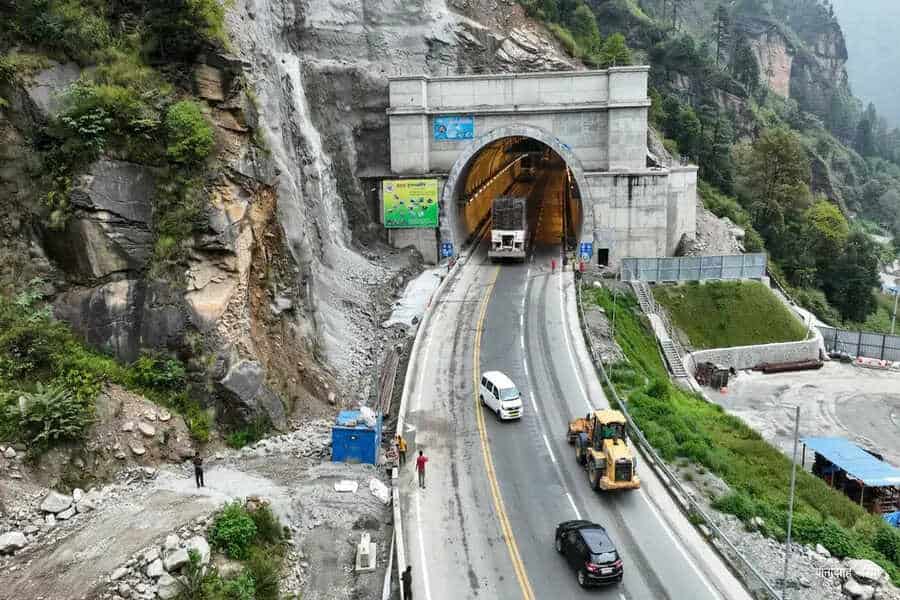
The Nagdhunga–Sisnekhola Tunnel completion marks a decisive shift in Nepal’s transport landscape as the long-delayed infrastructure project finally reaches its finishing stage after 79 months of construction work, paving the way for a new era of faster and safer travel into and out of Kathmandu Valley. Built to ease chronic congestion at the Nagdhunga entry point, the tunnel is expected to transform regional road connectivity, cut travel time, and improve freight movement efficiency along a key national corridor. With final operational preparations now underway following its handover by Hazama Ando Corporation and management arrangements in place with Yusin-ART JV, the project is positioned to become a strategic travel gateway that reshapes mobility patterns, strengthens economic flow, and modernises road infrastructure standards across Nepal.
Nepal’s First Road Tunnel Set for Historic Opening as Nagdhunga–Sisnekhola Project Nears Full Operation After 79 Months of Construction Delay
Nepal is on the verge of a major transport transformation as the Nagdhunga–Sisnekhola Road Tunnel, the country’s first modern road tunnel, reaches final readiness after 79 months of construction work. The project, originally planned for completion within 42 months, has now been fully handed over by Japanese contractor Hazama Ando Corporation to the national project authority, marking a decisive step toward its official opening in the Nepali month of Shrawan (mid-July).
Advertisement
Advertisement
This landmark infrastructure corridor is expected to redefine mobility between Kathmandu Valley and the Dhading region, easing congestion at the critical Nagdhunga entry point and offering safer, faster travel conditions for thousands of daily commuters and freight vehicles.
Mega Infrastructure Delivered After Extended Global and Local Challenges
Construction began on October 21, 2019, under a fixed 42-month delivery contract. However, the timeline was significantly disrupted by the COVID-19 pandemic, geological difficulties, workforce interruptions, and multiple on-site challenges along the mountainous corridor.
Advertisement
Advertisement
Despite these delays, structural completion has now been achieved, and final pre-opening procedures are underway. Although physical construction ended in May, additional safety validation, system testing, and operational calibration continue before public access is granted.
Under contractual terms, Hazama Ando Corporation will remain responsible for addressing any structural or engineering defects during a one-year defect liability period, ensuring long-term stability and safety assurance.
Advertisement
Advertisement
International Collaboration Powering Nepal’s Infrastructure Leap
The tunnel stands as a symbol of deepening infrastructure cooperation between multiple nations.
- Japan: Primary financing partner through concessional loans
- Nepal: National investment and implementation authority
- China: Operational involvement through joint venture management structure
The project was financed with approximately Rs 21.5 billion in Japanese concessional loans, supported by around Rs 6 billion from the Government of Nepal, making it one of the most significant transport investments in the country’s history.
Advertisement
Advertisement
Operational Control Handed to Joint International Management Team
The tunnel’s long-term operations have been awarded to Yusin-ART JV, a collaborative entity between China’s Yusin and Nepal’s ART.
The operator will manage the tunnel for five years, overseeing:
- Traffic flow management
- Emergency response systems
- Tunnel maintenance and safety operations
- Toll collection and revenue processing
- Upkeep of 2.8 km access roads connecting Kathmandu and Dhading
Around 150 trained personnel will be deployed to ensure uninterrupted 24/7 operations, making the tunnel one of Nepal’s most technologically managed road infrastructures.
Smart Digital Toll System Introduced for First Time in Nepal
A major technological shift accompanies the tunnel launch. The system will introduce a fully automated toll collection mechanism using RFID and electronic tagging technology.
Advertisement
Advertisement
Road Board Nepal has confirmed that vehicles will use an N-Tag system linked directly to bank accounts. Once installed, toll charges will be automatically deducted as vehicles pass through electronic gates.
Key features include:
- Mandatory prepaid balance of up to Rs 2,000
- Integration with 13 Class ‘A’ commercial banks
- Expansion planned for additional banking partners
- Alternative payment via QR codes and Fonepay for non-tag users
All toll revenue will be transferred daily to the Road Board Nepal account, ensuring financial transparency and central monitoring.
Detailed Toll Structure for All Vehicle Categories
The tunnel introduces a structured toll system based on vehicle size and direction of travel:
- Cars and Vans: Rs 65 (Kathmandu-bound), Rs 60 (Dhading-bound)
- Minibuses, Light Trucks, Tippers: Rs 115 inbound, Rs 80 outbound
- Buses and Standard Trucks: Rs 260 inbound, Rs 200 outbound
- Heavy Trucks and Lorries: Rs 600 inbound, Rs 250 outbound
Traffic projections estimate thousands of daily crossings, with the highest volume recorded among passenger vehicles and freight carriers.
Strict Safety Regulations and Tunnel Usage Restrictions
Under the Nagdhunga–Sisnekhola Tunnel Traffic Operation Directive 2024, strict operational rules have been implemented:
Advertisement
Advertisement
- No pedestrians allowed
- Motorcycles and three-wheelers prohibited
- Non-motorised vehicles banned
- Vehicles carrying flammable or explosive materials such as petrol, diesel, and LPG are strictly restricted
Such vehicles will continue to use the existing surface road network, ensuring safety within the enclosed tunnel environment.
Engineering Scale and Structural Design
The tunnel system includes:
- Main tunnel length: 2,688 metres
- Emergency escape tunnel: 2,557 metres
- Parallel safety infrastructure for evacuation and emergency response
This dual-tunnel configuration ensures compliance with modern international safety standards, enhancing resilience in case of emergencies or traffic incidents.
Countries Involved in the Project
- Japan – Financing and construction expertise
- Nepal – Project ownership, infrastructure development, and operations
- China – Operational partnership through joint venture management
The tunnel is expected to significantly reduce congestion at Kathmandu’s busiest entry point while delivering safer, faster and more efficient travel for passengers and freight traffic. It marks a major step in Nepal’s shift toward modern, technology-driven transport infrastructure.
Strategic Impact on Nepal’s Transport Future
Once operational, the Nagdhunga–Sisnekhola tunnel is expected to significantly reduce congestion at Kathmandu’s western entry point, improve freight efficiency, and enhance road safety along one of Nepal’s busiest transport corridors.
The integration of digital tolling, international operational expertise, and advanced safety systems positions the tunnel as a landmark in Nepal’s modern infrastructure development journey.
Advertisement
Advertisement
This project is not just a tunnel—it represents a strategic shift in Nepal’s transport architecture, connecting regions faster, safer, and with unprecedented technological precision.
Advertisement
