
U.S. Expands Social Media Screening to Media and Professional Visa Applicants
Published
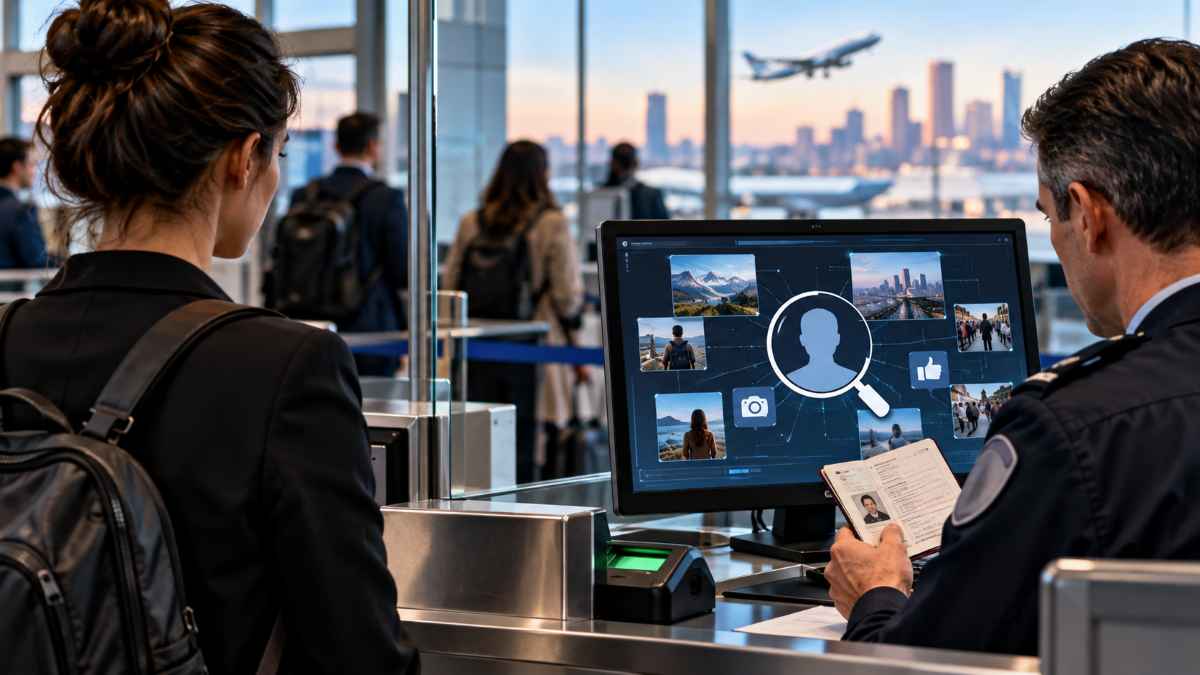
Image generated with Ai
There has been an increase in attention given by the United States government to the social media activity of visa applicants. Foreign media representatives and USMCA professionals seeking visas now join several other nonimmigrant visa types, whose applicants must go through the online presence review process. The United States Department of State, in a statement issued on 18 September, has informed that effective 1 October 2026, online presence review will be conducted for visa applications seeking I visas for foreign media representatives, TN visas for qualified USMCA professionals and TD visas for their dependents. It is important for international journalists, media professionals, Canadian and Mexican professionals and even those family members seeking visas linked to such applicants. This is another issue that must be considered by professionals planning trips to the United States. However, this is not a completely new requirement to provide information on social media accounts. Since 2019, all US visa applicants have been required to provide the social media identifiers.
What Changes From October 1
Under the new State Department guidance, applicants for I, TN and TD nonimmigrant visas are instructed to set the privacy settings on all their social media profiles to “public” or “open” to facilitate the vetting process.
The Department says the purpose is to use available information to identify applicants who may be inadmissible to the United States, including people considered to pose national-security or public-safety risks.
The change therefore affects more than traditional employment-based travel.
Advertisement
Advertisement
An I visa is used by foreign media representatives, including certain journalists and other qualifying media personnel travelling to the United States for professional activities.
The TN category covers qualifying professionals from Canada and Mexico under the USMCA framework. TD status is used for eligible dependants of TN professionals.
Advertisement
Advertisement
For international media organisations and professionals who regularly travel across borders, the change adds another procedural consideration before a US assignment begins.
Social Media Identifiers Are Not New
The distinction between providing social media identifiers and the newer online presence review is important.
The State Department changed its visa application forms in 2019 to request social media identifiers from most immigrant and nonimmigrant visa applicants worldwide.
Applicants have historically been asked to provide identifiers associated with social media platforms used during the relevant period. The department has said that this information forms part of its wider identity and security screening process.
The latest policy therefore expands the scope of active online-presence review rather than introducing social media disclosure to the US visa system for the first time.
The Department has already applied online-presence review to categories including F and M students, J exchange visitors, H-1B workers and several other nonimmigrant classifications.
Advertisement
Advertisement
The October expansion adds I, TN and TD applicants to that list.
What Applicants Need to Know
Applicants should carefully distinguish between what the government requires and what is being discussed on social media.
The State Department’s latest announcement specifically instructs applicants in the newly covered categories to make their social media profiles public or open for review.
It does not state that applicants must hand over passwords.
Earlier State Department guidance on social media collection explicitly said consular officers would not request user passwords.
Applicants are still responsible for providing truthful information in their visa applications and following instructions from the US embassy or consulate handling their case.
Advertisement
Advertisement
The visa process remains based on the applicant’s eligibility under the relevant immigration rules. Social media review is one element within the broader screening and adjudication process.
Why Media Professionals Are Watching Closely
The expansion is particularly relevant to foreign journalists and media organisations because I visa applicants can include professionals whose work naturally involves public commentary, reporting and political or social subjects.
For journalists, editors, photographers and other media personnel, an online profile may contain years of professional work, opinions, photographs, interviews and interactions with audiences.
The State Department says its screening is intended to identify applicants who may be inadmissible and to determine whether they credibly demonstrate eligibility for the visa requested.
The department also stresses that visa adjudication is a national-security decision and that applicants must demonstrate their intention to comply with the terms of admission.
This makes the change relevant to international news organisations sending staff to the United States, particularly when assignments involve conferences, political events, business reporting or other high-profile activities.
Advertisement
Advertisement
TN Professionals Face the Change Too
The TN category is particularly important for cross-border professional mobility between the United States, Canada and Mexico.
Eligible professionals can use the category for qualifying occupations under the USMCA framework, subject to the applicable requirements.
The October expansion means that applicants in this category who require a US visa will now be included in the State Department’s online-presence review framework.
The impact is therefore broader than tourism. It reaches professional conferences, assignments, business activities and cross-border employment-related travel.
Canadian citizens also have specific rules under the TN framework and generally do not require a visa to seek admission in TN status, although circumstances vary and Canadian applicants should follow the applicable US immigration requirements.
A Wider Shift in US Visa Screening
The change that was made on 1 October 2026 falls under tightening of rules about online presence review and screening rather than a one-off rule applicable only to media persons. It follows other changes about tightening of these rules that were made throughout 2026, when the State Department has extended review of online presence to additional classes of visa. This means that international travellers who are interested in obtaining a US visa would be better if they were able not only to learn about the required documents in connection with the type of trip for which they seek a visa, but also about all the additional screening procedures that are applied. The essential change that enters into force on 1 October 2026 can be stated like that: I, TN and TD applicants will now fall under the expanded screening by the State Department, requiring them to make their social media pages available for review.
Advertisement
