
Gen Alpha Is Re-framing Greece Tourism and Other European Countries Without a Passport Through AI Avatars, VR Worlds and Digital Adventures From the Comfort of Home

Published
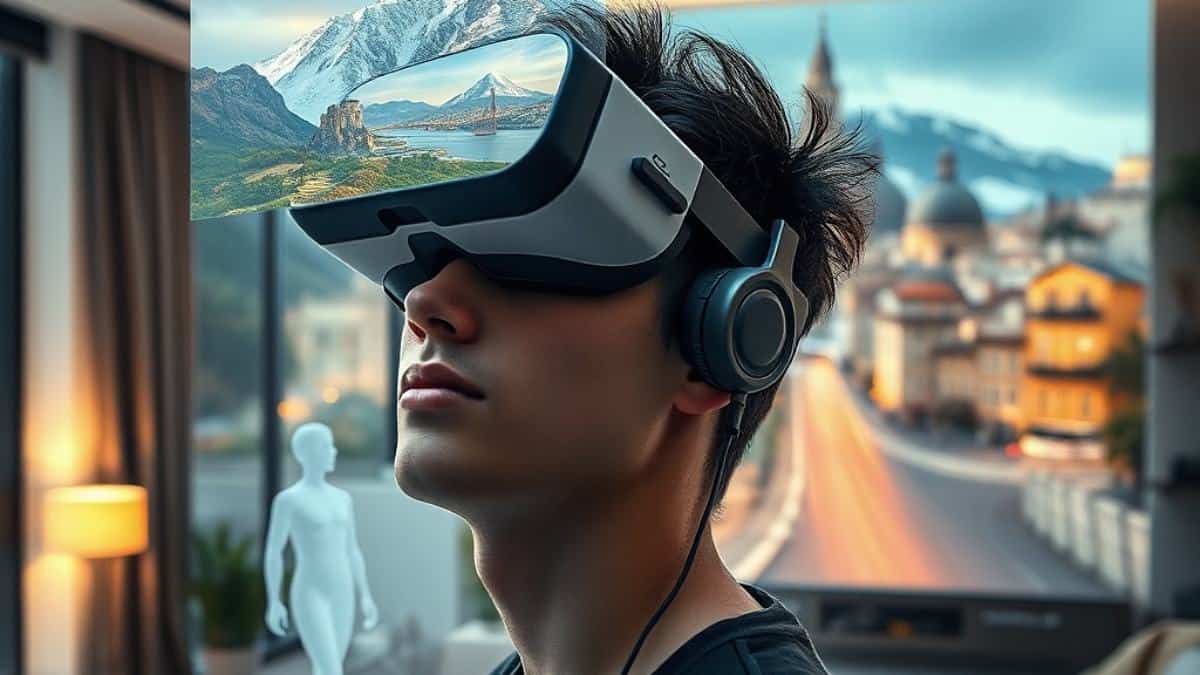
Image generated with Ai
There is currently a paradigm change in terms of how the next generation of global explorers will choose destinations in Europe, owing to the fact that there is currently a huge demographic transformation occurring. This is because the new generation, known as Gen Alpha, were born during the era of advanced technological tools such as artificial intelligence, gaming and spatial computing. This generation therefore does not go through the routine process of dreaming, researching, booking flights, then going to foreign places. They visit historical sites and other places even before they have physically traveled to them.
Defining Generation Alpha: The Birth of Digital-First Travellers
Technological DNA and Demographic Scale
Generation Alpha, comprising individuals born roughly between 2010 and 2024, represents a unique demographic cohort in global consumer history. Projected by international demographic studies to reach approximately two billion members worldwide by the mid-2020s, this generation is the first to be fully immersed in artificial intelligence, spatial computing, and responsive digital environments from early childhood. Unlike Millennials or Generation Z, who witnessed the arrival of mobile internet and social platforms during their formative years, Generation Alpha has never known a world without instant algorithmic feedback, voice-activated smart home assistants, and persistent virtual worlds.
Within the European Union, official demographic assessments by Eurostat confirm an exceptionally high level of daily digital integration among young citizens. Across EU Member States, 98% of young people aged 16 to 29 access the internet daily, compared with 90% of the overall population. Furthermore, Eurostat digital youth skill assessments reveal that 75% of young Europeans possess basic or above-basic overall digital skills, covering data literacy, content creation, digital communication, safety, and problem-solving. This digital fluency is balanced across genders, with 76% of young women and 73% of young men demonstrating verified proficiency.
| Demographic & Digital Skill Indicator | EU Youth Figure | General EU Population | Primary Data Source |
| Daily Internet Usage | 98.0% | 90.0% | Eurostat Digital Youth Report |
| Basic or Above Basic Digital Skills | 75.0% | 56.0% (Estimated) | Eurostat ICT Survey |
| Fact-Checking Online Content | 41.0% | 31.0% | Eurostat Digital Youth Report |
| Generative AI Adoption Rate | 63.8% | 32.7% | Eurostat AI Adoption Data |
| Private Generative AI Utilization | 44.2% | 25.1% | Eurostat ICT Household Survey |
| Educational Generative AI Utilization | 39.3% | 9.4% | Eurostat ICT Household Survey |
For Generation Alpha, digital technology is not an auxiliary tool adopted to facilitate real-world tasks; it is the fundamental medium through which physical reality is conceptualised, evaluated, and experienced. Consequently, their understanding of geography and culture is formed through interactive digital spaces long before they hold a physical passport.
Advertisement
Advertisement
Influence on Family Tourism and Collaborative Discovery
This technological intimacy alters household dynamics, particularly regarding family vacation planning and destination selection. Historically, family travel decisions were driven by parents researching physical guidebooks, visiting travel agencies, or browsing static web directories. Today, Generation Alpha plays an active role as digital co-planners within the household.
Advertisement
Advertisement
Children introduce destinations to their parents through interactive 3D environments, gamified landmark tours, and algorithmic recommendations discovered on digital platforms. This shifts traditional household influence from passive requests to collaborative, data-informed planning. When a family considers a trip to Europe, the child has often already navigated the target destination virtually, inspected hotel layouts through 3D models, and curated a list of local points of interest. This pre-departure familiarity transforms family travel, turning physical visits into the real-world validation of a digital journey that began months prior.
The AI Navigator: Generative Intelligence as the Primary Travel Companion
From Search Engines to Conversational Travel Curators
The shift from keyword-based search engines to conversational artificial intelligence represents an inflection point for the global travel industry. Generation Alpha is growing up asking AI travel assistants to curate personalized adventures rather than manually filtering search results or consulting traditional travel agencies. Natural language processing models allow young travellers to input complex, multi-variable requests, receiving instant, highly contextualised travel itineraries tailored to specific personal interests.
Instead of browsing static listings, a user can prompt an AI companion to design an itinerary focused on medieval European castles, sustainable transport routes, and family-friendly dining options. The AI system synthesizes real-time logistical data, historical context, and user preferences into a cohesive narrative, providing personalized holiday suggestions and destination recommendations. Through this interactive dialogue, AI tourism tools act as digital concierges, establishing a level of trust that legacy promotional channels struggle to replicate.
Advertisement
Advertisement
AI Adoption Rates and Trust Dynamics Among Young Europeans
Data published by Eurostat highlights the rapid integration of generative artificial intelligence across Europe, led by younger demographics. In 2025, 63.8% of young Europeans aged 16 to 24 reported utilizing generative AI tools, nearly double the 32.7% recorded among the general population aged 16 to 74. Private personal usage among young Europeans reached 44.2%, compared to 25.1% across the general population, while 39.3% employed AI tools for formal educational purposes.
| EU Member State | Youth Generative AI Adoption Rate (Aged 16–24) | Regional Digital Adoption Profile |
| Greece | 83.5% | Very High Adoption Tier |
| Estonia | 82.8% | Very High Adoption Tier |
| Czechia | 78.5% | Very High Adoption Tier |
| European Union Average | 63.8% | Regional Baseline |
| Poland | 49.3% | Emerging Adoption Tier |
| Italy | 47.2% | Emerging Adoption Tier |
| Romania | 44.1% | Emerging Adoption Tier |
Parallel metrics show that European enterprise infrastructure is scaling to support this demand. In 2025, 20% of all EU enterprises utilized artificial intelligence technologies, marking an increase from 13.5% in 2024 and 8.0% in 2023. Enterprise adoption is led by large commercial entities at 55%, compared to 19% among small and medium-sized enterprises. Top-performing EU Member States for business AI integration include Denmark at 27.6%, Sweden at 25.1%, and Belgium at 24.7%.
Advertisement
Advertisement
| Year | EU Enterprise AI Adoption Rate |
|---|---|
| 2023 | 8.0% |
| 2024 | 13.5% |
| 2025 | 20.0% |
| 2025 Breakdown | Large firms: 55% | SMEs: 19% |
This rapid deployment raises a key question for destination marketers: Will Generation Alpha trust AI recommendations over traditional travel websites? Empirical trends suggest they will. Because conversational AI interfaces synthesize verified data without displaying aggressive ad placements, young users perceive AI companions as objective advisors. Furthermore, Eurostat data indicates that 41% of young Europeans actively fact-check online information, demonstrating a critical approach to digital content that favors transparent, algorithmically verified travel intelligence.
Virtual Europe Before Reality Europe: Experiencing Cultural Heritage from Home
High-Fidelity Cultural Preservation Across Member States
The concept of visiting Europe is no longer contingent upon physical transit. Across the continent, national ministries of culture, municipal tourism authorities, and heritage foundations have digitized physical assets, creating accessible virtual models of world-famous heritage sites. These digital environments allow prospective visitors to explore historic architecture, art galleries, and natural landscapes remotely.
In France, major cultural institutions have led spatial digitization initiatives. The Musée du Louvre and the Palace of Versailles offer extensive 3D digital tours, virtual reality exhibitions, and augmented reality heritage applications that permit remote users to inspect artwork, royal apartments, and historic gardens with high visual fidelity. In Italy, the Ministry of Culture and the Parco Archeologico del Colosseo have deployed 3D digital modeling and immersive tours that grant remote access to historically restricted subterranean areas, such as the hypogeum beneath the Colosseum arena floor.
Virtually Accessible European Landmarks
- Musée du Louvre (France)
- Technology Applied: 3D virtual scans and augmented reality (AR) experiences
- Access Feature: High-resolution digital art archives allowing users to explore collections and artworks remotely
- Colosseum (Rome, Italy)
- Technology Applied: Subterranean 3D modelling and immersive digital reconstruction
- Access Feature: Virtual exploration of underground Hypogeum areas and hidden ancient structures
- Acropolis (Athens, Greece)
- Technology Applied: Photogrammetric reconstructions and digital heritage technology
- Access Feature: Interactive experiences showcasing historic architectural eras and ancient Greek heritage
- Virtual Helsinki (Finland)
- Technology Applied: Complete 3D spatial digital twin
- Access Feature: Virtual access to urban landscapes, cultural events and city experiences through immersive platforms |
In Greece, ancient heritage projects around the Acropolis of Athens utilize photogrammetry and 3D modeling to showcase historical reconstructions across different architectural eras. In Spain, smart destination initiatives integrate AI-powered city platforms with immersive urban discovery applications. In Northern and Central Europe, Iceland provides virtual volcanic exploration and simulated Northern Lights displays, while Switzerland delivers digital outdoor models of alpine terrain. The European Commission has highlighted that virtual reality tours and immersive technologies showcase European cultural and natural heritage, supporting accessibility and preservation.
UNESCO and Global Digital Heritage Initiatives
At the international level, the United Nations Educational, Scientific and Cultural Organization (UNESCO) has established frameworks to institutionalize digital heritage preservation and remote access. UNESCO’s Memory of the World Programme highlights that digital heritage is essential for democratizing access to human history and safeguarding vulnerable records. Through multi-stakeholder partnerships, UNESCO utilizes open-access digital repositories and multilingual platforms to ensure global audiences can engage with cultural heritage authentically.
Advertisement
Advertisement
A prime example is the UNESCO Virtual Museum of Stolen Cultural Objects, developed as a global platform using 3D spatial digitization and virtual reality. The museum provides educational access to missing cultural artifacts while illustrating their historical, spiritual, and artistic significance.
UNESCO Digital Preservation Architecture
- Virtual Museum of Stolen Arts
- Core Technology: 3D and 2D spatial digitisation
- Strategic Focus: Raising awareness about illicit art trafficking and preserving cultural heritage through digital access
- Virtual Science Museum
- Core Technology: Interactive open digital repositories
- Strategic Focus: Expanding global educational access and enabling remote learning through digital collections
- Memory of the World Programme
- Core Technology: Multilingual Wikidata metadata and digital cataloguing systems
- Strategic Focus: Protecting and preserving documentary heritage while improving worldwide access to historical records
- Emergency Site Documentation
- Core Technology: Drone and satellite photogrammetry
- Strategic Focus: Mapping and documenting cultural sites affected by conflicts, disasters and emergencies for preservation purposes |
Similarly, the UNESCO Virtual Science Museum offers interactive exhibitions covering scientific discoveries, indigenous knowledge systems, and global environmental initiatives. UNESCO also deploys 3D documentation technologies—combining satellite imagery, photogrammetry, and drone mapping—to create precise digital models of World Heritage sites affected by conflict or natural disasters, such as the Ancient City of Aleppo in Syria, alongside sites across Yemen and Iraq. These institutional deployments establish digital spaces as legitimate, accessible centers of cultural education.

Image generated with Ai
VR Tourism and the “Try Before You Fly” Revolution
Spatial Computing as the Digital Passport
The commercial deployment of spatial computing hardware—including Meta Quest headsets, Apple Vision Pro, and lightweight augmented reality glasses—has elevated virtual reality travel from a entertainment novel into a practical utility for destination discovery. For Generation Alpha, VR tourism Europe provides a digital passport that enables pre-departure spatial exploration without geographic or financial limitations.
Spatial computing allows users to interact with volumetric, photorealistic environments that convey spatial depth and scale. Users can navigate representations of European urban quarters, historical monuments, and geographical landmarks with active depth perception and location-aware audio. This level of immersion creates real spatial presence, allowing young travellers to evaluate prospective destinations through sensory previewing. As hardware accessibility expands, spatial exploration is establishing itself as a standard preliminary phase in the international travel discovery funnel.
Pre-Travel Validation: From Hotel Suites to Natural Ecosystems
The practical applications of immersive travel technology extend beyond virtual sightseeing into pre-purchase validation and risk reduction across the travel commerce chain. By leveraging spatial previews, prospective travellers can evaluate commercial offerings before committing financial resources or travel time:
Advertisement
Advertisement
- Hotel Suite Inspection: Walking through scaled 3D representations of hotel rooms, communal lounges, and resort grounds to verify room dimensions, layout suitability, and window views.
- Urban Pedestrian Navigation: Navigating virtual renditions of street networks, public transit hubs, and commercial districts to assess neighborhood atmosphere and walkability.
- Cultural Attraction Previewing: Moving through museum corridors, historic ruins, and performance venues to determine optimal visiting hours and crowd patterns.
- Dining Environment Assessment: Inspecting restaurant interiors, seating arrangements, and acoustic conditions to select dining venues aligned with group preferences.
- Accessibility Verification: Pre-testing mobility access routes, ramps, elevator availability, and physical terrain challenges for travellers with specialized physical requirements.
- Ecological and Wilderness Exploration: Experiencing delicate environmental ecosystems, national parks, and marine reserves virtually, minimizing physical impact on protected natural habitats.
This pre-travel validation mechanism alters consumer decision-making. By eliminating discrepancies between promotional marketing and physical realities, immersive previews reduce post-arrival dissatisfaction, increase booking conversion rates for high-quality service providers, and grant consumers complete transparency over their travel selections.
Digital Twins: Creating Interactive Virtual Replicas of European Destinations
Urban Replicas and Smart Tourism Management
A foundational pillar of modern urban digital infrastructure is the digital twin—a dynamic, geometrically precise 3D virtual replica of a physical city integrated with real-time data feeds. European municipalities are constructing digital twins to enhance urban planning, optimize traffic flows, monitor environmental indicators, and deliver interactive digital visitor experiences.
The City of Helsinki has pioneered this field through the development of Virtual Helsinki—a high-fidelity 3D digital twin of the Finnish capital’s city center created in strategic partnership with VR studio Zoan. Built using open data and high-resolution spatial rendering, Virtual Helsinki allows global users to explore iconic urban locations, purchase local design products, and attend major cultural events remotely. A notable demonstration occurred during May Day celebrations, when over 700,000 live participants attended a virtual concert hosted within Virtual Helsinki, generating over 1.4 million total views. This initiative provides an engaging experience of Helsinki’s urban culture while eliminating the carbon emissions associated with long-distance transit.
| Virtual Helsinki May Day Concert Case Study (2020) | Details |
|---|---|
| Live Concert Participants | 700,000 users experienced the virtual event live |
| Total Weekend Views | 1,400,000 total views recorded during the weekend |
| Core Objective | Providing carbon-neutral global access to cultural experiences through digital technology |
Spain’s Smart Tourism Destination Network and the Plataforma Inteligente de Destinos
Spain has formalized smart destination management through state-level policy and technology deployment. Under the Secretariat of State for Tourism and SEGITTUR, Spain established the Smart Tourism Destinations project (Destinos Turísticos Inteligentes or DTI), a framework recognized internationally by UN Tourism and the OECD for enhancing competitiveness, governance, accessibility, and technology integration. The associated Smart Destinations Network (Red DTI) encompasses 619 active members, including 440 municipal destinations, 86 institutional bodies, 86 commercial enterprises, and 8 academic observers.
| Red DTI Membership Category | Members |
|---|---|
| Municipal Destinations | 440 cities and regions |
| Institutional Bodies | 86 public entities |
| Commercial Enterprises | 86 technology and tourism firms |
| Academic Observers | 8 research institutes |
| Total Network Members | 619 entities |
To power this network, the Spanish Government launched the Plataforma Inteligente de Destinos (PID), funded through the national Recovery, Transformation and Resilience Plan. The PID provides public digital infrastructure connecting destination managers, private businesses, residents, and prospective tourists. Backed by €95 million allocated directly to 46 destinations and an additional €46 million awarded to 71 collaborative projects involving 432 entities, the platform uses big data to manage visitor flows, mitigate overtourism, and customize digital tourism experiences across the entire travel lifecycle.
Advertisement
Advertisement
| Smart City / Program | Operating Public Entity | Core Digital Infrastructure | Strategic Focus & Impact |
| Virtual Helsinki | City of Helsinki / Zoan | 3D Spatial Twin, Open Data APIs | Carbon-neutral events, global exploration |
| Smart Destinations (DTI) | SEGITTUR / State Secretariat | UNE 178 Standard, Governance Model | Sustainable development, accessibility |
| Plataforma Inteligente (PID) | SEGITTUR / Ministry of Industry | Cloud Data Node, IoT Integration | Public-private data integration, flow management |
| Smart Destinations Network | Public-Private Network (619 Members) | Knowledge Transfer Portal, Repository | Destination collaboration, tech standardization |
Through these digital twin ecosystems, Generation Alpha does not simply view static destination advertising. Instead, they enter, navigate, and evaluate interactive virtual replicas of physical destinations prior to arranging real-world transit.
Playable Tourism: Gaming Ecosystems as Gateway Discovery Channels
Discovering Europe Through Roblox, Minecraft, and Fortnite
Gaming platforms have evolved from isolated entertainment software into persistent spatial social environments for Generation Alpha. Platforms such as Roblox, Minecraft, Fortnite Creative, and sandbox virtual environments represent early operational iterations of metaverse travel, serving as primary hubs where young citizens socialize, collaborate, and explore.
Within these virtual platforms, physical European geography is systematically recreated. Millions of young players explore detailed, user-generated, or officially commissioned models of major European capitals, navigating the streets of Paris, the canals of Venice, or the monuments of Ancient Rome within their daily gaming routines. These virtual environments function as interactive tourism marketing channels, introducing architectural icons and cultural stories to players years before they enter the commercial travel market.
Playable Environments and Destination Marketing Partnerships
Integrating physical destinations into playable virtual spaces transforms traditional tourism marketing. Historical destination campaigns relied on broadcast media and printed material designed for adult decision-makers. Playable tourism shifts this strategy toward interactive engagement, allowing young citizens to build emotional familiarity with real-world sites through active gameplay:
| Phase | Tourism Marketing Progression | How It Influences Travel Behaviour |
|---|---|---|
| Phase 1: Spatial Exploration | Navigating 3D architectural models in virtual worlds | Allows users to discover destinations, landmarks and environments through immersive digital exploration |
| Phase 2: Interactive Context | Completing quest-based objectives connected to local history and culture | Creates deeper engagement by turning destination learning into an interactive experience |
| Phase 3: Emotional Connection | Building familiarity and a sense of ownership through avatar-based experiences | Encourages personal attachment and increases interest in visiting destinations physically |
| Phase 4: Family Co-Planning | Requesting real-world family visits to destinations discovered through gamified platforms | Converts digital engagement into actual travel decisions and family holiday planning |
- Spatial Familiarity: Navigating detailed digital models instills an intuitive cognitive map of physical landmarks, street layouts, and historical contexts.
- Interactive Historical Context: Completing quest-based objectives tied to historical events transforms passive observation into memorable learning.
- Emotional Ownership: Customizing avatars and completing achievements within virtual destination hubs fosters personal connections to geographic locations.
- Collaborative Itinerary Influence: Young players introduce gamified landmarks into family vacation planning, requesting real-world visits to places explored virtually.
As national tourism organizations recognize the high engagement metrics of interactive platforms, strategic partnerships between public heritage bodies and gaming developers are expanding. By converting physical locations into playable environments, destination managers establish early brand affinity among Generation Alpha, securing long-term destination mindshare across future travel generations.
Advertisement
Advertisement
Smart Wearables and Next-Generation Travel Hardware
Augmented Reality and Real-Time Translation Wearables
As Generation Alpha transitions from remote digital discovery to physical travel, hardware innovations are redefining on-the-ground exploration. Recent travel technology trends bridge the virtual and physical domains, enhancing physical environments through real-time digital overlays and contextual audio guidance.
Key hardware innovations transforming real-world destination engagement include:
- Augmented Reality Glasses: Lightweight eyewear projecting spatial overlays onto historical sites, rendering architectural restorations over ancient ruins during physical visits.
- Spatial Audio Earpieces: Location-aware audio devices delivering context-sensitive historical narratives, ambient soundscapes, and site commentary based on precise GPS positioning.
- Real-Time Translation Wearables: Compact earpieces and display systems offering sub-second conversational translation, removing language barriers across local interactions.
- Contextual Visual Computing: AI-enabled smart camera systems instantly processing and displaying information regarding local fauna, flora, architectural features, and street signage.
These technological tools convert physical travel into an augmented, highly educational experience, aligning real-world exploration with the interactive expectations of digital-native travellers.
AI Cameras and Autonomous Travel Storytelling
Capturing and sharing travel experiences is undergoing a parallel evolution driven by artificial intelligence. Generation Alpha is moving past manual camera operation toward autonomous storytelling devices that handle capture, curation, and media optimization automatically.
Autonomous AI Storytelling Processing Pipeline
- Autonomous AI Capture
- Uses computational sensors with automated framing capabilities to capture travel moments without manual control.
- Spatial Scene Recognition
- Uses real-time landmark identification, location detection and geotagging to understand surroundings and create contextual travel data.
- Content Synthesis
- Automatically generates spatial journals, digital memories and multimedia travel content using captured experiences and location insights.
Integrated with smart luggage tracking, autonomous transit systems, and IoT destination infrastructure, these devices create dynamic, location-verified digital travel logs. Visual processing systems automatically identify cultural landmarks, catalog contextual historical facts, and generate shareable spatial journals. This automated documentation allows young travellers to remain present during real-world exploration while maintaining an organized, interactive digital archive of their journeys.
Advertisement
Advertisement
Institutional Preparedness: How Tourism Boards Adapt to Digital-First Explorers
Policy Initiatives of the European Travel Commission and EU Bodies
European destination management organizations (DMOs) are aligning their strategic frameworks to serve a digital-first, environmentally conscious generation. Policy initiatives spearheaded by the European Commission Tourism Unit and the European Travel Commission emphasize digital adoption, operational resilience, and environmental sustainability. EU policy webinars and technical frameworks highlight how artificial intelligence, virtual reality, and advanced neurotourism tools support business transformation, workforce upskilling, and long-term destination resilience.
| Policy Pillar | Operational Mechanism | Target Outcome |
|---|---|---|
| Overtourism Mitigation | Virtual queue systems, pre-visit planning tools, AI-powered visitor management and digital booking solutions | Reduced peak-site congestion, smoother visitor distribution and improved management of high-demand destinations |
| Carbon Footprint Management | Virtual try-before-fly experiences, immersive destination previews and digital travel planning tools | Reduced unnecessary travel decisions, improved trip confidence and potential reduction of avoidable emissions |
| Regional Economic Balance | Digital heritage platforms, virtual destination showcases and immersive experiences for lesser-known locations | Increased visibility for secondary destinations, wider tourism distribution and stronger local economic opportunities |
A central focus of these digital initiatives is overtourism management and regional distribution. By deploying smart tourism destinations technology, tourism authorities use digital discovery channels to highlight secondary and tertiary cultural destinations, reducing congestion around primary bottlenecks. Prospective visitors can explore high-density sites virtually while discovering under-visited regional alternatives, promoting balanced economic distribution and supporting sustainable tourism practices across the European continent.

Image generated with Ai
Human Story: A Day in the Life of a Next-Generation European Traveller
To understand how these technologies converge in daily life, consider the scenario of Mia, a twelve-year-old resident of Frankfurt, Germany, planning an upcoming family trip to Italy.
| Step | Digital-First Travel Discovery Sequence | Technology Used | Travel Experience Created |
|---|---|---|---|
| 1 | Conversational AI Prompting | AI travel companion and conversational planning tools | Creates a personalised and accessible Roman historical itinerary based on user preferences |
| 2 | Spatial VR Hypogeum Tour | Spatial virtual reality and immersive 3D environments | Allows exploration of the Colosseum’s underground levels through a realistic virtual experience |
| 3 | Digital Twin Hotel Audit | 3D hotel models and digital twin technology | Enables users to inspect room layouts, facilities and potential noise levels before booking |
| 4 | Interactive Co-Planning | Interactive itinerary platforms and rendered digital experiences | Helps present a complete, verified travel plan to family members before the physical journey |
Rather than collecting printed brochures or browsing traditional travel websites, Mia initiates planning by conversing with an advanced generative AI travel assistant. She requests a historical itinerary focused on ancient engineering, specifying moderate daily physical activity and accessible dining options for her family. Within seconds, the AI assistant generates a multi-day itinerary featuring time-stamped routes, historical context, and transit logistics.
To validate the itinerary, Mia equips a spatial computing headset and enters a photorealistic 3D environment of Rome. She virtually walks through the subterranean hypogeum of the Colosseum via a digital reconstruction managed by the Parco Archeologico del Colosseo, examining architectural structures from home. She then enters the digital twin of a prospective hotel near the Roman Forum, walking through guest suites and inspecting street views to confirm accessibility and noise levels.
Advertisement
Advertisement
Satisfied with the arrangement, Mia presents a fully rendered, interactive 3D travel plan to her parents, complete with verified budget allocations, digital transit passes, and pre-booked site entries. For Mia’s family, the travel lifecycle began months prior to boarding a train—demonstrating how digital immersion serves as an effective, highly practical precursor to physical travel.
Comprehensive European Tourism and Technology Market Data
To evaluate the infrastructure supporting Generation Alpha’s digital travel habits, statistical indicators across demographics, youth digital skills, enterprise AI adoption, and smart city programs provide market context.
| Market Metric & Indicator | Official Statistical Figure | Regional / Sector Context | Official Data Source |
| Global Gen Alpha Population | ~2.0 Billion (Mid-2020s) | Global Demographic Shift | Demographic Estimates |
| EU Youth Internet Usage | 98.0% Daily Access | EU Citizens Aged 16–29 | Eurostat (2025) |
| EU Youth Basic Digital Skills | 75.0% Overall Population | 76% Women / 73% Men | Eurostat (2025/2026) |
| EU Youth AI Usage (Aged 16–24) | 63.8% Generative AI | Highest: Greece (83.5%) | Eurostat (2025) |
| EU Enterprise AI Adoption | 20.0% Total EU Businesses | 55% Large / 19% SMEs | Eurostat (2025) |
| Spain Red DTI Network | 619 Member Entities | 440 Municipalities | SEGITTUR / State Sec. |
| Spain PID Funding Allocation | €141 Million Total Investment | €95m Direct / €46m Projects | Spanish Recovery Plan |
| Virtual Helsinki Event Attendance | 700,000 Live Concert Users | 1.4m Total Views | City of Helsinki / Zoan |
These empirical metrics demonstrate that the technological ecosystem supporting digital-first exploration is established and expanding rapidly across European public institutions and commercial travel providers.
Key Questions for the Future of Global Tourism
Will Generation Alpha Travel Differently From Previous Generations?
Generation Alpha will travel differently from Millennials and Generation Z due to their complete technological fluency from early childhood. While previous generations adopted digital booking tools to streamline physical arrangements, Generation Alpha treats digital environments as living spaces where travel discovery occurs natively. Their decision-making relies on interactive 3D validation, algorithmically curated itineraries, and peer engagement within virtual environments, making spatial engagement a standard prerequisite for physical travel.
Will Virtual Tourism Increase or Replace Physical Tourism?
Empirical evidence and policy assessments indicate that virtual tourism complements rather than replaces physical travel. Immersive VR previews, digital twins, and virtual museum tours eliminate informational asymmetries, set accurate expectations, and spark curiosity. Rather than satisfying wanderlust remotely, digital exploration serves as a low-risk orientation phase that builds desire for authentic physical experiences, culinary encounters, and real-world cultural interactions.
Advertisement
Advertisement
Are AI Assistants Becoming the New Travel Agents?
Conversational AI travel assistants are replacing traditional travel search directories and static travel agencies for younger demographics. Because generative AI tools synthesize multi-variable logistical parameters into customized itineraries instantly, young travellers trust algorithmic curation. As Eurostat data shows that 63.8% of young Europeans actively utilize generative AI, travel providers must integrate conversational AI interfaces to remain relevant in destination discovery.
Will Destinations Need Digital Versions to Attract Future Visitors?
Creating digital versions, high-fidelity 3D models, or digital twins is becoming essential for destinations seeking international visibility. Cities like Helsinki and smart destinations across Spain demonstrate that digital replicas allow municipalities to showcase cultural assets, manage crowd flows, and host virtual events globally. Locations without a digital presence risk exclusion from the discovery platforms where Generation Alpha spends their online time.
| Destination Ecosystem Layer | Technology Stage | Key Technologies | How It Changes Travel Behaviour |
|---|---|---|---|
| Digital Layer (Remote Discovery) | Before the journey begins | AI travel planning, VR destination previews, digital twins, immersive virtual experiences, AI avatars | Travellers explore destinations from home, preview attractions, create personalised itineraries, compare experiences and make more informed travel decisions before booking |
| AI Planning | Digital inspiration and decision-making | AI travel assistants, personalised recommendations, conversational search, automated itinerary creation | Helps travellers discover destinations, activities, hotels and routes based on personal interests, budget and preferences |
| VR Previews | Virtual destination exploration | Virtual reality tours, 360-degree videos, immersive cultural experiences, simulated attractions | Allows travellers to experience landmarks, museums, landscapes and activities before physically visiting |
| Digital Twin Audits | Virtual destination management | 3D destination models, real-time data platforms, AI simulations, smart city technology | Helps destinations analyse visitor movement, test tourism strategies and improve infrastructure before implementing changes |
| Physical Layer (On-Site Visit) | Real-world travel experience | Smart mobility systems, connected infrastructure, augmented reality tools, sustainable tourism solutions | Creates smoother, more personalised and environmentally responsible experiences after visitors arrive |
| Smart Transit | Destination movement | AI-powered transport systems, real-time navigation, smart ticketing, connected mobility platforms | Enables easier movement through cities and attractions while reducing congestion and improving visitor convenience |
| AR Overlays | Enhanced physical exploration | Augmented reality guides, digital information layers, interactive maps, location-based experiences | Adds virtual information to real surroundings, allowing travellers to discover history, culture and attractions in new ways |
| Sustainable Flow | Responsible destination management | Visitor tracking systems, AI crowd management, smart energy solutions, eco-friendly mobility | Helps destinations balance tourism growth with environmental protection and better visitor distribution |
Can VR Encourage More Sustainable Tourism?
Virtual reality spatial exploration directly supports sustainable tourism goals by allowing travellers to preview sites remotely, reducing unnecessary short-haul flights and travel cancellations. Furthermore, digital twin crowd management platforms enable authorities to divert physical foot traffic away from congested heritage hotspots toward secondary cultural sites, balancing regional economic benefits and mitigating environmental strain.
Will Children Influence Future Destination Marketing Strategies?
Children exert a growing influence on family vacation planning through collaborative digital co-planning. Because Generation Alpha introduces destinations discovered within interactive gaming ecosystems, virtual tours, and AI discovery tools, destination marketing organizations are redirecting promotional resources toward interactive media, playable virtual worlds, and family-oriented digital experiences to capture multi-generational travel demand.
Conclusion
The continual digitization of European tourism showcases a long-term structural change that is occurring regarding how the coming generations perceive, discover, and visit tangible destinations within Europe. By completely reimagining the process of discovering travel through conversations between artificial intelligence, spatial computing, digital twin destinations, and game ecosystems, Gen Alpha Travel creates a discovery experience that always happens digitally prior to any physical travel. This doesn’t mean that physical travel isn’t happening; rather, these virtual travel experiences serve to enrich the decision-making process, alleviate environmental impact, and engage culturally on a deeper level. European destinations that work on building their digital infrastructure now will win the hearts of international travelers of tomorrow.
Advertisement
