
Saudi Arabia Breaks the Ground of the Tourism Playbook with New Riyadh Air Routes and Changing Travel Habits, Followed by Qatar and Several Other Countries

Published
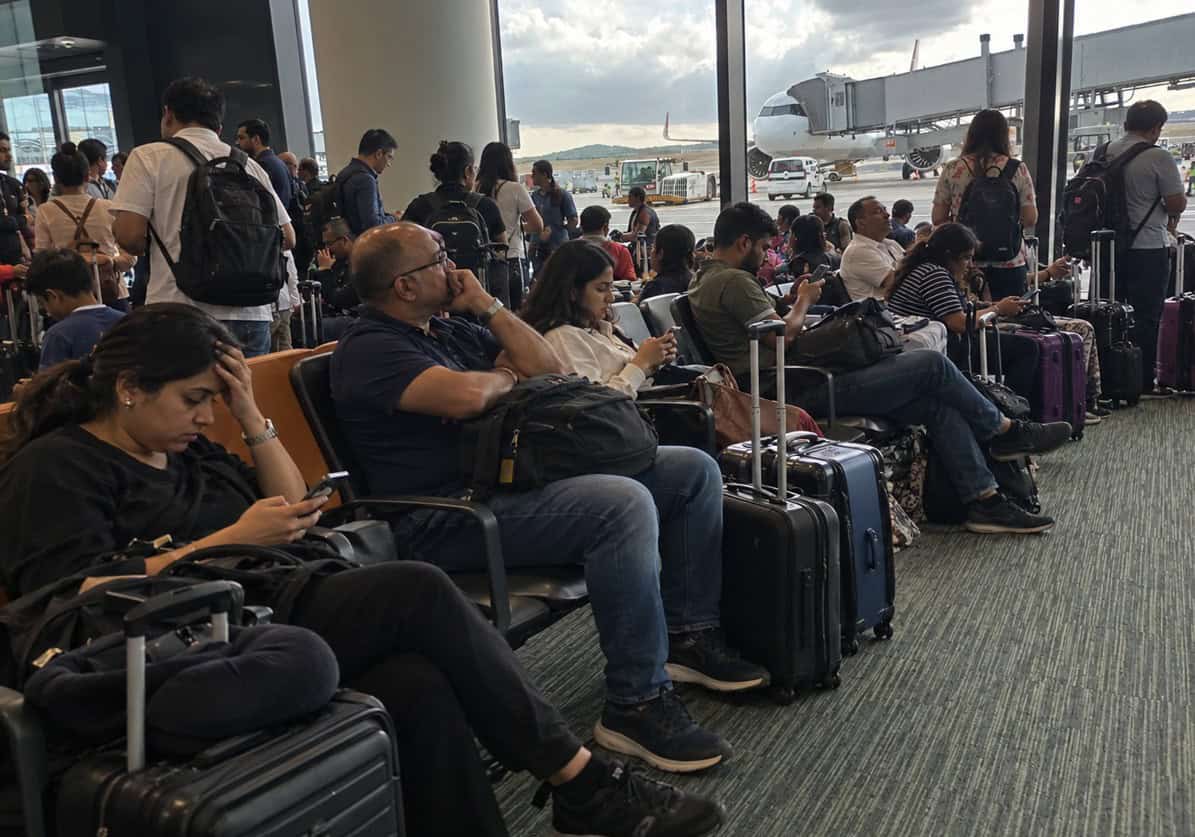
Saudi Arabia’s Riyadh Air routes are expanding across Europe and Asia, but a serious disruption at Riyadh’s main airport has complicated the country’s aviation ambitions. Official Saudi figures show 122.6 million domestic and inbound tourist trips in 2025, alongside SAR 303.7 billion in spending. Meanwhile, Qatar, the United Arab Emirates, Oman and Bahrain are pursuing different approaches to visitor growth. Government data also reveal changing patterns in leisure, domestic travel and regional mobility. As of 24 October 2026, the central question is not simply how many routes open, but whether tourism infrastructure can deliver reliable connections and sustained economic benefits.
Saudi Arabia’s Aviation Expansion Meets a New Test in October 2026
Saudi Arabia is developing a new aviation and tourism model centred on international connectivity, domestic destination development, hospitality investment and economic diversification. The introduction of Riyadh Air forms an important part of that strategy.
Advertisement
Advertisement
However, the developments of October 2026 demonstrate why airline expansion and operational reliability must be assessed separately.
On 12 October, Saudi Arabia’s General Authority of Civil Aviation (GACA) announced an extension of the suspension of operations at King Khalid International Airport in Riyadh. The decision followed attacks affecting airport infrastructure and the need to complete safety assessments.
Advertisement
Advertisement
The disruption has consequences for an airline established specifically to make Riyadh a major international gateway.
The Saudi Public Investment Fund (PIF), which owns Riyadh Air, has set a target of connecting the capital with more than 100 destinations by 2030. Its strategy links the development of a new national carrier to broader investment in tourism, aviation technology and transport infrastructure.
Advertisement
Advertisement
Yet an expanding route map cannot, by itself, establish a reliable international hub. Airports must remain operational, passengers must be able to connect between flights, and airlines need dependable schedules.
The situation illustrates an important distinction within Saudi Arabia’s tourism transformation: new routes demonstrate increasing planned connectivity, while airport performance determines how effectively that connectivity can serve passengers.
Advertisement
Advertisement
For tourism businesses, the distinction affects booking confidence, hotel demand, travel distribution and the planning of future international services.
Riyadh Air Routes Expand Across Europe, Asia and the Middle East
The airline’s first major network expansion
Riyadh Air began its latest phase of commercial expansion in June 2026, following the arrival of its first custom-built Boeing 787-9 Dreamliner aircraft.
According to a 9 June announcement from the Public Investment Fund, the carrier took delivery of three aircraft, representing the first arrivals from a planned fleet of 72 Dreamliners.
It opened ticket sales for Cairo, Dubai, Jeddah, Madrid and Manchester, adding those destinations to its existing London offering.
Advertisement
Advertisement
The network was developed to serve several distinct markets: international business travel, domestic transport, tourism, family visits and journeys connecting Europe with Asia through Saudi Arabia.
Riyadh Air’s expansion is particularly significant because it adds capacity to routes that already have established economic or social connections with Saudi Arabia.
London and Madrid provide access to major European business and tourism markets. Cairo serves an important regional corridor, while Jeddah supports domestic movement between two major Saudi cities.
Dubai connects Riyadh with an established Gulf aviation and commercial centre.
Manchester offers another United Kingdom gateway, extending the carrier’s European reach beyond London.
Officially announced route developments in 2026
The following destinations are supported by official Saudi Press Agency reporting, PIF announcements or statements from the publicly owned carrier.
Advertisement
Advertisement
| Destination | Market | Announced service commencement |
|---|---|---|
| London Heathrow | United Kingdom | 10 June 2026 on the new Dreamliner fleet |
| Jeddah | Saudi Arabia | 14 June 2026 |
| Dubai | United Arab Emirates | 18 June 2026 |
| Cairo | Egypt | 25 June 2026 |
| Málaga | Spain | 14 July–8 September 2026, seasonal |
| Madrid | Spain | 17 July 2026 |
| Manchester | United Kingdom | 23 July 2026 |
| Kuala Lumpur | Malaysia | 30 July 2026 |
| Mumbai | India | 4 August 2026 |
| Dhaka | Bangladesh | August 2026 |
| Islamabad | Pakistan | 14 August 2026 |
| Lahore | Pakistan | 18 August 2026 |
| Bangkok | Thailand | 2 September 2026 |
| Manila | Philippines | 9 September 2026 |
| Jakarta | Indonesia | 16 November 2026, scheduled |
| Milan | Italy | 16 December 2026, scheduled |
Sources: Saudi Press Agency, Public Investment Fund and official Riyadh Air announcements. Dates represent announced commencement schedules, not a guarantee of uninterrupted operations as of 24 October 2026.
Jakarta and Milan extend the planned network
On 5 October 2026, Riyadh Air announced ticket sales for three weekly services between Riyadh and Jakarta, scheduled to begin on 16 November.
Jakarta became the airline’s 16th destination offered for sale, according to its announcement.
The route is designed to extend its Southeast Asian network, already supported by services announced to Kuala Lumpur, Bangkok and Manila.
A separate announcement on 22 September confirmed that ticket sales had opened for Milan Malpensa. Four weekly flights were scheduled to begin on 16 December 2026.
These developments show a network being assembled through a combination of European cities, Gulf destinations, domestic routes and Asian markets.
Advertisement
Advertisement
However, the 16-destination figure should not be interpreted as 16 routes operating continuously on 24 October. It includes future services, while Málaga was announced as a seasonal route ending in September.
Why route selection matters
The individual markets reveal how the airline is being positioned.
Mumbai, Dhaka, Islamabad, Lahore and Manila serve countries with established employment, family and commercial connections to Saudi Arabia.
Bangkok, Kuala Lumpur and Jakarta add Southeast Asian markets with potential relevance to inbound and outbound leisure travel.
European destinations support corporate travel and tourism flows in both directions.
These different markets can support a more diversified passenger base than an airline dependent on only one type of traveller.
Advertisement
Advertisement
Nevertheless, official route announcements do not establish how many passengers have travelled, the airline’s load factors or the financial performance of individual services. Those outcomes require separate operational evidence.
October Airport Disruption Changes the Immediate Travel Outlook
GACA extends operational suspension at Riyadh airport
The most immediate development affecting Riyadh Air is the interruption of operations at its principal hub.
Official Saudi reporting confirms that King Khalid International Airport was affected by attacks during October.
A GACA statement published through the Saudi Press Agency on 12 October extended the suspension of operational activities while authorities assessed infrastructure safety and operational readiness.
The authority identified safety verification as the basis for the continued suspension.
The aviation consequences are substantial because the airport is central to Riyadh Air’s planned connecting network.
Advertisement
Advertisement
An airport disruption can affect more than flights arriving or departing from the immediate location. Connecting itineraries, baggage transfers, aircraft rotations, crew schedules and onward travel arrangements may also be affected.
Flight cancellations and Al Qassim arrangements
Riyadh Air’s official passenger advisory identifies multiple cancellations for 24 October, covering services involving Jeddah, Dubai, Cairo, London, Manchester, Lahore, Mumbai, Dhaka, Manila, Islamabad, Bangkok and Kuala Lumpur.
The carrier also identifies cancellations affecting selected return services on 25 October.
For travel from 25 October, it has published arrangements under which selected services involving Cairo, London Heathrow, Dhaka, Islamabad, Lahore and Jeddah are to operate through Al Qassim Airport instead of King Khalid International Airport.
The alternative arrangements include a complimentary coach service between Riyadh and Al Qassim, subject to the carrier’s published instructions.
Passengers should verify the actual departure airport and confirmed itinerary before travelling. A previously announced direct Riyadh service should not automatically be assumed to be departing from Riyadh.
Advertisement
Advertisement
Official travel advice remains significant
The United Kingdom’s Foreign, Commonwealth and Development Office updated its Saudi Arabia travel advice on 21 October 2026.
It advises against all but essential travel to Saudi Arabia, with stronger restrictions applying to specific areas. It also advises British nationals to stay away from King Khalid International Airport following the October incident.
The advisory identifies continuing risks to aviation infrastructure and possible flight cancellations.
This guidance applies to British travellers. Travellers of other nationalities should consult their own governments’ official advisories.
For the tourism industry, the developments underline the importance of travel safety, airport resilience and passenger information alongside network expansion.
As of the reporting cut-off, it would be inaccurate to describe Riyadh Air’s entire announced route network as operating normally.
Advertisement
Advertisement
Saudi Arabia Records 122.6 Million Domestic and Inbound Tourist Trips in 2025
Official tourism figures establish the economic scale
The strongest evidence of Saudi Arabia’s tourism development comes from the Ministry of Tourism’s 2025 Annual Statistical Report, released in June 2026.
The official figures show 122.6 million domestic and inbound tourist trips during 2025, approximately 5.8% more than in 2024.
Combined domestic and inbound tourism spending reached SAR 303.7 billion, an increase of approximately 7%.
The figures establish the size of tourism demand within the Kingdom, but also reveal how much activity depends on domestic rather than international visitors.
| Saudi tourism indicator | 2025 result |
|---|---|
| Total domestic and inbound tourists | 122.6 million |
| Total tourism spending | SAR 303.7 billion |
| Inbound tourists | 29.3 million |
| Inbound tourism spending | SAR 176.6 billion |
| Domestic tourists | 93.3 million |
| Domestic tourism spending | SAR 127.1 billion |
| Growth in combined tourist volume | 5.8% |
| Growth in combined spending | 7.0% |
Source: Saudi Ministry of Tourism’s 2025 statistical reporting, published through the Ministry and Saudi Press Agency in June 2026. Figures are rounded.
International visitors contribute a larger spending share
Although domestic tourism accounts for most of the Kingdom’s tourist volume, inbound visitors contribute a larger portion of spending.
Advertisement
Advertisement
The Ministry recorded SAR 176.6 billion in inbound tourism spending compared with SAR 127.1 billion generated by domestic tourists.
That means international spending accounted for approximately 58% of the combined total, based on the published figures.
This distinction matters when evaluating new international air routes.
A new route can contribute to tourism revenue when it brings visitors who purchase accommodation, transport, food, attractions and other services within Saudi Arabia.
However, it cannot be assumed that every international passenger is an inbound tourist. Some are connecting travellers, residents returning home or passengers travelling for other purposes.
Inbound arrivals require a more careful interpretation
Saudi Arabia recorded approximately 30 million inbound tourists in 2024, compared with 29.3 million in 2025.
Advertisement
Advertisement
The annual inbound total therefore did not increase in 2025, even though combined domestic and inbound tourism volume grew.
This is important for interpreting official claims about tourism expansion.
The growth in the overall market was supported particularly by domestic demand. It cannot be attributed entirely to new international arrivals.
The latest statistics nevertheless show a substantially larger tourism economy, supported by visitor spending and a more diverse range of travel purposes.
Changing Saudi Travel Habits Show Stronger Demand Beyond Traditional Tourism Patterns
Non-religious travel accounts for a growing share
One of the clearest structural developments concerns the purpose of international visits.
According to the Ministry of Tourism’s 2025 statistical report, non-religious purposes accounted for approximately 52% of inbound overnight visitors’ trips.
Advertisement
Advertisement
The equivalent share was 44% in 2019.
This eight-percentage-point difference indicates a shift in the composition of international tourism.
Religious travel remains fundamental to Saudi Arabia’s visitor economy. However, other purposes, including business and leisure, now represent a larger share of inbound overnight trips than they did before the pandemic.
The figures do not mean religious visitor volumes have declined by the same proportion. They measure the distribution of purposes rather than the absolute number travelling in each category.
For airlines, a more varied visitor base can create opportunities across different travel periods, destinations and customer segments.
For hotels and destination operators, it reinforces the importance of offerings beyond traditional pilgrimage-related services.
Advertisement
Advertisement
Domestic tourism rises 16% in the first quarter of 2026
The Ministry’s preliminary first-quarter 2026 results provide additional evidence of changing demand.
Domestic tourism reached approximately 28.9 million tourists, an estimated 16% increase compared with the corresponding period in 2025.
Domestic visitor spending reached SAR 34.7 billion, almost 8% higher year on year.
When inbound tourism was included, the Kingdom recorded approximately 37.2 million tourists and SAR 82.7 billion in total tourism spending for the quarter.
The figures indicate that domestic travel continued to provide substantial demand during a period of regional uncertainty.
Saudi Arabia’s tourism authorities also reported considerable activity during the Ramadan and Eid school holiday period.
Advertisement
Advertisement
Domestic tourism during that holiday period reached approximately 10 million tourists, up 14%, with spending of SAR 10.2 billion.
The Ministry identified the Red Sea, Jeddah and other destinations among the areas supported by domestic leisure campaigns.
Accommodation occupancy highlights regional differences
National accommodation occupancy reached approximately 59% during the first quarter of 2026, according to preliminary Ministry data.
However, individual destinations recorded substantially different levels.
Madinah achieved approximately 82% occupancy, while Makkah recorded 60% and Jeddah 59%.
The differences illustrate why a single national occupancy figure cannot fully describe tourism demand across Saudi Arabia.
Advertisement
Advertisement
Travel linked to religious activity, urban business demand and leisure destinations follows different patterns.
For investors and tourism operators, the location and timing of demand can therefore be as important as headline visitor totals.
Government Aviation Strategy Connects Tourism With Economic Diversification
Saudi Arabia targets 330 million annual air passengers
The development of Riyadh Air sits within a much larger national aviation strategy.
Saudi Arabia’s General Authority of Civil Aviation has established a long-term ambition to handle 330 million air passengers annually by 2030.
The national aviation strategy also targets connectivity with more than 250 international destinations through 29 airports.
These figures are policy objectives, not passenger volumes or route numbers already achieved.
Advertisement
Advertisement
They illustrate the scale of investment being directed towards air transport, airport facilities and supporting infrastructure.
The Public Investment Fund is an important participant in this expansion, particularly through Riyadh Air and King Salman International Airport.
The proposed airport development in Riyadh is intended to improve passenger capacity and strengthen the capital’s position as a connecting hub.
PIF’s official project description identifies a longer-term airport capacity objective of 185 million passengers annually by 2050.
The project also includes commercial, logistics and other supporting facilities.
Infrastructure development extends beyond Riyadh
Saudi Arabia is also strengthening connections through regional airports.
Advertisement
Advertisement
Official aviation reporting shows that Airports Cluster 2, which manages 22 airports, handled nearly five million passengers during the first quarter of 2026.
Passenger traffic increased by approximately 7% compared with the corresponding period in 2025.
The number of flights exceeded 37,000, an increase of 9%.
New connections included Qassim–Madinah, Jazan–Addis Ababa, Hail–Doha and Taif–Muscat.
These routes illustrate the importance of connecting secondary destinations directly with international markets.
Aviation growth does not necessarily need to pass through Riyadh or Jeddah.
Advertisement
Advertisement
For regional tourism businesses, direct flights can reduce reliance on connections through larger airports and improve access to destinations outside major metropolitan areas.
Saudi Airport Traffic Reaches 140.9 Million Passengers in 2025
Official statistics provide an additional measure of the aviation industry’s scale.
Saudi Arabia’s General Authority for Statistics reported that the Kingdom’s airports handled 140.9 million passengers during 2025.
The figure represented a 9.6% increase compared with 2024.
International passenger movements reached 75.8 million, up 9.4%, while domestic passenger movements totalled 65.1 million, up 9.8%.
The country’s busiest airports were:
Advertisement
Advertisement
| Airport | Passengers in 2025 |
|---|---|
| King Abdulaziz International Airport, Jeddah | 53.5 million |
| King Khalid International Airport, Riyadh | 40.8 million |
| King Fahd International Airport, Dammam | 13.7 million |
| All Saudi airports combined | 140.9 million |
Source: General Authority for Statistics, Air Transport Statistics Publication 2025, released 18 May 2026.
These figures show that Jeddah remained the Kingdom’s largest airport by passenger traffic in 2025.
Riyadh nevertheless handled more than 40 million passengers, demonstrating the scale of its established aviation operations before the October 2026 disruption.
The national statistics also show that Saudi Arabia’s aviation development is supported by substantial domestic activity.
This matters because international route growth is only one component of the industry’s economic performance.
Domestic flights connect residents with employment, education, commercial services, events and tourism destinations.
Advertisement
Advertisement
An effective national aviation strategy must therefore accommodate international visitors while supporting residents travelling within the Kingdom.
Tourism Investment Expands Beyond Airline Capacity
Hospitality projects create additional opportunities
Saudi Arabia’s tourism development depends on accommodation and destination infrastructure as well as aircraft.
In June 2026, the Ministry of Tourism published a report examining international investment in Saudi hospitality.
According to the Ministry, more than 50 international hospitality brands were expanding their presence in the Kingdom.
The report described tourism investments exceeding US$120 billion and a development pipeline expected to add more than 200,000 accommodation keys by 2030.
Approximately half of the additional keys were expected to be delivered by the private sector.
Advertisement
Advertisement
These projections illustrate the connection between aviation capacity and long-term accommodation investment.
More hotel rooms increase the potential capacity to receive visitors, but commercial performance depends on demand, occupancy, room rates and operating costs.
Air connections can improve access to developing destinations. They do not automatically guarantee profitable accommodation operations.
Tourism employment reaches approximately 1.03 million
The Ministry’s 2025 annual statistics also identified approximately 1.03 million jobs in tourism industries.
The report stated that Saudi women accounted for around 47% of Saudi employees working in tourism characteristic activities.
The corresponding share was approximately 5% at the end of 2018.
Advertisement
Advertisement
This represents a notable change in the composition of Saudi employment within the industry, although it should not be interpreted as the female share of the entire tourism workforce.
Employment is a central economic measure because tourism activity supports services beyond hotels and airlines.
Visitor demand can generate business for restaurants, transport operators, attractions, event organisers and local suppliers.
However, long-term economic impact should be measured through employment outcomes, business revenue and productivity rather than the number of announced projects alone.
Qatar Develops a Different Tourism Model as Visitor Numbers Reach 2.614 Million in 2026
September statistics provide the latest confirmed picture
Qatar offers an important comparison with Saudi Arabia.
Its tourism strategy combines an established international aviation hub with hotels, entertainment, cultural institutions, business events and regional travel.
Advertisement
Advertisement
According to figures released by Qatar Tourism and reported by the state-owned Qatar News Agency on 6 October 2026, the country received 2.614 million visitors during the first nine months of the year.
September arrivals totalled approximately 276,000, representing a 1.1% increase compared with the same month in 2025.
The figures provide a more recent assessment than the August data published earlier in September.
Gulf visitors remain Qatar’s largest source market
The January–September 2026 breakdown demonstrates the importance of regional travel.
| Visitor source region | January–September 2026 |
|---|---|
| Gulf Cooperation Council countries | 1.069 million |
| Asia and Oceania | 548,000 |
| Europe | 538,000 |
| Americas | 190,000 |
| Other Arab countries | 184,000 |
| Other African countries | 84,000 |
| Total | 2.614 million |
Source: Qatar Tourism, reported by Qatar News Agency on 6 October 2026. Regional totals are rounded.
GCC countries accounted for approximately 40.9% of Qatar’s visitors during the period.
Advertisement
Advertisement
Asia and Oceania represented about 21%, while European markets contributed 20.6%.
The data indicate that Qatar depends on a mixture of regional and long-distance visitor markets.
For the tourism industry, the strength of the GCC segment is particularly relevant to short holidays, family visits and cross-border travel.
However, the official regional figures do not identify the exact purpose of every visit. They therefore cannot establish how many arrivals were motivated by leisure rather than business or family travel.
Qatar recorded 5.1 million international visitors in 2025
The 2026 figures follow a year of substantial tourism activity.
Qatar Tourism reported 5.1 million international visitors in 2025, representing 3.7% annual growth.
Advertisement
Advertisement
The official annual report also showed that 61% of visitors arrived by air, 32% by land and 7% by sea.
Hotel room nights sold reached 10.84 million, an increase of 8.6%.
The country’s average accommodation occupancy reached approximately 71.3%, while total accommodation revenue reached QAR 8.3 billion.
These figures demonstrate why Qatar’s tourism economy cannot be assessed through airport passenger volumes alone.
Land arrivals are significant, while accommodation activity provides another measure of how visitors contribute to the local economy.
The annual 2025 total and the nine-month 2026 figure represent different reporting periods and should not be directly compared as though they covered identical timeframes.
Advertisement
Advertisement
Qatar Connects Aviation, Events and Digital Tourism Services
Hamad International Airport handled 54.3 million passengers in 2025
Hamad International Airport recorded approximately 54.3 million passengers during 2025, according to figures published through Qatar News Agency in January 2026.
Passenger traffic increased by 3% compared with the previous year.
Aircraft movements reached 282,975, while air cargo volumes totalled approximately 2.59 million tonnes.
The airport worked with 57 airline partners.
Importantly, traffic travelling to or from Doha reached approximately 13.5 million passengers, up 5.4%.
This distinction between overall passenger movements and Doha-originating or terminating passengers is important.
Advertisement
Advertisement
An international hub may handle large numbers of connecting passengers who never enter the destination as tourists.
Airport traffic therefore provides an indication of aviation activity, but it cannot be treated as a substitute for tourism arrival statistics.
Qatar introduces a tourism digital transformation roadmap
In November 2025, Qatar’s Ministry of Communications and Information Technology and Qatar Tourism announced a tourism digital transformation roadmap.
The programme identified more than 39 strategic digital initiatives.
These included plans for an integrated visitor application and services using artificial intelligence and augmented reality.
A dedicated Tourism Digital Transformation Office was established to support implementation.
Advertisement
Advertisement
Qatar Tourism’s September 2026 statements also highlighted digital destination planning and personalised visitor services.
Visit Qatar reported that its application had surpassed 230,000 users in 2026, compared with approximately 105,000 in 2025.
The tourism authority was also developing a unified digital ticketing platform for events and visitor experiences.
These initiatives show how Qatar is using technology to connect destination marketing with visitor services.
The commercial objective is not simply to attract someone to the country, but to help that visitor discover, book and participate in activities during the trip.
Advertisement
