
Spain is Seeing More Hotel Nights as Hotel Prices Climb 6.7% and Put New Pressure on Travel Budgets

Published
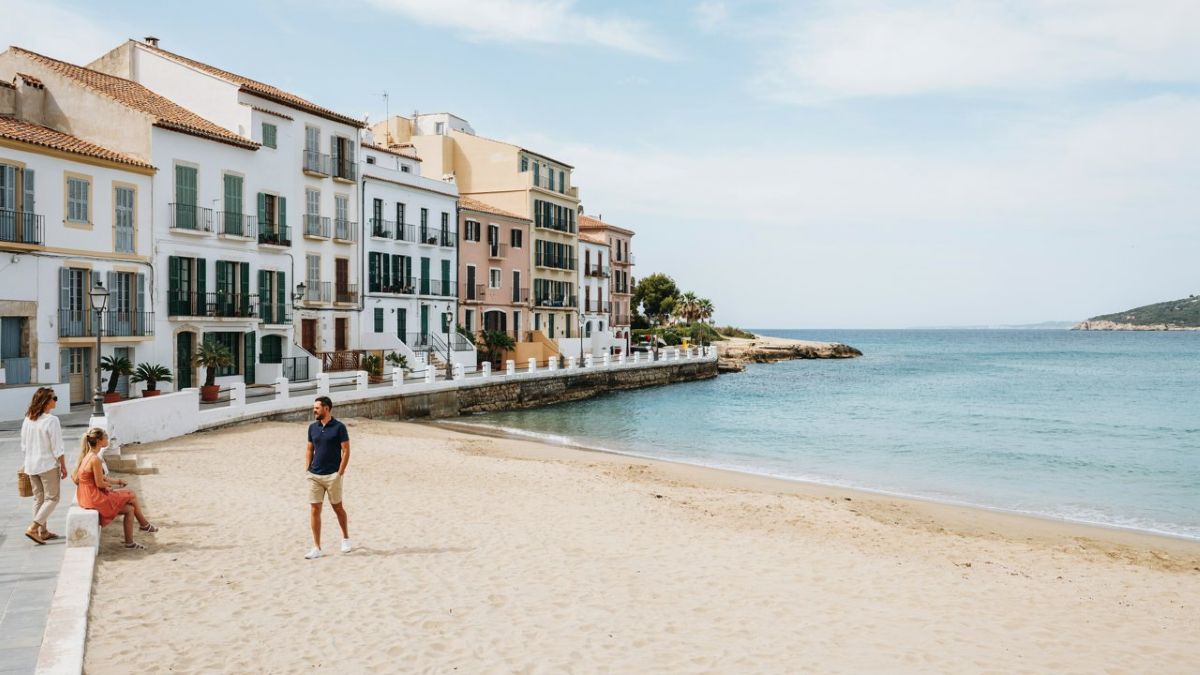
Spain’s Hotel Prices Climb 6.7% in September 2026 compared with a year earlier, while hotel overnight stays exceeded 40.1 million. National statistical figures published on 23 October show overseas demand strengthening as domestic stays declined. Based on hotel survey results, the provisional findings give holidaymakers and accommodation businesses a clearer picture of pricing, occupancy and room income. They signal stronger revenue growth than growth in guest-nights, but do not establish the cost of any individual booking or require travellers to change existing plans.
Official Evidence Behind Spain’s Hotel Performance
This is principally an accommodation and tourism performance story. The table separates its main components using verified September 2026 figures. All annual changes compare with September 2025. The story shares are an editorial assessment, not official statistics, economic contributions or measured effects on travellers; they total exactly 100%.
Advertisement
Advertisement
| News Component | Share of Story | Officially Verified Finding | Relevance to Travellers | Official Source Link |
|---|---|---|---|---|
| Pricing and room revenue | 35% | Price index +6.7%; daily occupied-room revenue €141.60, +7.4%; available-room revenue €110.50, +7.7% | Explains accommodation pricing and revenue trends | Official hotel release |
| Hotel demand | 30% | Over 40.1 million nights, +1.7%; resident nights −1.9%; non-resident nights +3.2% | Separates domestic and overseas demand | Official hotel release |
| Destination performance | 25% | Balearics: 32.5% of non-resident nights; Catalonia: 18.4%; Canaries: 17.7% | Identifies concentrations of overseas hotel demand | Official hotel release |
| Capacity use | 10% | Bed occupancy: 67.0% overall and 72.6% at weekends | Describes use of hotel sleeping capacity | Official hotel release |
The evidence confirms that hotels received higher average room revenue while accommodating more guest-nights overall. It also identifies differences between domestic and overseas demand. The release announces no visa, passport, border-entry or transport changes. Its scope is hotel activity, rather than the complete visitor economy or a new charge imposed on holidaymakers. The published series covers hotel establishments across Spain. It does not measure the performance of all holiday apartments, campsites or other accommodation, which need separate statistical evidence.
Understanding the Context Behind the Development
The immediate news development was the publication of September’s provisional results on 23 October 2026. Earlier figures, released on 22 September, showed August overnight growth of 1.4% and annual accommodation price growth of 6.3%. September’s corresponding rates reached 1.7% and 6.7%. Across January to September, nights increased by 1.5%, comprising resident growth of 0.1% and non-resident growth of 2.2%. This chronology establishes how the reported indicators changed; it does not identify a single cause. The acceleration in annual price growth was 0.4 percentage points, while annual growth in nights increased by 0.3 percentage points. Neither comparison measures a monthly increase in the price of the same room.
Advertisement
Advertisement
The significance lies in the contrast between stronger revenue indicators and modest growth in nights. Accommodation businesses can use the market breakdowns when assessing sales and room allocation, while travellers gain context for comparing offers. These are analytical uses of the data, not confirmed business responses. The figures do not prove that rising prices caused domestic demand to weaken. They also provide no basis for attributing the results to new routes, infrastructure investment or immigration policy. For destinations, the distinction between visitor volume and accommodation income matters when interpreting tourism performance. More revenue per room is not equivalent to a proportional increase in the number of visitors using local services.
Hotel Prices Climb 6.7% as Demand Growth Remains Modest
Hotel Prices varied considerably across Spain. Ceuta recorded the largest annual regional increase, at 13.7%, and Aragón the smallest, at 2.4%. One silver-star establishments recorded the strongest category increase, at 9.9%. Marbella led individual tourist locations for daily room revenue, with €286.60 per occupied room and €231.20 per available room. Nationally, five-star equivalents were €332.80 and €257.90; four-star figures were €144.30 and €122.80; three-star figures were €115.60 and €92.30.
Advertisement
Advertisement
Average daily rate, or ADR, measures accommodation revenue per occupied room. RevPAR spreads accommodation revenue across available rooms, including unsold capacity. Both exclude restaurant, minibar, spa, gym and event income, and neither establishes net profit. National bed occupancy rose 0.3% annually to 67%, while weekend occupancy increased 0.4% to 72.6%. The weekend gap was therefore 5.6 percentage points. Bed occupancy and room occupancy use different units, so they cannot be substituted for each other. The price index also reflects different customer types, including businesses, travel intermediaries and direct guests. It measures amounts received by hotels across those channels, rather than the advertised price of one standard consumer booking.
Overseas Nights Concentrate in Spain’s Leading Destinations
The Balearics, Catalonia and the Canaries together accounted for 68.6% of non-resident nights, calculated from their published shares. Residents favoured Andalusia, Catalonia and the Valencian Community, representing 22.4%, 13.8% and 12.8% of domestic nights. Mallorca exceeded 7.3 million nights, while Madrid, Barcelona and Calvià led tourist locations by volume. The Balearics recorded 82.6% bed occupancy. Palma-Calvià reached 85.3% overall and 88.8% at weekends; Llucmajor led individual locations with 90.1% and 94.2%. The three leading domestic destinations together held 49% of resident nights. Their combined share was lower than the concentration of non-resident nights in their three leading regions. These differences make destination-specific comparisons more useful than national averages.
The UK supplied 27.2% of non-resident hotel nights, followed by Germany with 17.4%, France with 6.9%, the USA with 4.7% and the Netherlands with 4.6%. Together, the UK and Germany represented 44.6%; the five markets accounted for 60.8%. These calculated shares show Spain’s international hotel-demand mix without ranking it against other countries. Travellers are classified by residence, not passport nationality. Guest-nights also differ from visitor numbers: two guests staying three nights generate six nights.
What Travellers Should Check as Hotel Prices Climb 6.7%
For holidaymakers comparing Hotel Prices, the immediate task is to assess actual accommodation offers. National averages combine locations, categories and sales channels, so they cannot determine an individual trip’s bill. The statistical release provides no instruction to cancel or rebook. The practical checks below help distinguish historical performance figures from the terms of a current booking. A hotel’s published offer can include services excluded from the statistical revenue measures. That makes a comparison of complete booking conditions particularly important.
- Check the period: September statistics do not quote rates for future travel dates.
- Compare equivalent offers: Match room type, dates and included services before comparing totals.
- Separate accommodation from extras: Meals, transfers and other spending fall outside room-revenue measures.
- Check local conditions: A national occupancy average cannot establish availability at a particular property.
These figures support careful comparison and continued monitoring, rather than an immediate change of itinerary. October’s hotel results are scheduled for 23 November 2026, followed by November’s results on 22 December 2026. Those releases will show how demand, occupancy and revenue subsequently developed; they do not promise further price increases. September’s results remain provisional, and the latest publication revised September 2025 price and revenue data. Future comparisons should use the current official series.
Hotel Prices and the Next Test for Spain’s Tourism Market
As Hotel Prices Climb 6.7%, Spain’s September results show stronger room revenue alongside modest growth in guest-nights. Overseas demand increased while domestic stays declined, with clear differences between destinations and accommodation categories. These findings help travellers compare offers and businesses assess their markets, but they do not establish profits or predict future rates. The scheduled November release will provide October evidence, allowing the pattern to be reassessed. Until then, booking decisions should reflect actual prices and conditions. Continued attention to official updates will provide a firm basis for understanding Spain’s hotel market than assumptions drawn from one reporting month.
Advertisement
