
Equatorial Guinea Joins Nigeria to Boost Tourism as Grand Hotel Djibloho Drives Corporate Travel Growth

Updated
Published
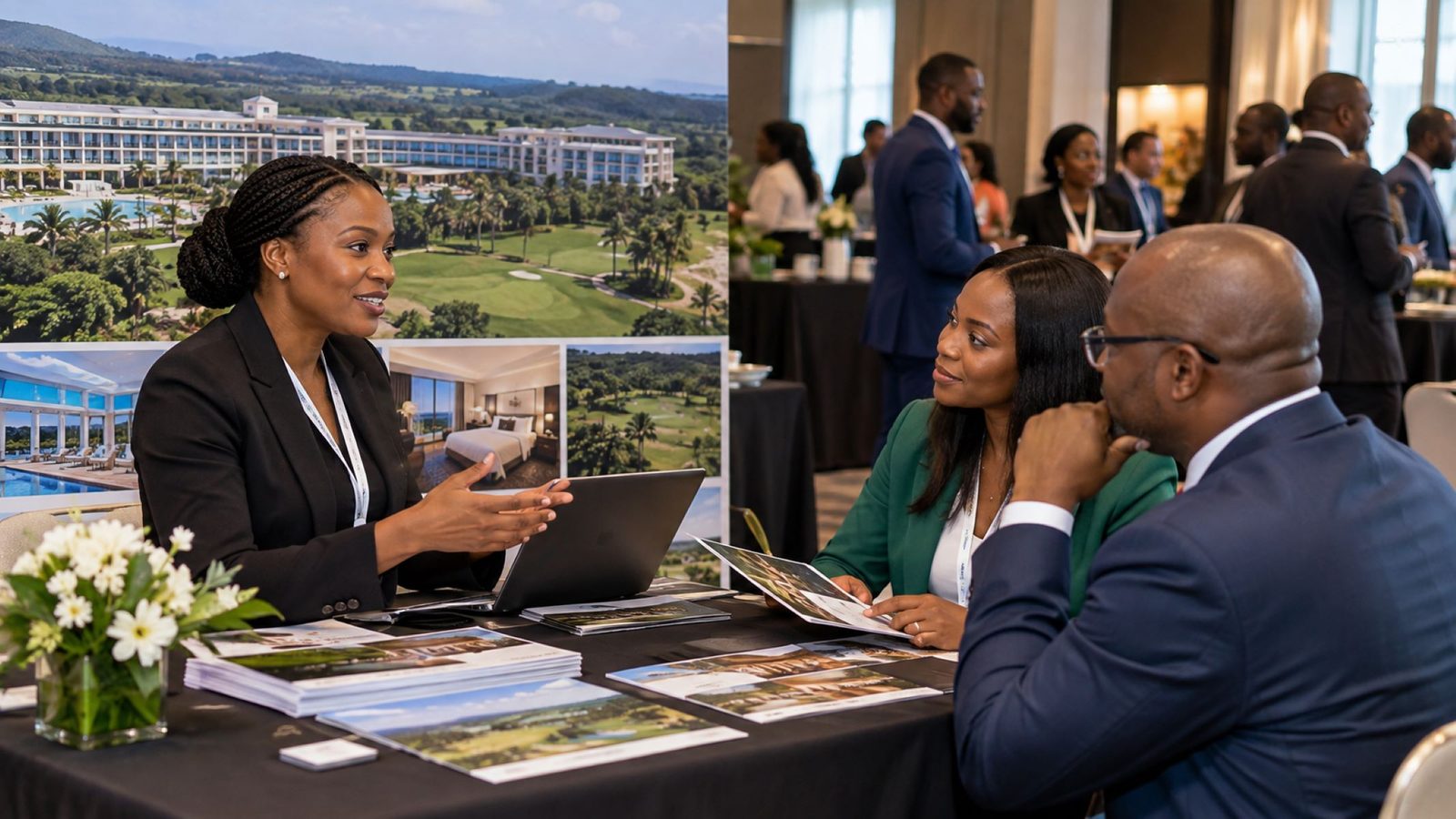
Equatorial Guinea joins Nigeria in strengthening regional MICE tourism links as Grand Hotel Djibloho uses its corporate events infrastructure to drive greater corporate travel growth between the two African markets. The hotel’s participation in the West Africa Showcase in Lagos places meetings, incentive travel, conferences and business events at the centre of this connection. Its combination of accommodation, congress facilities, wellness, golf, dining and leisure creates a broader proposition for corporate groups. Global tourism impact: stronger regional MICE links could diversify travel demand, support longer business stays and give companies another destination option within Africa’s developing meetings and events landscape.
Why Is Equatorial Guinea MICE Tourism Gaining Greater Visibility?
Equatorial Guinea is developing tourism alongside its traditional economic sectors, and business events provide one route towards attracting higher-value international visitors. The country’s government created a National Tourism Committee under Presidential Decree 143/2024 to coordinate public-sector activities affecting tourism. It has also been assessing tourism infrastructure and attractions across the continental region as part of destination planning. Against that backdrop, Grand Hotel Djibloho gives Ciudad de la Paz a sizeable hospitality platform capable of combining conferences with accommodation and leisure. Its presence at the Lagos showcase consequently connects a national tourism-development direction with a specific commercial effort aimed at Nigeria’s corporate market.
Advertisement
Advertisement
- Equatorial Guinea is pursuing wider tourism development.
- MICE travel can complement leisure tourism.
- Ciudad de la Paz provides a continental destination base.
- Tourism infrastructure is being assessed and developed nationally.
- Nigeria represents a practical regional corporate source market.
| Equatorial Guinea MICE factor | Relevance to travel |
|---|---|
| Ciudad de la Paz | Destination for corporate groups |
| Tourism planning | Supports destination development |
| Congress infrastructure | Enables larger business gatherings |
| Nature setting | Adds incentive and leisure potential |
| Nigerian outreach | Creates regional market visibility |
How Does Grand Hotel Djibloho Support Corporate Travel Growth?
Grand Hotel Djibloho has infrastructure extending considerably beyond standard business accommodation. Preferred Hotels & Resorts lists 452 rooms, suites and villas, nine restaurants and bars, an 18-hole golf course and a wellness centre. The hotel’s own current website describes a congress centre capable of accommodating up to 1,000 guests, including an amphitheatre auditorium, ballroom and adaptable meeting rooms. A specialist Preferred Hotels meetings listing gives an ideal group size of 600 and maximum group size of 800, indicating substantial group-event capability, although these capacity figures refer to different meeting contexts. Together, these facilities support conferences, retreats, incentives and corporate programmes.
- Preferred Hotels lists 452 rooms, suites and villas.
- The property has substantial dedicated event infrastructure.
- Its facilities can serve large corporate groups.
- Golf and wellness broaden incentive-trip programmes.
- Dining and leisure can keep activities within the resort environment.
| Hotel feature | MICE travel relevance |
|---|---|
| 452 rooms, suites and villas | Group accommodation |
| Congress centre | Conferences and meetings |
| Up to 1,000-person stated capacity | Large events |
| 18-hole golf course | Incentives and networking |
| Wellness centre | Corporate retreats |
| Nine restaurants and bars | Group dining and hospitality |
Why Does Nigeria Matter to Grand Hotel Djibloho’s West African Strategy?
Nigeria is central to this particular expansion because Lagos hosted the West Africa Showcase on 30 September 2026. The event brought Grand Hotel Djibloho into contact with companies, agencies and professionals involved in corporate tourism and event planning. Rather than simply promoting hotel rooms, the property presented Equatorial Guinea as a location for executive meetings, strategic sessions, corporate celebrations, incentives and team-building programmes. That distinction matters. Nigeria becomes a source market for potential business travellers, while Equatorial Guinea becomes the destination receiving those groups. The relationship therefore has the potential to generate travel demand built around organised corporate programmes rather than conventional holiday traffic.
Advertisement
Advertisement
- Lagos hosted the West Africa Showcase.
- Nigerian travel professionals were directly exposed to the product.
- Corporate groups are the principal target.
- Incentive travel expands the proposition beyond meetings.
- Partnerships could generate future organised group movements.
| Nigeria connection | Potential effect |
|---|---|
| Companies | Corporate meeting demand |
| Travel agencies | Destination distribution |
| Event planners | Conference opportunities |
| MICE specialists | Incentive programme development |
| Lagos marketplace | Greater destination awareness |
How Could Easier Entry Support Equatorial Guinea Business Travel?
International accessibility is particularly important for an emerging MICE destination. Equatorial Guinea introduced its online visa project in July 2023, reducing reliance on wholly offline application processes. Government figures published in April 2026 show that 28,479 online visas had been approved between July 2023 and March 2026. An earlier government review covering July 2023 to May 2025 identified 6,714 tourists and 11,931 business travellers associated with the online-visa programme. These figures do not represent Grand Hotel Djibloho bookings, but they demonstrate that business mobility already forms a significant component of the country’s digitally processed international travel demand.
- The online visa programme began in July 2023.
- Digital processing can simplify pre-travel administration.
- More than 28,000 visas had been approved by March 2026.
- Government reporting separately identifies business travellers.
- Entry facilitation is relevant to international MICE competitiveness.
| Official visa indicator | Reported figure |
|---|---|
| Online visa launch | July 2023 |
| Period in latest cited review | July 2023–March 2026 |
| Approved visas | 28,479 |
| Tourists in earlier review | 6,714 |
| Business travellers in earlier review | 11,931 |
What Makes Grand Hotel Djibloho Relevant Beyond Meetings and Conferences?
MICE tourism increasingly depends on what participants can do outside formal sessions. Grand Hotel Djibloho combines its meetings infrastructure with an 18-hole golf course, spa facilities, indoor heated pool, hammam, sauna, fitness facilities and outdoor activities. Its experience portfolio also includes cultural programmes, nature-based activities, cycling, birdwatching, forest trails and excursions. This creates opportunities to construct programmes where a morning conference can be followed by wellness, recreation or team activities. Such integration is particularly useful for incentive travel and executive retreats because accommodation, meetings and experiences can be packaged around the same stay rather than treating the conference venue purely as functional event space.
Advertisement
Advertisement
- Business events can be combined with leisure.
- Golf adds an established corporate networking activity.
- Wellness facilities strengthen retreat programmes.
- Cultural experiences can add destination identity.
- Nature activities differentiate the setting from urban convention hotels.
| Experience | Corporate travel application |
|---|---|
| Golf | Networking and incentives |
| Spa and wellness | Executive retreats |
| Cultural activities | Destination experiences |
| Forest activities | Team-building |
| Restaurants | Corporate hospitality |
How Is Equatorial Guinea Building a Broader Tourism Environment?
Grand Hotel Djibloho’s corporate positioning sits within broader efforts to improve Equatorial Guinea’s visitor economy. In July 2025, the country opened a tourism information office at Malabo International Airport. Tourism authorities have also worked on tourism signage, information offices and proposals connected with visitor services. Separately, the government has assessed attractions and infrastructure across the continental region with the objective of developing tourism products for domestic and international demand. These initiatives do not prove that MICE arrivals will increase. However, they indicate that destination development is taking place beyond individual hotels, an important consideration because conference travellers also depend on transport, visitor information, attractions and supporting tourism services.
- Visitor-information infrastructure has expanded.
- Tourism planning covers the continental region.
- Authorities are identifying potential tourism products.
- Destination services matter alongside hotel investment.
- MICE development requires a wider tourism ecosystem.
| Destination measure | Tourism relevance |
|---|---|
| Airport tourism office | Visitor information |
| Tourism signage planning | Destination navigation |
| Infrastructure assessment | Product development |
| Attraction identification | Leisure extensions |
| Tourism coordination | Sector organisation |
Why Could Ciudad de la Paz Become More Relevant to African MICE Travel?
Ciudad de la Paz gives this MICE proposition an unusual geographical identity. Grand Hotel Djibloho sits within Equatorial Guinea’s mainland rainforest environment rather than a conventional coastal business district. Preferred Hotels places the property around 40.7 kilometres from President Obiang Nguema International Airport, with an estimated road journey of approximately 45 minutes. The hotel therefore combines a relatively secluded setting with airport access and large-scale meetings infrastructure. This positioning can appeal to organisations seeking controlled corporate retreats, incentive programmes or conferences that combine work with nature. Its viability, however, will depend on practical considerations including air access, entry requirements, ground transport, cost and consistent service delivery.
Advertisement
Advertisement
- Ciudad de la Paz offers a distinctive rainforest setting.
- The resort has access to an international airport.
- Corporate groups can remain within one integrated property.
- Nature creates scope for incentive itineraries.
- Air connectivity remains crucial for regional expansion.
| Destination characteristic | MICE significance |
|---|---|
| Rainforest location | Differentiated setting |
| Airport access | International group movement |
| Integrated resort | Simplified programme planning |
| Meeting facilities | Business-event capability |
| Leisure activities | Longer and mixed-purpose stays |
What Travel and Tourism Impact Could the Nigeria–Equatorial Guinea MICE Link Create?
The immediate impact is principally a business-travel opportunity rather than confirmed tourism growth. The Lagos showcase creates a sales and partnership channel through which Nigerian companies, agencies and event planners can consider Equatorial Guinea for meetings and incentives. Successful conversion could generate demand across flights, airport transfers, hotel accommodation, catering, conference services, restaurants, golf, wellness and excursions. Longer programmes could be particularly valuable because MICE travellers often require multiple services during one organised itinerary. Importantly, no verified booking or visitor-volume forecast was supplied for the Lagos initiative. The responsible interpretation is therefore that the showcase expands market access and commercial potential rather than proving a measurable rise in arrivals.
- Nigeria can act as a corporate source market.
- Equatorial Guinea can capture destination spending.
- MICE programmes support several tourism services simultaneously.
- Incentive extensions can broaden visitor activity.
- Current evidence establishes opportunity, not guaranteed visitor growth.
| Travel segment | Potential impact |
|---|---|
| Airlines | Corporate passenger demand |
| Hotels | Group room nights |
| Ground transport | Transfers and organised mobility |
| Restaurants | Group and event dining |
| Event services | Meetings and conference spending |
| Leisure operators | Incentive and pre/post-event activities |
Conclusion
Equatorial Guinea joins Nigeria in building a clearer regional MICE tourism connection as Grand Hotel Djibloho uses its scale, meeting facilities and integrated resort experiences to pursue corporate travel growth. Lagos provides access to companies, agencies and event specialists capable of introducing another African destination into corporate travel planning. For Equatorial Guinea, the opportunity extends beyond conferences because meetings can connect accommodation with dining, golf, wellness, culture and nature-based tourism. The longer-term value will depend on accessibility, partnerships and sustained demand. For now, Grand Hotel Djibloho gives the Nigeria–Equatorial Guinea relationship a tangible platform for expanding business events and incentive travel.
Advertisement
