
Paris Charles de Gaulle Unites With Brussels, Amsterdam Schiphol, Liege, Milan Malpensa, and Rome Fiumicino Airports to Accelerate Automated Airfield Tech Following Radical New EASA Mandates

Published
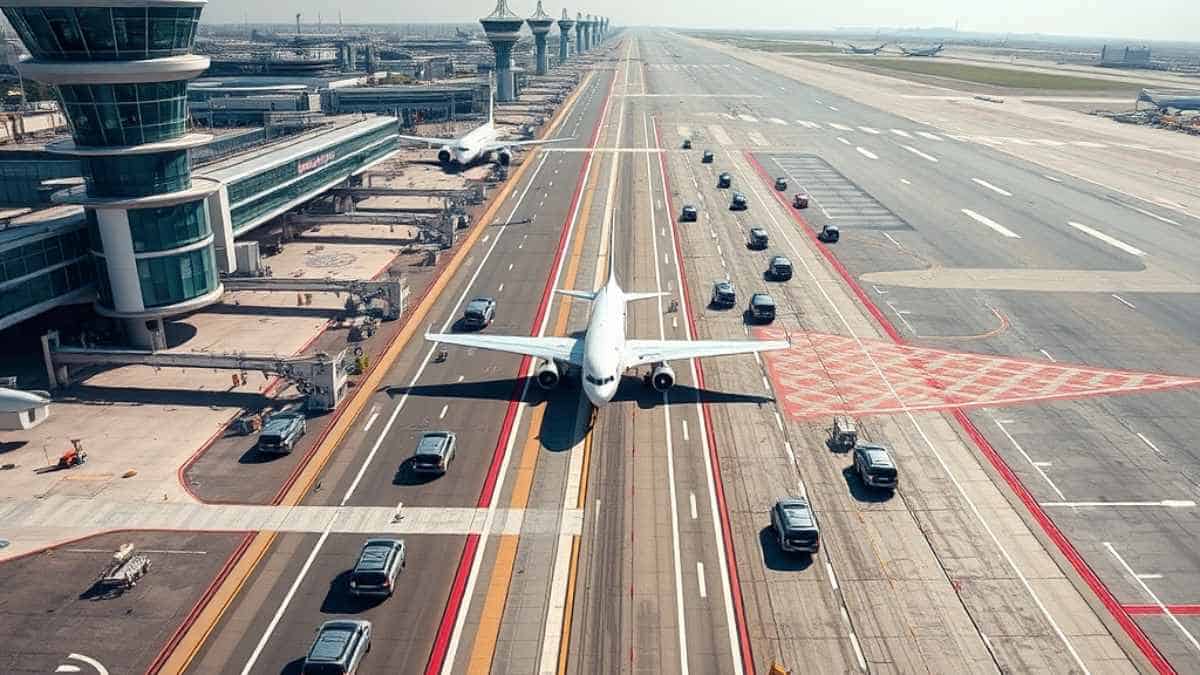
Image generated with Ai
Paris Charles de Gaulle unites with Brussels, Amsterdam Schiphol, Liege, Milan Malpensa, and Rome Fiumicino airports as Europe accelerates automated airfield technology following radical new EASA mandates. The airports are moving towards smarter operations, improved safety systems, and advanced digital solutions. Furthermore, these developments aim to transform how airfield management works across major European aviation hubs. The new EASA mandates are encouraging airports to adopt automated technologies that enhance efficiency, monitoring, and operational reliability. Therefore, Paris Charles de Gaulle and partner airports including Brussels, Amsterdam Schiphol, Liege, Milan Malpensa, and Rome Fiumicino are preparing for a new era of aviation innovation. The accelerated adoption of automated airfield tech reflects Europe’s ambition to modernise airport infrastructure, strengthen safety standards, and create more resilient air transport networks for future growth.
Paris Charles de Gaulle Airport (LFPG)
Paris Charles de Gaulle Airport (LFPG) represents one of the largest and most intricate civil aviation hubs within the European continent, accommodating up to 1500 daily aircraft movements across an environment configured with four parallel runways and three distinct air traffic control towers. To systematically manage this extreme operational scale, advanced automation tools have been integrated by the French air navigation service provider, DSNA, alongside the airport operator, Groupe ADP.
Advertisement
Advertisement
In May 2025, a comprehensive contract was awarded to upgrade the InNOVA Advanced Surface Movement Guidance and Control System, commonly designated as A-SMGCS, to a configuration that achieves full compliance with the European Union Common Project 1 regulation. Through this technological integration, primary Surface Movement Radar data, Multilateration signals, and Automatic Dependent Surveillance-Broadcast feeds are seamlessly fused into a singular, high-fidelity tracking display intended for utilization by tower controllers. The implementation at this facility features electronic flight strips that are fully integrated with advanced safety net algorithms engineered to detect and alert air traffic control personnel to Conflicting ATC Clearances as well as Conformance Monitoring Alerts.
Furthermore, this hub serves as the pioneering European site for the deployment of Runway Status Lights, which function autonomously as an Autonomous Runway Incursion Warning System. This fully automated infrastructure is embedded directly into the physical pavement of the taxiways and runways. Through the real-time analysis of surface tracking data, red Runway Entrance Lights are automatically illuminated by the processor at taxiway holding positions if an aircraft is detected executing a high-speed takeoff roll or landing on the corresponding runway surface. Simultaneously, Takeoff Hold Lights are illuminated on the runway centerline if another target occupies the path ahead. Because this warning mechanism operates entirely independently of manual air traffic control clearances, it serves as an immediate visual override on the airfield surface.
Advertisement
Advertisement
The safety efficacy of this system has been validated by real-world occurrences. In one recorded event, a landing aircraft vacated runway 09L and was cleared by air traffic control to immediately cross the parallel runway 09R via taxiway K6. As the aircraft approached the designated holding point, the automated Runway Entrance Lights were illuminated red. The flight crew immediately halted at the holding line, observing a departing aircraft executing its takeoff roll down runway 09R. Upon subsequent communication, the conflicting instruction was recognized by the controller, an apology was issued, and the aircraft was recleared once the runway environment was rendered sterile.
Advertisement
Advertisement
In addition to these electronic safety nets, large-scale structural refurbishments have been executed on the airfield infrastructure to maintain structural integrity. The parameters of this airside refurbishment are detailed below:
| CDG Airside Refurbishment Parameter | Quantitative Value | Operational Significance |
| Runway 1 Reconstruction Length | 4.2 kilometers | Refurbishment of the longest take-off runway at the facility |
| Asphalt Pavement Relaid | 33,000 tons | Provision of a highly durable surface to withstand wide-body structural stress |
| Taxiway Feeder Slab Thickness | 40 centimeters | Concrete reinforced with steel dowels to prevent pavement ruts |
| Underground Utility Tunnels | 7,400 meters | Housing for dry utility and electrical cabling networks |
| New Electrical Cabling | 220 kilometers | Connection for the next generation of smart LED airfield lighting |
| New Concrete Drawpits | 800 units | Facilities for future optical fiber and sensor maintenance |
Complementing these surface safety nets, 3D Smart Monitoring LiDAR technology developed by Outsight has been integrated within Terminal 2E by Groupe ADP. By tracking spatial passenger movements anonymously without the collection of biometric data, crowd flows are optimized, and bottlenecks are prevented at critical terminal-to-apron access points.
Brussels Airport (EBBR)
Operating within a densely populated metropolitan area, Brussels Airport is required to continuously balance high-density traffic with stringent environmental and noise-abatement constraints, which are primarily managed through the utilization of its Preferential Runway System. To preserve safety margins under these operational pressures, a series of targeted infrastructure and technology upgrades have been pursued by the airport operator in collaboration with the Belgian air navigation service provider, skeyes.
Advertisement
Advertisement
A primary focus at this aerodrome is the modernization of physical and visual airfield assets to prevent spatial disorientation among flight crews. A major modernization of the Instrument Landing System serving runway 25R was initiated by skeyes, scheduling a complete replacement and calibration of the ground antennas of the system. To eliminate geometric layout confusion, a comprehensive renovation of a critical taxiway intersection leading directly to the primary runway 07L/25R was commenced by the airport operator. This structural redesign is engineered to provide pilots with highly intuitive, perpendicular taxi-to-runway angles, thereby mitigating the cognitive errors frequently associated with skewed intersections.
On the training front, an advanced airside driving simulator was deployed through a collaboration between Brussels Airport and Velocity Airport Solutions. This simulator incorporates a highly detailed, localized scenario library mapping the exact apron layouts, taxiway routings, and recognized hot spots of the airport, allowing ground vehicle operators to undergo intensive training designed to reduce surface incidents. Furthermore, following the issuance of Safety Information Bulletin 2025-07 by the European Union Aviation Safety Agency, a commitment was made by Brussels Airport to ensure the continuous, 24/7 activation of its runway stop bars. Rather than activating these stop bars exclusively during low-visibility procedures, their continuous operation serves as a constant visual red light barrier, preventing unauthorized crossings under all meteorological conditions.
Advertisement
Advertisement
The urgency of these deployments was highlighted by a serious safety incident that occurred on the evening of February 5, 2026, involving an Airbus A320neo, bearing registration SE-ROM, which was operating SAS flight SAS43M from Brussels to Copenhagen. This occurrence represents one of the most hazardous classes of surface safety events, characterized by a takeoff attempt initiated from a parallel taxiway instead of the active runway.
The flight crew began their duty day with a flight from Oslo to Copenhagen, departing late due to slot restrictions. After transitioning to the incident Airbus A320neo, further delays were encountered in Copenhagen due to severe winter conditions, which required de-icing and snow clearing of the de-icing pads. Due to these compounding delays and air traffic control flow management restrictions across Europe, a Calculated Take-Off Time of 20:48 UTC was assigned for the next sector. The aircraft landed at Brussels Airport on Runway 07L at 20:01 UTC and arrived at gate 147 at 20:06 UTC, leaving a 42-minute window to complete the turnaround and comply with the updated Calculated Take-Off Time of 21:00 UTC. During this turnaround, significant delays were faced because boarding was highly challenging, with a large number of passengers carrying excessive amounts of cabin baggage. A rapid takeoff briefing was performed by the captain, anticipating a routing to the full runway length of 07R but keeping Charlie 6 in mind in case a hurry was experienced.
At 21:04 UTC, takeoff clearance for Runway 07R was received by the flight crew. Due to severe time pressure and a cognitive focus on meeting the critical departure slot, a precise positional cross-check against onboard navigation charts was not executed by the crew. The aircraft exited the outer taxiway system and was mistakenly aligned with the parallel taxiway E1. A rolling takeoff was subsequently initiated down taxiway E1, and the aircraft accelerated rapidly down taxiways E1, F2, and V1. Upon reaching approximately 100 knots ground speed, it was suddenly recognized by the flight crew that the surface ahead was narrowing and lacked standard runway centerline lights. An emergency aborted takeoff was immediately initiated, with maximum braking and full reverse thrust applied.
According to flight data monitoring data, a peak speed of 126 KIAS, equivalent to approximately 220 kilometers per hour, was reached by the Airbus A320neo before deceleration began. The aircraft managed to stop on the paved surface of the taxiway near the intersection of taxiways V1 and C1. The final stopping position was situated only a short distance before the physical end of the taxiway and in close proximity to the bulk fuel storage area of Brussels Airport. All 165 passengers and crew members evacuated safely via mobile airstairs, no injuries were reported, and no physical damage was suffered by the aircraft.
An analysis of the environmental conditions indicates that the weather was stable with high visibility, indicating that meteorological factors were not primary contributors. Instead, the incident was driven by cognitive tunneling and nighttime visual anomalies. During night operations, the visual differences between a runway and a parallel taxiway are significantly reduced. Runways are illuminated with high-intensity white edge and centerline lights, whereas taxiways feature green centerline and blue edge lights of much lower intensity. On a wet tarmac, reflections and ambient apron illumination can create visual clutter, leading to perceptual confusion. If a crew is highly focused on an impending slot expiration, they are susceptible to expectation bias, assuming their physical location matches their cleared routing without validating their heading against the primary flight display or GPS-driven moving maps. This serious incident demonstrated that visual lighting cues alone cannot prevent severe alignment errors, serving as a direct operational catalyst for skeyes to accelerate the rollout of automated airfield safety nets.
Advertisement
Advertisement

Image generated with Ai
Amsterdam Airport Schiphol (EHAM)
The highly intricate layout of six runways at Schiphol Airport requires absolute surveillance coverage to prevent ground collisions, particularly under low-visibility conditions. Under the Single European Sky ATM Research deployment framework, a comprehensive upgrade of the A-SMGCS surveillance systems has been undertaken at Schiphol.
The primary objective of the upgraded A-SMGCS at this facility is to achieve optimal ground surveillance coverage of all active runways, taxiways, and gate areas. To resolve tracking drops that historically occurred during push-back operations, a dense array of cooperative sensors supporting both Multilateration and ADS-B updates has been deployed. The system incorporates a highly redundant communication network connecting the sensors to dual, independent central processing units. This dual-processor architecture prevents system outages during maintenance or hardware failures, ensuring that the critical air traffic situation picture remains uninterrupted.
Furthermore, the Follow the Greens automated lighting concept is actively being evaluated at Schiphol. This system automatically switches on a trail of green taxiway centerline lights ahead of an approved aircraft, dynamically adjusting to other surface traffic to enforce safe separation distances. While a feasibility study completed in 2024 highlights the potential of this system to reduce taxi times and fuel burn, its deployment is carefully balanced against the massive capital expenditure and the long-term operational disruption caused by tearing up active taxiway pavements for fiber-optic installations.
Liege Airport (EBLG)
Liege Airport functions as one of the premier dedicated air cargo hubs within Europe, hosting a high volume of night operations and wide-body cargo flights. Because cargo carriers often exhibit a statistically higher incursion rate due to irregular schedules and nighttime fatigue, early-stage automated protections have been prioritized at this facility.
The operational validation of the automated A-SMGCS safety nets was successfully finalized at Liege Airport, transitioning the system to active status. This surveillance layer is combined with a complete Performance-Based Navigation environment. By transitioning all arrival and departure procedures to satellite-guided procedures, the spatial predictability of traffic patterns has been significantly improved. This precise trajectory modeling reduces flight level leveling-off times, lowers overall fuel consumption, and enhances the ability of the tower controller to anticipate and manage potential runway conflicts well before touchdown occurs.
Advertisement
Advertisement
Milan Malpensa (MXP) and Rome Fiumicino (FCO)
Under the technical direction of the Italian air navigation service provider, ENAV, synchronized upgrades have been undergone at Milan Malpensa and Rome Fiumicino airports to establish full A-SMGCS Level 2 capabilities with integrated airfield safety nets.
This project focused on replacing legacy, low-resolution Surface Movement Radars with advanced primary radar sensors. Furthermore, Multilateration coverage was expanded, and a new MultiSensor Fusion system was integrated at Rome Fiumicino to seamlessly synthesize primary and cooperative tracking feeds into a singular, lag-free radar display. Crucially, to mitigate the risk of ground vehicle incursions, the installation of active ADS-B transponders was mandated by ENAV on all airside vehicles, including fire services, tugs, and snow-clearing equipment. This ensures that all ground mobiles are fully cooperative and continuously tracked, thereby eliminating blind spots on the controller’s console.
Malta International Airport (LMML)
While runway alignment represents a critical flight hazard, ground-handling collisions can also lead to catastrophic structural accidents. A major ground incident at Malta International Airport involving a Boeing 737-800 under tow served as the direct catalyst for structural design changes under regulatory frameworks.
During the incident, a Boeing 737-800, registration 9H-QCJ, was being repositioned under tow from Apron 8 to Apron 2. The tow crew—consisting of a tug driver, a wing walker, and a cockpit brake operator—had just finished repositioning another aircraft and immediately connected their tug to the aircraft using the same tow bar assembly. During the initial pushback from Stand 2 onto Taxiway India, the moving tug was alighted by the wing walker. As the wing walker crossed closely in front of the vehicle, the tug driver braked suddenly to avoid a collision. This sudden mechanical shock went uninspected. Crucially, the sudden deceleration sheared the internal shear and retaining pins within the tow bar head, leaving them in a compromised, fractured state.
The tow was continued along Taxiway India and Taxiway Juliet, successfully crossing Runway 23. However, as a sharp left turn was executed by the tug onto Taxiway Kilo, the compromised tow bar detached entirely from the nose gear of the aircraft. The heavy commercial jet continued rolling forward on its own momentum. With no active steering or immediate cockpit braking applied, the aircraft rolled off the taxiway centerline and collided directly with a bank of four parked aviation fuel tankers located inside the Cargo and GSE area.
Advertisement
Advertisement
A comprehensive field investigation was conducted by the Malta Bureau of Air Accident Investigation, retrieving the broken shear pin parts and retaining pin heads from Apron 8 near Stand 2. A critical safety recommendation was issued by the bureau to the European Union Aviation Safety Agency, highlighting the lack of physical isolation between active taxiing corridors and hazardous ground equipment or fuel storage zones.
Stuttgart Airport, Aberdeen Airport, Gloucestershire Airport, and Jersey Airport
Beyond the primary occurrences at Brussels and Malta, a series of other operational incidents throughout Europe in 2026 have directly influenced the adoption of new safety systems.
At Stuttgart Airport, a serious runway incursion occurred involving an Embraer Phenom 500 and a Boeing 737-800. The Phenom was cleared by the tower controller for an immediate takeoff from taxiway Hotel while the landing Boeing 737 was on short final. The Boeing crew was instructed to execute a go-around at 0.63 nautical miles from the threshold, passing over the runway threshold at a mere 18 feet above ground level while the Phenom was still accelerating down the runway surface. This near-collision reinforced the critical need for automated Conflict Alerting systems in tower environments to catch overlapping clearances.
During a separate event involving climb-out from Aberdeen Airport, an ATR 42-500, registered as G-LMRC, suffered a complete loss of multiple flight deck displays. At FL100, when the landing lights were deactivated by the co-pilot, both primary Electronic Attitude Director Indicators and Electronic Horizontal Situation Indicators went blank, the autopilot disengaged, and the air conditioning packs deactivated. The failure lasted approximately 3 seconds before the systems recovered. A post-incident investigation identified a faulty 1PA contactor stuck in an intermediate position, preventing the backup emergency electrical network from engaging. This event has heightened regulatory focus on the robustness of emergency power routing and avionics redundancy.
At Gloucestershire Airport, a complete loss of engine power was suffered by a light aircraft, registered as G-BYLZ, while on final approach to Runway 09. The aircraft landed short of the runway and collided with the Instrument Landing System localizer antenna array. The subsequent investigation revealed that a 3D-printed plastic air induction elbow had softened and collapsed due to radiant engine heat. Strict safety directives restricting the use of uncertified 3D-printed parts in critical engine assemblies have since been issued by the Light Aircraft Association, highlighting the importance of robust material certifications.
Advertisement
Advertisement
Additionally, a critical human-machine interface breakdown was encountered at Jersey Airport during rotation by a Loganair ATR 72-212A. The pilot monitoring called for a stop and retarded the power levers, but power was subsequently re-applied. The aircraft lifted off directly into a stick shaker stall warning. This incident has been integrated into human factors research under the 2026 Research Agenda to drive the design of clearer flight crew alerting systems for large aeroplanes.
Statistical Baselines of Airfield Risks
The safety and efficiency of airfield movement areas remain the most critical parameters in modern civil aviation. Statistically, the take-off and landing phases represent the highest-risk portions of any flight, with runway incursions and excursions continually classified by the International Civil Aviation Organization among the top five global aviation safety priorities. As European air traffic density recovers to and surpasses pre-pandemic thresholds, airside operations are experiencing elevated levels of throughput and complexity. This traffic density amplifies surface congestion, transforming minor taxiway deviations or communication breakdowns into potential catalysts for multi-aircraft collisions.
To understand the operational necessity of advanced airfield technologies, the underlying human and system factors that contribute to surface movement risks must be quantitatively evaluated. Historical data compiled by regulators indicates that the vast majority of runway incursions stem from a complex convergence of pilot error, inadequate air traffic control technology, and vehicle communication failures. The statistical breakdown of global and European surface movement incidents provides a baseline for evaluating these interventions:
- Visibility-Related Incursions: These account for 80% of major airport incursions, driven primarily by low-visibility conditions below 1 mile, resulting in the visual misidentification of holding points.
- Human Error Contribution: Approximately 85% of total incursions involve pilot deviation or cognitive overload, representing a breakdown in Crew Resource Management.
- CRM Failure Rate: Poor cockpit coordination during taxi contributes to 70% of surface incidents, often resulting in misalignment with assigned runway surfaces.
- Vehicle-Related Incidents: Ground service vehicle unauthorized entries account for 70% of surface movement events, driven by inadequate driver situational awareness.
- Pilot Distraction Trends: A 15% year-on-year increase was noted in 2023, stemming from distraction caused by electronic devices on the flight deck, which delays reactions to ATC instructions or visual cues.
- Outdated Tower Infrastructure: Legacy analog systems and layout blind spots are responsible for 40% of controller-related errors, often exacerbated by overlapping controller responsibilities.
- Unreported Incursions: It is estimated that 90% of minor blunders remain unreported due to fear of regulatory penalties or operator fines, leading to a lack of data on precursors to serious accidents.
These statistical realities illustrate that manual visual checks are insufficient during high-density operations. Consequently, European hubs have prioritized the implementation of automated surveillance and guidance systems to act as an independent safety net.
Technical Architecture of the Runway Overrun Awareness and Alerting System
Beyond ground-handling and navigation errors, longitudinal runway excursions during landing represent one of the most historically persistent safety threats in commercial aviation. To mitigate this risk, a comprehensive airworthiness mandate has been formalized for newly produced aircraft through the introduction of the Runway Overrun Awareness and Alerting System, commonly known as ROAAS.
Advertisement
Advertisement
Unlike legacy landing distance software, which is computed statically prior to descent, ROAAS functions as an active, energy-based cockpit safety system. The system continuously monitors the state of the aircraft in real time during the approach, touchdown, and deceleration phases. By ingesting key parameters—such as calibrated airspeed, ground speed, aircraft weight, flap configuration, wind shear vectors, and braking friction—the ROAAS algorithm continuously calculates the stopping distance of the aircraft against a database of the physical remaining length of the runway.
During the approach phase, between 400 feet and 200 feet, the stopping profile is continually calculated. A visual runway too short alert is generated on the primary flight display if established limits are exceeded, followed by a coordinated aural alert below 200 feet. During the touchdown and deceleration phase, real-time deceleration rates are monitored, and the crew is alerted if maximum deceleration means, such as brakes and thrust reversers, must be maintained. The system remains active down to a taxi speed of 30 knots.
A critical milestone was achieved on July 17, 2026, when Embraer’s proprietary, in-house developed ROAAS was formally certified for the E-Jet E2 family, encompassing the E190-E2 and E195-E2 models. Since these regional aircraft are heavily utilized on short, wet, or topographically constrained European routes, this type-specific certification provides a vital safety barrier for regional operators.

Image generated with Ai
EASA NPA 2026-01 and Part-26 Explained
To address the vulnerabilities exposed by recent operational breakdowns, sweeping changes to European aerodrome design and ground operations have been introduced via regulatory mandates. On April 28, 2026, Notice of Proposed Amendment 2026-01 was published by the European Union Aviation Safety Agency, transposing the latest ICAO Annex 14 Standards and Recommended Practices. The key provisions of this regulatory package are structured as follows:
- Apron Safety Design: The mandatory incorporation of separation criteria on aprons is required, physically segregating aircraft towing and taxi paths from parked fuel tankers and ground service equipment.
- Reduced RVR Lighting: A new Runway Visual Range threshold of 300 meters is established for runway and taxiway lighting, guaranteeing visual guidance continuity under severe fog or low-visibility operations.
- Distance Remaining Signs: The provision of Runway Distance Remaining Signs is rendered mandatory, providing pilots with continuous visual feedback of the remaining runway length.
- Apron Management: Revised procedures are introduced for aircraft departing from stands, establishing standardized protocols to secure parked aircraft and prevent unintended rolling.
- Malta BAAI Alignment: The direct integration of safety recommendations from the Malta investigation is executed, establishing mandatory inspections of tow bar shear pins following sudden braking events.
Simultaneously, under EASA Part-26 (Annex I to Regulation EU 2015/640), the installation of a certified ROAAS is strictly mandated for all newly produced large aeroplanes operated in commercial air transport. This mandate applies to aircraft with a maximum takeoff weight exceeding 5,700 kilograms first issued an individual Certificate of Airworthiness on or after July 1, 2026. To prevent competitive discrimination, this deadline was aligned with the Part-TCO mandate, requiring third-country operators flying into European Union territories to demonstrate equivalent ROAAS compliance as of the same date.
Advertisement
Advertisement
Despite the clear safety benefits, severe supply chain and manufacturing delays have been faced by the global aviation industry, preventing several aircraft manufacturers from integrating certified ROAAS equipment into production lines before the deadline. To prevent the grounding of newly built fleets, a temporary exemption framework was established, permitting the issuance of time-limited exemptions until March 31, 2027. However, to compensate for the absence of this safety net, strict operational mitigating measures must be implemented by operators at the time of dispatch, ensuring no additional in-flight workload is placed on the flight crew:
- Advanced Flight Crew Training: Targeted simulator sessions and Crew Resource Management training must be undergone by crews, focusing on the precise calculation of actual landing distance required, strict adherence to stabilized approach gates, and the immediate application of maximum deceleration devices upon touchdown.
- Flight Data Monitoring Integration: Flight data monitoring programs must be configured by operators to automatically flag landing parameter deviations on non-ROAAS equipped aircraft. The system is required to track stabilized approach violations, touchdown point variations, and delayed braking applications, compiling the data to identify systemic safety trends.
Triple One Concept and Friction Management
The evolving landscape of runway safety in Europe is defined by several emerging technological and regulatory initiatives designed to establish a highly resilient, data-driven airside ecosystem. Among these is the Triple One Concept, which is actively being researched to resolve communication breakdowns that are frequently exacerbated when controllers and pilots utilize different languages or split frequencies. This operational concept mandates that all aircraft and vehicles active on a specific runway maneuvers area utilize a single, common radio frequency and a common language, typically aviation English. Fusing all communications onto a single frequency ensures that a shared auditory picture of runway occupancy is maintained by all pilots and vehicle drivers.
Concurrently, the 15th edition of the European Plan for Aviation Safety for 2026 introduces three new cross-domain strategic priorities designed to modernize safety oversight:
- Big Data Technologies: The deployment of advanced analytics and machine learning to process regional flight data monitoring and safety reports, allowing regulators to proactively identify runway incursion precursors.
- Rules Simplification: The streamlining of complex aerodrome and air operations regulations, reducing administrative burdens while maintaining a uniform level of safety.
- Single European Sky Framework: The acceleration of the digitalization of European airspace to optimize routing, reduce airspace congestion, and seamlessly integrate manned and unmanned operations.
Additionally, new Rulemaking Tasks targeting flight crew alerting systems for large aeroplanes have been established under the European Plan for Aviation Safety to standardize visual and auditory cockpit warnings during critical maneuvers.
Finally, to prevent excursions on wet or contaminated runways, a shift is being made by airport operators from destructive, high-pressure water blasting to advanced chemical maintenance. Because heavy landing aircraft deposit substantial volumes of carbonized tire rubber that fills the pavement macrotexture and facilitates hydroplaning, specialized, non-destructive chemical detergents, such as Avion50, are increasingly deployed by airside managers. These agents chemically target and emulsify the carbonized rubber bond, allowing the deposits to be swept away easily by standard snow brooms and water trucks. Through this method, the underlying pavement microtexture is preserved, high friction coefficients are maintained, and runway maintenance downtime is significantly reduced.
Advertisement
