 Angana Dutta Angana Dutta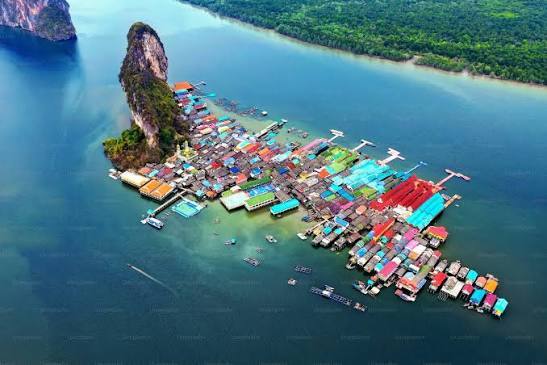
In addition to being Thailand’s main travel gateway, Phuket is now the primary point of access for quieter holiday destinations on Thailand’s Andaman coast including Phang Nga. Currently, in 2026, Thailand’s tourism strategy is focused on value, sustainability, and visitor dispersal. Phang Nga is one of a few pilot ‘green destinations’. Phang Nga is a quieter holiday destination, including Khao Lak, and is part of Phuket’s southern neighbor. Phang Nga is a growing wellness destination, community based tourism and offers protected marine landscapes. Together, the two locations offer Thailand an opportunity for visitor dispersal, beyond the famous tourist Phuket island.
Phuket and Phang Nga sit beside each other on Thailand’s Andaman coast, but they do not need to compete for exactly the same visitor. Their infrastructure and tourism products increasingly allow them to play complementary roles.
Phuket has the major international airport, established resort districts and extensive tourism services. Phang Nga has Khao Lak, Phang Nga Bay, forest landscapes, wellness experiences, community tourism and internationally recognised marine attractions such as the Similan and Surin island groups.
That distinction makes the Phuket travel gateway idea important. International travellers can arrive through Phuket and then continue north into Phang Nga rather than spending the entire holiday on Phuket island.
Advertisement
Advertisement
The Tourism Authority of Thailand already presents the destinations this way. Its official Phuket–Phang Nga itinerary combines Phuket attractions with Ban Bo Dan Hot Spring, the Khao Lak coast and Ban Nam Khem Tsunami Memorial Park in Phang Nga.
TAT also notes in its official Similan Islands guidance that Phang Nga does not have its own commercial airport. Travellers flying into the region can therefore use nearby Phuket Airport before continuing towards Phang Nga and the Andaman coast.
This is the key structural advantage. Phuket can provide aviation access without having to capture every hotel night, restaurant bill or tourism experience generated by an arriving passenger.
Russia gives this tourism story commercial weight.
Advertisement
Advertisement
TAT reported that Thailand received 9.31 million international arrivals between 1 January and 31 March 2026. Russia contributed about 726,000 visitors, ranking third after China and Malaysia.Q1 2026 source market Official arrivals China 1.49 million Malaysia 960,000 Russia 726,000 India 626,000 South Korea 412,000
Source: Tourism Authority of Thailand, April 2026.
That makes Russian travellers a major audience for Thailand’s resorts, airlines, hotels, restaurants, transport operators and attractions.
However, an important distinction must be maintained. Thailand’s official national arrival data show strong Russian demand, but they do not currently establish that hundreds of thousands of Russians are specifically abandoning Phuket for Phang Nga.
No current official province-level evidence reviewed for this report proves a large-scale Russian diversion from Phuket into Phang Nga.
The credible story is therefore broader. A large Russian market is travelling to Thailand at the same time as neighbouring Phang Nga is being actively developed and promoted for lower-density, wellness, nature and sustainable tourism.
That creates a meaningful opportunity for visitor dispersal without turning an unverified social-media claim into a statistic.
The strongest change taking place in Phang Nga is not simply the arrival of more tourists. It is the type of tourism Thailand wants the province to attract.
In January 2026, TAT introduced its Thailand Tourism Next strategy. It shifted the national tourism emphasis towards quality, balance, sustainability and greater value rather than relying only on higher visitor volumes.
TAT set an ambition of up to three trillion baht in total tourism revenue under that strategy. It also identified Phang Nga, Nan and Phetchaburi as pilot green destinations.
That puts Phang Nga inside a national policy experiment.
Instead of replicating dense resort development everywhere, authorities are trying to build tourism products around local communities, environmental responsibility, wellness, culture and meaningful experiences.
For Phang Nga, this matters because the province’s strongest assets include natural landscapes that can be damaged if tourism growth becomes poorly managed.
TAT’s official destination profile highlights mountains, forests, caves, Phang Nga Bay, Khao Lak, beaches, waterfalls and the Similan and Surin island groups.
The province can therefore sell more than a conventional beach stay.
The strategy has moved beyond policy statements.
In May 2026, TAT organised the Amazing Green Experience in Thailand, connecting international buyers and media with responsible tourism businesses across southern Thailand.
The familiarisation programme covered Krabi, Phang Nga, Surat Thani and Phuket. It showcased community businesses, wellness operators and nature-based experiences that could be sold through international travel distribution channels.
In Phang Nga, the programme included Ban Sam Chong Nuea Community Enterprise, helping place community-based tourism within an international commercial programme.
That is important for local economic development. It increases the possibility that international visitor spending can move beyond large hotels and beach resorts.
Local guides, transport providers, food businesses, community enterprises, wellness operators and smaller accommodation businesses can potentially participate in the visitor economy.
For Russian visitors or any other international market, this also expands what a Phang Nga holiday can mean.
The province is no longer being presented only as a place for boat trips. It is being packaged as a destination for longer and more varied experiences.
Wellness is becoming another major part of the province’s tourism identity.
On 18 and 19 June 2026, TAT organised the Thailand Surf Therapy Real Experience and Trust Building Journey in Phang Nga.
The programme involved tourism partners, wellness operators and media representatives. Activities at Memories Beach examined how surfing could form part of a structured wellness experience.
TAT subsequently presented surf therapy within its wider effort to position Thailand as a significant Asian wellness destination.
The proposed concepts included programmes lasting from several days to two weeks or longer. That is relevant to tourism economics because longer programmes can potentially support more accommodation nights, meals, local transport and activity spending.
TAT strengthened this direction again in August.
International media and creators were brought through Phuket and Phang Nga under the Amazing Thailand Surf & Wellness Journey. The programme linked surfing, wellness, nature, communities and culture under TAT’s Healing Is the New Luxury communication direction.
This again demonstrates the gateway relationship.
Phuket brings international recognition and access. Phang Nga provides room to build a different type of stay.
Official Thai statistics already demonstrate the economic gap between Phuket and Phang Nga.
Thailand’s National Statistical Office, using Ministry of Tourism and Sports data, recorded 13,141,410 visitors and 497.52 billion baht in visitor receipts for Phuket in 2024.
Phang Nga recorded 4,142,571 visitors and 50.90 billion baht in visitor receipts in the same year.Destination Visitors in 2024 Visitor receipts in 2024 Phuket 13.14 million THB 497.52 billion Phang Nga 4.14 million THB 50.90 billion
Source: National Statistical Office of Thailand using Ministry of Tourism and Sports statistics.
The figures show why Phuket remains the heavyweight of Andaman tourism.
They also show the scale of the opportunity for neighbouring Phang Nga.
Even a better distribution of existing Andaman visitors could create additional demand for hotels, restaurants, transport and attractions in Phang Nga without requiring the province to reach Phuket’s visitor density.
This is where Thailand’s value-led strategy becomes economically important.
Success does not have to mean matching Phuket’s visitor numbers. It can mean capturing more value per visitor while protecting the characteristics that differentiate Phang Nga.
Air connectivity remains one of Phuket’s biggest advantages.
Phang Nga’s lack of its own commercial airport means Phuket International Airport is an important arrival point for travellers heading towards parts of the province.
In June 2026, Phuket International Airport also introduced Automatic Border Channel systems for international departures.
Automated departure checks began on 13 June 2026, while work on the international arrivals immigration area continued into July to prepare additional automated processing infrastructure.
Eligible passengers using the automated departure channels must hold an electronic passport and meet the system’s operating requirements.
The infrastructure improvement matters beyond Phuket itself.
When immigration processing becomes more efficient at a regional gateway airport, surrounding destinations can also benefit because international visitors can use the same airport before travelling elsewhere.
For Phang Nga tourism, Phuket Airport can therefore operate as shared regional infrastructure.
Travellers do not need a direct flight to Phang Nga to build a holiday around Khao Lak or other parts of the province.
The gateway model can affect several parts of the tourism industry.
Airlines benefit from demand into Phuket even when passengers continue into another province.
Phuket International Airport retains its role as an international entry point.
Phang Nga hotels can compete for overnight stays from travellers who want to move away from Phuket’s busiest tourism districts.
Tour operators can combine both provinces in the same itinerary.
Transport providers gain business from airport transfers and inter-provincial journeys.
Local communities can benefit when tourism programmes deliberately include community enterprises rather than concentrating visitor spending in major resorts.
This is exactly why destination dispersal matters.
It changes tourism from a single-destination model into a regional travel economy.
TAT’s own itineraries provide official evidence that authorities already view Phuket and Phang Nga as destinations that can be combined within one journey.
Phang Nga’s environmental attractions are among its greatest tourism strengths.
The official TAT destination profile highlights Mu Ko Similan and Mu Ko Surin National Marine Parks, Phang Nga Bay, Khao Lak and the province’s caves, forests and coast.
But these environments cannot be treated as unlimited tourism inventory.
Seasonal national park closures are particularly important for travellers.
Official Tourism Authority of Thailand information states that the Similan Islands generally close during the Andaman monsoon period to support natural recovery and visitor safety. TAT’s April 2026 information says the tourism period normally runs from 15 October to 15 May.
That means travellers planning a September trip should not assume that every famous island photograph they see online represents an attraction they can visit immediately.
This seasonal reality strengthens the case for mainland tourism.
Khao Lak, community experiences, local food, wellness programmes and other land-based attractions help Phang Nga maintain a broader tourism economy when offshore conditions or conservation rules limit access.
Thailand is also changing how it markets the rainy period.
TAT’s 2026 Healing Is the New Luxury campaign presented the green season as a time for slower travel, nature and wellness.
Phang Nga featured prominently in that positioning, including its limestone scenery and coastal environment.
This creates another difference from the traditional Phuket holiday model.
Instead of selling only sunshine and beaches, Phang Nga can sell forests, mist, wellness, surfing, local experiences and a slower pace during parts of the year.
Khao Lak has a particularly useful seasonal tourism mix.
TAT material identifies the area as a surfing destination during parts of the green season, while calmer conditions later in the year support other coastal activities.
That can help tourism businesses build products across more months rather than depending entirely on one peak season.
Travellers should also pay attention to Thailand’s changing entry rules.
On 31 August 2026, Thailand published revised visa-exemption measures in the Royal Gazette. The Ministry of Foreign Affairs confirmed on 3 September that the measures will take effect on 15 September 2026.
The revision removes Thailand’s previous 60-day visa-exemption scheme and restructures the country’s 30-day, 15-day and Visa on Arrival arrangements.
Because eligibility can depend on nationality and the date of entry, Russian travellers planning trips around the changeover should check their precise status directly with Thailand’s Department of Consular Affairs before departure.
Older travel guides that continue to state the previous 60-day system may therefore become outdated after 15 September.
Thailand Ministry of Foreign Affairs visa update
This distinction is essential for newsroom accuracy.
There is clear official evidence that Russia is a major tourism market for Thailand.
There is also clear evidence that Phang Nga is being developed as a green, wellness, community and nature destination and that Phuket functions as a practical aviation gateway.
What official sources do not currently show is a measured mass movement of Russian visitors away from Phuket into Phang Nga.
No official dataset reviewed for this report provides a 2026 count showing how many Russian visitors arrived through Phuket Airport and then transferred into Phang Nga.
Therefore, descriptions such as “Russians abandon Phuket” or “Phang Nga replaces Phuket” would go beyond the official evidence.
The more defensible tourism story is that Thailand now has the infrastructure, visitor market and policy framework for Phuket and Phang Nga to function together.
Thailand’s national tourism policy helps explain why this regional model matters.
In April 2026, TAT recalibrated its tourism outlook and emphasised value over volume.
TAT projected approximately 30 million to 34 million international arrivals for 2026, around 206 million domestic trips, and about 2.58 trillion baht in total tourism revenue under its revised outlook.
The adjustment reflected changing global demand, economic conditions, air connectivity constraints and other external pressures.
That makes revenue quality and geographic distribution increasingly important.
Instead of asking only how many people Thailand attracts, tourism policy is increasingly concerned with how visitors travel, how much they spend and which destinations benefit.
For Phang Nga, this creates room to grow differently from Phuket.
Hotels in Phuket and Phang Nga do not necessarily have to fight for identical guests.
Some travellers may want Phuket’s nightlife, restaurants and established resort districts. Others may prefer Khao Lak, wellness, nature or quieter coastal stays.
Multi-destination holidays can support both.
A visitor could spend several nights in Phuket before moving into Phang Nga. Another could land at Phuket Airport and travel directly north.
That creates opportunities for accommodation businesses at different price points.
It can also generate demand for airport transfers, local drivers, restaurants, cafés, wellness businesses, surf schools, community experiences and guided activities.
TAT’s responsible-tourism programmes show that connecting smaller businesses with international buyers forms part of the wider government tourism strategy.
Phang Nga offers a different travel pattern from Phuket.
Travellers should first plan transport because there is no equivalent major international airport inside Phang Nga. Phuket International Airport is one of the practical gateways for the province.
Khao Lak is on the mainland, while famous marine attractions require additional land and boat transport.
Visitors should also check national park opening periods before purchasing island-based trips.
The Similan and Surin island areas operate with seasonal access controls. Conditions can also change because of weather and marine safety.
Travellers arriving around mid-September should separately check Thailand’s new visa rules because the revised national visa-exemption framework takes effect on 15 September 2026.
Thailand’s published strategy gives the clearest guide to Phang Nga’s future direction.
TAT has already designated the province as a pilot green destination.
It has taken international buyers into responsible tourism businesses. It has developed wellness concepts in Phang Nga. It has connected Phuket and Phang Nga through international media and creator journeys.
Those actions point towards controlled value growth rather than simply recreating Phuket at a different address.
That distinction will matter if demand increases.
The attraction of Phang Nga rests heavily on nature, wellness, community experiences and relatively dispersed tourism.
Protecting those assets is therefore directly connected to the province’s economic competitiveness.
Phang Nga does not have a major commercial airport comparable with Phuket International Airport. TAT advises that travellers heading towards destinations such as the Similan Islands can fly to nearby Phuket and continue by road and, where required, boat. Phuket therefore works as an important gateway for Khao Lak travel and wider Phang Nga trips.
No. TAT’s official information states that Mu Ko Similan National Park normally opens for tourism from 15 October to 15 May. Travellers visiting Phang Nga in September should build their itinerary around available mainland, wellness, community and other coastal experiences instead of assuming the Similan Islands can be visited.
Tourism Authority of Thailand Phang Nga destination information
Yes. Thailand’s revised visa arrangements take effect on 15 September 2026. Travellers should check the latest nationality-specific rules with Thailand’s Ministry of Foreign Affairs or Department of Consular Affairs before departure, particularly if their trip falls around the changeover date.
Current tourism trends in Thailand and Phang Nga support the 2026 value-based plan with their specific match to Phuket’s air connectivity. Russian travelers matter because Russia is already one of Thailand’s main source markets and because Phang Nga is developing as a green, wellness, and community-focused destination. For now, official statistics do not confirm a Russian transfer from Phuket to Phang Nga, so this must be handled with caution. The growing coordination of the connection to access and the dispersal of travel is clear. Phuket facilitates the flight connection while Phang Nga offers longer stays and greater tourism expenditures with greater balance among the southern regions of Thailand.
Advertisement
Tags: phang nga, phuket, Thailand holiday, Tourism news, Travel
Advertisement
Advertisement













Friday, September 4, 2026

Friday, September 4, 2026

Friday, September 4, 2026

Friday, September 4, 2026

Thursday, September 3, 2026

Wednesday, September 2, 2026

Friday, September 4, 2026
Friday, September 4, 2026


