
Riyadh Air Direct Flights to Bangkok: Boosting Saudi-Thai Aviation Links

Published
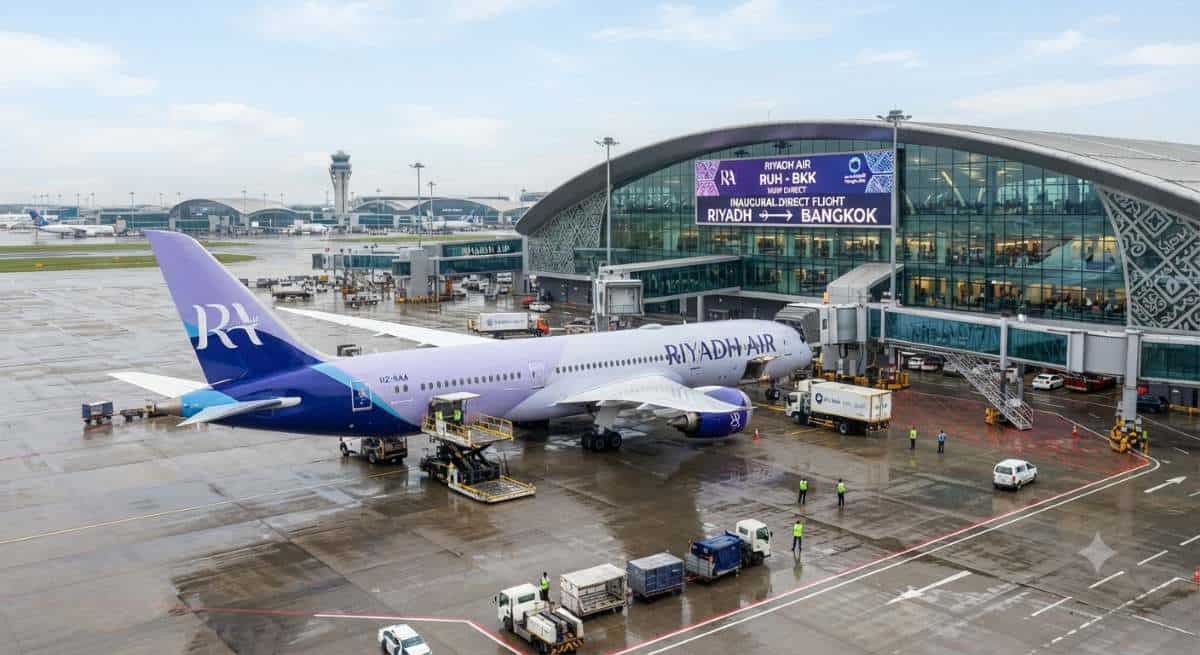
The official establishment of a direct flight corridor connecting King Khalid International Airport in Riyadh with Suvarnabhumi International Airport in Bangkok has been finalized. This strategic initiative marks a notable milestone for Riyadh Air, reflecting its continuous network expansion since its initial operational launch.
By bridging these two major capital cities, the new connection is designed to bolster bilateral relations, encourage cultural exchanges, and foster economic cooperation between Saudi Arabia and Thailand. Leadership figures within the airline have repeatedly emphasized that such infrastructural developments are aligned with broader national transformation agendas, specifically supporting long-term economic diversification and global integration targets.
Advertisement
Advertisement
Impact on Travellers
For passengers journeying between the Middle East and Southeast Asia, this route eliminates the traditional inconvenience of layovers or transiting through alternative regional hubs. Tourists, business professionals, and family groups can now experience streamlined, non-stop transit options that significantly reduce overall travel duration.
The introduction of these services addresses specific demographic demands, offering enhanced convenience for visitors seeking leisure, medical tourism, or corporate engagements abroad. Furthermore, the availability of high-capacity aircraft ensures that passengers benefit from modern cabin amenities and improved schedule flexibility, catering to the growing volume of international travelers moving across these regions.
Advertisement
Advertisement
Industry Insights
Industry analysts view this network expansion as a calculated move to strengthen competitive positioning within the global aviation market. By incorporating Southeast Asian markets into its operational map, the carrier enhances the strategic importance of its primary domestic hub as a central international transit point.
Experts note that establishing direct connectivity to high-demand leisure and commercial centers allows carriers to capture vital traffic streams, optimizing fleet utilization and driving revenue growth. This development also mirrors broader regional trends focusing on aggressive route diversification and the enhancement of cross-continental trade partnerships.
Advertisement
Advertisement
Practical Information
Initial operations for the route involve a frequency of three flights per week, which is scheduled to transition into a full daily service format as demand scales. Flights utilize advanced wide-body aircraft designed to accommodate substantial passenger volumes and cargo loads per journey.
Travelers are advised to consult official booking channels and airline portals for up-to-date schedules, fare structures, and baggage guidelines. Ground services at both departure and arrival terminals have been coordinated to ensure seamless immigration, transit, and baggage handling procedures for all ticket holders.
Advertisement
Advertisement
Comparison With Previous Policies or Developments
In contrast to historical travel patterns that frequently required indirect routings through intermediary Gulf airports, current aviation policies emphasize point-to-point connectivity and bilateral open-sky cooperation. Earlier frameworks often imposed longer transit times and higher logistical hurdles for cross-regional mobility.
The modern approach focuses on direct accessibility, reflecting a progressive shift in governmental and corporate strategies aimed at stimulating tourism recovery, attracting foreign investment, and modernizing international transportation infrastructure.
Advertisement
