
Image generated with Ai
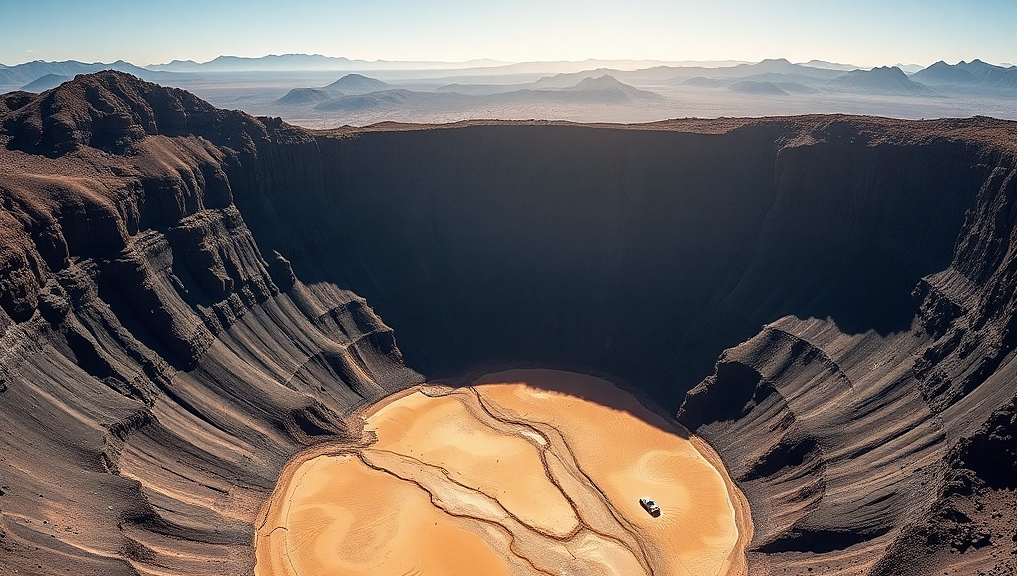
Hidden within the remarkable landscapes of the Hail Region, Al-Hutaima Crater has been recognized as one of northern Saudi Arabia’s most fascinating geological landmarks. Far more than a scenic destination, the crater has been regarded as a living record of the Earth’s ancient volcanic history, where millions of years of natural evolution have been preserved in striking detail. As interest in geological tourism continues to expand across the Kingdom, this extraordinary site has increasingly attracted travelers, photographers, researchers, and outdoor enthusiasts seeking a deeper understanding of the region’s unique natural heritage.
Located east of Salma Mountain near Taba Village within the northeastern section of the ancient Arabian Shield, Al-Hutaima Crater has been celebrated for both its scientific importance and breathtaking desert scenery. Its inclusion within the Salma UNESCO Global Geopark has further strengthened its reputation as one of Saudi Arabia’s most valuable geological treasures while supporting the country’s growing commitment to sustainable tourism.
Advertisement
Unlike many famous craters around the world that have been created by meteorite impacts, Al-Hutaima Crater was formed through ancient volcanic activity. The landscape has been shaped by powerful natural processes that occurred when magma rose beneath the Earth’s surface and encountered underground water. Steam explosions were subsequently triggered, resulting in the collapse of surrounding rock and the creation of the broad volcanic depression visible today.
The crater measures approximately 1.25 kilometers in diameter and extends around 110 meters deep, making it one of the most remarkable volcanic formations in northern Saudi Arabia. Rather than being characterized by a towering volcanic cone, the site displays the distinctive features of a maar volcanic system, where explosive interactions between magma and groundwater have left behind a wide circular crater.
Advertisement
Advertisement
Over thousands of years, erosion and weathering have continued to transform the landscape, gradually creating the dramatic geological features that can now be observed throughout the area.
Al-Hutaima Crater has been situated within the northeastern portion of the Arabian Shield, one of the oldest geological formations in the region. The surrounding terrain presents a spectacular meeting point where rugged mountains, volcanic plains, and expansive lava fields converge to create a landscape unlike any other in Saudi Arabia.
Dark basalt lava flows surround much of the crater, while lighter-colored desert sediments have accumulated across its floor through centuries of natural weathering. This striking contrast between black volcanic rock and pale desert surfaces has contributed to the area’s exceptional visual appeal, making it a favorite destination for landscape photography.
The sparse vegetation found throughout the region has allowed geological formations to remain clearly exposed, providing visitors with uninterrupted views of volcanic rock layers, weathered sediments, and ancient lava deposits that tell the story of Earth’s distant past.
The geological significance of Al-Hutaima extends far beyond its impressive appearance. The crater has been regarded as an exceptional outdoor classroom where multiple geological processes can be observed within a single location.
Ancient lava flows, volcanic ash deposits, sediment accumulation, weathered rock formations, and evidence of long-term erosion can all be examined throughout the surrounding landscape. Each of these natural features contributes valuable insight into the volcanic evolution of northern Arabia and the forces that have shaped the region over millions of years.
One of the most common misconceptions associated with Al-Hutaima is the assumption that it resulted from an asteroid impact. Instead, the crater serves as an outstanding example of volcanic activity that occurred through the explosive interaction between magma and groundwater, creating one of the Kingdom’s finest examples of a maar volcano.
The importance of Al-Hutaima Crater has been further elevated through its inclusion within the Salma UNESCO Global Geopark. This internationally recognized geopark has been established to protect and promote the area’s remarkable geological heritage while encouraging sustainable tourism and scientific research.
The geopark showcases an extraordinary variety of natural features, including volcanic craters, lava fields, ancient marine fossils, tectonic structures, weathering landforms, archaeological heritage, and diverse desert ecosystems. According to UNESCO, the volcanic field surrounding Al-Hutaima contains more than 100 volcanic vent sites, at least 77 volcanoes, several maar craters, volcanic bombs, extensive lava fields, and basalt formations, highlighting the exceptional geological richness of the region.
The wider geopark also provides important habitats for wildlife, including the Nubian ibex and Arabian oryx, demonstrating that the area possesses ecological value alongside its geological importance.
Because the Hail Region experiences extremely high temperatures during summer, travel is generally considered most comfortable between October and April. During these months, cooler weather allows visitors to spend longer periods exploring the volcanic landscape while enjoying more favorable outdoor conditions.
Early morning, sunrise, late afternoon, and sunset have been regarded as the ideal times for visiting the crater. During these hours, softer sunlight enhances the dramatic textures of the volcanic terrain while producing spectacular lighting conditions for photography.
The remote desert setting also provides opportunities for night photography, as minimal light pollution allows exceptionally clear views of the night sky.
Al-Hutaima Crater has become increasingly popular among photographers due to its remarkable combination of natural features. The perfectly circular volcanic depression, surrounding basalt lava fields, rugged mountain scenery, and contrasting desert colors combine to create visually striking compositions throughout the day.
Outdoor enthusiasts have also been drawn to the crater’s surrounding terrain, where hiking opportunities can be enjoyed along the crater rim and across nearby volcanic landscapes. However, careful preparation has been strongly recommended before undertaking any exploration.
Visitors are advised to wear sturdy hiking footwear, carry adequate drinking water, avoid walking during the hottest part of the day, remain alert for loose volcanic rock, and refrain from descending steep crater walls unless safe routes have been clearly identified. As tourism infrastructure within the area continues to develop, additional caution should always be exercised during visits.
Although the surrounding desert landscape may initially appear barren, a surprising variety of wildlife has been supported within the region. Desert birds, reptiles, insects, and small mammals have adapted to the challenging environment, while conservation efforts throughout the wider Salma UNESCO Global Geopark continue to protect larger species such as the Nubian ibex and Arabian oryx.
The combination of geological diversity and ecological significance has further enhanced the area’s appeal for nature enthusiasts interested in experiencing one of Saudi Arabia’s unique desert environments.
Al-Hutaima Crater has remained a relatively undeveloped natural destination, preserving much of its untouched character. Visitors should therefore not expect restaurants, cafés, souvenir shops, visitor centers, or fuel stations at the crater itself.
Proper preparation has been considered essential before traveling to the site. Sufficient drinking water, snacks, sun protection, a fully charged mobile phone, offline navigation maps, and a basic first-aid kit should all be carried to ensure a safe and comfortable visit.
The crater can be accessed through the Hail Region’s road network, with the final approach generally involving rural roads near Taba Village. Depending on road conditions, the use of a high-clearance vehicle may prove beneficial.
Travelers exploring the Hail Region often choose to combine a visit to Al-Hutaima Crater with several nearby attractions. Salma Mountain provides impressive panoramic landscapes, while additional volcanic fields within the Salma UNESCO Global Geopark offer further opportunities to discover the region’s ancient geological history.
Hail city, nearby desert valleys, expansive lava plains, and local cultural and archaeological sites can also be incorporated into a broader regional itinerary, allowing visitors to experience both the natural and cultural heritage of northern Saudi Arabia.
As Al-Hutaima forms part of a protected geological landscape, responsible tourism practices have been strongly encouraged. Geological formations should be left undisturbed, rock samples should not be collected, litter should always be removed, existing tracks should be followed whenever possible, wildlife should be respected, and off-road driving should be avoided to minimize environmental impact.
Such practices help preserve this remarkable volcanic landscape for future generations while supporting the conservation objectives of the Salma UNESCO Global Geopark.
Al-Hutaima Crater has emerged as one of Saudi Arabia’s most remarkable geological attractions, offering visitors a rare opportunity to witness the powerful forces that have shaped the Arabian Peninsula over millions of years. Its spectacular volcanic formations, outstanding scientific value, dramatic desert scenery, and protected status within the Salma UNESCO Global Geopark have collectively established it as a leading destination for geotourism.
For travelers seeking experiences that extend beyond traditional sightseeing, Al-Hutaima offers an unforgettable journey into Earth’s ancient volcanic past while showcasing the extraordinary natural heritage that continues to define the Hail Region.
Advertisement
Advertisement
Advertisement













Friday, September 4, 2026

Friday, September 4, 2026
Friday, September 4, 2026
Friday, September 4, 2026

Thursday, September 3, 2026

Wednesday, September 2, 2026
Friday, September 4, 2026

Friday, September 4, 2026


