

Short-Term Rental Hosts Face Rising Damage Costs as AI and Tech Consolidation Reshape Business

Updated
Published
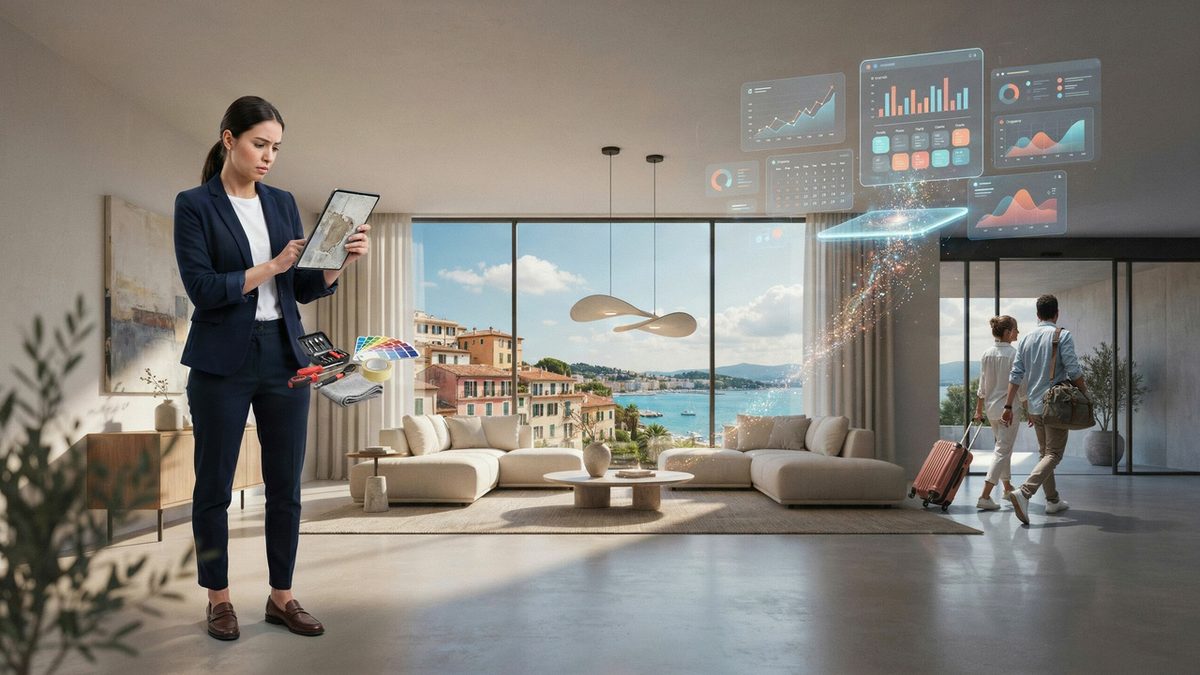
Short-term rental hosts face rising damage costs as AI and tech consolidation reshape business, with new research showing operators are paying more themselves while seeking simpler, smarter tools.
Short-term rental hosts face rising damage costs as AI and tech consolidation reshape business, with new research showing operators are paying more themselves while seeking simpler, smarter tools.
Advertisement
Advertisement
Short-term rental hosts are facing a tougher business reality as rising damage costs expose gaps in protection, while AI and tech consolidation reshape daily operations. New Hospitable research shows guest damage remains a significant financial burden, with many operators paying repair bills themselves.
At the same time, rental businesses are trimming fragmented technology stacks and increasingly accepting AI as a practical operating partner. The findings point to a wider shift: owners and managers want fewer systems, smarter decisions and less routine work. For the short-term rental sector, that combination could change how businesses control costs, manage risk and grow efficiently.
Advertisement
Advertisement
Guest damage is leaving operators out of pocket
Guest-caused damage remains one of the most persistent operational risks for short-term rental hosts and property managers, according to new research from short-term rental operating system Hospitable.
The research found that 60% of hosts and property managers experienced property damage caused by guests during the past 12 months. More than a third, or 36%, said they had dealt with damage on multiple occasions during that period.
Advertisement
Advertisement
For operators managing several homes, repeated incidents can create a particularly difficult financial equation. A damaged appliance, broken furniture, stained surfaces or other repair requirement can turn an otherwise profitable booking into an unexpected expense.
The bigger issue, however, is not simply the frequency of damage. It is the difficulty of recovering the money required to put a property back into rentable condition.
Advertisement
Advertisement
Among operators who experienced guest damage, 66% said they ultimately paid for repairs themselves because their insurance provider or booking channel did not cover the cost.
That figure highlights a substantial exposure for small and growing rental businesses. While individual repair bills may vary considerably, repeated uncovered claims can steadily erode margins.
For professional operators, the problem also extends beyond the repair invoice. Damage can require maintenance coordination, replacement purchases, contractor visits and additional management time. If a property cannot be marketed until the issue is resolved, there can also be a knock-on effect on future bookings.
The findings therefore put risk management alongside occupancy, pricing and guest satisfaction as a core consideration for the short-term rental sector.
Advertisement
Advertisement
Technology stacks are starting to become less fragmented
Short-term rental businesses have increasingly turned to software to manage the growing number of tasks involved in running properties.
Pricing, cleaning coordination, accounting, guest communication and property management can each involve dedicated platforms. For an operator with only a handful of properties, this can quickly result in several subscriptions and systems that need to work together.
Hospitable’s research suggests that this fragmentation remains widespread.
More than half of respondents, 56%, currently use two or three separate systems covering areas such as pricing, cleaning, accounting and messaging. A further 22% use four or more systems.
That means a significant proportion of operators are still navigating a complex technology environment to keep their businesses running.
However, there are signs that the market is beginning to move in the opposite direction.
Advertisement
Advertisement
Almost 30% of respondents said they had stopped using a standalone technology tool during the past 12 months. The most frequently cited reason was that their property management software had introduced the same functionality.
The trend is important because it suggests operators are increasingly questioning whether every operational requirement needs its own dedicated platform.
Instead, broader property management systems are becoming more attractive when they can combine multiple functions under one roof.
For businesses, consolidation can mean fewer subscriptions, fewer logins and less time spent moving information between different applications. It can also reduce the operational friction created when separate systems fail to communicate effectively.
That does not necessarily mean standalone software is disappearing. Specialist tools can still offer deeper functionality for particular requirements. But the research indicates that operators are becoming more selective about what deserves a permanent place in their technology stack.
AI is moving from experiment to operational tool
The strongest shift identified in the research concerns artificial intelligence.
Advertisement
Advertisement
AI has rapidly moved beyond its early role as an experimental technology in travel and hospitality. For short-term rental operators, the latest figures suggest that confidence is now extending to decisions that directly affect revenue and business performance.
Hospitable found that 60% of respondents already trust AI to take actions on their behalf or would be willing to try it.
Only 9% said they would not trust AI to act for them at all.
The willingness to delegate, however, depends on the task.
Pricing emerged as the area with the highest level of acceptance. Eighty-four per cent of respondents said they would allow AI to make pricing decisions.
That is particularly significant because pricing is one of the most commercially sensitive functions in a short-term rental business. Rates need to respond to demand, seasonality, local events, booking patterns, competition and availability.
Advertisement
Advertisement
Automating those decisions could reduce the amount of manual monitoring required from operators while potentially allowing businesses to react more quickly to market conditions.
The research also found that 70% would trust AI to generate owner reports, while 68% would use AI to identify underperforming listings.
Together, those figures suggest that operators are becoming comfortable with AI not merely as a writing or administrative assistant, but as a system capable of supporting analytical and commercial decisions.
Why the shift matters for professional operators
The three findings — guest damage, technology consolidation and AI adoption — are closely connected.
Short-term rental operators are under pressure to run increasingly sophisticated businesses without allowing administration to consume the time and resources required to manage properties effectively.
As portfolios expand, operational complexity tends to rise. More properties can mean more guests, more maintenance, more cleaning schedules, more financial reporting and more pricing decisions.
Advertisement
Advertisement
Historically, one response has been to add another software product whenever a new operational challenge appears. That approach can solve an immediate problem but create another one: a growing and fragmented technology stack.
The movement towards integrated property management platforms offers a different approach.
Instead of adding another standalone system, operators may increasingly expect existing software to absorb more functions. The appeal is straightforward: fewer tools can mean fewer processes to oversee.
AI could accelerate that change further.
If operators become comfortable delegating pricing, reporting and performance analysis to AI-powered systems, software could take on a greater share of repetitive decision-making. This would not remove the need for human oversight, particularly where financial, guest or property-related decisions carry significant consequences. But it could change where an operator spends their working day.
Rather than manually reviewing every listing, report or rate adjustment, managers could increasingly focus on exceptions, strategy, guest relationships and property growth.
Advertisement
Advertisement
A growing focus on risk as rental businesses mature
The damage findings provide an important counterpoint to the enthusiasm surrounding automation.
Technology can help operators work more efficiently, but it cannot eliminate physical risk from a property.
The fact that two-thirds of affected operators had to absorb repair costs themselves demonstrates why protection and recovery mechanisms remain important issues for the sector.
Insurance terms, booking-platform policies and damage recovery processes can differ, meaning operators need to understand exactly what protection they have before an incident occurs.
For hosts and managers, the lesson is practical. Technology decisions should not be considered separately from financial risk.
A cheaper or more efficient operating model can still be vulnerable if unexpected repair costs repeatedly consume revenue.
Advertisement
Advertisement
The most resilient businesses are therefore likely to combine operational efficiency with clear procedures for documenting damage, assessing responsibility, pursuing legitimate recovery and maintaining appropriate protection.
Hospitable sees appetite for greater automation
Pierre-Camille Hamana, CEO and Founder of Hospitable, said the research reflects a broader reality for hosts and property managers.
“Hosts and property managers have become used to carrying a huge amount of the operational burden themselves,” Hamana said. “When something goes wrong, they often pay for it. As their businesses grow, they add more tools, more subscriptions and more things to manage.”
He added that the research shows an appetite for technology capable of taking greater responsibility for everyday operations, whether by bringing more functions into one platform or allowing AI to make decisions.
That observation aligns with the broader direction of the short-term rental technology market, where operators increasingly want software to do more than simply store information.
The emerging expectation is for technology to actively support — and in some cases execute — routine operational work.
Advertisement
Advertisement
What the findings mean for the short-term rental market
Hospitable’s research offers a snapshot of an industry becoming more commercially mature.
Operators are dealing with real costs and operational pressures while simultaneously gaining access to increasingly sophisticated technology.
The 60% damage rate demonstrates that guest-related property risk remains widespread. The 66% self-funded repair rate among affected operators shows that recovering those costs can be challenging.
Meanwhile, the technology figures reveal a market looking for simplification. With 56% using two or three systems and 22% using four or more, there remains considerable room for consolidation.
The fact that 30% have already abandoned a standalone tool indicates that this process is underway.
AI could become the next major stage of that evolution. With 84% prepared to let AI handle pricing, 70% comfortable with AI-generated owner reports and 68% willing to use it to identify underperforming listings, resistance to practical AI applications appears to be falling.
Advertisement
Advertisement
The key question now is not whether technology will become more important to short-term rental operations. It is how much responsibility operators will ultimately be prepared to delegate.
For hosts and property managers, the most useful technology is likely to be technology that reduces workload without removing appropriate human control.
As the sector continues to professionalise, businesses that combine stronger risk management, simpler technology and carefully supervised automation may be better positioned to protect margins while managing growth.
The cause is clear: short-term rental operators are managing more properties, more operational tasks and more financial uncertainty than before. Guest damage creates unexpected costs, while multiple software subscriptions add complexity. The answer is not simply to adopt more technology. Operators need integrated systems that reduce duplication and AI tools that can handle suitable decisions under human oversight. The reason is practical. Lower administrative friction can free managers to focus on guests, property quality and growth, while better risk controls can protect profitability. Hospitable’s findings show that operators are already moving in this direction, particularly as confidence in automation continues to increase.
Hospitable’s latest research points to three defining pressures facing the short-term rental industry: property damage, technology complexity and the need to operate more efficiently. Six in ten operators reported guest-caused damage, while 66% of affected businesses had to cover repairs themselves. At the same time, many operators are beginning to reduce the number of standalone software tools they use. AI is emerging as another major change, with most respondents willing to trust it with practical operational responsibilities. Together, the findings suggest a market moving towards integrated platforms, automated decisions and stronger cost control, while retaining human oversight for important business judgements.
“Short-term rental businesses are entering a more disciplined phase, where efficiency, risk control and intelligent technology increasingly matter alongside bookings and occupancy. The Hospitable findings are significant because they show that operators are not simply interested in adding technology; they want technology that solves genuine operational problems. The strong acceptance of AI for pricing and performance analysis is particularly notable. At the same time, the high level of self-funded damage costs underlines the need for stronger risk-management practices. This combination of automation and accountability could shape the next stage of professional short-term rental growth.”— Anup Kumar Keshan, Founder and Editor-in-Chief, Travel And Tour World
Advertisement
