

Malta Takes Global Tourism Spotlight as WTTC Forecasts Europe Travel Growth to Reach 3.1% in 2026

Published
Travel and Tourism in Europe will be moving towards yet another year of growth in 2026 with a projected 3.1% growth rate that will solidify its importance as one of the key drivers of economic activities and international tourism revenue in Europe.
The latest industry outlook indicates that European Travel & Tourism is expected to grow faster than the wider economy during the year. The projected 3.1% growth in 2026 also represents an acceleration from the 2.6% growth recorded in 2025, signalling continued resilience despite persistent economic and geopolitical uncertainty.
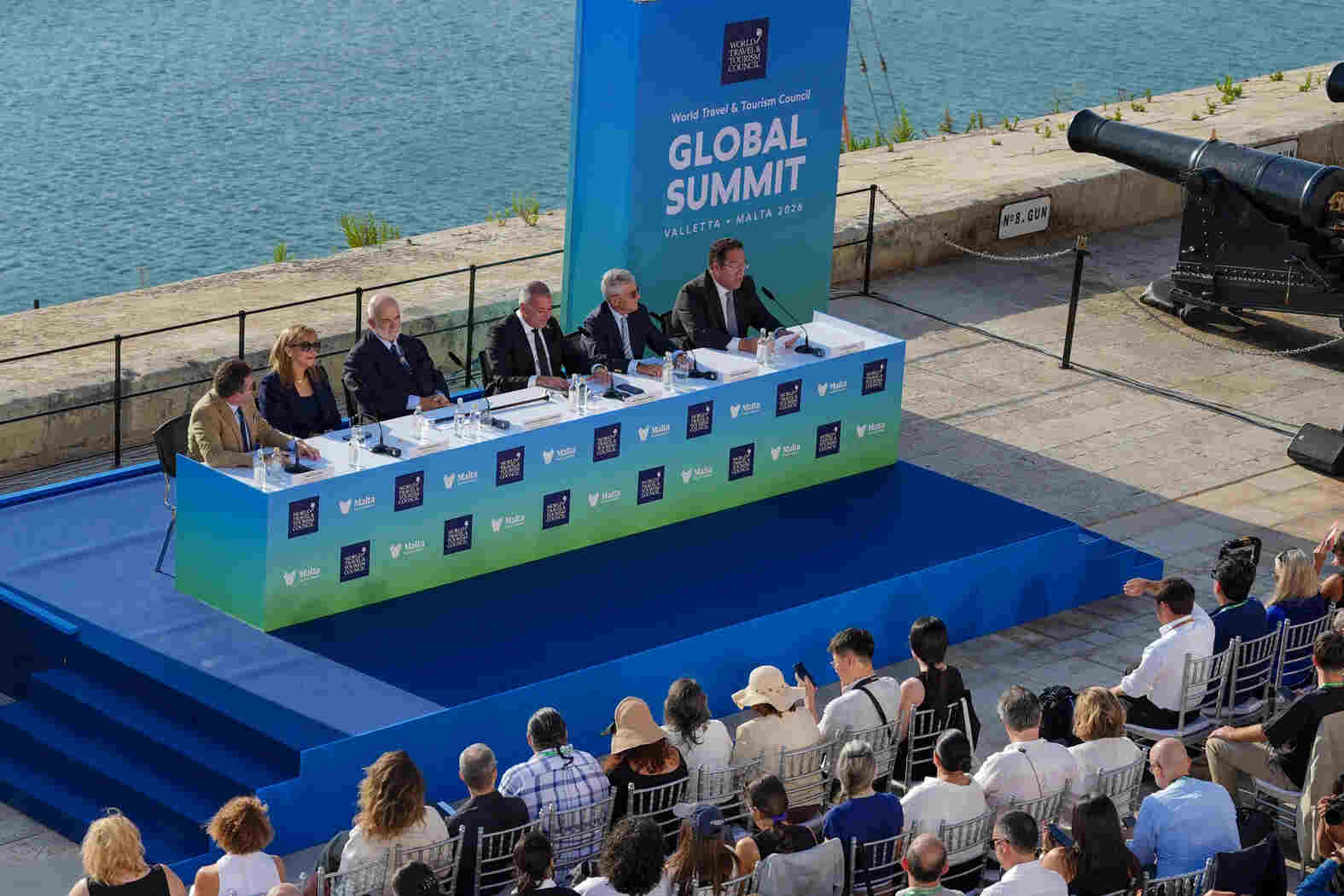
The new findings were released by the World Travel & Tourism Council (WTTC) as its 26th Global Summit opened in Malta, placing the Mediterranean destination at the centre of discussions about the future of international tourism.
More than 1,000 delegates are gathering in Valletta for the major industry event. The programme brings together more than 200 senior Travel & Tourism executives and government leaders, while over 100 speakers are participating across the Summit.
Advertisement
Advertisement
The scale of the gathering reflects the economic importance of the global visitor economy at a time when destinations are balancing rising travel demand with questions surrounding investment, connectivity, technology, employment, competitiveness and sustainable development.
Europe Tourism Growth Moves Ahead of Wider Economic Expansion
The latest outlook presents an encouraging picture for Europe.
Advertisement
Advertisement
Travel & Tourism across the continent is forecast to expand by 3.1% in 2026, exceeding the sector’s 2025 growth rate and demonstrating its capacity to generate economic activity even during a period of considerable uncertainty.
Europe’s performance is also expected to exceed the global Travel & Tourism growth forecast.
Advertisement
Advertisement
Worldwide, the sector is projected to grow by approximately 2.5% in 2026. This means Europe’s forecast expansion is around 0.6 percentage points higher than the projected global Travel & Tourism growth rate.
The comparison reinforces Europe’s continuing importance within the international visitor economy. The region combines mature tourism markets with major aviation gateways, extensive rail networks, internationally recognised cultural destinations, Mediterranean leisure markets, established business centres and a wide variety of urban and rural tourism products.
Growth therefore extends beyond traditional holiday travel. Tourism expenditure feeds into accommodation, restaurants, transportation, attractions, retail, entertainment and numerous other industries connected with visitor activity.
International Visitor Spending Forecast to Rise 5.8%
One of the strongest indicators in the 2026 European outlook is the expected increase in international visitor expenditure.
Advertisement
Advertisement
Spending by international travellers across Europe is projected to rise by 5.8%, significantly faster than the forecast rate of overall Travel & Tourism growth.
This matters because international visitor expenditure represents direct economic value entering destinations from overseas markets. Travellers spend money across hotels, restaurants, cafés, transport systems, cultural attractions, shopping districts and entertainment businesses.
A 5.8% increase could consequently benefit a broad tourism ecosystem rather than one segment alone.
For destinations, the figures also underline the importance of maintaining international accessibility and destination competitiveness. Efficient aviation connections, rail services, border processes, accommodation capacity and tourism infrastructure remain essential if destinations are to convert travel demand into economic value.
Europe’s extensive network of established destinations gives the region a significant advantage, but competition for international travellers continues to intensify globally.
Leisure Travel Spending Expected to Advance 3.1%
Leisure tourism is also expected to continue expanding during 2026.
Advertisement
Advertisement
Spending connected with leisure travel across Europe is forecast to increase by 3.1%.
The projection indicates that holidays and recreational travel should remain a major source of demand across the continent. Mediterranean destinations, European capitals, coastal regions, heritage cities, islands, mountain areas and rural destinations all form part of this enormous leisure tourism marketplace.
The continued expansion of leisure expenditure is particularly significant for destinations where tourism forms a substantial part of the local economy.
Hotels, holiday accommodation providers, restaurants, attractions, tour businesses and local transport operators can all benefit when visitor demand remains strong.
However, growth also increases the importance of effective destination management. Popular tourism markets need to balance rising demand with infrastructure capacity, environmental considerations, resident interests and the long-term quality of the visitor experience.
Business Travel Spending Could Grow Faster Than Leisure
Business travel presents another important element of the European outlook.
Advertisement
Advertisement
Business travel expenditure is forecast to grow by 4.2% in 2026, exceeding the expected 3.1% increase in leisure spending.
This stronger growth could provide additional momentum for major commercial and conference destinations across Europe.
Business travel supports a broad network of economic activities, including hotels, meeting venues, conference centres, airlines, rail services, restaurants, ground transportation providers and event organisers.
The projected increase also highlights the continuing economic relevance of face-to-face meetings, conferences, exhibitions and corporate events despite major changes in workplace technology and communication.
For European destinations competing for international conventions and business events, investment in connectivity, venues, digital infrastructure and accommodation remains an important component of tourism competitiveness.
Tourism Continues to Support Around One in Ten European Jobs
Travel & Tourism remains deeply connected with Europe’s labour market.
Advertisement
Advertisement
The sector supports approximately one in every ten jobs across the region, demonstrating how tourism growth can influence employment well beyond hotels and conventional tourism businesses.
Employment linked to the visitor economy stretches across aviation, accommodation, food services, attractions, travel agencies, tour operations, retail, cultural institutions, events and transportation.
There are also indirect employment effects across supply chains that provide goods and services to tourism businesses.
The scale of employment makes workforce development an increasingly important issue for the industry’s next stage of growth. Destinations need sufficient numbers of trained workers to maintain service quality as visitor demand increases.
Skills development, recruitment, productivity and technology adoption are therefore becoming central components of the wider tourism growth discussion.
Malta Becomes the Centre of the Global Tourism Conversation
The latest forecasts have been released as Malta hosts the WTTC’s FUTU[RE]SET Global Summit, bringing a major international tourism gathering to Valletta.
Advertisement
Advertisement
More than 1,000 delegates are attending, including hundreds of senior figures from the global tourism industry and public sector.
More than 100 speakers are taking part across the programme, allowing the Summit to examine some of the most significant issues affecting tourism development.
The event provides a platform for discussions about how destinations and businesses can remain competitive while adapting to economic uncertainty, technological change and evolving traveller expectations.
The decision to stage the Summit in Malta also places attention on a destination where tourism represents a particularly large component of national economic activity.
Investment and Connectivity Take Centre Stage
Investment and connectivity are among the principal themes shaping the Summit agenda.
Both issues are fundamental to the expansion of international tourism.
Advertisement
Advertisement
Destinations require sustained investment in airports, transport networks, accommodation, attractions, digital infrastructure and public services if they are to accommodate increasing visitor volumes effectively.
Connectivity is equally important. Travellers need convenient access to destinations, whether through aviation, rail, road or maritime networks.
For smaller and island economies, international transport connectivity can have an especially significant impact on tourism competitiveness.
The European tourism outlook therefore depends not only on traveller demand but also on the industry’s capacity to invest in infrastructure and provide efficient links between source markets and destinations.
Artificial Intelligence and Technology Move Higher Up Tourism Agenda
Technology and artificial intelligence are another major focus of discussions surrounding the future of Travel & Tourism.
Digital systems now influence almost every stage of the travel journey.
Advertisement
Advertisement
Travellers research destinations online, compare accommodation and transportation, make digital bookings, navigate destinations using mobile technology and increasingly interact with automated systems throughout their journeys.
Artificial intelligence is accelerating that transformation.
For tourism businesses, technology can support demand forecasting, customer service, pricing, operational efficiency and personalised travel planning.
Destinations can also use digital systems to understand visitor flows and improve tourism management.
However, technological adoption creates new requirements for workforce skills, investment and responsible implementation. The challenge for the industry is therefore not simply to adopt new technology, but to integrate it in ways that improve productivity and the traveller experience.
Malta Tourism Economy Forecast to Reach US$4.9 Billion
Malta itself provides a striking example of tourism’s economic importance.
Advertisement
Advertisement
Travel & Tourism is forecast to contribute approximately US$4.9 billion to Malta’s economy in 2026, according to the latest Economic Impact Research figures cited in the industry outlook.
That contribution is expected to represent 16.9% of Malta’s GDP.
In practical terms, almost one-sixth of the country’s economic output is projected to be associated with Travel & Tourism.
The employment impact is even more pronounced.
Tourism is expected to support more than one in five jobs in Malta, illustrating how deeply the visitor economy is connected with employment and commercial activity across the island nation.
These figures help explain why tourism policy, infrastructure, investment and connectivity carry considerable economic importance for Malta.
Advertisement
Advertisement
Malta Emerges as One of Europe’s Fastest-Growing Tourism Economies
Malta’s recent tourism performance has also placed it among Europe’s strongest performers.
In 2025, the country’s Travel & Tourism GDP contribution increased by 16.8%, the highest annual increase recorded among European economies in the data presented.
That performance dramatically exceeded the 2.6% European average for the same year.
The difference is substantial.
Malta’s Travel & Tourism GDP growth rate was more than six times the European average, demonstrating the strength of the sector’s expansion within the country’s economy.
For a relatively small island destination, strong tourism growth can create significant economic opportunities. At the same time, rapid expansion increases the importance of managing infrastructure, accommodation capacity, transport networks and destination resources effectively.
Advertisement
Advertisement
Sustainable Destination Growth Becomes a Critical Priority
Sustainability is increasingly moving from a long-term tourism ambition into a central economic and destination-management issue.
As international arrivals and visitor expenditure rise, destinations need to consider how tourism growth interacts with infrastructure, natural resources and local communities.
The objective is not simply to attract larger numbers of visitors.
Destinations increasingly need to generate greater economic value while maintaining the quality of the visitor experience and protecting the assets that make them attractive in the first place.
This approach can involve improving transport systems, spreading visitor demand across different locations and seasons, strengthening local tourism supply chains and investing in infrastructure that serves both visitors and residents.
For Europe, where many tourism destinations are already mature and heavily visited, sustainable growth will be particularly important.
Advertisement
Advertisement
Destination Competitiveness Will Shape Europe’s Next Tourism Chapter
Europe enters 2026 from a position of considerable tourism strength, but destinations cannot assume that future growth will happen automatically.
International tourism is highly competitive.
Destinations across Asia, the Middle East, Africa and the Americas are investing heavily in aviation connectivity, hotels, attractions, technology and destination marketing.
European destinations therefore need to maintain quality while improving accessibility, digital capability and visitor experience.
The forecast 5.8% increase in international visitor spending provides a major economic opportunity, but destinations will need adequate capacity to capture that demand.
Investment decisions made now could determine which markets gain the greatest share of future tourism growth.
Advertisement
Advertisement
Workforce Development Becomes Essential for Long-Term Expansion
The employment scale of Travel & Tourism means workforce development will remain fundamental to the industry’s future.
With approximately one in ten European jobs supported by the sector, continued growth creates opportunities but can also place pressure on labour supply.
Hotels, restaurants, airports, attractions, event venues and tourism businesses require skilled workers capable of delivering reliable services.
Technology can improve efficiency, but tourism remains fundamentally dependent on people.
Training, skills development and talent retention will therefore remain closely connected with competitiveness.
Destinations that successfully combine technology with a capable tourism workforce may be better positioned to maintain service standards while visitor demand expands.
Advertisement
Advertisement
Europe’s Tourism Economy Enters 2026 With Strong Momentum
The latest outlook ultimately points towards another important year for Europe’s visitor economy.
Travel & Tourism growth of 3.1% would exceed the previous year’s 2.6% expansion and surpass the projected 2.5% global Travel & Tourism growth rate.
International visitor spending is expected to provide additional momentum with a 5.8% increase, while leisure spending is forecast to rise 3.1% and business travel expenditure 4.2%.
Behind those percentages sits an enormous economic network supporting roughly one in ten jobs across Europe.
Malta illustrates that impact particularly clearly. Travel & Tourism is forecast to contribute US$4.9 billion to the country’s economy in 2026, equal to 16.9% of GDP, while supporting more than one-fifth of national employment.
After Malta recorded a 16.8% increase in Travel & Tourism’s GDP contribution in 2025, compared with Europe’s 2.6% average, the country enters the Summit as both host and an example of the scale tourism can achieve within a national economy.
Advertisement
Advertisement
The wider European outlook is similarly positive, although future success will depend on more than visitor numbers alone. Investment, international connectivity, artificial intelligence, workforce development, destination competitiveness and sustainable management are becoming increasingly interconnected.
Europe’s Travel & Tourism industry is therefore moving into 2026 with considerable momentum. The challenge ahead will be turning that growth into durable economic value while ensuring destinations, businesses, workers and local communities can benefit from the continuing expansion of international travel.
Advertisement
