

Cleveland Takes the Lead Over St. Louis and Philadelphia as America’s Most Affordable Digital Detox Getaway in 2026

Published
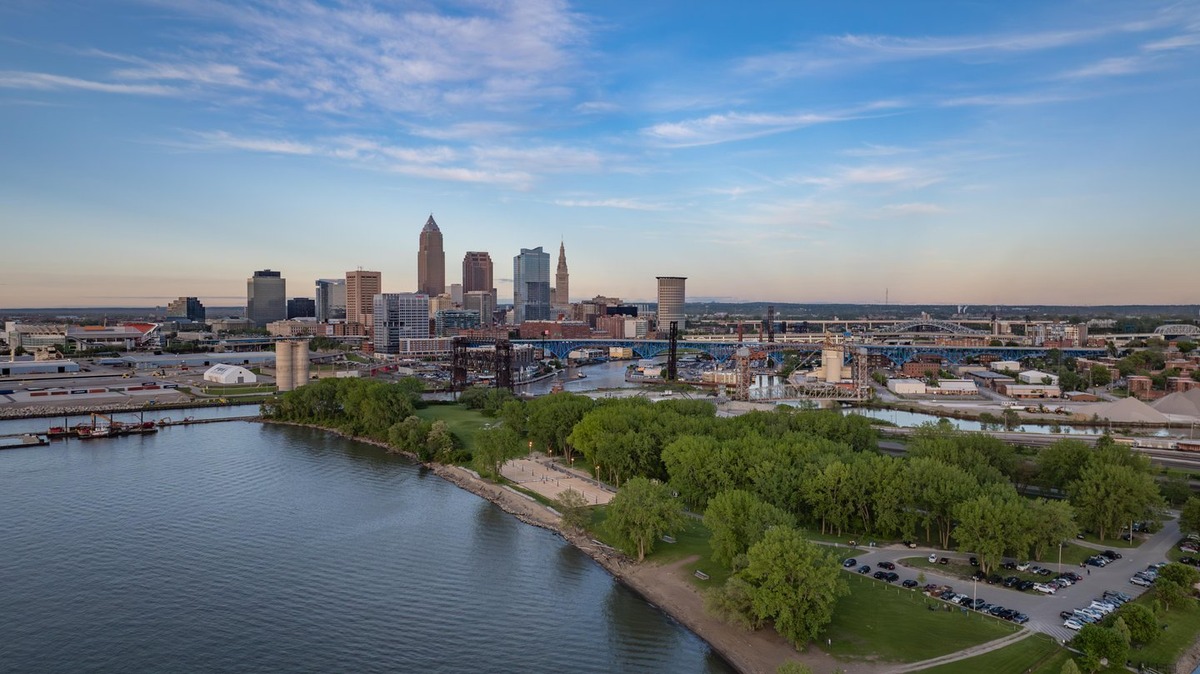
Cleveland, St. Louis, Philadelphia, Memphis and Cincinnati are leading a new ranking of America’s most affordable destinations for a screen-free weekend, after a September 2026 study by Overnight Glasses compared popular US city-break destinations on accommodation, dining, drinks, coffee, entertainment and access to offline activities. Cleveland took first place with an estimated two-day Screen-Free Weekend Cost of $1,092, as travellers looking to disconnect from phones and other digital devices increasingly find affordable alternatives in Midwestern and inland US cities.
The study puts a price on an emerging form of short-break travel: leaving everyday digital routines behind without paying premium wellness-retreat prices. Instead of sending travellers to an isolated resort or expensive retreat, the ranking identifies cities where an ordinary weekend can become a digital detox through parks, trails, restaurants, cafes, cultural attractions, markets and other real-world experiences.
Advertisement
Advertisement
St. Louis ranked second at $1,115.18, followed by Philadelphia at $1,140.08, Memphis at $1,146.18 and Cincinnati at $1,159.78. Salt Lake City, Indianapolis, Albuquerque, Pittsburgh and San Antonio completed the top 10. The geographical pattern is particularly significant for the US visitor economy. Rather than being dominated by the country’s biggest coastal tourism centres, the list favours Midwestern and inland destinations where accommodation and everyday visitor spending can remain comparatively manageable while parks and free activities provide alternatives to screen-based entertainment.
The ranking is a commercial study rather than an official government tourism index, meaning its proprietary cost and per-capita figures should be understood as the study’s estimates. However, official municipal information supports the wider premise that several leading destinations possess extensive public recreation infrastructure. Cleveland, for example, says the city owns and operates 160 parks and 20 recreation centres, while Philadelphia protects more than 10,200 acres of public land and waterways.
Advertisement
Advertisement
Digital Detox Travel Turns an Everyday City Break Into a Wellness Escape
The study arrives as the relationship between tourism and technology becomes increasingly complicated. According to the figures supplied with the research, the average American spends around 2.5 hours a day scrolling through apps, while overall daily screen exposure reaches approximately five to six hours for Millennials and more than seven hours for Gen Z.
The concept behind a digital-detox holiday is simple. Travellers temporarily reduce their dependence on phones, social platforms and other screens and replace digital stimulation with walking, dining, nature, cultural activities and face-to-face experiences. A destination does not need to construct an expensive wellness resort to participate in the trend. Existing parks, trails, riverfronts, markets, cafes, museums, historic neighbourhoods and public spaces can effectively become part of the wellness tourism product. That makes the trend particularly relevant to cities with strong public infrastructure but lower visitor costs.
Advertisement
Advertisement
America’s 10 Cheapest Cities for a Screen-Free Weekend
The September 2026 study calculated a Screen-Free Weekend Cost for a standard two-day trip and assessed the availability of restaurants and cafes, parks and free activities.
| Rank | US Destination | Cafes & Restaurants* | Parks* | Free Activities* | Screen-Free Weekend Cost |
|---|---|---|---|---|---|
| 1 | Cleveland, Ohio | 210.46 | 13.38 | 7.85 | $1,092.00 |
| 2 | St. Louis, Missouri | 457.73 | 39.21 | 16.20 | $1,115.18 |
| 3 | Philadelphia, Pennsylvania | 369.92 | 15.41 | 11.09 | $1,140.08 |
| 4 | Memphis, Tennessee | 53.80 | 2.52 | 1.93 | $1,146.18 |
| 5 | Cincinnati, Ohio | 248.86 | 17.84 | 8.21 | $1,159.78 |
| 6 | Salt Lake City, Utah | 114.44 | 8.03 | 5.23 | $1,194.62 |
| 7 | Indianapolis, Indiana | 64.12 | 3.46 | 1.25 | $1,206.76 |
| 8 | Albuquerque, New Mexico | 85.23 | 7.05 | 3.58 | $1,253.88 |
| 9 | Pittsburgh, Pennsylvania | 341.32 | 18.60 | 12.64 | $1,285.42 |
| 10 | San Antonio, Texas | 93.33 | 3.83 | 1.70 | $1,289.59 |
*Per-capita indicators as reported in the September 2026 study.
Advertisement
Advertisement
The difference between Cleveland in first place and San Antonio in tenth is $197.59. That relatively compact spread shows that all ten destinations fall within a broadly similar budget band, even though their individual strengths differ considerably. Some win through cheaper accommodation. Others stand out for parks, restaurants or free attractions.
Cleveland Takes the Crown at $1,092 for Two Days
Cleveland is the cheapest digital-detox destination in the study, with its complete weekend estimated at $1,092. The Ohio city recorded 210.46 cafes and restaurants per capita, 13.38 parks and 7.85 free activities under the study’s measurements. Individual visitor costs were also competitive. The research put an average hotel room at $123 per night, while a restaurant meal cost approximately $17.50. A casual drink averaged $6, a cappuccino $5.75 and a cinema ticket $15.
The study also counted more than 1,600 dining establishments and over 100 parks, giving travellers alternatives to spending an entire weekend indoors or online. Official city information reinforces the importance of Cleveland’s outdoor infrastructure. The municipal government says it owns and operates 160 parks, alongside 20 recreation centres and specialist facilities. Cleveland’s parks range from large regional parks to community and neighbourhood green spaces, with facilities including playgrounds, sports areas, trails and gathering spaces.
For tourism businesses, Cleveland‘s result demonstrates how affordability itself can become part of a wellness proposition. Instead of paying for a dedicated detox programme, travellers can use ordinary urban infrastructure to create their own break: breakfast in a cafe, a morning walk, lunch, an afternoon in a park, dinner and an evening activity. The phone becomes optional rather than central to the experience.
Advertisement
Advertisement
St. Louis Nearly Overtakes Cleveland With Exceptional Offline Choice
Only $23.18 separates first-place Cleveland from second-place St. Louis. St. Louis recorded a total Screen-Free Weekend Cost of $1,115.18, but it substantially outperformed Cleveland on several of the study’s offline amenity measurements. The Missouri destination recorded 457.73 cafes and restaurants, 39.21 parks and 16.20 free activities per capita. Its cappuccino price was estimated at $5.12.
Those numbers make St. Louis particularly interesting from a digital-detox perspective. A cheap destination is useful only when visitors have enough to occupy their time after putting their phones away. St. Louis offers that combination through dining, public spaces, riverfront walks and major green areas.
Its wider park infrastructure gives the city a particularly strong offline proposition. Parks can turn an inexpensive urban break into a slower itinerary built around walking, picnics, recreation and cultural exploration rather than continuous paid entertainment. That gives the destination a potential advantage with travellers who want wellness benefits but do not necessarily identify with traditional spa or retreat holidays.
Philadelphia Becomes the Standout East Coast Digital Detox City
Philadelphia ranks third at $1,140.08, making it the leading major East Coast city in the top 10. The Pennsylvania destination recorded 369.92 cafes and restaurants, 15.41 parks and 11.09 free activities per capita under the study methodology. An average hotel night was calculated at $127, while a restaurant meal averaged $22 and a cappuccino $5.27.
Philadelphia’s advantage is the combination of urban heritage and extensive outdoor infrastructure. Official city information shows Philadelphia Parks & Recreation protects more than 10,200 acres of public land and waterways and manages parks, playgrounds, recreation facilities, environmental areas and cultural spaces. The city’s trail network is another important asset for screen-free tourism. Philadelphia Parks & Recreation reports 166 miles of trails, including the Schuylkill River Trail, Manayunk Canal Tow Path, Delaware River Trail, Forbidden Drive in Wissahickon Valley Park, Pennypack Park Trail and Tacony Creek Trail.
For visitors, this creates considerable flexibility. A weekend does not have to revolve entirely around ticketed attractions. Historic neighbourhoods can be combined with river walks, parkland, trails and public spaces. Philadelphia therefore illustrates how a traditional heritage city can also function as a modern wellness destination without abandoning its established tourism identity.
Advertisement
Advertisement
Memphis Uses America’s Lowest Top-Ranked Hotel Rate to Reach Fourth Place
Memphis takes fourth position with an estimated weekend cost of $1,146.18. One figure stands out: $122 per night for accommodation. According to the study, this was the lowest reported average hotel rate among the leading destinations, giving Memphis a major advantage because accommodation normally accounts for a substantial share of short-break expenditure. A restaurant meal averaged $18, while a casual drink cost approximately $6.50.
Memphis recorded 53.80 cafes and restaurants, 2.52 parks and 1.93 free activities per capita. Its per-capita scores therefore fall considerably below those of St. Louis and Philadelphia, yet lower visitor costs keep the city highly competitive overall. The study also highlights more than 1,500 food and cafe establishments, over 70 parks, outdoor markets and riverfront routes. That creates a different digital-detox proposition.
Memphis does not need to compete directly with St. Louis on park density. Its strength is that travellers can secure relatively inexpensive accommodation and then build an offline itinerary around food, outdoor spaces, markets, neighbourhood exploration and the riverfront.
Cincinnati Puts a Second Ohio Destination Into America’s Top Five
Ohio is the only state to place two cities in the top five, with Cincinnati joining Cleveland. Cincinnati’s estimated Screen-Free Weekend Cost stands at $1,159.78. It registered 248.86 cafes and restaurants, 17.84 parks and 8.21 free activities per capita. The study additionally identified almost 2,000 cafe and dining locations and around 140 parks within its broader dataset.
A casual drink averaged $5.50, while a cinema ticket cost approximately $14.50. Official Cincinnati Parks information provides further context. The city’s park system comprises five regional parks, 70 neighbourhood parks and 34 natural areas. Locations such as Ault Park provide nature trails, picnic areas, children’s facilities and Ohio River viewpoints, showing how existing public assets can support the kind of low-screen itinerary measured by the study. The combined performance of Cleveland and Cincinnati strengthens the Midwest’s position in the ranking.
Salt Lake City Brings Mountains Into the Digital Detox Equation
Salt Lake City ranks sixth at $1,194.62. The Utah capital recorded 114.44 cafes and restaurants, 8.03 parks and 5.23 free activities per capita. Unlike destinations whose digital-detox appeal is largely concentrated within the urban area, Salt Lake City benefits from the relationship between metropolitan amenities and the wider outdoor landscape.
Advertisement
Advertisement
This makes the destination relevant to travellers who want restaurants and city comforts but also see walking, outdoor recreation and nature as central parts of switching off. Its sixth-place result also demonstrates that the digital-detox category is not limited to the lowest-cost destinations. Access to outdoor experiences can itself contribute to perceived value.
Indianapolis Keeps the Screen-Free Weekend Near $1,200
Indianapolis follows in seventh position with a Screen-Free Weekend Cost of $1,206.76. The Indiana capital recorded 64.12 cafes and restaurants, 3.46 parks and 1.25 free activities per capita under the research methodology. Indianapolis does not lead the ranking for amenity density. Its strength is instead its ability to provide the components of a conventional Midwestern city break within the study’s lower-cost range.
That matters commercially. Digital-detox travel does not necessarily require specialised products. Hotels can promote nearby walking routes. Restaurants can become part of slow-travel itineraries. Parks can support mornings away from devices. Cultural venues can provide afternoon entertainment. Existing city infrastructure can therefore be repackaged around the motivation to disconnect.
Albuquerque Gives the Southwest a Place Among America’s Cheapest Detox Breaks
Albuquerque ranks eighth with an estimated weekend expenditure of $1,253.88. The New Mexico city registered 85.23 cafes and restaurants, 7.05 parks and 3.58 free activities per capita. Albuquerque also introduces a very different landscape to the ranking. Its desert setting and proximity to mountain recreation allow the city to offer an outdoor-led break distinct from the park-and-riverfront experience available in several Midwestern destinations.
That diversity is important to the development of the digital-detox market. Travellers are not necessarily searching for one standardised experience. Some may prefer an urban park. Others may favour historic streets, mountain paths, desert scenery, riverside walking or cafe culture. The common element is that the destination offers enough real-world stimulation to reduce the need for digital entertainment.
Pittsburgh Scores Strongly for Free Activities Despite Higher Weekend Costs
Pittsburgh ranks ninth at $1,285.42, but its amenity scores tell a more nuanced story. The Pennsylvania city recorded 341.32 cafes and restaurants, 18.60 parks and 12.64 free activities per capita. Those figures put Pittsburgh among the stronger performers for offline infrastructure despite its higher overall cost.
Advertisement
Advertisement
In fact, its free-activity score is behind only St. Louis among the ten destinations based on the figures supplied, while its cafe and restaurant density also performs strongly. Pittsburgh therefore demonstrates why price alone does not tell the full story. Travellers considering a screen-free weekend may accept slightly higher expenditure if a destination provides enough free and accessible experiences to fill the itinerary. Pennsylvania’s presence through both Philadelphia and Pittsburgh also shows that the trend extends beyond the Midwest.
San Antonio Completes the Top Ten at $1,289.59
San Antonio rounds out the ranking with a total Screen-Free Weekend Cost of $1,289.59. The Texas destination recorded 93.33 cafes and restaurants, 3.83 parks and 1.70 free activities per capita. Although it is the most expensive of the ten cities, San Antonio remains below $1,300 under the study’s two-day model.
Its walking environments are particularly relevant to screen-free travel. A visitor can structure significant portions of a city break around exploring public spaces, eating, walking and sightseeing rather than spending long periods dependent on digital entertainment. The city’s inclusion also expands the geographic reach of the list, showing that the study’s affordability proposition is not confined to Ohio, Missouri, Indiana or Pennsylvania.
What Does a $1,092 Digital Detox Weekend Actually Include?
The ranking is based on five central visitor expenditure categories:
- Two nights of hotel accommodation
- Multiple restaurant meals
- Casual or alcoholic drinks
- Cappuccinos and cafe visits
- Cinema tickets or baseline entertainment expenditure
Researchers then evaluated those costs alongside the per-capita availability of cafes and restaurants, parks and free activities. This second stage is important. A city could theoretically have extremely cheap accommodation but still perform poorly as a screen-free destination if travellers had few things to do without paying heavily for entertainment.
The ranking therefore attempts to measure the relationship between cost and offline choice, rather than hotel prices alone. The Screen-Free Weekend Cost should nevertheless be treated as a comparative estimate rather than a guaranteed package price. Real travellers may spend substantially more or less depending on travel dates, hotel category, restaurant choice, taxes, transport costs, attractions and personal spending behaviour.
Advertisement
Advertisement
Parks Are Becoming More Valuable to the Urban Visitor Economy
One of the strongest messages emerging from the ranking is the tourism value of public green infrastructure. Parks traditionally sit outside the commercial core of the visitor economy because admission is often free. Yet in digital-detox tourism, that lack of commercialisation can become part of their appeal. A traveller can spend several hours walking, reading, exercising, picnicking or simply sitting outside without buying another ticket or opening another app.
Cleveland provides a particularly strong example. Its municipal park system includes regional, community and neighbourhood parks, with city information describing spaces for both active and passive recreation. Philadelphia goes further by combining extensive public land with a large trail system. Its 166 miles of trails serve residents, commuters and visitors and range from major regional routes to smaller nature trails. Cincinnati similarly operates a mix of regional parks, neighbourhood parks and natural areas, creating multiple ways to move outdoor recreation into an urban itinerary
Advertisement
