
United Kingdom Travellers Enter a New Era of European Holidays as France, Spain, Italy and Schengen Destinations Transform Border Crossings With Digital Biometric Entry Exit System

Published
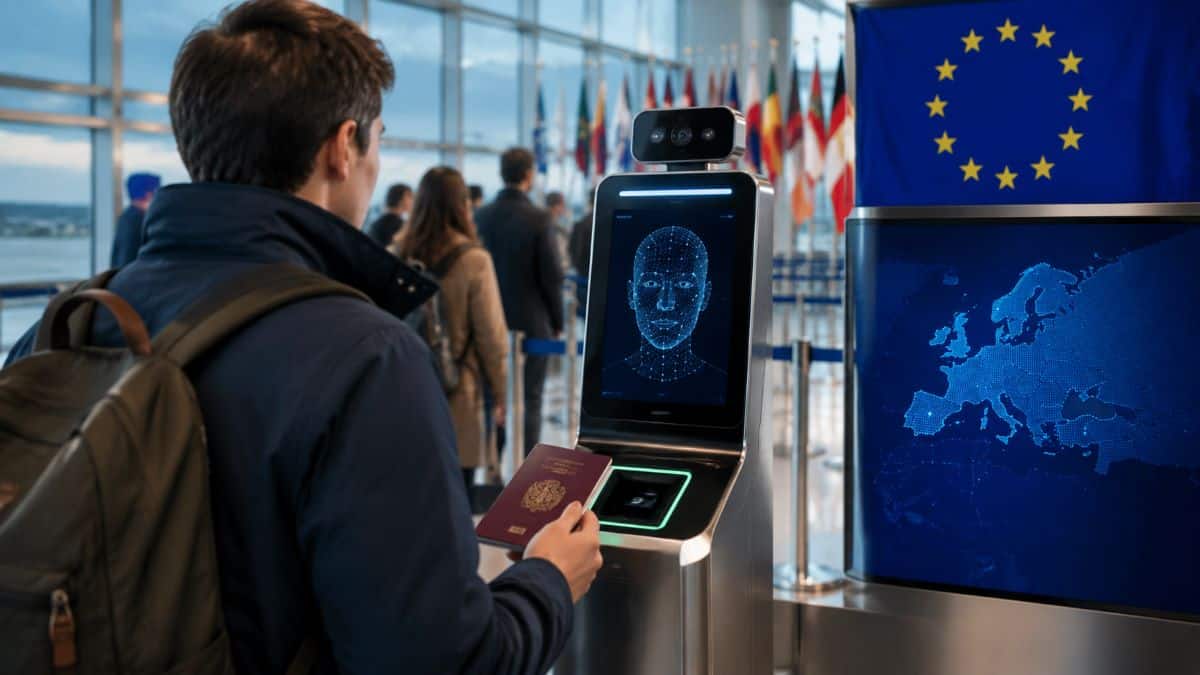
Image generated with Ai
United Kingdom travellers heading to France, Spain, Italy and other popular Schengen destinations are entering a new chapter of international travel as Europe introduces a digital Entry Exit System (EES) that replaces traditional passport stamping with advanced biometric border technology. The new system is reshaping how millions of British holidaymakers experience European journeys by introducing electronic registration, facial recognition and fingerprint checks at external Schengen borders.
The EU Entry Exit System has been introduced to create a smarter, more secure and fully digital border network across participating European countries. For British visitors, the change marks one of the biggest adjustments to Europe travel procedures since the United Kingdom left the European Union.
Rather than receiving a passport stamp at every crossing, eligible travellers now have their movements recorded electronically through a centralised border management system. The initiative covers short stays for tourism, business and family visits across the Schengen Area.
France Spain Italy and Europe’s Most Popular Destinations Adopt New Digital Travel Controls
The new border system directly affects some of Europe’s busiest tourism markets, including France, Spain, Italy, Greece, Portugal, Germany, Austria and Croatia, where British visitors form one of the largest international visitor groups.
Advertisement
Advertisement
The European Commission developed EES to modernise border management and provide authorities with a more accurate picture of visitor movements. The system records important travel information, including passport details, entry and exit dates, facial images and fingerprints.
The introduction of EES means that British travellers arriving at European airports, ferry terminals and international rail stations may experience a different border process compared with previous journeys. Instead of a quick passport stamp, visitors may need to complete biometric registration before continuing their holiday.
Advertisement
Advertisement
The system applies across the Schengen Area, which includes 29 participating countries. Alongside EU members, it also covers Iceland, Norway, Switzerland and Liechtenstein. However, travel between the United Kingdom and Ireland remains outside the EES framework because separate border arrangements continue.
Biometric Passport Checks Become the New Standard for UK Visitors
One of the most significant changes under EES is the introduction of biometric verification. When a British traveller first enters the Schengen Area after the system’s implementation, border authorities may collect a facial image and fingerprints to create a digital travel record.
The European Union has designed this process to improve identity verification and reduce dependence on manual checks. The biometric information is linked to the traveller’s passport details, creating a secure electronic profile that can be accessed during future border crossings.
The UK government confirms that travellers do not need to complete an EES application before departure. Registration takes place directly at the border when entering or leaving participating Schengen countries.
The process may differ depending on the travel route. Passengers travelling through airports usually complete checks after reaching their first Schengen destination. Meanwhile, travellers using international rail services or certain ports may complete border procedures before departure where European border controls operate outside the destination country.
Europe’s Smart Border Strategy Aims to Improve Security and Travel Management
The Entry Exit System forms part of the European Union’s wider Smart Borders programme, which focuses on using technology to improve international mobility while strengthening security standards.
Advertisement
Advertisement
The system has been created to automatically record when non-EU visitors enter and leave the Schengen Area. This allows authorities to monitor compliance with the short-stay limit of 90 days within any 180-day period.
European officials expect digital records to make border checks more efficient by reducing administrative processes and helping identify irregular travel patterns. The system also supports efforts to prevent identity fraud and the misuse of travel documents.
For Europe’s tourism industry, the introduction of EES represents a major operational transformation. Airports, ferry terminals and railway stations have been required to adapt infrastructure, install new equipment and prepare staff for the updated procedures.
British Holidaymakers Need Greater Preparation Before Europe Trips
With millions of UK travellers continuing to choose European destinations such as France, Spain and Italy for summer holidays, city breaks and cultural journeys, preparation has become increasingly important.
British visitors are required to ensure that passports meet Schengen travel requirements before departure. Travellers should also expect additional time for border processing, particularly during peak travel periods when airports and ports experience higher passenger volumes.
The European Union and UK government have advised travellers to follow official guidance and check updates before travelling. Airlines, ferry operators and rail companies are also providing information to passengers about the updated border procedures.
Advertisement
Advertisement
The changes are expected to become more familiar as travellers complete biometric registration more regularly. Over time, the digital process is designed to create a smoother experience by reducing manual checks and providing faster access to verified passenger information.
Future of UK Europe Travel Moves Towards Digital Authorisation and Automation
The launch of EES is only one stage in Europe’s wider move towards digital travel management. The European Union is also preparing the European Travel Information and Authorisation System (ETIAS), a separate electronic travel authorisation requirement for eligible visa-exempt visitors.
Unlike EES, which is completed at the border, ETIAS will require travellers to obtain approval before travelling to the Schengen Area. The two systems will operate separately but together represent a major shift towards technology-based international travel.
For British travellers, European holidays remain accessible, but the journey itself is changing. France, Spain, Italy and other Schengen destinations continue to welcome visitors while introducing a more advanced border environment designed around digital identity checks.
As biometric systems become a permanent feature of international travel, understanding these new procedures will be essential for British tourists seeking smooth and stress-free European journeys in the years ahead.
Advertisement
