
Guatemala Targets Eurasian Market and Sustainable MICE Growth for Next Tourism Boom

Published
As global travel markets increasingly look toward the Americas for emerging, culturally dense destinations, Guatemala is positioning itself for an unprecedented tourism boom. Far from relying solely on its traditional North American source markets, the Central American nation is leveraging its deep Mayan heritage, booming MICE infrastructure, and expanding airline connectivity to forge new global pathways. Speaking at the bustling 2026 Istanbul Tourism Fair, a representative from the Embassy of Guatemala outlined a robust strategy to capture the Eurasian and Middle Eastern markets. Far from relying solely on its traditional North American source markets, the Central American nation is leveraging its deep Mayan heritage, booming MICE infrastructure, and expanding airline connectivity to forge new global pathways. The insights driving this new direction were provided by Stephanie Garcia Hernandez, who serves as a Counselor (Müsteşar) at the Embassy of Guatemala in Ankara, Türkiye.

Antigua Guatemala’s colonial charm and dramatic volcanic landscape
The Strategic Push into Eurasia and the Middle East
Guatemala’s active presence at major Eurasian and Middle Eastern trade events—including the Istanbul Tourism Fair and ATM Dubai—signals a deliberate shift in its global marketing strategy. “We are here present representing Guatemala, promoting Guatemala and the Central America region to position ourselves in Turkey,” the Special Consular noted during the forum.
Advertisement
Advertisement
Despite the geographical distance, Guatemalan officials see significant cross-cultural appeal. “We are far away from Turkey, but actually we are close in culture, and we are rich in experiences in Guatemala that we want to expose this beauty in Turkey,” the representative explained. The enthusiastic reception at the Istanbul Tourism Fair underscores a growing appetite among Eurasian travelers for long-haul, experiential travel that goes beyond typical sun-and-sea offerings.
A Trajectory of Unprecedented Growth
The optimism displayed by the Guatemalan delegation is grounded in hard, verified data. The Guatemalan Tourism Institute (INGUAT) recently reported that the country closed 2025 with 3,361,843 non-resident visitors, representing an impressive 11% increase compared to 2024. This growth rate significantly outpaced the global average (roughly 5%) and more than tripled the average growth seen across the Americas (3%) during the same period.
Advertisement
Advertisement
This surge in inbound arrivals translated into an estimated US$1,390.2 million in foreign-exchange earnings, cementing tourism as a critical pillar of the national economy.
| Guatemala Tourism Performance Indicators | 2024 | 2025 | Growth Rate |
|---|---|---|---|
| Non-Resident Arrivals | 3,037,282 | 3,361,843 | +11% |
| International Tourism Receipts | US$1,208.7 Million | US$1,390.2 Million | +15.0% |
| Domestic Tourism Trips | 25.9 Million | 27.0 Million | +4.2% |
These figures form the foundational baseline for INGUAT’s ambitious Sustainable Tourism Master Plan 2026–2036, designed to expand the economic benefits of travel nationwide while preserving the country’s fragile ecosystems and indigenous cultures.
Antigua Guatemala: The Crown Jewel of MICE Tourism
While leisure travel drives sheer volume, the lucrative Meetings, Incentives, Conferences, and Exhibitions (MICE) sector is where Guatemala is aggressively expanding its margins. The colonial city of Antigua Guatemala—a UNESCO World Heritage site renowned for its preserved Spanish Baroque architecture, cobblestone streets, and dramatic volcanic backdrop—has emerged as the country’s premier MICE destination.
Advertisement
Advertisement
When asked how the country is positioning itself to attract more corporate and incentive groups, the Consular was emphatic: “We do have the infrastructure, and we do already receive MICE groups in Guatemala. Antigua Guatemala is one of the… I would suggest the best to receive this kind of group promotion.”
The highly walkable, pedestrian-friendly nature of Antigua, combined with high-end boutique hotels built into restored 16th-century convents and colonial mansions, offers a unique value proposition for international event planners. Planners can bypass the logistics of heavy motorcoach transit in favor of intimate, walkable itineraries. INGUAT has actively supported this positioning; in late 2025, the tourism board hosted a high-profile aviation roundtable directly in Antigua, gathering representatives from major international airlines and proving the city’s capacity to host significant international delegations.
Preserving the Heart of the Maya: Tikal and Cultural Heritage
Beyond colonial architecture, Guatemala’s strongest unique selling proposition in the Eurasian market is its deep, tangible indigenous history. “We own one of the biggest cities of the Mayan civilization,” the Special Consular highlighted, pointing to the intense interest Eurasian travelers show in ancient history.
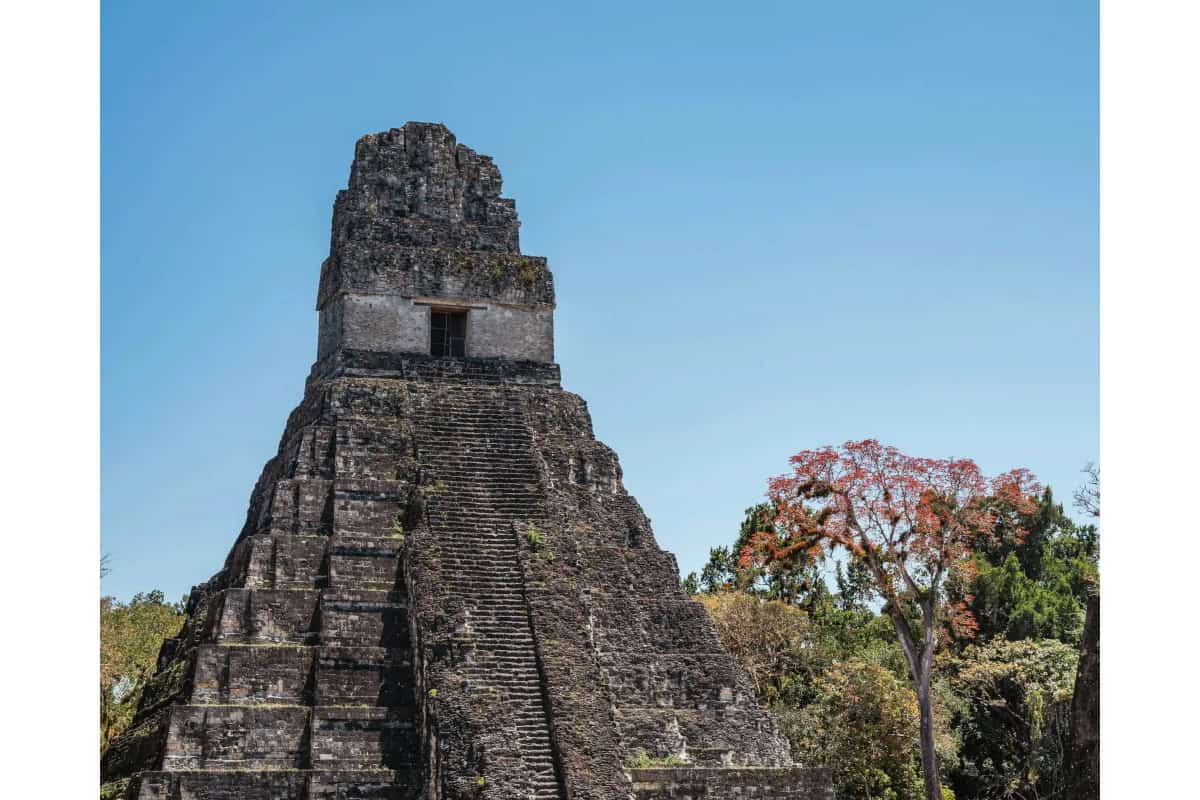
The focal point of this historical tourism is Tikal National Park in the northern Petén region. As one of the largest archaeological sites and urban centers of the pre-Columbian Maya civilization, Tikal’s monumental temples rising above the dense jungle canopy offer an experience that resonates strongly with tourists seeking profound historical narratives. “People are very interested about the Mayan background and what we have still in Guatemala, especially the Mayan city Tikal,” the Consular stated.
However, Guatemala’s Mayan heritage is not confined to ancient ruins; it is a vibrant, living culture that INGUAT is heavily integrating into its modern tourism frameworks.
Advertisement
Advertisement
Sustainable Tourism: Empowering Indigenous Women Weavers
A core pillar of Guatemala’s future tourism boom is a strict adherence to sustainability, economic equity, and community empowerment. The government and local organizations recognize that preserving the cultural fabric of the nation is just as important as protecting its natural landscapes.
“We do work with the communities,” the Consular explained. “We work also with women, the weavers that work making those textiles in Guatemala that are typical and traditional from our culture. We support them, work with them, collaborate with them to be able to promote their work and respect their background.”
Traditional backstrap loom weaving empowers local Maya artisans. Source: Suzanne Lovell Inc.
In regions like San Juan La Laguna on the shores of Lake Atitlán, indigenous women’s cooperatives (such as the Asociación Lema’ and Trama Textiles) are keeping the ancient art of backstrap loom weaving alive. These fair-trade cooperatives are entirely owned and operated by Maya women, many of whom are the sole breadwinners for their families, ensuring that the economic benefits of tourism stay within the local community.
Tourism directly intersects with these efforts. By integrating visits to these cooperatives into national itineraries, tourists provide a sustainable revenue stream. Visitors can observe the intricate process of creating vibrant scarlet dyes from crushed cochineal insects and watch as artists manage the complex warp and weft threads of the backstrap loom. This ethical tourism model ensures that “all year we have tourists and we try to encourage them and make part of all this work,” directly injecting foreign capital into rural communities without exploiting their labor.
Advertisement
Advertisement
The Aviation Catalyst: Courting Turkish Airlines
To fully realize this Eurasian expansion, Guatemala must overcome the logistical hurdle of long-haul connectivity. Currently, access from the Middle East and Turkey relies on transit through North America or European hubs.
A significant focus of the Guatemalan delegation at the Istanbul International Travel Forum was securing stronger aviation partnerships to bridge this gap. Currently, Turkish Airlines connects passengers to Guatemala via a strategic interline and codeshare agreement with Copa Airlines. Passengers can fly Turkish Airlines to a regional hub like Panama City, where their itinerary and baggage seamlessly transfer to a Copa Airlines flight bound for Guatemala City’s La Aurora International Airport.
However, the ultimate goal is direct access. “We would love to have Turkish Airlines coming to us,” the Consular revealed. “Since Guatemala is a very specific and very strategic location in Central America, I think it would be wonderful to also have them among us with direct flights like they have to neighbor countries in Latin America. I hope we keep growing and making the partnership big so we can have direct flights from Turkish Airlines.”
Securing a direct, or heavily streamlined, route from Istanbul would open the floodgates for the Turkish and broader Middle Eastern markets, eliminating the friction of complex multi-stop itineraries.
Guatemala’s presence on the global stage makes one thing abundantly clear: the country is no longer content to be a secondary stop on Central American itineraries. Through targeted MICE infrastructure in Antigua, the sustainable empowerment of indigenous artisans, and aggressive overtures to global aviation giants, Guatemala is engineering a purposeful, high-value tourism boom. For the Eurasian traveler looking for the next frontier of cultural and historical immersion, the heart of the Mayan world is officially open for business.
Advertisement
