
Italy and Germany Drive Europes Rail Revival as Rome Turns a Metro Station Into an Archaeological Showcase

Published
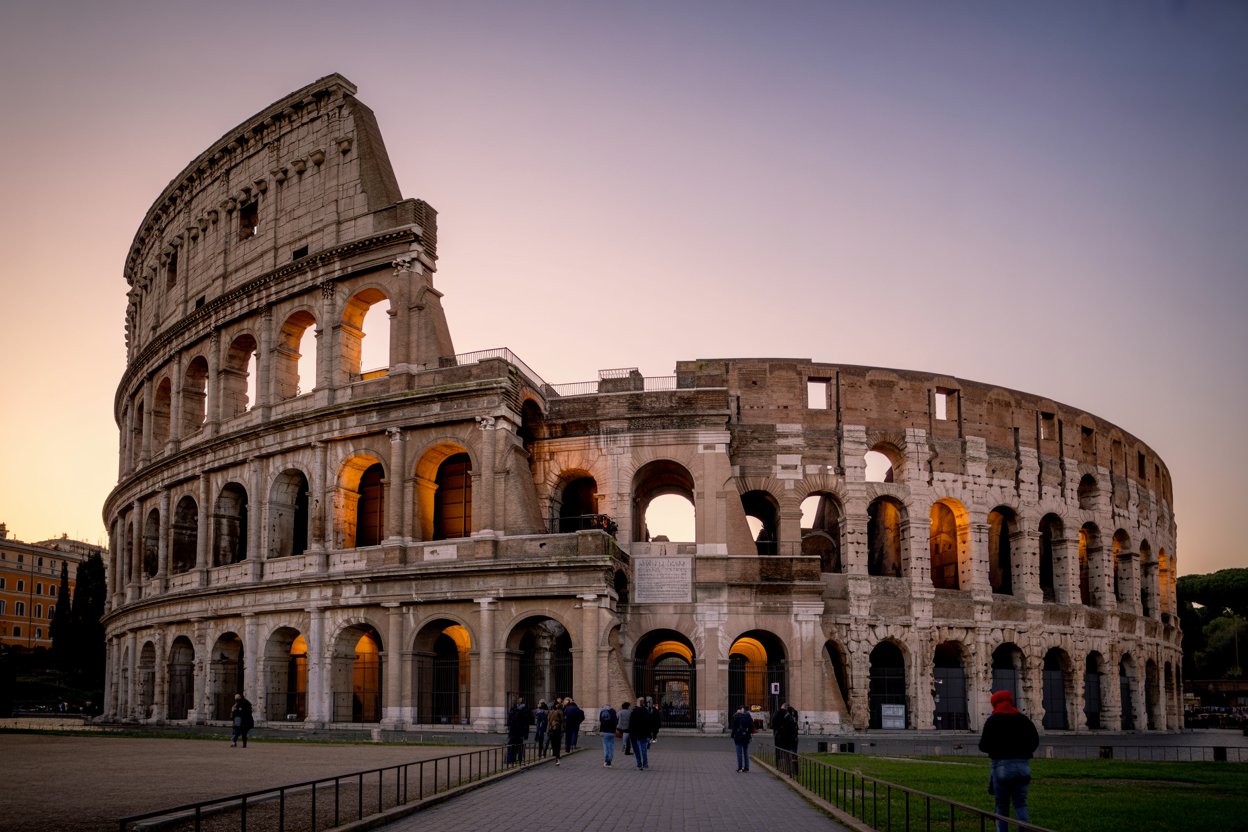
Image generated with Ai
Italy and Germany are helping illustrate a new chapter in European rail travel as governments and cities invest in better connections, modern stations and infrastructure designed to make train journeys more attractive.
One of the most visually striking examples is underneath central Rome.
The Italian capital has opened its Colosseo/Fori Imperiali station on Metro C, placing a modern underground transport hub beside some of the most important archaeological sites in the world.
The station is not simply another stop on Rome’s expanding metro system. Its design incorporates archaeological discoveries made during construction, creating an unusual relationship between ancient Rome and modern public transport.
Advertisement
Advertisement
At the same time, rail expansion is continuing on a much larger European scale. A direct Prague-Berlin-Copenhagen service launched in June 2026, while the European Union is pursuing ambitious plans for faster cross-border rail connections.
For travellers, the result could be a Europe where rail infrastructure increasingly becomes part of the destination experience itself.
Advertisement
Advertisement
Rome Opens Colosseo Fori Imperiali Station
Rome officially opened the Colosseo/Fori Imperiali and Porta Metronia Metro C stations to passengers on 16 December 2025.
Their arrival extended Metro C from San Giovanni towards the historic centre.
Advertisement
Advertisement
The Colosseo/Fori Imperiali station occupies an extraordinary location beneath Via dei Fori Imperiali, between the Colosseum and the area around the Basilica of Maxentius.
Its importance goes beyond location.
The station provides an interchange between Metro C and the existing Metro B at Colosseo. That creates another important connection within Rome’s underground transport network.
For tourists, improved interchange can make movement between different parts of the city easier.
Advertisement
Advertisement
| Rail Development | Location | Importance for Travellers |
|---|---|---|
| Colosseo/Fori Imperiali | Rome, Italy | Metro B and C interchange beside major archaeological attractions |
| Porta Metronia | Rome, Italy | Extends Metro C through another historically important area |
| Prague-Berlin-Copenhagen service | Czechia, Germany, Denmark | Direct cross-border connection between Central and Northern Europe |
| Madrid-Lisbon project | Spain and Portugal | Planned faster connection between Iberian capitals |
| Rail Baltica | Baltic region | Designed to strengthen rail integration with the wider EU network |
A Metro Station Built Around Archaeology
Building a metro line through Rome presents a challenge that few European cities face on the same scale.
Construction takes place beneath layers of history.
Archaeological investigations connected with the Colosseo/Fori Imperiali station have taken place during different phases of the project since 2014.
Instead of treating archaeology only as an obstacle, the station was developed to incorporate historical storytelling into the passenger environment.
The design uses contrasting materials and carefully planned lighting to identify areas connected with archaeological interpretation.
Passengers therefore move through a working transport facility while also encountering reminders of the ancient city lying around and beneath them.
Advertisement
Advertisement
The station extends across four underground levels and reaches a maximum length of about 150 metres.
It includes an atrium providing access towards Metro B, technical areas, an interchange level and the platform level.
Rome Creates Stations That Work Like Museums
Rome describes Colosseo/Fori Imperiali and Porta Metronia as museum stations.
The concept is significant for tourism.
Railway and metro stations are normally viewed as gateways. Travellers pass through them on the way to attractions.
Rome is turning that relationship around.
Advertisement
Advertisement
Here, the transport infrastructure itself becomes part of the cultural experience.
This approach is particularly appropriate around the Colosseum and Imperial Forums, where the urban landscape contains layers of Roman history.
It also demonstrates how infrastructure projects can potentially work alongside heritage conservation rather than simply competing with it.
Germany Gains From a New Cross-Border Connection
The wider European rail story extends far beyond Rome.
A new direct rail service connecting Prague, Berlin and Copenhagen launched in June 2026.
The European Commission described the route as an important milestone for international passenger rail.
Advertisement
Advertisement
It directly connects Central Europe with Scandinavia and was among ten pilot services supported by the European Commission to improve international passenger rail connections.
Berlin consequently occupies a strategic position on a route linking the Czech capital with Denmark.
For tourists, direct services can remove one of the biggest barriers to international train travel: complicated changes between trains.
The development is also connected to much larger European infrastructure projects, including the future Dresden-Prague connection and Fehmarn Belt fixed link.
Europe Wants Faster Trains Between Major Cities
European rail policy is becoming increasingly ambitious.
In November 2025, the European Commission unveiled a plan to accelerate high-speed rail development across the European Union.
Advertisement
Advertisement
Its objective is to improve connections between major European cities while reducing journey times.
Among the ambitions outlined by the Commission are substantially faster connections between Berlin and Copenhagen.
The Commission says its plan aims for a Berlin-Copenhagen rail journey of around four hours by 2030, compared with roughly seven hours at the time the strategy was announced.
Other planned improvements stretch across the continent.
A Madrid-Lisbon high-speed connection is another major project. The European Commission has established milestones intended to bring the journey between the Spanish and Portuguese capitals down to around three hours by 2034.
Rail Baltica is meanwhile designed to better integrate Estonia, Latvia and Lithuania with the wider European rail network.
Advertisement
Advertisement
These are long-term infrastructure projects rather than routes travellers can necessarily use today.
That distinction is important when planning European rail holidays.
Booking Cross-Border Trains Could Become Easier
Building tracks and opening routes addresses only one part of the European rail challenge.
Booking international journeys can still be complicated.
A passenger travelling across several countries may need to compare different railway companies, ticketing systems and passenger-rights arrangements.
The European Commission proposed new measures in May 2026 intended to simplify this process.
Advertisement
Advertisement
The proposals aim to make it easier for passengers to compare and purchase journeys involving multiple rail operators while strengthening passenger protection across the complete journey.
If implemented successfully, simpler ticketing could be almost as important for international rail tourism as faster trains.
Travellers need convenient booking as well as convenient infrastructure.
Rail Stations Are Becoming Part of the Travel Experience
Rome’s archaeological stations highlight another aspect of Europe’s rail revival.
Good railway infrastructure is not solely about speed.
Stations are often a traveller’s first encounter with a city. Architecture, public spaces, accessibility and connections to major attractions can shape that first impression.
Advertisement
Advertisement
Colosseo/Fori Imperiali takes this idea further because its surroundings are among Rome’s greatest attractions.
Passengers emerging from the station arrive beside the archaeological heart of the Italian capital.
Inside, the design tells another part of that historical story.
The station therefore operates simultaneously as transport infrastructure, an interchange and a space interpreting Rome’s archaeology.
What European Rail Expansion Means for Travellers
Several trends are developing simultaneously across the continent:
- New international passenger services are connecting more European cities directly.
- High-speed infrastructure remains a major EU investment priority.
- Cities are upgrading urban rail systems and stations.
- Cross-border ticketing is being targeted for improvement.
- Station architecture is becoming an important part of passenger experience.
- Rail investment is increasingly connected with lower-carbon European mobility.
Europe still faces substantial obstacles.
Advertisement
Advertisement
Major railway infrastructure is expensive and can take years to build. The European Commission estimated in June 2026 that completing the trans-European high-speed network by 2040 would require about €345 billion in infrastructure investment.
Different national railway systems also need better coordination.
But projects already entering service demonstrate what the future network could look like.
Rome Shows How Ancient History Can Meet Modern Rail
Colosseo/Fori Imperiali may be one of the clearest examples of how European rail infrastructure can become more than a practical transport project.
Rome needed another metro connection through its historic centre. Building it meant working through an archaeological landscape of exceptional importance.
The finished station attempts to connect those two worlds.
Advertisement
Advertisement
Above ground stand the Colosseum, Roman Forum and Imperial Forums. Below ground, passengers move through a contemporary railway station shaped by discoveries made during construction.
Elsewhere, Germany, Denmark, Czechia, Spain, Portugal and the Baltic countries are part of another transformation focused on longer-distance connectivity.
Together, these developments show the different dimensions of Europe’s rail expansion.
Some projects shorten journeys. Others create new international routes. Some make booking easier. Rome demonstrates that railway infrastructure can also become an architectural and cultural experience in its own right.
For travellers exploring Europe by train, the journey and the station are increasingly becoming part of the destination.
Advertisement
