Home»India Travel News» IMD Issues Red Alert for Himachal Pradesh While Delhi Faces Heavy Rains: What You Need To Know While Visiting
IMD Issues Red Alert for Himachal Pradesh While Delhi Faces Heavy Rains: What You Need To Know While Visiting
Written By: Arpita Bhowmick
Arpita Bhowmick
I'm from Jamshedpur, Jharkhand. Raised in Tatanagar, I carry the balanced spirit of the Steel City and greenery of the city with me- resilient, gritty,grounded, and committed to excellence yet calm and composed in times of tenacity. I value integrity, teamwork, and delivering results with honesty.
Sacred Heart Convent School was the place where I built my foundation of discipline and curiosity and completed schooling. Then moved to Bhawanipur Education Society College, Kolkata, there I broadened my perspective and developed strong academic roots and also got first big exposure to a metro city & diverse cultural heritage. Currently I'm a student of ICFAI Business School, Mumbai , where I'm evolving my business acumen and leadership skills and working for your company Travel and tour world as a freelancer. I love to watch movies and travel, through them I collect stories, not just memories. They shape my personality by making me curious, creative, adaptive and more understanding of people.
I'm always eager to learn, explore and contribute to organizations that prioritize people, purpose, and performance and keep learning and growing.
July 21, 2026 8:34 PM
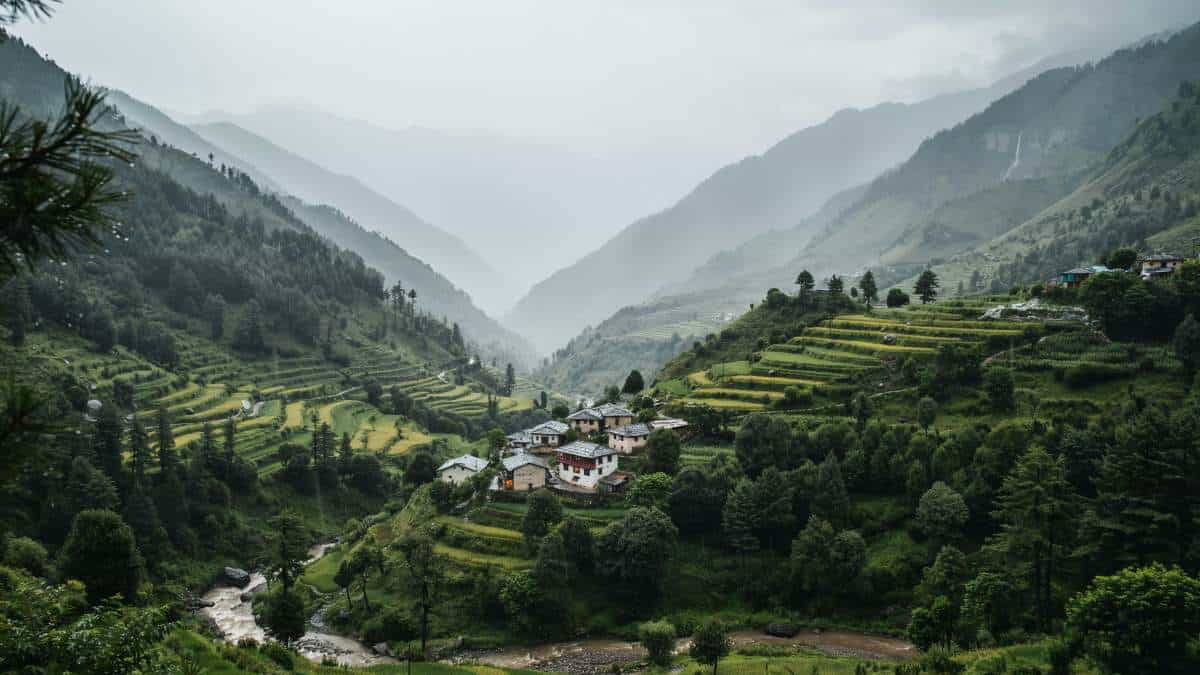
Image generated with Ai
As the southwest monsoon intensifies significantly across the Indian subcontinent, widespread weather advisories are issued by meteorological authorities. The India Meteorological Department (IMD) officially announces that heavy downpours will batter several regions. Specifically, a red alert is hoisted for the hilly state of Himachal Pradesh, indicating extreme hazard potentials due to persistent rainfall. Meanwhile, other administrative regions, including the national capital of Delhi, are placed under yellow alerts. Moderate showers provide a marked respite from prolonged spells of heat. These weather fluctuations are driven by active atmospheric formations and upper-air cyclonic circulations converging over northern and central territories. Delhi weather and weather update bulletins show constant shifts. India weather forecasts indicate widespread changes. Heavy rainfall triggers severe concerns. Flash floods remain a major threat across vulnerable sectors.
Practical Information for Travellers in Delhi and Himachal Pradesh
Residents residing in high-risk zones are urged to remain vigilant. Everyone must closely follow safety bulletins issued by civic authorities. Emergency response teams and disaster management units are strategically positioned. They remain ready to assist affected populations during unforeseen crises. Individuals in urban areas experiencing waterlogging are advised to steer clear of vulnerable electrical installations. Regular updates are tracked through official weather portals to ensure personal safety and preparedness.
Essential safety measures and traveller tips comprise:
Monitoring official weather updates continuously through authorized meteorological portals before initiating any journey.
Avoiding vulnerable electrical installations, overhead wires, and weak structures during severe waterlogging.
Staying in contact with designated local emergency response teams and keeping local helpline numbers saved.
Keeping essential supplies, dry food, and first-aid kits stored securely in high-risk residential zones.
Adhering strictly to district-level travel advisories and postponing non-essential trips to landslide-prone hill regions.
Packing waterproof travel gear, sturdy anti-slip shoes, and protective covers for all electronic devices.
Maintaining lower driving speeds, keeping a safe distance from other vehicles, and avoiding flooded roads or mountain tracks during heavy rainfall.
Impact on Travellers
Mobility and transit networks across affected zones are heavily disrupted by ongoing weather patterns. Tourists and daily commuters traversing through elevated terrains face severe risks. People in Himachal Pradesh are strongly advised to avoid unnecessary travel. Continuous precipitation increases vulnerability to catastrophic landslides, flash floods, and severe waterlogging along vital mountain passes and highways. In urban centers like Delhi, sudden downpours lead to heavy traffic congestion. Localized waterlogging causes delays for public and private transport alike. Authorities monitor transit routes closely to safeguard civilians navigating through precarious conditions.
Advertisement
Advertisement
Key travel impacts include:
Severe disruptions across mountain passes and major highways due to debris and rockfalls.
Heightened risks of sudden landslides and flash floods in hilly terrains making routes impassable.
Major traffic congestion and localized waterlogging in urban centers causing extensive commuting delays.
Delays affecting both public transit networks and private transport providers.
Strict advisories urging tourists to postpone non-essential journeys until weather conditions stabilize.
Essential dos and don’ts for travellers navigating monsoon zones:
DO check real-time traffic updates, highway status reports, and local weather forecasts before setting out on any journey.
DO keep emergency helpline numbers, local district control room contacts, and family members informed of your travel itinerary.
DO carry sufficient non-perishable food items, bottled water, essential medications, and power banks for your devices.
DO drive with extreme caution, maintain a wide distance from other vehicles, and use fog lights when visibility drops.
DON’T attempt to drive or walk through flooded underpasses, rushing streams, or waterlogged street sections.
DON’T venture into landslide-prone mountainous stretches, riverbanks, or steep gorges during active downpours.
DON’T ignore official warnings or barricades set up by civic authorities and local police forces along vulnerable transit routes.
Industry Insights
Economic sectors such as agriculture, transport, and local tourism experience significant operational shifts. While agricultural communities often welcome adequate rainfall for crop cultivation, excessive downpours result in crop damage and soil erosion. Furthermore, hospitality and tourism industries in mountainous regions witness sudden cancellations. Precautionary safety protocols are strictly enforced by local administrations. Infrastructure management sectors remain on high alert to mitigate structural damages, restore disrupted power grids, and clear blocked thoroughfares promptly.
Notable industry challenges involve:
Advertisement
Advertisement
Potential crop damage and soil erosion caused by excessive water accumulation.
Sudden cancellations hitting the hospitality and tourism sectors.
Operational delays across transport and supply chain networks.
Urgent mobilization needed to restore disrupted power grids.
Increased expenditure on emergency infrastructure repair and maintenance.
Comparison with Previous Policies or Developments
Meteorological forecasting models and disaster management responses have evolved considerably. Early warning systems are now deployed with enhanced precision. State administrations issue color-coded alerts well in advance of extreme weather events. Past monsoon seasons often caught municipal authorities off guard. Today, contemporary proactive deployment of disaster relief forces changes the landscape. Pre-emptive advisories reflect a structured evolution in disaster mitigation and public safety management.
Key comparative improvements include:
Deployment of advanced forecasting models for earlier detection.
Swift execution of color-coded alerts by state administrations.
Proactive positioning of disaster relief forces prior to landfall.
Transition from reactive rescue operations to structured pre-emptive management.
Enhanced public awareness through timely digital communication channels.
We use cookies on our website to give you the most relevant experience by remembering your preferences and repeat visits. By clicking “Accept”, you consent to the use of ALL the cookies.
This website uses cookies to improve your experience while you navigate through the website. Out of these, the cookies that are categorized as necessary are stored on your browser as they are essential for the working of basic functionalities of the website. We also use third-party cookies that help us analyze and understand how you use this website. These cookies will be stored in your browser only with your consent. You also have the option to opt-out of these cookies. But opting out of some of these cookies may affect your browsing experience.
Necessary cookies are absolutely essential for the website to function properly. These cookies ensure basic functionalities and security features of the website, anonymously.
Cookie
Duration
Description
cookielawinfo-checkbox-analytics
11 months
This cookie is set by GDPR Cookie Consent plugin. The cookie is used to store the user consent for the cookies in the category "Analytics".
cookielawinfo-checkbox-functional
11 months
The cookie is set by GDPR cookie consent to record the user consent for the cookies in the category "Functional".
cookielawinfo-checkbox-necessary
11 months
This cookie is set by GDPR Cookie Consent plugin. The cookies is used to store the user consent for the cookies in the category "Necessary".
cookielawinfo-checkbox-others
11 months
This cookie is set by GDPR Cookie Consent plugin. The cookie is used to store the user consent for the cookies in the category "Other.
cookielawinfo-checkbox-performance
11 months
This cookie is set by GDPR Cookie Consent plugin. The cookie is used to store the user consent for the cookies in the category "Performance".
viewed_cookie_policy
11 months
The cookie is set by the GDPR Cookie Consent plugin and is used to store whether or not user has consented to the use of cookies. It does not store any personal data.
Functional cookies help to perform certain functionalities like sharing the content of the website on social media platforms, collect feedbacks, and other third-party features.
Performance cookies are used to understand and analyze the key performance indexes of the website which helps in delivering a better user experience for the visitors.
Analytical cookies are used to understand how visitors interact with the website. These cookies help provide information on metrics the number of visitors, bounce rate, traffic source, etc.
Advertisement cookies are used to provide visitors with relevant ads and marketing campaigns. These cookies track visitors across websites and collect information to provide customized ads.