
Denmark Moves Alongside Sweden and Others as Extended Schengen Checks Shape Scandinavian Ferry Travel

Published
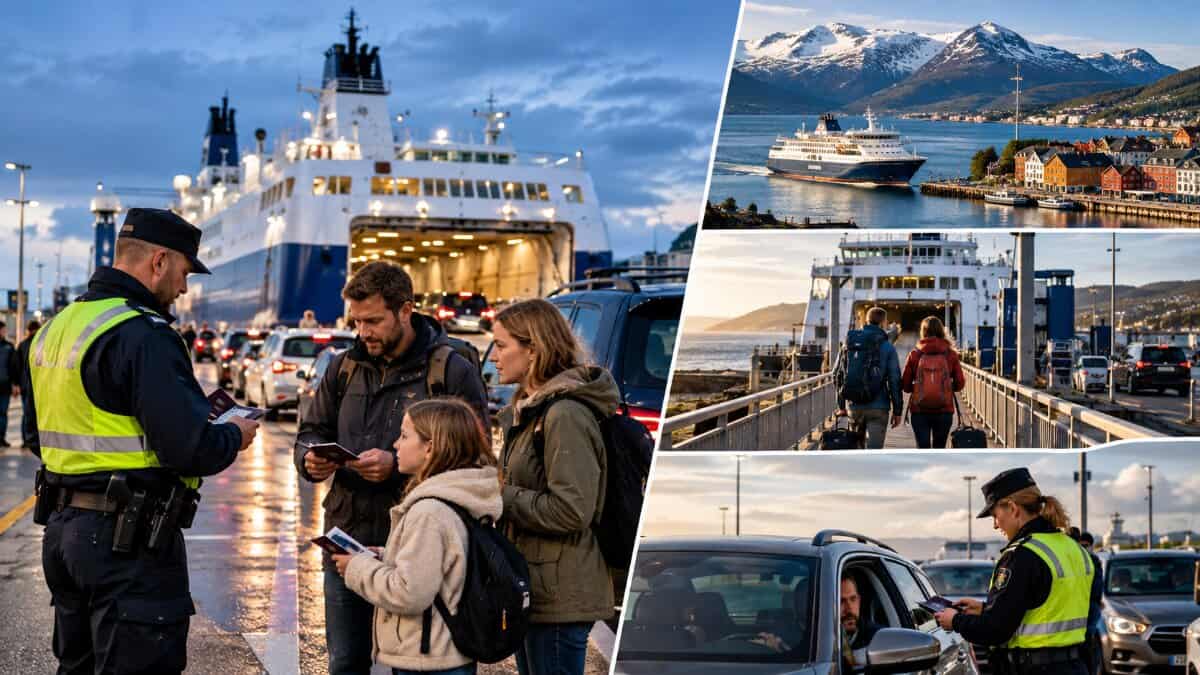
Travellers planning Scandinavian ferry holidays from November face continuing border inspections across an interconnected Germany–Denmark–Sweden–Norway network. Denmark, Sweden and Norway have notified temporary internal Schengen control extensions for 12 November 2026 to 11 May 2027. Germany’s separate land-border extension runs until 15 March 2027. The risk concerns identification checks, different ferry deadlines, children’s documentation and self-drive connections. No official forecast establishes universal delays or new checks at every terminal. According to the European Commission, the measures continue existing controls.
Four Countries Share One Travel Risk, but Their Border-Control Mandates Differ
All four countries belong to the Schengen Area. That normally enables journeys without routine checks at internal borders. Temporary controls remain legally possible where justified by serious security or public-order threats. Crucially, each notification defines its own geographical scope.
| Country | Applicable dates | Official scope | Practical travel relevance |
|---|---|---|---|
| Denmark | 12 Nov 2026–11 May 2027 | Land and sea borders with Germany | German–Danish ferry links and southern road entries |
| Sweden | 12 Nov 2026–11 May 2027 | Internal land, sea and air borders, including its border with Denmark | Denmark–Sweden and Germany–Sweden travel may face checks |
| Norway | 12 Nov 2026–11 May 2027 | Ports with Schengen ferry connections | International ferry arrivals, including from Denmark |
| Germany | 16 Sep 2026–15 Mar 2027 | Land borders with nine neighbours, including Denmark | Road approaches to Scandinavia; not a new German sea-border notification |
These are scheduled extensions, not a four-country decision to introduce new ferry visa requirements. The overlapping measures complicate itinerary planning.
Denmark’s German Ferry Gateway Requires Documents Even on Short Crossings
According to the Danish Police, Denmark has conducted temporary checks at its German land and sea border since 2016. Police describe spot checks intended to establish travellers’ entitlement to enter. The latest extension therefore continues an established procedure rather than introducing a compulsory inspection for every vehicle.
Advertisement
Advertisement
Scandlines operates Puttgarden–Rødby and Rostock–Gedser. Its 2025 annual report gives respective crossing times of approximately 45 minutes and up to two hours. Cyclists on the Berlin–Copenhagen long-distance route also use Rostock–Gedser, according to VisitDenmark.
Sweden’s Flexible Checks Matter for Cyclists, Motorists and Coastal Itineraries
The November Swedish notification covers internal land, sea and air borders. Swedish Police determine the timing and location of checks; an extension does not mean every ferry arrival undergoes identical processing. Travellers approaching Helsingborg from Helsingør or Gothenburg from Frederikshavn should keep identification accessible after disembarkation.
Advertisement
Advertisement
This matters beyond urban breaks. Kattegattleden, the official regional coastal cycle route, runs for 390 kilometres between Helsingborg and Gothenburg. An itinerary may combine a ferry with transfers and trails. Late arrival may reduce daylight or make onward transport less convenient, even when the sailing itself operates normally.
Norway’s Notification Singles Out Ferry Ports, Not Every Land Crossing
Norway’s European Commission notification specifically covers ports connected by ferry with the Schengen Area. It does not announce a new universal border check at all Norwegian road crossings. The stated concern involves threats to energy-sector infrastructure and possible sabotage.
Advertisement
Advertisement
For passenger operations, Fjord Line currently describes comprehensive ID checks when entering Norway and requires physical documentation. This does not establish identical procedures at other operators. On Hirtshals–Kristiansand and other international services, document readiness is particularly important for families continuing towards southern Norway’s hiking areas.
Germany Remains a Key Access Point, With a Different Type of Control
Germany’s extension covers land borders, including Denmark, not Sweden’s maritime checks. The German Federal Police emphasise that travellers still need recognised identification when crossing between Schengen countries.
Depending on their route, motorists travelling between Germany and Denmark may encounter border inspections before continuing towards separate Swedish or Norwegian ferry checks. Germany–Sweden sea services, including Kiel–Gothenburg and Rostock–Trelleborg, need to be assessed against Swedish and carrier requirements rather than wrongly categorised as covered by Germany’s land-border renewal.
Ferry Check-In Deadlines Reveal the Overlooked Difference Between Passenger Types
The operators’ original instructions show why one generic instruction to arrive early is inadequate. Check-in cut-offs concern boarding eligibility; they do not predict the duration of a police inspection.
Advertisement
Advertisement
| Operator and route | Motorists | Foot passengers and cyclists | Official operator source |
|---|---|---|---|
| Scandlines, Rostock–Gedser | Standard vehicle ticket: check in at least 15 minutes before departure | Foot passengers: 30 minutes at Rostock, 15 at Gedser; bicycles use a ticket add-on | Scandlines |
| ØRESUNDSLINJEN, Helsingør–Helsingborg | Standard vehicle check-in at least 10 minutes before departure | Foot passengers: five minutes; bicycles carried without an extra charge | ØRESUNDSLINJEN |
| Stena Line, Frederikshavn–Gothenburg | Vehicle check-in closes 30 minutes before departure | Foot check-in also closes 30 minutes before departure; cyclists 45 minutes | Stena Line |
| Stena Line, Rostock–Trelleborg | Rostock vehicle check-in closes 60 minutes before departure | Collect tickets at least 45 minutes before departure; foot check-in closes 30 minutes before departure | Stena Line |
| Fjord Line, Denmark–Norway | International check-in closes 60 minutes before departure | Same international cut-off; foot passengers use terminal counters or kiosks where available | Fjord Line |
The contrast extends to terminal layout. ØRESUNDSLINJEN lists separate vehicle and pedestrian terminal entrances. Fjord Line directs foot passengers to terminal facilities and drivers to vehicle lanes. Cyclists on Stena’s Danish–Swedish service report through the vehicle check-in area and must follow additional boarding instructions.
Family Passport Rules Are Not Interchangeable Between Nordic Ferry Routes
According to the Danish Police, Nordic citizens have special identification arrangements. Nordic children under 18 accompanied by a qualifying Nordic parent or guardian may be exempt from carrying their own ID for entry into Denmark. That exception should never be automatically extended to German, British or other non-Nordic families.
| Traveller | Documents to prepare | Important qualification |
|---|---|---|
| Non-Nordic EU/EEA adult | Valid passport or recognised national identity card | A driving licence is not an ordinary EU border-crossing document |
| Nordic adult within the Nordic region | Preferably passport or national ID; qualifying physical Nordic driving licence may be accepted | Traveller must establish Nordic nationality when requested |
| Non-EU adult, including British tourist | Valid passport and any required Schengen visa or residence evidence | Existing immigration conditions continue |
| Child from a non-Nordic family | Own passport or eligible national identity card | Check carrier rules and parental consent where applicable |
| Nordic child accompanied by Nordic parent | Check destination-specific Nordic exception | Operators can apply separate boarding-document requirements |
The carrier distinction is material. Stena Line specifically requires children to hold their own ID on Sweden–Germany services. Its Sweden–Denmark guidance differs for accompanied minors. Police entry rules take precedence over a perceived carrier concession. The European Commission also advises checking consent documentation for minors travelling with one parent or another adult.
Adventure Travel Has a Second Risk After the Ferry Arrives
Border readiness is only one part of a November trip. According to the Norwegian Public Roads Administration, Norway has 18 official scenic routes, some incorporating domestic ferries and mountain roads. Helgelandskysten extends 433 kilometres and uses six ferries. A late international arrival can leave less resilience for those onward connections.
Seasonal access deserves equal attention. The official Aurlandsfjellet guidance identifies a winter closure on the mountain road, while the approach to Stegastein remains open year-round. Travellers should not treat a road closed by winter conditions as an effect of Schengen policy.
Why a Documentation Error Has Consequences for the Ferry Economy
The scale is substantial. According to the Scandlines 2025 annual report, its two Germany–Denmark services carried 6.3 million passengers and 1.6 million cars across approximately 37,000 sailings in 2025. Scandlines recorded group revenue of EUR 478 million, including EUR 389 million from ferry operations. Eurostat recorded 41.3 million passengers at Danish ports in 2024, around 9.9 per cent of the EU total.
Advertisement
Advertisement
Neither statistic measures November border-related delay. They demonstrate why document verification and punctual check-in matter to a large network of tourism businesses. A refused boarding or missed crossing can alter hotel arrivals, vehicle-hire arrangements and time-sensitive guided activities.
The November Alert Must Not Be Confused With New EES or ETIAS Requirements
The EU Entry/Exit System records eligible non-EU short-stay travellers at external Schengen borders. It has been fully operational since 10 April 2026, according to the European Commission. A routine Germany–Denmark–Sweden–Norway itinerary staying inside Schengen does not create another external-border registration simply because police conduct an internal check.
The official ETIAS portal still identifies an expected launch during the final quarter of 2026 and has not specified a mandatory start date as of this report. Travellers should not be told that the 12 November extensions introduce an ETIAS application deadline.
Trade Analysis: The Real Vulnerability Is a Chain of Small Operational Mismatches
The distinctive problem for adventure-tourism sellers is cumulative itinerary friction. A bicycle group arriving at Rostock with adequate time for a car check-in may still miss the separate 30-minute pedestrian deadline. A family that travelled legally on one Nordic crossing may discover that its next ferry company requires individual children’s documents. A motorhome party may have valid passports but leave its vehicle registration or rental authorisation inaccessible during inspection.
These mismatches expose a gap between national entry rights, operator admission contracts and the operational design of multi-stop outdoor holidays. The risk grows when a missed sailing displaces a prepaid cabin, mountain transfer or guided excursion that cannot be postponed. An itinerary-level document audit is more useful than a generic passport-queue warning.
For operators, useful controls include checking the most restrictive documentation rule across the whole route, separating each passenger type in pre-departure communications, and inserting recoverable connections where services are infrequent. Monitoring actual departure performance is preferable to publishing invented queue estimates. No increase in November waiting times has been quantified.
Advertisement
Advertisement
Immediate Operational Takeaways for Agents and Tour Operators
- Confirm every traveller’s nationality, passport or recognised ID and any visa or residence evidence before issuing ferry vouchers.
- Apply each carrier’s check-in deadline separately for vehicles, pedestrians and cyclists; allow additional contingency without presenting it as an official queue forecast.
- Audit documents for every child, including consent paperwork and route-specific carrier rules.
- Verify vehicle registration, rental permission, insurance and physical ID for self-drive bookings.
- Recheck sailing updates, Norwegian scenic-road closures and seasonal activity access before departure.
- Build flexible accommodation and transfer arrangements for itineraries with consecutive crossings.
What the Extensions Mean for Scandinavian Travel Beyond November
The notified controls stretch into spring 2027 for Denmark, Sweden and Norway, while Germany’s present period ends in March 2027. For ferry-led adventure tourism, the strategic lesson is resilience rather than retreat. Documentation and realistic connections will increasingly determine holiday quality. No official evidence yet supports predictions of widespread November ferry disruption.
FAQs
Are Denmark, Sweden, Norway and Germany introducing new border checks on 12 November?
No. Denmark, Sweden and Norway extend existing checks on that date. Germany continues a separately notified land-border extension already in force.
Do EU citizens need passports for Scandinavian ferries?
Most non-Nordic EU citizens can travel with a valid recognised national ID card instead. Operators may verify documents at boarding, and Nordic exemptions differ.
Can children travel on a parent’s ID document?
Specific Nordic exceptions exist, but they are not universal. Families should confirm the destination authority’s rules and individual ferry-carrier requirements before travelling.
Will car passengers automatically face longer queues than pedestrians?
No verified forecast establishes that. Terminal processing and check-in deadlines differ by operator; police inspections can be selective or more comprehensive depending on the country and route.
Does the EU Entry/Exit System apply again on each Scandinavian ferry crossing?
No. The EES concerns relevant external Schengen border movements, not ordinary internal crossings between Germany, Denmark, Sweden and Norway.
Advertisement
