
Libya Advances Ghadames Tourism Readiness as Heritage Gains Meet Airport Reactivation and Digital Payments

Published
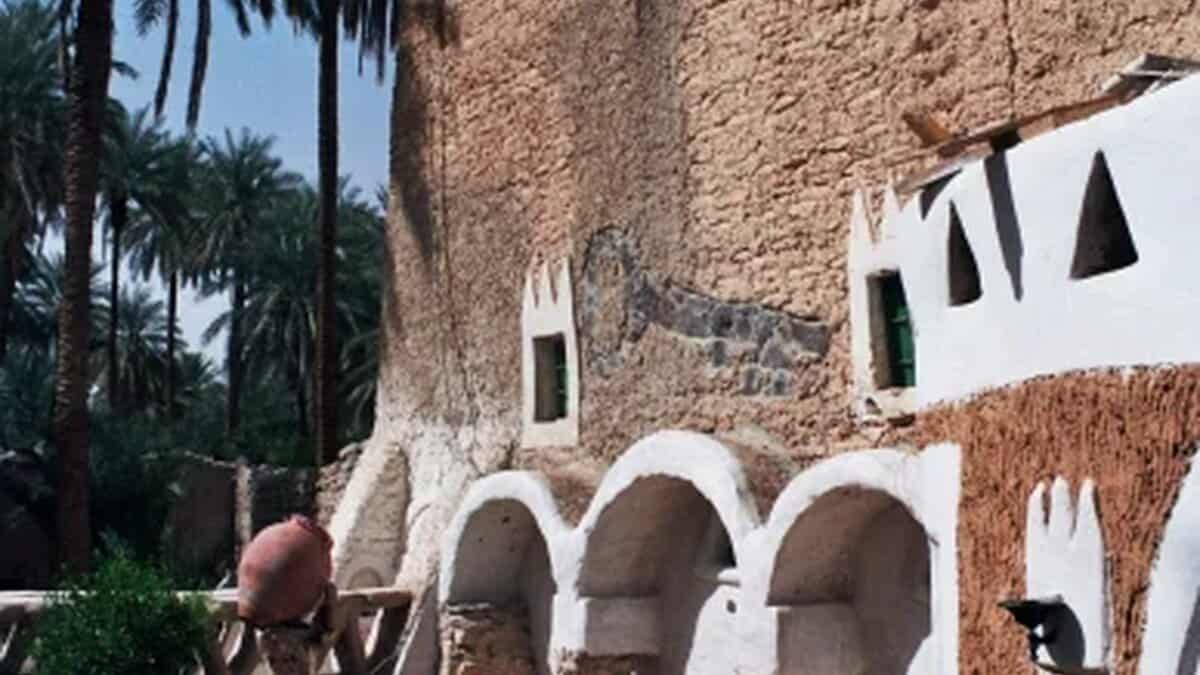
Libya is assembling several components needed to make Ghadames a stronger heritage destination, but official evidence shows that the process remains incomplete. UNESCO has removed the Old Town of Ghadamès from the List of World Heritage in Danger Libyan authorities are continuing heritage-management work with airport agencies are addressing operational requirements and nationwide Visa and SoftPOS payment infrastructure is expanding. However there is still no official confirmation of normal passenger services at Ghadames Airport or proof of widespread international-card acceptance among local tourism businesses. External government travel warnings also remain a major commercial constraint.
Ghadames Is Entering a Different Phase of Destination Development
The most important development for Ghadames in 2026 is not a single tourism announcement. It is the emergence of several separate systems that, taken together, determine whether a remote heritage city can eventually function as an internationally marketable destination.
Advertisement
Advertisement
Ghadames already possesses the tourism asset. UNESCO describes the Old Town as one of the oldest pre-Saharan cities and an exceptional example of desert urban settlement. Its historic fabric is integrated with its oasis and water-management system. The World Heritage property covers 287.59 hectares, with a 271.3-hectare buffer zone, and has been on the World Heritage List since 1986.
What is changing is the infrastructure around that asset.
Advertisement
Advertisement
Heritage governance has strengthened. Airport reactivation is under active institutional review. Libya is expanding electronic payments. Entry administration is becoming more digital. The national tourism authority is simultaneously presenting Ghadames as a visitor destination with guides, tourism information, accommodation listings, cultural experiences and an October heritage-shopping event.
For the travel trade, however, the critical issue is sequencing. A destination can have internationally recognised heritage and attractive visitor experiences while remaining difficult to package commercially if reliable transport, payment acceptance, visas, insurance and government travel advice do not move at the same pace.
Advertisement
Advertisement
UNESCO Progress Has Removed a Major Heritage Constraint
Ghadames reached a significant milestone in 2025 when the World Heritage Committee removed the Old Town from the List of World Heritage in Danger. The site had been on that list from 2016 until 2025. UNESCO recorded substantial completion of the corrective measures required for removal and recognised completed restoration of houses damaged by rainfall in 2017, continuing maintenance of the Old Town and oasis, and stabilisation of structures affected by 2019 rainfall.
That change matters commercially because heritage status is central to Ghadames’ international identity. It strengthens the destination narrative available to cultural-tourism specialists and removes one negative classification from the World Heritage record.
Advertisement
Advertisement
It does not mean that conservation management is finished.
UNESCO’s 2025 decision required further work including a conservation guidance manual, an action plan supporting the management plan, implementation of amended land-use regulations and preparation of a Sustainable Tourism Management Plan covering the property, buffer zone and wider setting. Libya must provide another updated conservation report by 1 December 2027.
According to Libya’s Ministry of Tourism and Traditional Industries, another step followed on 13 May 2026, when a memorandum was concluded with the Ghadames development authority to implement World Heritage recommendations and support protection of the city’s architectural and cultural legacy.
That makes heritage the most advanced component of Ghadames’ emerging destination-readiness structure, although UNESCO’s remaining requirements show why tourism growth must still be managed rather than simply accelerated.
Advertisement
Advertisement
Airport Reactivation Is Now the Most Important Physical Access Test
Air access is where the destination-readiness picture becomes considerably less complete.
Official developments throughout 2026 confirm that Ghadames Airport remains an active policy issue. In March, municipal and airport authorities examined the obstacles preventing reactivation of the airport and the technical and administrative measures required for the resumption of aviation activity. The stated development context included both economic and tourism activity.
On 28 June 2026, the Ghadames Municipal Council renewed the call for the airport to return to service after an inspection of the facilities. The official account explicitly described the airport as important for residents and visitors and connected its continued suspension with wider development challenges.
The Libyan Airports Authority then recorded a further review on 19 July, covering the airport’s current position, priority services and operational matters requiring continued attention. No later Airports Authority announcement found during research up to 10 September confirms the restoration of scheduled passenger operations.
That distinction is crucial for agents.
Airport reactivation work is verified. Airport reopening is not.
Advertisement
Advertisement
A travel company should therefore avoid selling Ghadames on the assumption that direct air access has normalised until an operating carrier, timetable, start date and official airport status are confirmed.
Ghadames Destination Readiness Is Advancing at Unequal Speeds
| Destination layer | Latest verified official position | Ghadames-specific evidence | Travel-trade interpretation |
|---|---|---|---|
| Heritage status | Removed from UNESCO danger list in 2025 | Direct | Major heritage milestone achieved |
| Heritage management | 2026 cooperation framework supports implementation of World Heritage recommendations | Direct | Conservation governance remains active |
| Sustainable tourism planning | UNESCO still requires a holistic tourism-management plan | Direct | Tourism growth must remain controlled |
| Airport access | Service and operational requirements reviewed on 19 July 2026 | Direct | Reactivation process exists, but reopening remains unconfirmed |
| International card payments | Visa acceptance through domestic POS and SoftPOS launched nationally | No local Ghadames merchant confirmation located | Strong national enabler, not proof of local availability |
| E-visa infrastructure | National electronic visa system adopted for entry processing | National rather than Ghadames-specific | Potentially lowers pre-trip administrative friction |
| Local tourism services | Guides, tourist information and accommodation entries appear in official tourism material | Direct | Basic visitor-product infrastructure exists |
| Government travel advice | UK advice against all travel applies outside specified Libyan cities; Ghadames is not among the exceptions | Direct implication for Ghadames | Major insurance and distribution constraint |
Tripoli’s Digital Payment Push Could Reduce One of Libya’s Visitor Frictions
The financial component originates at national level rather than specifically in Ghadames.
At the electronic-payments exhibition held at the Tripoli International Fairgrounds in June 2026, the Central Bank of Libya introduced international Visa-card acceptance through domestic point-of-sale terminals and SoftPOS technology that allows compatible smartphones to operate as payment terminals.
Libya’s Ministry of Tourism subsequently connected these developments directly with visitor readiness. The ministry identified potential application across hotels, restaurants, tourism establishments and handicraft markets and recognised reduced reliance on cash as an improvement to the visitor experience.
Implementation nevertheless remained under development in July. According to the Central Bank of Libya, a 13 July review examined progress on Visa payments in foreign currency through domestic POS terminals and the stages required to implement the project.
The wider digital-payment system is expanding rapidly. Central Bank data published in September placed the gross value of electronic transactions processed between 1 January and 31 August 2026 at approximately LYD764.9 billion. Earlier August data showed more than 270,000 POS terminals operating nationally.
Advertisement
Advertisement
Those figures demonstrate the scale of Libya’s domestic payment transformation. They do not establish that a foreign traveller arriving in Ghadames today will find international card acceptance at every hotel, guide operation, restaurant or craft outlet.
That gap between national capability and local merchant acceptance is one of the most important points for travel planners.
Why Digital Payments Matter More in a Heritage Economy
Payment modernisation has particular relevance to Ghadames because the visitor economy extends beyond conventional accommodation.
According to Libya’s Ministry of Tourism, Ghadames is associated with several traditional craft activities, including palm-based products, leatherwork, wooden handicrafts, copper work and traditional accessories. The ministry’s current local-events calendar also places Ghadames Days for Shopping and Heritage in October.
For a destination built around heritage streets, traditional markets, crafts and community-based experiences, SoftPOS has potentially greater strategic value than it would in a resort dominated by large hotels. A small merchant does not necessarily require conventional payment hardware if approved smartphone-based acceptance becomes accessible.
That creates a possible route for tourism expenditure to reach smaller local businesses.
Advertisement
Advertisement
The commercial opportunity remains conditional, however, because there is no official Ghadames-level merchant-acceptance figure and no official source located in this research establishes universal foreign-card acceptance in the city.
Libya Is Also Digitising the Visitor’s Entry Journey
Another piece of the destination-readiness architecture developed during summer 2026.
Libyan authorities temporarily suspended visas on arrival through airports and air entry points on 11 June while entry procedures were being reviewed. Later that month, authorities moved into the second phase of the national E-VISA LIBYA system and designated the electronic platforms as the official mechanism for managing visas and foreign entry procedures.
Official follow-up continued in August, including review of application processing, technical obstacles and the operation of the electronic system. The Passport, Nationality and Foreigners Affairs Authority’s official website was continuing to publish e-visa updates into September and directly links to the government’s e-visa portal.
For tour operators, that means the Ghadames proposition is becoming digitally structured at both the payment and immigration layers.
It does not eliminate the need for pre-departure verification. Operators should confirm the current visa pathway for every nationality and should not assume that visa-on-arrival procedures previously used remain available.
Advertisement
Advertisement
The Overlooked Issue Is Bookability Rather Than Tourism Potential
This is the principal information gain in the Ghadames story.
Tourism potential and operational bookability are not the same thing.
The Ministry of Tourism currently presents Ghadames with a suggested two-day visitor experience, tourism guiding, an information office and free entry to the Old Town. Its destination material identifies 161 heritage landmarks, while its accommodation directory currently displays four hotel entries for Ghadames.
This shows that the local tourism product is not theoretical.
Yet an international itinerary requires a longer chain:
permission to enter → viable transport → insurable travel → accommodation → on-ground services → reliable payments → protected attractions.
Advertisement
Advertisement
In Ghadames, different parts of that chain are progressing at different speeds.
Heritage protection has reached a major international milestone. Electronic payments and visa administration are becoming more sophisticated nationally. Local tourism products are being actively presented. But direct airport access remains unresolved, local foreign-card acceptance has not been demonstrated at destination level and major source-market government advisories continue to constrain normal distribution.
That is why the recovery story should not yet be framed as a conventional tourism comeback.
It is better understood as destination infrastructure gradually becoming interoperable.
Government Travel Warnings Remain a Critical Commercial Barrier
Any assessment of Ghadames tourism readiness that excludes current official travel advice would give the trade an incomplete picture.
The UK Foreign, Commonwealth and Development Office advice remained current on 10 September 2026. It advises against all travel to Libya except specified areas including Tripoli, Benghazi, Al-Bayda, Derna and Misrata, where the advice is against all but essential travel. Ghadames is not included among those exceptions, meaning the advice against all travel applies to the destination. The FCDO also warns that travelling against its advice can invalidate travel insurance.
Advertisement
Advertisement
The United States Department of State maintained Level 4 Do Not Travel advice for Libya in its 31 August 2026 advisory.
For B2B sellers, this currently matters as much as any airport or payment development. Tour operators must consider consumer duty, insurance availability, supplier liability, evacuation planning and their own risk policies before converting destination interest into commercial programmes.
What Travel Agents and Tour Operators Should Do Now
- Do not advertise Ghadames Airport as reopened until Libya’s aviation authorities or an operating airline publishes confirmed passenger operations, routes and schedules.
- Verify payment acceptance supplier by supplier. Libya’s Visa and SoftPOS infrastructure is advancing nationally, but Ghadames-specific foreign-card coverage is not officially established.
- Use the current Libyan e-visa channel before travel and confirm requirements according to nationality rather than relying on historical visa-on-arrival practices.
- Check government travel advice immediately before contracting or selling. UK advice presently places Ghadames within the area subject to advice against all travel, while US advice remains Level 4 nationally.
- Treat heritage capacity as a management issue, not simply a sales opportunity. UNESCO still requires a Sustainable Tourism Management Plan and continued conservation controls.
- Build flexible programmes rather than fixed air packages while the airport-reactivation process remains unresolved.
- Consider local-spend opportunities carefully. Craft markets, guides and community businesses could benefit significantly from digital-payment penetration once destination-level acceptance becomes verifiable.
- Do not use national payment statistics as evidence of Ghadames merchant coverage. Domestic digital-payment growth and international visitor-card acceptance are related but separate indicators.
What Happens Next Could Decide Whether Ghadames Becomes Truly Sellable
Ghadames now occupies an unusual position in Libya’s destination-development landscape. Its core heritage asset has strengthened materially, its World Heritage danger classification has ended, tourism governance continues, national payments are becoming more digital and electronic immigration infrastructure is being formalised.
The missing transition is from tourism potential to commercially reliable access.
The clearest near-term trigger will be Ghadames Airport. A confirmed reopening accompanied by scheduled services would materially alter itinerary design, particularly for a city whose remote desert setting creates obvious surface-transport constraints. The second trigger will be proof that international card acceptance has moved from national infrastructure into hotels, restaurants, guides and merchants within Ghadames itself.
The third will be external. Changes to major source-market travel advisories would have significant implications for insurance, organised tours and conventional distribution.
Until those pieces move, Ghadames should be watched not as a fully recovered tourism destination, but as a heritage city assembling the operational architecture required for a future recovery. That distinction is what makes the current story important for travel professionals: Libya is no longer working solely on preserving what travellers may eventually see. It is beginning to work on the systems that determine whether they can realistically get there, enter, pay, stay and travel responsibly.
Advertisement
