
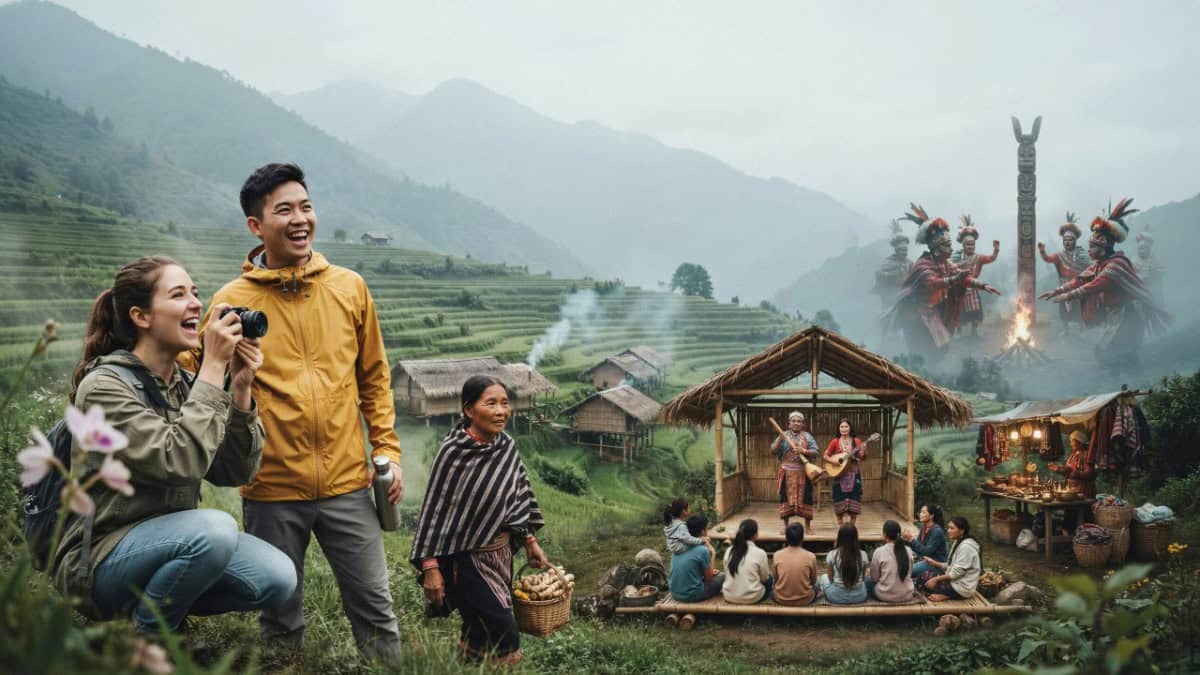
Image generated with Ai
From the festival of Ziro to Hornbill, cultural festivals in India are placing hidden destinations on the map of sustainable tourism through remarkable travel experiences. These cultural festivals are transforming the way visitors get to know remote areas. Such festivals help make connections between the travelers and the local people, culture, and nature. Moreover, festivals such as Ziro and Hornbill provide examples of how cultural festivals can be utilized for the purpose of promoting sustainable tourism. Hidden destinations of India have been discovered owing to cultural festivals and tourism experiences.
Ziro Festival of Music has created a new model for responsible tourism in India. The festival carefully balances visitor growth with environmental protection. Instead of large permanent structures, organisers use locally available bamboo and wood to build festival stages. This reduces environmental impact while highlighting traditional craftsmanship.
Advertisement
The festival follows strict zero-waste principles. Visitors are encouraged to use reusable items and respect the fragile mountain environment. Waste management, sustainable infrastructure and local participation remain at the centre of the festival experience.
This green approach has changed how travellers view music festivals. Ziro is not only a place to enjoy performances. It is a destination where visitors learn about sustainability and responsible travel. The festival proves that tourism can support local communities while protecting natural resources.
Advertisement
The economic benefits also reach beyond the festival grounds. Local families participate through homestays, food services and cultural activities. Small businesses receive new opportunities as more travellers discover the beauty of Arunachal Pradesh.
Another major cultural tourism attraction in Northeast India is the Hornbill Festival in Nagaland. Often called the “Festival of Festivals”, this annual celebration showcases the rich traditions of the Naga tribes.
Usually held in December at the Naga Heritage Village in Kisama, the festival attracts visitors from India and around the world. It presents traditional dances, indigenous sports, folk music, handicrafts and local cuisine.
The festival provides travellers with a direct connection to Nagaland’s living heritage. Visitors can witness colourful performances, explore traditional homes and understand the customs of different Naga communities.
Advertisement
Advertisement
Hornbill Festival has played an important role in placing Nagaland on the global tourism map. It attracts photographers, cultural researchers and international travellers who want authentic experiences. The event demonstrates how indigenous culture can become a powerful force for sustainable tourism development.
India’s cultural festival landscape is also growing in Rajasthan. The Magnetic Fields Festival in Alsisar combines modern music with royal heritage. Held at the historic Alsisar Mahal in Jhunjhunu, the festival offers a unique experience inside a traditional Rajasthani palace.
The event blends underground electronic music, desert landscapes, heritage architecture and luxury camping. Travellers can enjoy music performances while exploring the beauty of Rajasthan’s rural regions.
Magnetic Fields has helped transform a lesser-known destination into an attractive international travel hotspot. It appeals especially to younger travellers seeking experiences beyond traditional sightseeing.
The festival supports local communities by creating demand for artisans, hospitality providers and regional businesses. It shows how cultural events can introduce visitors to unexplored parts of India while strengthening local tourism economies.
Karnataka’s Echoes of Earth represents another important step in eco-conscious tourism. Often recognised as one of India’s greenest music festivals, the event focuses on conservation, recycling and creative sustainability.
The festival uses recycled materials and innovative designs to create artistic stages. Instead of producing unnecessary waste, it turns discarded materials into impressive structures.
Held in Bengaluru during December, Echoes of Earth attracts music fans who also care about environmental responsibility. The festival combines global and Indian music with educational experiences about nature conservation.
It has created a new category of eco-tourism where art, music and sustainability meet. The festival encourages urban travellers to think differently about their relationship with the environment.
Through creative design and responsible practices, Echoes of Earth proves that entertainment and environmental awareness can grow together.
Goa is famous worldwide for beaches, but the Serendipity Arts Festival has helped introduce another side of the destination. Held in Panaji during December, the festival celebrates creativity through music, dance, theatre, literature, crafts and culinary arts.
The festival takes place across heritage locations near the Mandovi River. It transforms the city into a vibrant cultural centre where artists and visitors connect.
Serendipity Arts Festival supports Goa’s move towards high-value cultural tourism. It attracts travellers who want artistic experiences rather than only beach holidays.
By promoting local crafts, performances and creative industries, the festival strengthens Goa’s position as a destination for international arts and culture. It adds depth to the state’s tourism identity and encourages visitors to explore beyond traditional attractions.
The Losar Festival offers travellers a completely different cultural experience in the Himalayan regions. Celebrated in places such as Ladakh, Himachal Pradesh and Arunachal Pradesh, Losar marks the Tibetan Buddhist New Year.
The festival usually takes place between late February and early March, depending on the lunar calendar. It features sacred rituals, monastery ceremonies, masked Chaam dances and family celebrations.
For travellers, Losar provides an opportunity to experience ancient traditions in peaceful mountain settings. The festival also helps extend tourism into the winter season when many Himalayan areas receive fewer visitors.
By attracting cultural explorers during colder months, Losar supports local tourism businesses and highlights the spiritual richness of Himalayan communities.
From the hills of Arunachal Pradesh to the deserts of Rajasthan to the beaches of Goa, festivals in India have become a new mode of travel. This kind of travel is not an event anymore. It is a tool which helps the festival to become a source of tourism revenue. The Ziro Festival of Music in 2026 will be the future of ethical travel. This festival combines the love of music, ecology and indigenous culture in one unique package which helps the tourists as well as the locals.
Advertisement
Advertisement
Advertisement













Saturday, September 5, 2026

Saturday, September 5, 2026

Saturday, September 5, 2026

Saturday, September 5, 2026

Saturday, September 5, 2026

Saturday, September 5, 2026

Saturday, September 5, 2026

Saturday, September 5, 2026



