
Greece Teams Up With Italy and Others in Regional Tourism Surge as Europeans Shift to Nearer-Home Micro Trips in 2026

Published
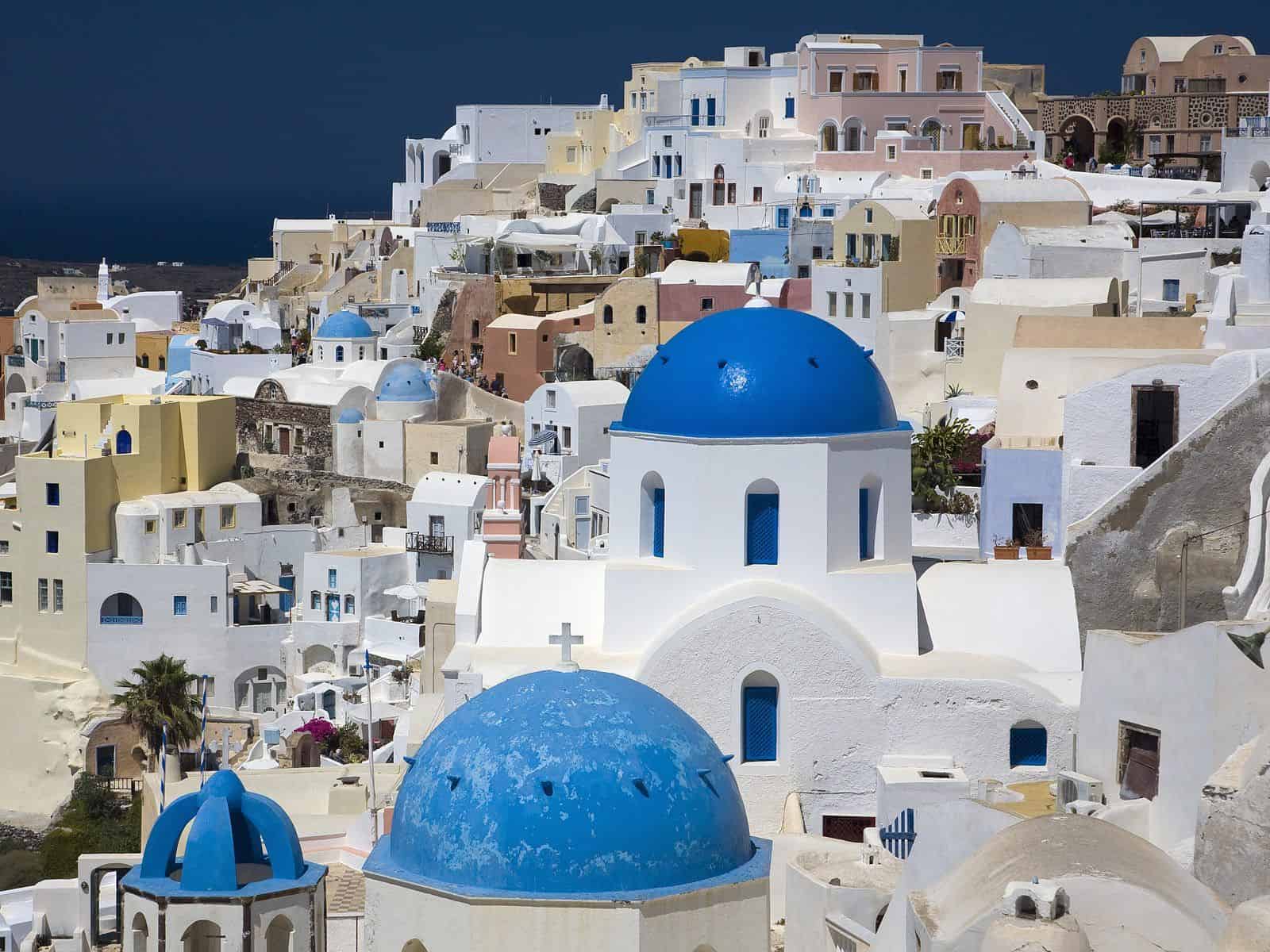
Europe’s tourism map is being redrawn in 2026, and Greece and Italy are emerging as two of the clearest beneficiaries. Travellers are still determined to take holidays, but the way they are travelling is changing. Expensive long-distance journeys, extended summer stays and rigid two-week holidays are increasingly competing with shorter European escapes that are easier to reach, easier to budget and easier to fit around work and family commitments.
The European Travel Commission says international tourist arrivals across Europe increased by 5% year-on-year during the period covered by its Q2 2026 assessment, even as economic uncertainty, geopolitical tensions and concerns about travel costs continued to affect consumer confidence. The more revealing finding, however, is that travellers are increasingly prioritising value, proximity and trips spread more evenly across the year.
Advertisement
Advertisement
That combination is creating favourable conditions for destinations such as Greece, Italy, Malta, Portugal and Spain. Rather than abandoning holidays, many Europeans appear to be redesigning them. A long and expensive journey can become a shorter break within Europe. A peak-August holiday can move into September. A week abroad can become four or five nights. The result is a tourism market increasingly shaped by what might loosely be described as the nearer-home micro-trip economy.
Greece Emerges as One of Europe’s Strongest Tourism Performers
Greece has become one of the clearest winners from the shift. ETC figures showed international arrivals to Greece rising by approximately 38.3%, while travel spending surged by around 64.3%. That gap is significant because spending grew considerably faster than visitor numbers.
Advertisement
Advertisement
This suggests that Greece is not simply attracting more travellers. It is also extracting greater economic value from tourism.
The country’s appeal is particularly well suited to today’s traveller. Greece offers major cities, islands, beaches, food tourism, heritage attractions and nature within comparatively compact itineraries. A traveller does not necessarily require two weeks to experience the country. Athens can anchor a short cultural break. Islands can support four- or five-night leisure holidays. Mainland destinations can offer road-based trips that appeal to Europeans looking for alternatives to complex long-haul travel.
Advertisement
Advertisement
The spending increase also matters because tourism success can no longer be assessed simply by counting arrivals. Large numbers of visitors create pressure on airports, ferries, housing, water supplies and historic areas. If spending grows more rapidly than arrivals, the destination has a better chance of generating stronger economic returns without relying indefinitely on ever-larger visitor volumes.
Greece in 2026
| Indicator | Latest reported movement | Why it matters |
|---|---|---|
| International arrivals | +38.3% | One of Europe’s strongest reported increases |
| Travel spending | +64.3% | Revenue is rising faster than visitor volume |
| Core strength | Mediterranean leisure tourism | Strong fit with short holiday demand |
| Opportunity | Shoulder seasons | Can spread demand beyond July and August |
| Main challenge | Capacity pressure | Islands and major attractions must manage growth |
Greece’s performance therefore reflects more than a simple tourism rebound. It demonstrates what can happen when strong demand, high visitor spending and flexible holiday formats meet at the same time.
Italy Is Growing Fast, but Its Tourism Economics Tell a Different Story
Italy is also experiencing strong growth, although its numbers require more careful interpretation.
The ETC reported arrivals increasing by around 21.1%, while travel expenditure grew by only 4.3%.
That is almost the reverse of Greece’s pattern.
Italy is receiving considerably more visitors, but expenditure is not increasing at anything close to the same rate. It would be too simplistic to conclude that every traveller is spending less. Differences in trip duration, accommodation choices, domestic versus international visitor mix and travel timing can all affect the figures.
Advertisement
Advertisement
Nevertheless, the gap is strategically important.
If visitor numbers rise substantially faster than revenue, destinations can experience the physical pressure of tourism without receiving an equivalent increase in economic return. Rome, Florence, Venice and other heavily visited cities already face questions about crowding, local infrastructure and the concentration of visitors within small historic districts.
Shorter trips may contribute to this challenge. A traveller staying three nights instead of seven still uses airport infrastructure, public transport and tourist attractions, but has fewer days in which to spend money locally.
Italy’s tourism challenge therefore differs from Greece’s.
Greece needs to manage high-value expansion. Italy increasingly needs to ensure that rising volumes translate into stronger visitor value.
Southern Europe Is Benefiting From Strong Intra-European Demand
Greece and Italy are not operating alone. Southern and Mediterranean Europe has remained one of the strongest tourism zones in 2026, with the ETC highlighting broad growth across Greece, Italy, Malta, Portugal and Spain.
Advertisement
Advertisement
Several factors support this regional strength.
European travellers can reach many of these destinations with relatively short flights. Low-cost airline networks are extensive. Rail links are improving across continental Europe. Holiday infrastructure is mature. Travellers can also choose between cities, beaches, countryside, heritage destinations and islands without leaving the region.
This flexibility is increasingly important when travellers are trying to control spending.
A European consumer comparing a nearby four-night holiday with a long-haul journey may face a substantial difference in airfare, travel time and logistical risk. The nearby holiday can therefore look attractive even if hotel rates are relatively high.
That is why the current shift should not simply be interpreted as tourists becoming less adventurous. It is better understood as tourists becoming more selective about how much distance adds genuine value to a holiday.
Travel Demand Remains Exceptionally Strong
The shift towards shorter and nearer trips is not occurring because Europeans have lost interest in holidays.
Advertisement
Advertisement
The opposite is true.
The ETC reported in July that 81% of Europeans intended to travel between June and November 2026, four percentage points higher than a year earlier. Almost two-thirds, or 64%, planned to travel within Europe, while more than half expected to take at least two holidays during the six-month period.
Those numbers provide the crucial context for the current tourism surge.
Europe is not dealing with weak travel demand. It is dealing with strong travel demand meeting tighter financial decision-making.
Travellers want holidays, but affordability matters. Safety matters. Climate matters. Travel time matters.
This creates a market in which relatively nearby destinations can gain because they allow consumers to continue travelling without committing to the cost and time associated with long-haul journeys.
Advertisement
Advertisement
What is shaping European travel decisions in 2026?
- Affordability: Consumers are comparing total holiday costs more carefully.
- Proximity: Closer destinations reduce travel time and can lower transport costs.
- Safety: Perceived stability increasingly affects destination choice.
- Climate: Extreme summer temperatures are influencing when and where people travel.
- Flexibility: Shorter holidays are easier to fit around work and personal commitments.
- Connectivity: Rail, road and frequent short-haul flights support spontaneous regional travel.
These factors help explain why regional tourism can remain resilient even during periods of economic uncertainty.
Short Trips Are Becoming a Rational Consumer Response
The phrase “micro trip” is useful for describing the direction of travel, although there is no single official European definition.
The underlying behaviour is much clearer.
Travellers facing higher living costs do not necessarily cancel holidays. Instead, they shorten them, stay closer to home, travel at different times or substitute one destination for another.
This is an economically rational response.
A four-night break allows a traveller to protect the emotional value of a holiday while reducing accommodation costs, restaurant spending and time away from work. It may also enable people to take more than one trip during the year rather than placing their entire travel budget into one long holiday.
Advertisement
Advertisement
For the tourism industry, however, this creates a new challenge. Visitor numbers can remain healthy while average length of stay comes under pressure.
Hotels may therefore need to focus more aggressively on ancillary spending, experiences and food and beverage revenue. Destinations may need to package attractions efficiently for travellers with limited time.
The winner in the short-trip economy is the destination that can deliver a satisfying holiday quickly.
Nearer-Home Travel Is Becoming More Important
The ETC’s Q2 analysis explicitly identified a shift towards destinations that are closer to home, offer stronger value and are perceived as safe.
This is one of the most consequential changes in European tourism.
Distance used to function mainly as a logistical factor. Increasingly, it is becoming an economic one.
Advertisement
Advertisement
Longer journeys generally mean higher transport costs, more time spent travelling and greater vulnerability to disruption. Shorter European journeys can reduce all three.
A traveller based in Germany, France, Belgium, Austria or the Netherlands can access multiple countries without taking an intercontinental flight. Even journeys that cross national borders can often be completed within a single day.
That geographic advantage gives Europe a tourism characteristic few other regions can match: international travel can still feel local.
Road Travel Reveals the Strength of Europe’s Regional Tourism Network
Eurostat data reinforces the importance of proximity.
For trips made by EU residents to other EU countries, cars and other motor vehicles dominate inbound tourism in several centrally located destinations. In 2024, motor vehicles accounted for approximately 75% of inbound intra-EU trips to Slovakia, 72% to Austria, 69% to Croatia, 66% to Slovenia and 62% to the Netherlands.
These figures reveal something important about the European tourism economy.
Advertisement
Advertisement
Not every international holiday depends on aviation.
For millions of Europeans, another country can be reached through a motorway journey lasting only a few hours. This creates ideal conditions for short weekend breaks and spontaneous travel.
| Destination | Share of intra-EU inbound trips by motor vehicle |
|---|---|
| Slovakia | 75% |
| Austria | 72% |
| Croatia | 69% |
| Slovenia | 66% |
| Netherlands | 62% |
Road accessibility also gives smaller destinations opportunities that might otherwise struggle to attract international tourists. Rural areas, mountain regions, wine destinations and small historic towns can tap into neighbouring markets without needing direct international flights.
That is especially valuable as travellers move beyond conventional week-long resort holidays.
Rail Is Becoming Increasingly Relevant to Short European Holidays
Rail travel offers similar advantages, particularly for urban tourism.
Eurostat data shows rail accounting for 34% of inbound intra-EU trips to Luxembourg, while Belgium recorded approximately 18%. Czechia, Germany and several other European countries also receive meaningful shares of cross-border tourism by train.
Advertisement
Advertisement
Meanwhile, EU residents made approximately 8.7 billion rail journeys in 2024, covering 444.5 billion passenger-kilometres. Germany and France were the largest rail markets by passenger-kilometres, followed by Italy.
Rail is particularly well suited to micro trips because it can reduce the amount of holiday time lost in transit.
Air travel may offer a shorter scheduled journey, but the real trip also involves travelling to an airport, security screening, boarding, possible delays and transport from the arrival airport.
A city-centre-to-city-centre train can therefore compete effectively on routes where the total journey remains manageable.
As holiday duration becomes shorter, every hour matters more.
Greece Remains More Dependent on Aviation
There is an important limitation to the near-home trend.
Advertisement
Advertisement
Not every successful destination benefits from road or rail travel.
Eurostat data shows that air transport accounted for approximately 85% of intra-EU inbound trips to Greece in 2024. Spain’s share stood at around 78%, while Cyprus and Malta were even more dependent on aviation.
That means Greece’s tourism boom is not primarily a road-trip phenomenon.
Instead, Greece benefits from being geographically close enough to major European source markets to support dense short-haul aviation networks.
The distinction matters because shorter holidays increase the importance of airline schedules.
A traveller taking four nights in Greece needs convenient outbound and return flights. Poor flight timings can effectively turn four nights into three usable days.
Advertisement
Advertisement
Air connectivity is therefore fundamental to Greece’s ability to compete in the short-break market.
September and October Are Becoming More Valuable
Nearer-home travel is also interacting with another major trend: the gradual extension of the European tourism season.
The ETC says climate considerations increasingly influence destination choices. Travellers are also spreading trips more evenly throughout the year.
This is particularly significant in Southern Europe.
July and August can bring extreme heat, high hotel prices, packed beaches and congested attractions. September offers a very different proposition.
Temperatures can remain suitable for beach holidays while crowds begin to decline. Hotel availability improves. Families tied to school calendars leave the market, giving couples, retirees and flexible workers more choice.
Advertisement
Advertisement
For Greece and Italy, this can turn shoulder-season travel into a major economic advantage.
A hotel does not need another building if it can sell existing rooms for several additional weeks each year.
This makes season extension one of the most efficient ways of increasing tourism revenue.
Climate Could Accelerate the Shift
Climate change adds another dimension.
Southern Europe’s appeal has historically been closely linked to hot summer weather. But when temperatures become uncomfortably high, the relationship changes.
Travellers may increasingly choose June, September or October rather than abandoning Mediterranean destinations entirely.
Advertisement
Advertisement
Others may move north.
This opens opportunities for destinations in Scandinavia, the Baltic region and Northern Europe, particularly among travellers interested in nature, outdoor activities and cooler temperatures.
Northern Europe has already shown strong momentum. Earlier ETC data for 2026 identified Ireland with a 30% increase in arrivals and Finland with 12% growth during the period measured.
These figures demonstrate why Europe’s tourism growth cannot be reduced to a Mediterranean story.
The broader market is becoming more geographically diverse.
European Tourism Nights Continue to Grow
More recent Eurostat accommodation data also shows that European tourism remains on an expansionary path.
Advertisement
Advertisement
The EU recorded approximately 1.321 billion nights in tourist accommodation during the first half of 2026, an increase of 1.7% compared with the same period in 2025.
Ireland posted the strongest increase at 14.6%, followed by Malta at 9.9% and Slovakia at 5.9%. Cyprus, however, recorded a decline of 7.7%.
The difference between arrival growth and overnight-stay growth is worth watching closely.
If arrivals rise faster than nights spent, shorter stays may be one explanation.
That does not mean tourism is weakening. It means destinations may increasingly receive more visitors cycling through accommodation over shorter periods.
For hotels, that changes operational patterns. More arrivals and departures mean increased housekeeping, reception workloads and room turnover even when the total number of occupied nights grows relatively slowly.
Advertisement
Advertisement
Cyprus Shows That Regional Tourism Is Not Rising Everywhere
The tourism surge is therefore uneven.
Cyprus recorded a 17.9% decline in arrivals in the ETC’s Q2 assessment, while Türkiye saw a 2.1% decrease. The ETC linked weakness partly to traveller sentiment surrounding regional tensions in the Middle East.
Eurostat’s first-half accommodation figures similarly showed Cyprus recording one of the EU’s sharpest declines in nights spent.
This demonstrates that proximity can work in both directions.
Being closer to home makes a destination convenient when travellers perceive the region as stable.
But perceived proximity to geopolitical tension can make tourists more cautious.
Advertisement
Advertisement
Tourism is therefore increasingly shaped by a combination of physical distance and psychological distance.
A destination can be geographically near but emotionally feel risky.
Shorter Holidays Make Disruption More Expensive
The rise of compact holidays also changes the consequences of transport disruption.
Losing half a day to a cancelled flight during a two-week holiday is inconvenient. Losing half a day during a three-night trip can significantly reduce the experience.
This means reliability becomes more valuable as holidays get shorter.
Travellers may increasingly accept slightly higher fares for convenient departure times, direct services or airports with several daily frequencies.
Advertisement
Advertisement
Rail can also benefit because it offers alternatives on many regional European routes.
This creates a new form of competition.
Airlines and transport operators are no longer competing on fare alone. They are competing on the amount of useful holiday time their service preserves.
Long-Haul Travel Is Facing Stronger Competition From Regional Alternatives
The shift towards nearby holidays is not limited to European residents.
The ETC’s Long-Haul Travel Barometer found weaker global appetite for long-distance travel in 2026 as affordability and time constraints encourage travellers to consider domestic or short-haul alternatives.
Overall long-haul travel intention fell, while consumers showed increased sensitivity to costs, flexibility and journey time.
Advertisement
Advertisement
Europe continues to benefit from a strong reputation for safety, but long-haul markets increasingly have to be persuaded that the additional cost and travel time are worthwhile.
This reinforces the advantage of intra-European tourism.
A European traveller choosing Greece or Italy can receive the emotional benefits of international travel without necessarily accepting the cost or complexity of crossing continents.
What the Nearer-Home Micro-Trip Means for Tourism Businesses
The short-trip economy changes the mathematics of tourism.
A destination that receives the same annual number of overnight stays through more individual visitors will experience different operational pressures than one dependent on long-stay guests.
More short trips can mean:
Advertisement
Advertisement
- More frequent hotel check-ins and check-outs
- Greater pressure on airports and rail stations
- Higher demand for short-duration attractions and tours
- Greater importance of weekend pricing
- More restaurant and experience bookings concentrated into fewer days
- Stronger demand for easy airport and station transfers
- Increased value of packaged three-to-five-day itineraries
- Greater sensitivity to delays and transport disruption
Tourism operators therefore need to make destinations easier to consume in a limited period.
A traveller arriving on Friday evening and leaving on Monday afternoon does not have time for complicated transport connections or poorly coordinated attractions.
Convenience becomes part of the tourism product.
Greece and Italy Face Different Opportunities
Greece and Italy illustrate two versions of the same European tourism boom.
Greece currently combines strong arrival growth with even stronger spending growth. Its priority should therefore be protecting visitor experience while preventing popular islands and destinations from being overwhelmed.
Italy, by contrast, has strong visitor growth but weaker spending expansion. Its challenge is to increase the economic value generated by those visitors and disperse tourism beyond heavily crowded centres.
Advertisement
Advertisement
Both countries can benefit from encouraging:
- Longer shoulder seasons
- Regional travel beyond famous tourism hotspots
- Better public transport connections
- Higher-value experiences
- Rural and food tourism
- Secondary cities and lesser-known destinations
- Multi-stop rail and ferry itineraries
The objective should not simply be more tourists.
It should be better-distributed, higher-value and more sustainable tourism.
Europe Is Becoming a Network of Shorter Tourism Corridors
The biggest structural shift may ultimately be geographical.
Europe increasingly functions not simply as a collection of separate national tourism markets but as a network of highly connected short-haul travel corridors.
Germany links into Austria, Switzerland, France, Belgium, the Netherlands, Poland and Czechia.
Advertisement
Advertisement
Northern Italy connects into France, Switzerland, Austria and Slovenia.
Belgium, the Netherlands, Luxembourg, France and Germany form another dense tourism corridor.
Croatia and Slovenia benefit from Central European road markets.
Spain, Italy and Greece remain strongly supported by short-haul aviation.
This connectivity gives European tourism unusual resilience.
If long-haul travel becomes too expensive, Europeans have numerous substitutes within their own region.
Advertisement
Advertisement
If one destination becomes overcrowded or expensive, another country may be only a few hours away.
The New European Holiday Is Becoming Shorter but More Frequent
The most important conclusion from the 2026 data is that Europeans have not stopped prioritising travel.
More than four in five continue to plan journeys. Most intend to remain within Europe, and more than half expect multiple holidays.
What is changing is the format.
The traditional annual holiday is increasingly sharing space with several shorter breaks. Travellers can divide budgets across cities, beaches, food destinations and nature trips.
This creates opportunities for a wider range of European destinations.
Advertisement
Advertisement
A smaller city no longer needs to persuade travellers to spend ten nights there.
It may only need to become irresistible for three.
Conclusion
Greece’s surge alongside Italy and other European destinations reveals a tourism market that remains remarkably resilient despite economic uncertainty and geopolitical pressure.
But the strongest story is not simply that more people are travelling.
It is how Europeans are choosing to travel.
Proximity is gaining value. Short holidays are becoming easier to justify financially. Road and rail connections are strengthening the appeal of neighbouring countries. Short-haul aviation continues to deliver large volumes to Mediterranean destinations. September and other shoulder-season months are becoming increasingly important, while travellers are paying closer attention to safety, climate and the overall cost of reaching a destination.
Advertisement
Advertisement
Greece currently stands out because spending is rising even faster than arrivals. Italy is experiencing strong visitor growth but faces a greater challenge in converting that volume into equivalent economic value. Malta, Ireland, Finland, Slovakia and other destinations demonstrate that the expansion reaches well beyond the largest Mediterranean tourism markets.
The underlying shift is therefore not away from travel. It is away from the assumption that a valuable holiday must be long or far away.
In 2026, many European travellers appear to be discovering that an international journey can be shorter, closer and more carefully budgeted without feeling like less of a holiday.
For Europe’s tourism industry, that may be one of the most important changes of all.
Advertisement
