
Malaysia’s Sarawak Delta Achieves Global Prestige as the Newest UNESCO Global Geopark

Published
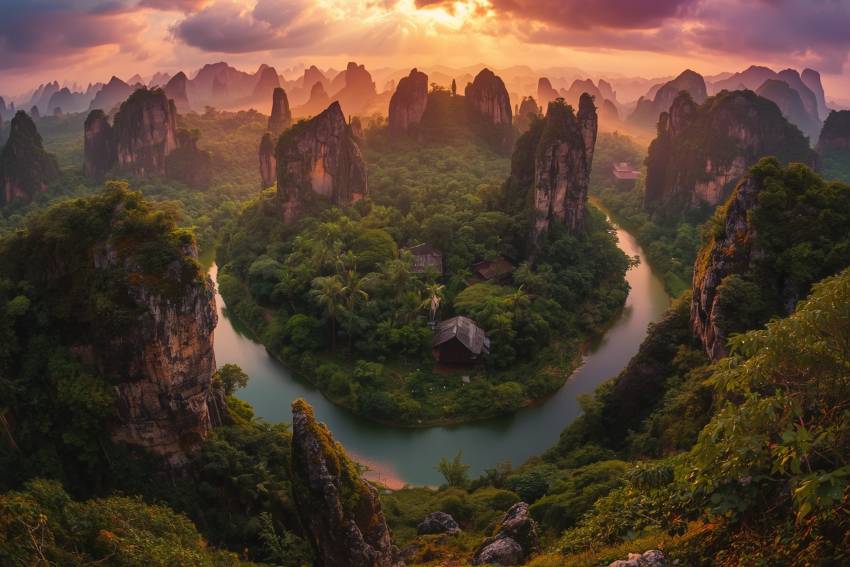
Image generated with Ai
On April 27, 2026, Sarawak Delta Geopark was officially inscribed on the UNESCO Global Geoparks list, a historic moment for the Malaysian tourism industry. The official certification was presented to a high-level delegation from Sarawak at a prestigious ceremony held at the UNESCO headquarters in Paris. The international acclaim is a reflection of the region’s outstanding geological, ecological and cultural resources. With this designation, the Sarawak Delta joins the third UNESCO Global Geopark in Malaysia, following the successful designations of Langkawi, Kinabalu and Lenggong.
The UNESCO upgrade is regarded by state officials and conservationists as a watershed moment for tourism in Southeast Asia. Global visibility is expected to increase dramatically, attracting a new breed of travellers who care about sustainability and heritage. The title is not just a name but a commitment to a holistic management approach that combines scientific preservation with community-led development. This development will be a key pillar of the “Visit Malaysia 2026” campaign and a testament to the nation’s commitment to environmental stewardship and the green economy.
Advertisement
Advertisement
Exploring the Geological Foundations of Borneo
The Sarawak Delta Geopark encompasses an expansive area of approximately 3,112 square kilometres, stretching across the districts of Kuching, Bau, Padawan, and Siburan. This vast territory is often described as “Borneo’s Cradle of Origin” due to its remarkably complex geological history. It is understood that the region’s landscape was shaped by tectonic movements dating back over 200 million years, linked to the fragmentation of the supercontinent Gondwana. The geopark features 42 identified geological heritage sites, many of which offer invaluable insights into the formation of the Proto-South China Sea.
Within this geological playground, the limestone karst landscapes of Bau remain a primary attraction for researchers and eco-tourists. International recognition has been extended to sites such as the Wind Cave and Fairy Cave Nature Reserves, where ancient stalactites and stalagmites are preserved. These formations are considered of global scientific importance, as they house unique subterranean ecosystems and fossil-rich strata. Through the implementation of the UNESCO management framework, these fragile environments are protected from industrial exploitation while being opened for educational and recreational purposes.
Advertisement
Advertisement
A Confluence of Multi-Ethnic Cultural Heritage
Beyond the physical rock formations, the Sarawak Delta is celebrated for its profound cultural significance. The geopark area is home to a diverse multi-ethnic population residing in over 280 villages, including the Malay, Bidayuh, Iban, and Chinese communities. The region’s history is deeply intertwined with the waterways of the Sarawak River, which once served as a vital maritime artery for the Bruneian Sultanate and later the Rajah Brooke dynasty. Cultural heritage sites within the geopark, such as the Santubong Peninsula, are recognized as archaeological treasures containing iron smelting remains and ancient Hindu artefacts.
Advertisement
Advertisement
A major objective of the UNESCO designation is the preservation of intangible heritage, including indigenous knowledge and traditional livelihoods. Through community-based tourism initiatives, visitors are encouraged to engage with local ambassadors in Bidayuh longhouses or explore the maritime traditions of coastal Malay fishing villages. This integration of human history with geological landscapes is a core requirement of the UNESCO Global Geopark Network. It is believed that by empowering local residents to act as stewards of their own heritage, the long-term sustainability of the geopark can be secured.
Sustainable Strategies and the Future of Purposeful Travel
As the Sarawak Delta Geopark transitions into this new phase of global recognition, innovative strategies are being deployed to manage tourism growth responsibly. A significant emphasis is placed on “Purposeful Travel,” where the ecological footprint of visitors is minimized. In the capital city of Kuching—which also holds the title of a UNESCO Creative City of Gastronomy—green transit solutions are being prioritized. The implementation of the Hydrogen Autonomous Rapid Transit (ART) system and the use of electric buses are intended to facilitate carbon-neutral movement between the city centre and the outlying geological sites.
Furthermore, the geopark is being utilized as a “living laboratory” for environmental education and research. Academic partnerships have been established to study the delta’s biodiversity, including its mangrove forests and peat swamps. These ecosystems are essential for climate change mitigation and provide a habitat for rare flora and fauna. By linking geological conservation with the preservation of natural habitats, Sarawak is demonstrating a forward-thinking model for regenerative tourism. This approach ensures that the economic benefits derived from tourism are reinvested into the protection of the very landscapes that attract visitors.
Advertisement
Advertisement
Global Connectivity and the Geopark Network
The addition of Sarawak Delta into the Global Geopark Network provides opportunities for cooperation and sharing of knowledge globally. There are also strategic links with other renowned geoparks like Jeju Island in South Korea to share best practices in sustainable management and visitor education. Such partnerships are anticipated to improve Sarawak’s image as an eco-tourism leader in the ASEAN region. As the management plan for 2040 is implemented, the geopark will continue to grow as a centre of scientific excellence and a haven of cultural identity.
In a nutshell, the UNESCO designation of the Sarawak Delta Geopark is a win for conservation, community and the future of travel. It’s a move away from mass tourism to a model that values the intrinsic value of the earth’s geological history and the diversity of its peoples. The Sarawak Delta is more than a destination for the modern traveller; it’s an opportunity to see the deep link between the ancient past and a sustainable future.
Advertisement
