
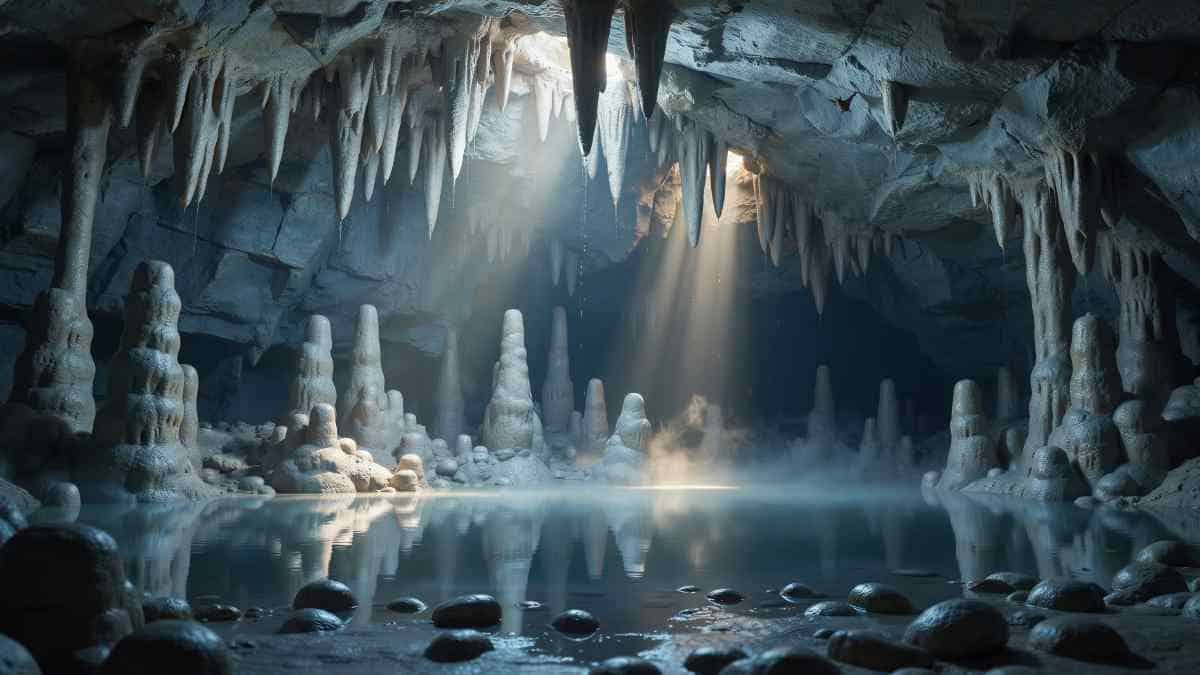
Image generated with Ai
Crete continues to stand at the centre of Greek mythology, and few places on the island carry greater legendary significance than the Cave of Zeus. Hidden beneath the slopes of Mount Ida, also known as Psiloritis, this remarkable cave has long been associated with one of the most important stories in ancient Greek tradition. According to mythology, it was here that Zeus, the future king of the gods, was born and raised away from danger, making the cave one of the most revered mythological locations in Greece.
Today, the Cave of Zeus attracts visitors from around the world who are eager to explore a destination where mythology, geology and cultural heritage converge. Beyond its legendary status, the site offers impressive natural formations, underground chambers and a dramatic mountain setting that highlights the diversity of Crete’s tourism landscape.
As cultural and heritage tourism continues to grow, the Cave of Zeus remains one of the island’s most compelling attractions, drawing travellers interested in both the stories and landscapes that shaped ancient Greece.
The cave’s significance begins with its location.
Advertisement
Situated beneath Mount Ida, the highest mountain on Crete, the site occupies a prominent place in Greek mythological tradition.
Ancient stories describe Mount Ida as a sacred landscape closely connected to the lives of the Olympian gods.
The mountain’s rugged terrain, dramatic elevations and remote environment contributed to its association with divine events and legendary narratives.
For travellers exploring Crete, Mount Ida represents more than a natural landmark; it serves as a gateway to some of the island’s most enduring cultural traditions.
The Cave of Zeus remains one of the mountain’s most celebrated attractions.
According to Greek mythology, Zeus was born in the cave during a period of great danger.
Ancient traditions recount that Zeus’ father, Cronus, feared a prophecy stating that one of his children would eventually overthrow him.
In response, Cronus swallowed each of his offspring shortly after birth.
To protect Zeus from the same fate, his mother Rhea secretly hid him within the cave beneath Mount Ida.
There, according to legend, Zeus was raised in secrecy until he became powerful enough to challenge Cronus and fulfil the prophecy.
The story remains one of the foundational myths of Greek civilisation.
Beyond its mythological importance, the Cave of Zeus is renowned for its geological features.
Visitors entering the site encounter a network of chambers shaped over thousands of years through natural processes.
The cave contains:
These formations contribute to a dramatic underground environment that has fascinated travellers and researchers alike.
The cave’s natural characteristics enhance its appeal by creating a setting that feels appropriate for a location linked to one of mythology’s most powerful figures.
Its geological value complements its cultural significance.
Among the cave’s most striking features are its underground pools.
These water-filled sections create reflections that highlight the surrounding rock formations and contribute to the cave’s atmospheric environment.
The presence of water has played an important role in shaping the cave over time, helping create many of the formations visible today.
For visitors, the pools provide an additional layer of visual interest and reinforce the sense of entering a landscape largely untouched by modern development.
Their inclusion within the cave system makes the site one of Crete’s most distinctive natural attractions.
The Cave of Zeus illustrates how mythology continues influencing modern tourism.
Across Greece, destinations associated with legendary narratives attract visitors interested in exploring the origins of ancient stories.
The cave occupies a particularly prominent position because Zeus remains one of the most recognised figures in Greek mythology.
Travellers visiting Crete often include the site on itineraries focused on cultural and historical exploration.
The opportunity to stand within a location connected to one of antiquity’s most enduring legends creates a powerful tourism experience.
This relationship between mythology and travel continues supporting visitor demand.
Crete possesses a unique advantage within Greek tourism due to its extensive mythological associations.
The island is linked to numerous stories involving gods, heroes and legendary creatures.
Destinations connected to:
contribute significantly to the island’s cultural tourism sector.
The Cave of Zeus plays a central role within this network of attractions by offering visitors direct access to one of the most important mythological locations in Greece.
Its popularity strengthens Crete’s position as a leading destination for heritage tourism.
Global interest in cultural and heritage tourism remains strong.
Travellers increasingly seek destinations that provide historical depth and meaningful storytelling alongside natural beauty.
The Cave of Zeus aligns closely with these preferences.
Its combination of mythology, geology and mountain scenery creates a multifaceted visitor experience capable of appealing to a wide range of audiences.
From mythology enthusiasts to nature lovers, the destination attracts travellers interested in understanding both the cultural and physical landscapes of Crete.
Mythological Era – Zeus is said to be born and hidden within the cave.
Ancient Greek Period – The site gains religious and cultural significance.
Modern Tourism Era – The cave becomes a major heritage attraction.
Present Day – Visitors continue exploring the cave as part of Crete’s cultural tourism offering.
According to Greek mythology, it is the location where Zeus was born and raised.
The cave is situated beneath Mount Ida on the island of Crete.
Travellers can explore rock formations, underground chambers, natural pools and geological features shaped over thousands of years.
The Cave of Zeus remains one of Greece’s most remarkable mythological and natural attractions, offering visitors a rare opportunity to explore a location deeply connected to the origins of ancient Greek tradition. Hidden beneath Mount Ida, the cave combines legendary significance with extraordinary geological beauty, creating an experience that bridges mythology and reality. As travellers continue seeking destinations rich in history, culture and storytelling, the Cave of Zeus stands as one of Crete’s most enduring symbols of the ancient world and its lasting influence on global heritage tourism.
Advertisement
Advertisement
Advertisement













Friday, September 4, 2026

Friday, September 4, 2026

Friday, September 4, 2026

Thursday, September 3, 2026

Wednesday, September 2, 2026

Friday, September 4, 2026

Friday, September 4, 2026