
Massive “No Kings” Protests Sweep Washington, New York, and Global Cities as Millions Rally Against Trump Policies: What You Need to Know

Published
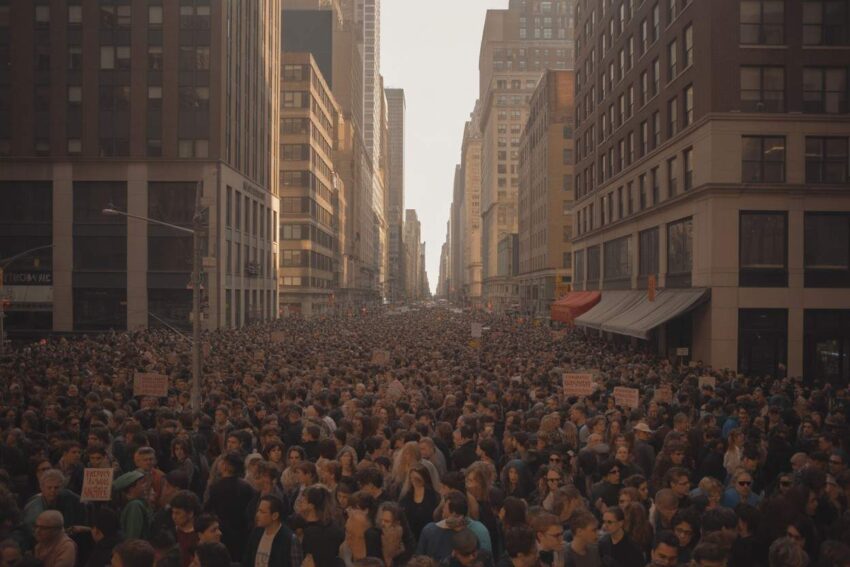 Image generated with Ai
Millions of demonstrators across the United States and around the world took to the streets this weekend in a sweeping display of dissent during the “No Kings” protests, a global movement denouncing President Donald Trump’s policies and perceived challenges to democratic governance. More than twenty-six hundred rallies were organized across all fifty US states and numerous international cities including London, Berlin, Paris, Lisbon, and Madrid, marking one of the largest coordinated acts of civic resistance since Trump’s return to office in January 2025.
A Global Display of Political Dissent
The demonstrations began early Saturday morning in Washington, D.C., before spreading to major US cities such as New York, Los Angeles, Chicago, Atlanta, Houston, and San Francisco. By midday, millions of peaceful protesters had gathered nationwide holding signs that demanded adherence to democratic norms and decried what organizers describe as the administration’s “drift toward authoritarianism.”
Internationally, rallies were held outside US embassies in London, Paris, Rome, Berlin, and Stockholm, and hundreds gathered in Barcelona and Lisbon to show solidarity with American demonstrators. The movement’s unifying slogan, “No Kings,” encapsulates the message opposing top-down governance and emphasizes the principle that leadership must remain accountable. Organizers estimate total global participation between five and six million people, making the October demonstrations among the largest of 2025.
Protests Amid Political Tension
The mass mobilization comes amid deep political divisions and an ongoing federal government shutdown, now stretching into its eighteenth day, which has frozen numerous federal programs across the US. The demonstrations are widely regarded by activists as a pivotal moment for reenergizing civic opposition.
Advertisement
Advertisement
President Trump’s second administration has been marked by aggressive policy maneuvers, including expanded powers for federal law enforcement, mass deportation directives, and the deployment of National Guard troops in several states. Reports confirm increased troop presence in Washington, D.C., Memphis, and Los Angeles, while pending deployments to Chicago and Portland were blocked by federal courts.
Organizers Emphasize Peaceful Resistance
The No Kings network, a coalition of over two hundred organizations, including groups such as the American Civil Liberties Union (ACLU), Human Rights Campaign, Common Defense, and MoveOn, coordinated both national and local-level events. Organizers trained thousands of volunteers in nonviolent resistance, de-escalation, and protest safety protocols through online seminars held earlier this month.
Advertisement
Advertisement
Protest leaders describe the campaign as a defense of America’s democratic traditions and civil liberties rather than partisan opposition. Many participants view the demonstrations as critical for reaffirming America’s founding principles of equality, accountability, and freedom of speech.
Despite scattered reports of tense faceoffs between protesters and police in cities like Austin, Texas, and Richmond, Virginia, the majority of events proceeded peacefully.
Advertisement
Advertisement
Political Response and Security Measures
The protests prompted significant security deployments across multiple US states. Texas Governor Greg Abbott ordered National Guard reinforcements ahead of the demonstrations in Austin, labeling the event an “Antifa-linked disturbance” and instructing law enforcement to arrest anyone engaged in violence. Similarly, Virginia authorities mobilized law enforcement and tactical units in anticipation of large gatherings, though no major conflicts were reported as of Saturday evening.
Federal officials confirmed that law enforcement cooperation between Homeland Security and state agencies was increased but emphasized respect for peaceful assembly rights under the First Amendment. In New York, coordinating agencies worked with protesters to organize designated marching routes through Manhattan, leading to one of the largest gatherings of the day around Times Square.
Protests Expand Beyond America
Outside the United States, international rallies echoed the call for democratic accountability and human rights. Protesters gathered across Europe, symbolically outside US embassies, to denounce what they termed an erosion of democratic values. In Paris, demonstrators waved signs reading “Liberté, not loyalty” and “Democracy has no kings,” while events in Berlin and Madrid saw speeches from expatriate groups and political advocates demanding transparency and freedom of the press.
The global reach of the “No Kings” demonstrations underscores the perception that US democracy influences political climates beyond its borders. Global civic groups have commended American organizers for maintaining a peaceful, inclusive tone while challenging abuses of power.
Advertisement
Advertisement
A Historic Moment for Civic Mobilization
Political analysts estimate turnout numbers on par with similar movements from early 2025, including the June “No Kings” protests, which commemorated Trump’s birthday and the US Army’s two hundred fiftieth anniversary. Those events drew around five million participants worldwide.
Saturday’s rallies are being lauded for reviving mass mobilization after months of post-election disillusionment within liberal and progressive circles. Organizers framed the day as a crossroads moment between “democracy and dictatorship,” urging collective participation to safeguard free institutions during an era of polarization.
Tourism, Culture, and Economic Impact
While the “No Kings” protests carry a strong political focus, their scale also reflected significant secondary effects on domestic tourism and urban economies. Major metropolitan hubs like New York City, Washington, and Chicago experienced full hotel occupancies and boosted weekend business revenue from the influx of regional visitors. Local tourism offices and transportation networks reported surges in public transport use, echoing patterns seen during previous large-scale civic events such as the Women’s March and March for Our Lives.
Conversely, concerns about safety temporarily deterred some casual weekend tourism in affected districts, particularly near government buildings and capitols under security surveillance. Air traffic experienced moderate delays due to rerouted flights in both Dallas–Fort Worth and Atlanta as officials restricted drone and helicopter use during demonstrations.
Governments of allied nations closely observed the US situation, with analysts suggesting that heightened global civic activism could embolden similar democratic movements elsewhere. In London, for example, tourism officials indicated that increased visibility for American demonstrations has also drawn attention to international democratic solidarity events, adding cultural significance to local weekend gatherings.
Advertisement
