
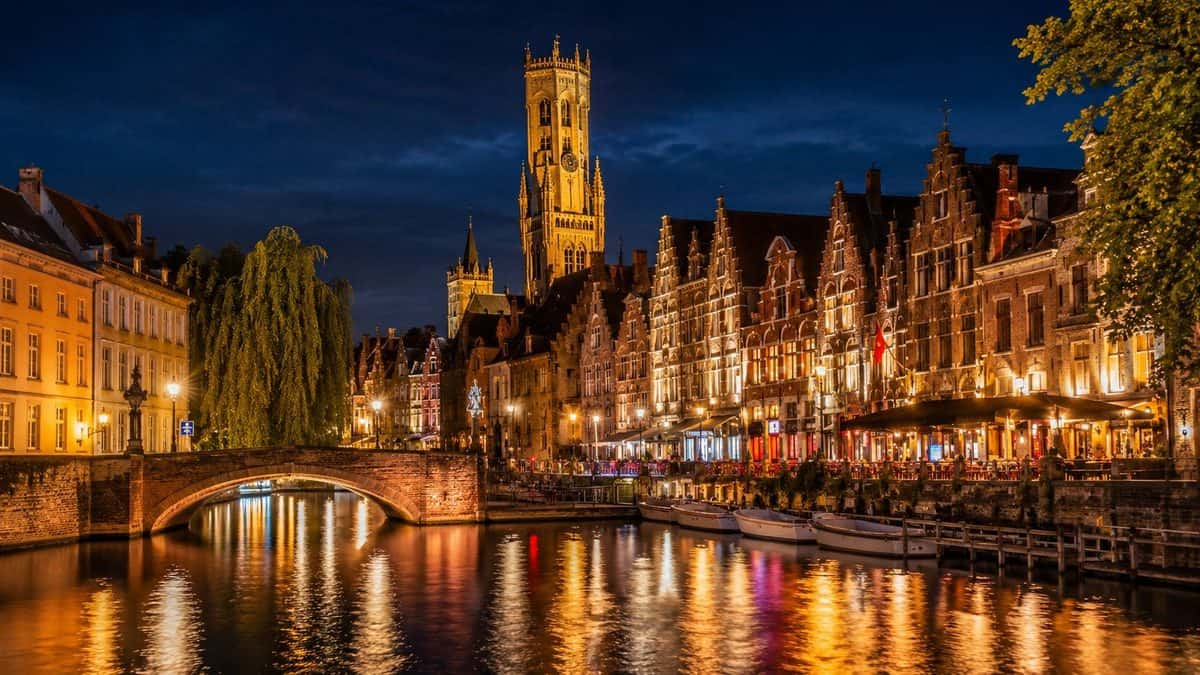
Image generated with Ai
Ireland overtakes Malta and more in fuelling European tourism through a record surge in overnight stays in the first half of 2026, with 14.6% growth putting it ahead of Malta at 9.9% and Slovakia at 5.9%. Strong foreign visitor demand, expanding city-break interest, coastal tourism and established touring experiences helped Ireland outperform the EU’s overall 1.7% increase, as total overnight stays across the bloc reached 1.321 billion. The figures highlight an uneven European tourism landscape, with Ireland leading the growth momentum while several destinations, including Cyprus and Romania, experienced declining accommodation demand.
Ireland emerged as the EU’s fastest-growing tourism accommodation market in the first half of 2026, recording a striking 14.6% increase in overnight stays compared with the same period in 2025, according to Eurostat. The performance places Ireland well above the EU-wide growth rate of 1.7%. Its appeal combines Dublin city breaks, Atlantic coastal landscapes, heritage attractions, festivals and established touring routes such as the Wild Atlantic Way. Strong international accessibility and a tourism product supporting both short breaks and longer touring holidays help explain why Ireland is outperforming the wider European accommodation market.
Malta recorded a 9.9% increase in overnight stays during H1 2026, making it the second-highest growth rate highlighted by Eurostat. The performance places the Mediterranean island firmly among the strongest tourism accommodation markets in the EU during the opening six months of the year. Its compact geography works strongly in its favour, allowing visitors to combine Mediterranean beaches, Valletta, historic architecture, cultural attractions and neighbouring Gozo within one holiday. Extensive European air connectivity and its year-round Mediterranean proposition also help Malta attract travellers beyond the traditional summer peak, strengthening hotels, holiday accommodation providers, restaurants and other businesses connected to the country’s tourism economy.
Slovakia became the EU’s third-fastest-growing tourism accommodation market highlighted for H1 2026, with overnight stays increasing 5.9% year on year. Its performance shows how lesser-visited Central European destinations can gain ground as travellers look beyond Europe’s traditional tourism capitals. Bratislava provides an accessible city-break proposition, while the High Tatras, castles, thermal spas, national parks and mountain communities broaden Slovakia’s appeal throughout the year. Its location also makes it relatively easy to combine with Austria, Hungary, Poland and Czechia. This combination of affordability, nature, heritage and cross-border accessibility is helping Slovakia capture a greater share of European tourism demand.
Advertisement
Advertisement
Cyprus presents one of H1 2026’s most striking tourism developments. Overnight stays declined 7.7%, the steepest fall reported among EU countries in the Eurostat data. The decline contrasts sharply with the strong growth recorded by Ireland, Malta and Slovakia and demonstrates how uneven Europe’s tourism accommodation performance remained during the opening half of the year. Cyprus nevertheless continues to offer Mediterranean beaches, resort tourism, archaeological sites, gastronomy and warm-weather holidays. Its established tourism infrastructure remains an important advantage, but changing travel patterns, airline capacity, accommodation demand and economic conditions across major source markets can influence performance in a highly competitive Mediterranean tourism environment.
Romania recorded a 6.7% decline in overnight stays during the first half of 2026, making it the second-largest fall highlighted by Eurostat. The result puts Romania on the opposite side of Europe’s uneven tourism performance from Ireland, Malta and Slovakia. However, Romania possesses a broad tourism portfolio capable of supporting future growth, stretching from Bucharest and Transylvania to the Carpathian Mountains, medieval towns, rural landscapes and the Black Sea. Its combination of cultural heritage, nature, mountain tourism and comparatively less-explored destinations provides opportunities to attract travellers seeking alternatives to Europe’s heavily visited tourism centres. Strengthening accessibility and destination promotion could help generate renewed accommodation demand.
Europe’s tourism accommodation sector maintained its upward momentum in the first half of 2026, with 1.321 billion overnight stays across the EU, up from 1.299 billion during the same period in 2025, according to Eurostat. That represents 1.7% year-on-year growth and shows that accommodation demand continued expanding across the bloc. Nights spent by foreign visitors increased 2.5%, nearly three times the 0.9% growth recorded for domestic tourism. Ireland led the EU with a striking 14.6% increase, followed by Malta at 9.9% and Slovakia at 5.9%. However, the recovery remained uneven, with 9 countries recording declines. Cyprus fell 7.7% and Romania dropped 6.7%, demonstrating substantial differences in tourism performance between individual European destinations.H1 2026 Tourism Indicator Eurostat Data Total EU overnight stays 1.321 billion H1 2025 overnight stays 1.299 billion Overall growth +1.7% Foreign overnight-stay growth +2.5% Domestic overnight-stay growth +0.9% Countries recording declines 9 Fastest-growing country Ireland: +14.6% Second-fastest growth Malta: +9.9% Third-fastest growth Slovakia: +5.9% Largest decline Cyprus: −7.7% Second-largest decline Romania: −6.7%
Ireland overtakes Malta and more in fuelling European tourism through a record surge in overnight stays in the first half of 2026, driven by strong foreign demand, city breaks, coastal tourism and touring holidays.
Advertisement
Advertisement
In conclusion, Ireland overtakes Malta and more in fuelling European tourism through a record surge in overnight stays in the first half of 2026, supported by strong international demand, city breaks, coastal experiences and established touring holidays. Ireland’s 14.6% growth places it ahead of Malta at 9.9% and Slovakia at 5.9%, significantly outperforming the EU-wide increase of 1.7%. With foreign overnight stays growing faster than domestic demand across the EU, Ireland’s performance highlights how international visitors are strengthening Europe’s accommodation sector even as destinations such as Cyprus and Romania face declines.
Advertisement
Advertisement
Advertisement













Thursday, September 3, 2026

Thursday, September 3, 2026

Thursday, September 3, 2026

Thursday, September 3, 2026

Thursday, September 3, 2026

Wednesday, September 2, 2026

Thursday, September 3, 2026

Thursday, September 3, 2026


