
Mexico’s Tequila Tourism in Jalisco: The Rise of a Mature Global Economy

Published
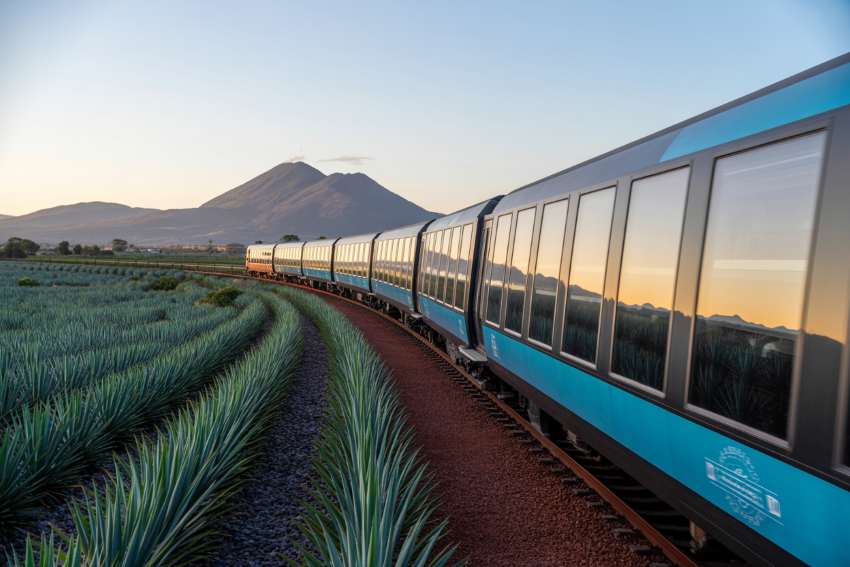 Image generated with Ai
The landscape of Jalisco is currently being reshaped, not just by the expansion of agave plantations or the rise of celebrity-backed spirit brands, but also by a fundamental shift in how the region is perceived. Tequila tourism has evolved into a scalable, infrastructure-driven industry that has progressed far beyond the days of occasional pilgrimages. In 2025, the Ruta del Tequila is expected to welcome approximately 1.3 million visitors. This influx is no longer considered a novelty; rather, a sophisticated visitor economy has emerged, with logistics and accessibility serving as the primary drivers of growth.
The Locomotive Revolution: Rail as a Catalyst
The most visible indicator of this regional transformation is found in the resurgence of rail transport. What was once considered a logistical hurdle—navigating the distance between the metropolitan hub of Guadalajara and the rural heart of agave country—has been streamlined into a seamless, bookable excursion. This shift is largely attributed to the efforts of Grupo México Transportes, through which rail-based tourism has been successfully modernized.
Multiple dedicated train excursions now connect the state’s capital to the town of Tequila, providing a controlled and scenic environment for travellers. Friction is recognized as the ultimate deterrent to repeat visitation, and by removing the complexities of driving, the rail system has allowed the region to be sold more predictably to international markets. These journeys are frequently packaged with distillery tours and cultural performances, effectively turning the transit time into a core component of the destination experience.
Mapping the Agave Heartland
The current tourism model in Jalisco is divided into three distinct pillars: the historic town of Tequila, the UNESCO-recognized Agave Landscape corridor, and the broader “Ruta del Tequila” experience. According to the Secretaría de Turismo de Jalisco (SECTURJAL), the town of Tequila remains the primary magnet, capturing roughly two-thirds of all regional visitors.
Advertisement
Advertisement
However, a significant imbalance is observed when looking toward the Jalisco Highlands (Los Altos). Despite being the production home for world-renowned labels such as Patron and Don Julio, the Highlands currently attract less than 5% of the region’s total tourist traffic. This disparity is largely fuelled by a lack of connective infrastructure. While the Agave Landscape of the valley is easily traversed, the Highlands are still characterized by a limited road network and a shortage of high-capacity lodging.
The Economics of the Short-Stay Model
Statistically, Tequila tourism remains a “short-stay” phenomenon. Data indicates that the average visit to the town of Tequila lasts approximately 5.2 hours. For domestic travellers, who represent roughly 87.36% of the visitor mix, the experience is typically treated as a high-frequency day trip from Guadalajara. International visitors, primarily from the United States (66%) and Canada (13%), tend to stay slightly longer, though the average overnight stay still fluctuates between 1.2 and 1.4 days.
Advertisement
Advertisement
Financially, the impact of tourism on total producer revenue is considered modest when compared to global exports. With tourism contributing approximately $81 million (MXN 1.45 billion) to the economy, it represents only about 1.8% of the industry’s $4.28 billion export value. For comparison, spirit-based tourism in the Scotch whisky and Kentucky bourbon industries often accounts for 3% to 4% of their respective revenues. This discrepancy is attributed to the current low-cost structure and a historical lack of premium hospitality options, though the recent opening of luxury properties like Solar de Las Animas suggests a shift toward higher-value spending.
Future Horizons: The 2026 World Cup and Beyond
As 2026 unfolds, the government of Jalisco is actively working to diversify the tourist flow. A major initiative has been the launch of the Los Altos Tequila Route, which aims to integrate eight municipalities—including Arandas and Tepatitlán—into the formal tourism network. This expansion is timed to coincide with Guadalajara’s role as a host city for the 2026 FIFA World Cup, an event expected to bring millions of additional visitors to the state.
Efforts are being concentrated on improving road networks and increasing hotel capacity, with over $1 billion in private investment recently allocated for hotel projects across the state. Furthermore, the integration of Puerto Vallarta as a potential feeder for Tequila tourism is being explored. As highway infrastructure improves and cruise ship arrivals increase, the coastal city is expected to play a larger role in moving international travellers toward the interior.
A Mature Visitor Economy
The conclusion is obvious: tequila tourism in Jalisco has reached critical mass. It is no longer reliant on a single brand’s hospitality efforts but rather on a strong transport infrastructure and UNESCO-protected heritage. The next phase of development will most likely focus less on increasing visitor volume and more on how those visitors are distributed throughout the state. Jalisco is positioning its agave heartland as a global leader in spirits tourism by giving visitors more reasons to stay overnight and improving the “connective tissue” between distilleries.
Advertisement
