

Greece’s Strategic Travel Outlook Gains Momentum as Marco Rubio Visit Highlights Energy, Defence and Regional Stability

Published
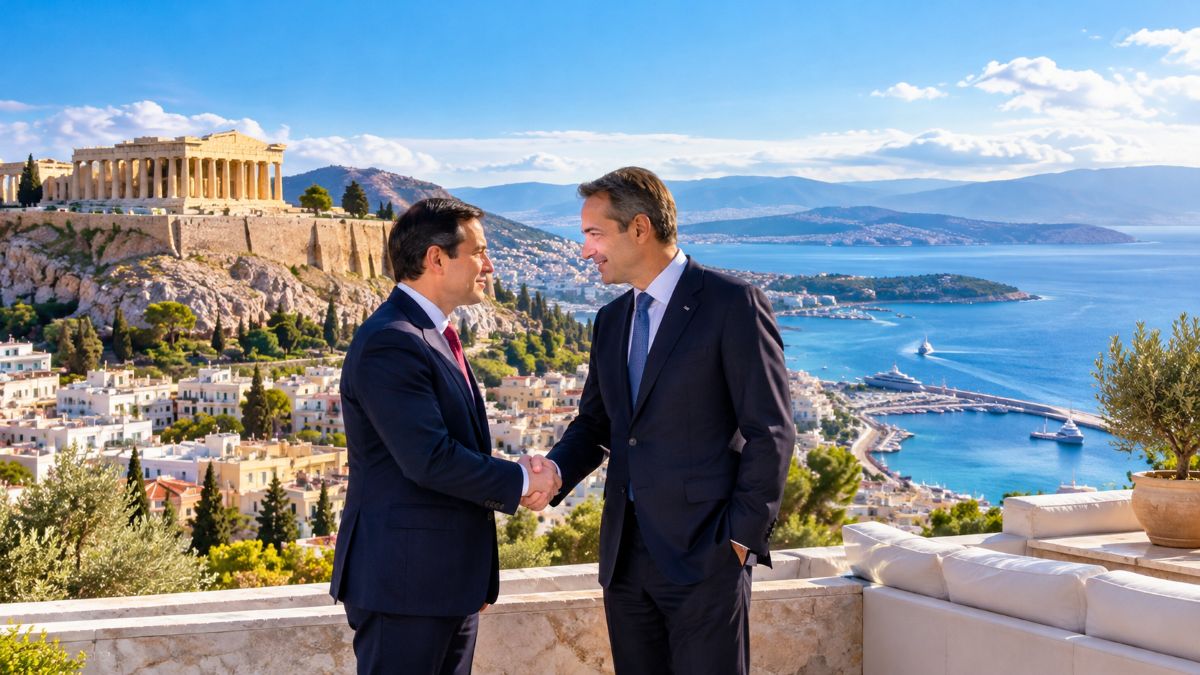
Greece’s international standing has returned to focus following US Secretary of State Marco Rubio’s visit to Athens on 6 and 7 October 2026. Discussions surrounding energy, defence, regional security and technological cooperation have highlighted the country’s strategic position in the Eastern Mediterranean. For the travel and tourism sector, these developments offer a broader perspective on how diplomatic relationships, political stability and international visibility can influence a destination’s image. Athens, with its internationally recognised historical landmarks, also provided a striking setting for the visit, bringing contemporary diplomacy into a city closely associated with the foundations of democratic thought and classical civilisation.
The visit also prompted debate within Greek politics about foreign policy, national interests and the country’s international partnerships. Alongside these discussions, Canadian poet, translator and classicist Anne Carson’s Nobel Prize in Literature brought renewed attention to Greece’s enduring cultural legacy. Although diplomacy and literary recognition represent different aspects of national identity, both demonstrate how history, intellectual achievement and international relationships contribute to Greece’s global profile. Their significance for tourism lies in the continuing connection between the country’s contemporary affairs and its reputation as a destination for historical exploration, cultural experiences and Mediterranean travel.
Marco Rubio’s Athens Visit Highlights Greece’s Strategic Importance
Rubio’s appearance on Pnyx Hill, overlooking the historic landscape of Athens, became a prominent visual moment during his visit. The location carries considerable historical significance because of its association with ancient Athenian democratic assemblies. Against this backdrop, the US secretary of state addressed an international audience during a visit centred on the strategic relationship between Washington and Athens.
The setting illustrated how Greece’s cultural landmarks can intersect with modern diplomatic communication. International political figures frequently use recognisable locations to convey messages about history, identity and national relationships. In Athens, the proximity of ancient monuments to contemporary political events reinforces the city’s distinctive position as both a living capital and a major destination for cultural tourism.
Advertisement
Advertisement
For visitors, the Pnyx and the surrounding archaeological landscape provide opportunities to understand the relationship between ancient political institutions and modern democratic traditions. However, the tourism significance of the visit should be distinguished from any confirmed increase in visitor numbers or bookings, for which separate evidence would be required.
US-Greece Relations Bring Energy and Defence Into Focus
The strategic dialogue between Greece and the United States covered several areas of mutual interest, including energy cooperation, defence, security and high technology. These subjects reflect Greece’s geographical position between Europe, the Balkans and the Eastern Mediterranean, where regional developments can influence economic partnerships and infrastructure planning.
Advertisement
Advertisement
Greece’s ambition to strengthen its position as an energy hub for Europe has also featured prominently in discussions about international cooperation. Connections involving electricity infrastructure, regional energy networks and neighbouring countries form part of a wider debate about energy security and cross-border integration.
The following table summarises the principal themes highlighted by the visit and their potential relevance to Greece’s international profile.
| Strategic Area | Significance for Greece | Potential Tourism Connection |
|---|---|---|
| Defence and security | Strengthens bilateral strategic discussions | Supports wider consideration of regional stability |
| Energy cooperation | Reinforces Greece’s potential role in European energy networks | May influence perceptions of long-term infrastructure development |
| High technology | Encourages discussion of technological collaboration | Could support future innovation in tourism services |
| International alliances | Expands diplomatic engagement | Enhances Greece’s visibility among international audiences |
| Cultural heritage | Connects contemporary diplomacy with historical identity | Reinforces Athens’ appeal for cultural tourism |
These connections represent potential implications rather than evidence that the diplomatic meetings have directly increased tourism demand.
Greek-Turkish Relations Remain a Regional Consideration
Relations between Greece and Turkey remain an important element of Eastern Mediterranean diplomacy. Questions involving maritime interests, regional security, energy infrastructure and neighbouring states continue to shape political discussions across the region.
During the debate surrounding Rubio’s visit, Greek opposition parties questioned aspects of the government’s approach to international relations. The disagreements reflected different interpretations of how Greece should balance international law, diplomatic engagement and the pursuit of strategic partnerships.
For the tourism industry, the broader regional environment matters because travellers, airlines, cruise operators and hospitality businesses consider a range of factors when planning their activities. Political developments can influence perceptions, but their actual effects depend on specific circumstances, travel advisories, transport operations and market conditions.
Advertisement
Advertisement
Greece’s established tourism infrastructure and internationally recognised destinations remain important elements of its appeal. Any assessment of future visitor demand should therefore consider verified booking information, aviation capacity and official travel guidance rather than assuming that diplomatic developments automatically produce commercial benefits.
Energy Connectivity and the Eastern Mediterranean
Energy cooperation has emerged as another important dimension of Greece’s international strategy. Electricity interconnection projects involving Greece, Cyprus and Israel have attracted attention because of their potential relevance to regional energy security and infrastructure integration.
Such projects involve technical, financial and political considerations, including construction requirements, regulatory coordination and long-term investment. Their progress can influence discussions about Greece’s economic relationships with neighbouring countries, although individual projects must be assessed according to their actual development status.
The Great Sea Interconnector has featured in the wider debate over electricity connectivity in the Eastern Mediterranean. Its importance extends beyond energy policy to questions about regional cooperation and infrastructure resilience.
For tourism, the relationship is indirect. Reliable infrastructure and economic stability can support business confidence and destination development over time. Nevertheless, an electricity interconnection project should not be presented as an immediate tourism initiative unless specific hospitality, transport or destination investments can be demonstrated.
Athens Uses Cultural Heritage to Strengthen Its Global Image
Athens occupies a distinctive position in international tourism because its archaeological sites connect visitors with the history of ancient Greece. The Acropolis, the Pnyx and the surrounding historic districts provide a setting in which architecture, political history and contemporary urban life intersect.
Advertisement
Advertisement
Rubio’s appearance against the backdrop of the Acropolis illustrated the international recognisability of Athens’ heritage. Such visibility can reinforce existing awareness of the city, although a single political event does not establish a measurable increase in travel interest.
Cultural tourism remains dependent on the quality of visitor experiences, accessibility, conservation, interpretation and the management of busy historic areas. Athens must balance international visibility with the responsibility to protect its archaeological resources and maintain a positive experience for residents and visitors.
The city’s contemporary identity also extends beyond antiquity. Museums, contemporary cultural institutions, neighbourhood businesses and modern Greek cuisine offer additional reasons for travellers to explore the capital.
Anne Carson’s Nobel Recognition Renews Attention to Classical Antiquity
Anne Carson’s Nobel Prize in Literature has added another dimension to international discussion of classical civilisation. The Canadian poet, translator and scholar is recognised for work that engages deeply with ancient literature while exploring themes including desire, loss, memory and the experience of reading.
Her approach demonstrates how classical texts can remain relevant through translation, interpretation and creative experimentation. Rather than treating antiquity solely as a historical subject, Carson’s scholarship and literary work examine how ancient ideas continue to influence modern intellectual life.
This recognition has cultural relevance for Greece, whose historical legacy attracts scholars, students and visitors from around the world. It also highlights the importance of presenting ancient literature and philosophy as evolving intellectual traditions rather than static collections of monuments and artefacts.
Advertisement
Advertisement
For cultural tourism, literary recognition can encourage interest in museums, archaeological locations, historical collections and educational travel. However, any resulting change in visitor demand would need to be established through reliable tourism data.
What These Developments Mean for Greece Tourism
Greece’s international profile reflects several interconnected influences, including diplomacy, economic policy, cultural recognition and regional relationships. Rubio’s visit placed Athens within a contemporary geopolitical conversation, while Carson’s Nobel recognition highlighted the continuing relevance of classical traditions.
Together, these developments illustrate the range of narratives through which Greece is understood internationally. The country is not simply a destination associated with beaches, islands and summer holidays. It is also a European state with strategic partnerships, significant infrastructure ambitions and a cultural legacy that continues to influence literature, politics and education.
For tourism businesses, the practical priority remains translating international visibility into sustainable visitor experiences. That requires dependable transport, well-managed heritage sites, investment in hospitality and accurate communication with prospective travellers.
The diplomatic visit and literary award provide opportunities for wider cultural discussion, but neither should be treated as proof of immediate tourism growth. Their longer-term relevance will depend on how effectively Greece connects its contemporary role with its historical assets while maintaining stability, accessibility and responsible destination management.
Frequently Asked Questions
1. Why Did Marco Rubio Visit Greece in October 2026?
Advertisement
Advertisement
Rubio visited Athens for the sixth round of the US-Greece Strategic Dialogue, with discussions covering energy, defence, security, high technology and geopolitical developments.
2. How Could Rubio’s Visit Affect Greece Tourism?
The visit increased international visibility for Athens, but a direct effect on tourist arrivals or bookings has not been established.
3. Why Is Athens Important for Cultural Tourism?
Athens contains internationally recognised archaeological sites, museums and historic locations that help visitors explore ancient Greek civilisation and its influence on modern society.
4. What Is the Significance of Pnyx Hill?
Advertisement
Advertisement
Pnyx Hill is historically associated with assemblies in ancient Athens and is an important location for understanding the development of democratic political traditions.
5. Why Are US-Greece Relations Strategically Important?
The relationship encompasses defence, regional security, energy cooperation, technological collaboration and wider diplomatic engagement.
6. How Do Greek-Turkish Relations Influence Regional Tourism?
Regional relations can affect perceptions of stability and influence travel planning, although the actual effects depend on specific developments and verified travel information.
7. What Is the Great Sea Interconnector?
Advertisement
Advertisement
The Great Sea Interconnector is an electricity interconnection project associated with improving power connectivity between Greece, Cyprus and Israel.
8. Why Is Anne Carson’s Nobel Prize Relevant to Greece?
Carson’s engagement with classical antiquity highlights the continuing influence of ancient Greek literature and ideas on contemporary writing and scholarship.
9. Does Political Visibility Automatically Increase Tourist Arrivals?
No. International exposure may increase awareness, but measurable tourism growth depends on factors such as accessibility, prices, accommodation capacity, visitor preferences and travel conditions.
10. What Should Travellers Consider Before Visiting Athens?
Travellers should check current transport information, attraction opening arrangements, seasonal conditions and official travel advice while planning visits to archaeological sites and cultural landmarks.
Advertisement
