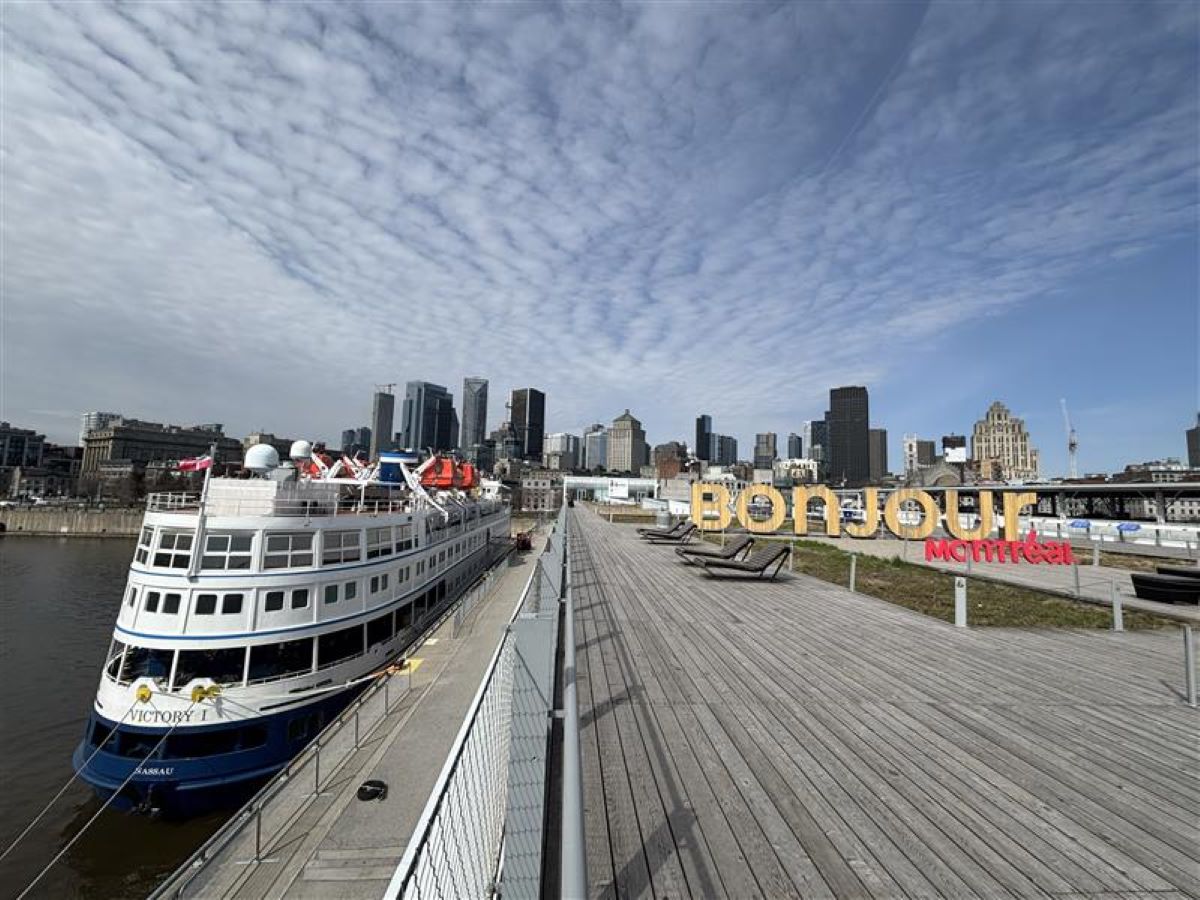
Ontario joins Quebec and other markets as Canada’s Port of Montreal targets major cruise growth, strengthening the city’s role as a gateway for domestic and international travellers. This cruise focus expansion will help Montreal accommodate larger volumes of demand related to Canadian and international tourism. The strategy will assist Montreal in meeting the needs and requirements of travelers of all kinds and help Montreal realize its potential as a key player in regional and international cruise routes. Montreal’s goal in strengthening its connectivity will help travelers reach cruise destinations while showing travelers why Canada deserves a spot in their cruise itineraries in 2026.
The Port of Montreal cruise season 2026 is built around nearly 50,000 expected passengers between 24 April and 31 October. The official Montréal Port Authority programme lists 39 cruise operations, comprising nine port calls and 30 embarkation or disembarkation operations. Seventeen ships from 16 cruise lines form the season’s scheduled fleet. Vessel sizes range from PONANT’s Le Bellot, with capacity for 184 passengers, to Holland America Line’s Volendam, carrying up to 1,440 passengers. The programme places Montréal firmly within Canada’s 2026 cruise network while creating options for domestic travellers from Québec, Ontario and other Canadian markets.
Advertisement
| Port of Montreal 2026 measure | Official figure |
|---|---|
| Expected passengers | Nearly 50,000 |
| Cruise operations | 39 |
| Port calls | 9 |
| Embarkation/disembarkation operations | 30 |
| Ships | 17 |
| Cruise lines | 16 |
One of the most significant elements of the Montréal programme is its 30 embarkation and disembarkation operations, compared with nine conventional calls. A turnaround operation is important for travellers because Montréal becomes the starting or finishing point of the cruise rather than simply an intermediate stop. That creates a direct connection between the cruise terminal and the wider Canadian visitor journey. Travellers can combine a sailing with accommodation, ground transport, restaurants or sightseeing in Montréal. The Port’s official programme also links Montréal with Germany, Iceland, the Great Lakes, Florida and New England, giving passengers both international and North American itinerary choices during the 2026 season.
| Operation type | 2026 total | Traveller relevance |
|---|---|---|
| Embarkation/disembarkation | 30 | Cruise can begin or end in Montréal |
| Port calls | 9 | Montréal forms one stop within an itinerary |
| Total operations | 39 | Full seasonal cruise programme |
Ontario is particularly relevant to the Port of Montreal cruise season 2026 because it remains Québec’s largest visitor market outside Québec by number of visitors, according to the Québec Ministry of Tourism’s dashboard updated in April 2026. The ministry also ranks Ontario as Québec’s second-largest external market by tourism spending, behind the United States, using its latest available underlying expenditure data. Fresh 2026 research adds another useful indicator: among surveyed Ontario residents planning a summer leisure trip, 19% expected to visit Québec. This proximity market can therefore support pre-cruise and post-cruise travel without depending entirely on international air arrivals.
Advertisement
| Ontario tourism indicator | Official position/data |
|---|---|
| Importance by visitor numbers | Largest market outside Québec |
| Importance by spending | Second outside Québec |
| Summer 2026 intention to visit Québec | 19% |
| Market type | Domestic/proximity |
| Relevance to cruise sector | Feeder and pre/post-cruise market |
Québec itself provides an even larger immediate traveller pool for Montréal’s cruise programme. The Québec government’s 2026 summer travel-intention study, based on more than 4,000 respondents across Canada, the northeastern United States and France, found that 61% of surveyed Québec residents planning summer leisure travel intended to travel within Québec. Their expected average daily spending on a main Québec trip was C$345. These figures are not cruise-passenger projections, but they show the scale of domestic travel interest surrounding Montréal. The Port also schedules four roundtrip cruises from Montréal, a particularly relevant option for Québec residents seeking a cruise that begins locally.
| Québec market indicator | 2026 official data |
|---|---|
| Intention to visit Québec | 61% |
| Expected daily spend | C$345 |
| Roundtrip Montréal cruises | 4 |
| Main relevance | Domestic cruise feeder market |
| Main access advantage | Local embarkation |
The official Port of Montréal schedule connects the Canadian gateway with Germany and Iceland, adding a transatlantic dimension to its 2026 cruise positioning. These connections matter because the Montréal season is not limited to local St Lawrence River or Great Lakes traffic. The itinerary network allows travellers to combine Canada with North Atlantic and European cruise routes. This strengthens Montréal’s role as an embarkation, disembarkation and itinerary point within longer journeys. International travellers planning to include Québec can also link their cruise with Montréal city stays. Québec’s 2026 research shows that more than 35% of surveyed foreign travellers intending a main Québec trip planned it for June or September, periods that overlap with the cruise season.
| International connection | Role in 2026 programme |
|---|---|
| Germany | European itinerary connection |
| Iceland | North Atlantic connection |
| Montréal | Canadian embarkation/disembarkation gateway |
| June | International Québec travel period |
| September | Important cruise and international travel period |
The Great Lakes, Florida and New England form the other major geographic component of Montréal’s 2026 cruise schedule. Official Port listings show ships moving through routes involving Canadian and US destinations, reinforcing Montréal’s position between inland North America and the Atlantic coast. The current schedule includes movements involving places such as Toronto, Boston, New York, Portland, Fort Lauderdale, Milwaukee, Halifax and Québec. These routes give passengers multiple ways to build broader Canada-US holidays around their cruise. New England is especially relevant because the Québec government’s 2026 survey found 7% of surveyed northeastern US leisure travellers planned to visit Québec, compared with 5% in the previous survey year.
| Cruise geography | 2026 relevance |
|---|---|
| Great Lakes | Inland North American cruising |
| New England | Northeastern US connectivity |
| Florida | Southern US itinerary link |
| Toronto | Canadian Great Lakes connection |
| Boston/New York/Portland | Major US cruise points |
Four roundtrip cruise departures are one of the most traveller-focused elements of the Port of Montreal cruise season 2026. The official programme includes two Volendam roundtrips, one Seabourn Ovation roundtrip and one Star Pride roundtrip. The Port explicitly identifies these sailings as an option for Montréal residents wanting to cruise without taking a flight. The same access advantage can extend to travellers able to reach Montréal overland or by other domestic transport. For Ontario and Québec residents in particular, this changes the traditional cruise journey: instead of flying to a distant embarkation city, passengers can potentially position themselves directly in Montréal before sailing.
Advertisement
Advertisement
| Ship | Montréal roundtrip period |
|---|---|
| Volendam | 30 May–9 June |
| Volendam | 1–12 September |
| Seabourn Ovation | 25 September–7 October |
| Star Pride | 25 September–9 October |
Premium cruising is another defining element of Montréal’s 2026 programme. According to the Montréal Port Authority, the number of luxury cruise ships calling at Montréal has increased by more than 220% since 2019. The 2026 schedule includes the return of Crystal Symphony after a seven-year absence as well as visits by Scenic Eclipse and Seabourn Ovation. The latter is scheduled to appear three times during the season. This vessel mix gives the Port exposure to smaller and higher-end cruise segments alongside mainstream ships such as Volendam. It also complements the Port’s strategy of handling extended calls and turnaround operations rather than relying exclusively on short transit visits.
| Premium cruise indicator | 2026 position |
|---|---|
| Luxury-call growth vs 2019 | More than 220% |
| Crystal Symphony | Returning vessel |
| Scenic Eclipse | New/high-end call |
| Seabourn Ovation | Three visits |
| Market direction | Greater premium cruise presence |
The Port’s 2026 schedule includes several ships remaining at berth beyond a standard single-day visit. Viking Mars has extended stays scheduled for 11–13 September and 5–7 October. Amera is listed for 12–13 September, Scenic Eclipse for 23–24 September, Vista for 24–25 September and Crystal Symphony for 2–3 October. These longer port periods are relevant because they give cruise passengers a wider window for Montréal accommodation, restaurants, cultural attractions and neighbourhood visits. They also place a larger proportion of cruise activity in September and October, extending the visitor opportunity beyond Canada’s core summer travel period.
| Vessel | Extended Montréal stay |
|---|---|
| Viking Mars | 11–13 Sept; 5–7 Oct |
| Amera | 12–13 Sept |
| Scenic Eclipse | 23–24 Sept |
| Vista | 24–25 Sept |
| Crystal Symphony | 2–3 Oct |
Canada’s wider travel market provides an important backdrop to Montréal’s cruise season. Statistics Canada reported 69.1 million domestic visits in the first quarter of 2026, an increase of 2.3% year on year. Canadian residents spent C$14.5 billion on domestic tourism during the quarter, up 5.1%. Ontario accounted for 40.5% of domestic visits by destination, while Québec represented 19.5%. Québec also accounted for 17.5% of domestic tourism expenditure and Ontario 33.1%. These national figures do not measure cruise passengers specifically, but they show the substantial domestic travel economy within which Montréal’s 2026 cruise programme is operating.
| Q1 2026 Canadian tourism indicator | Official data |
|---|---|
| Domestic visits | 69.1 million |
| YoY visit growth | +2.3% |
| Domestic spending | C$14.5 billion |
| Spending growth | +5.1% |
| Québec share of visits | 19.5% |
| Ontario share of visits | 40.5% |
The Québec government’s latest 2026 travel-intention research provides a useful source-market picture around Montréal. Among surveyed leisure travellers, 61% of Québec respondents, 19% of Ontario respondents, 16% from Atlantic Canada, 7% from Western Canada, 7% from the northeastern United States and 5% from France planned to visit Québec. These are travel-intention percentages rather than actual arrival shares and should not be represented as Montréal cruise passenger nationalities. However, they demonstrate the markets available to feed Montréal’s wider tourism economy during the same period as the cruise season. International travellers also identified Montréal and Québec City among the destinations they intended to visit.
| Surveyed source market | Planning a Québec trip, summer 2026 |
|---|---|
| Québec | 61% |
| Ontario | 19% |
| Atlantic Canada | 16% |
| Western Canada | 7% |
| Northeastern United States | 7% |
| France | 5% |
The wider travel and tourism impact extends beyond passenger counts at the cruise terminal. Statistics Canada measured total Canadian tourism spending at C$28.4 billion in the first quarter of 2026, while tourism supported approximately 695,900 jobs and represented 1.80% of Canada’s nominal GDP. International tourism spending increased 0.9% quarter on quarter. At the provincial level, the Québec government reported that tourism receipts reached almost C$19 billion in 2025, with the result published in March 2026. Canadian-market spending in Québec had grown 7.5%, while overseas-market expenditure rose 5%. Montréal’s cruise operations therefore enter 2026 within a sizeable and expanding visitor economy.
| Travel and tourism impact indicator | Latest official figure |
|---|---|
| Canada tourism spending, Q1 2026 | C$28.4 billion |
| Tourism-supported jobs | 695,900 |
| Tourism share of nominal GDP | 1.80% |
| Québec tourism receipts, 2025 | Nearly C$19 billion |
| Québec Canadian-market spending growth | +7.5% |
| Québec overseas-market spending growth | +5.0% |
Ontario joins Quebec and other markets as Canada’s Port of Montreal targets major cruise growth by strengthening its role as a gateway for regional and international travel. Ontario, Quebec, and the other markets will have the same opportunities as Montreal’s Port wants to focus its efforts on major cruise growth. The Port’s decision will offer better international cruise route opportunities and help travelers create the perfect combination of cruising, city stays, and other fun activities. As Montreal continues to strengthen its position, it will further help Canada and Québec connect with North America and other international destinations. As cruise holidays become even more popular, the Port of Montreal will become an even more vital part of Canada’s tourism network, allowing different passengers to visit the country while Montreal keeps its spot as an important part of international cruise routes.
Advertisement
Tags: Canada cruise tourism, Montreal travel, Ontario travel, Port of Montreal Cruise 2026, Quebec Tourism
Advertisement
Advertisement













Monday, September 7, 2026
Monday, September 7, 2026

Monday, September 7, 2026
Monday, September 7, 2026

Monday, September 7, 2026
Monday, September 7, 2026

Monday, September 7, 2026