
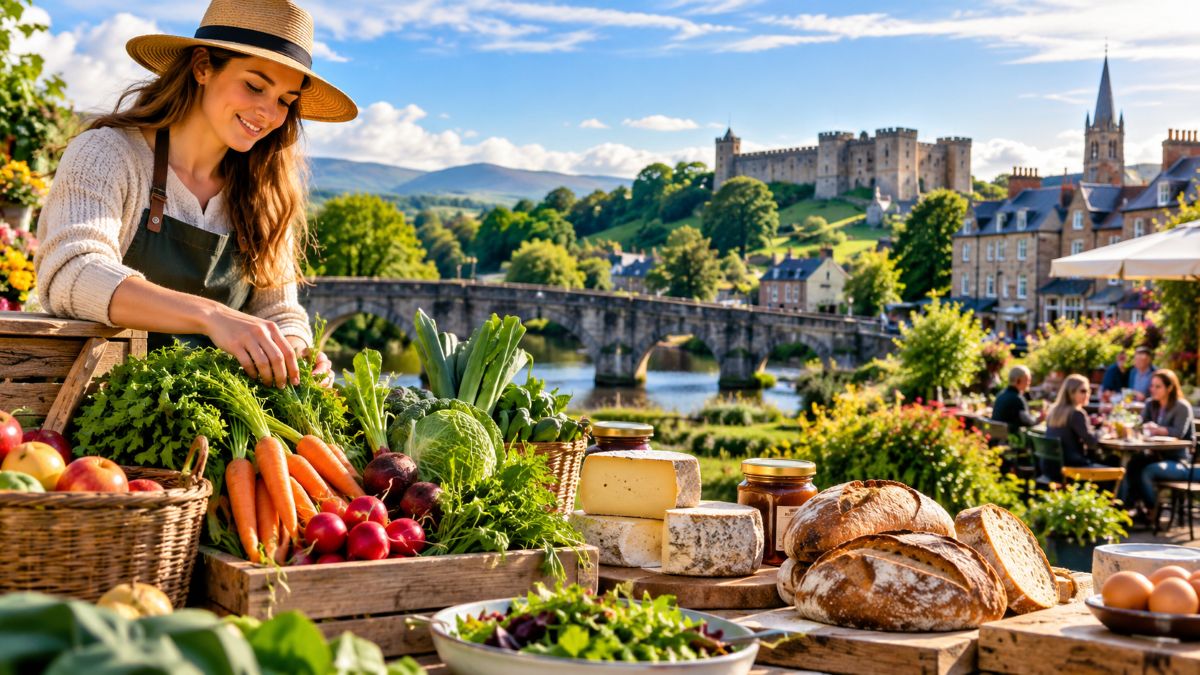
Image generated with Ai
The United Kingdom is placing greater emphasis on resilient local food systems as Cumberland Council prepares to review progress made by its Food Cumberland Partnership, an initiative that could also influence the region’s visitor economy by supporting sustainable food production, community wellbeing and stronger connections between residents, producers and local businesses. Councillors on the council’s health and wellbeing board are scheduled to consider the latest partnership update at the Civic Centre in Carlisle on Friday, September 11. The report examines progress across Cumberland’s food system, including policies, guidance, achievements and emerging challenges.
For travellers, food resilience may appear to be a local-government issue, but it has increasingly important links with destination identity and responsible tourism. Cumberland’s food landscape is connected to farmers, producers, community organisations, hospitality businesses and consumers, creating opportunities for visitors to experience local produce while supporting the wider regional economy. Established in 2024 following a Right to Food motion, the Food Cumberland Partnership brings together communities, businesses, producers and public and third-sector organisations with the ambition of developing a healthier, more sustainable and equitable food system. Its latest update highlights both progress and the work still required.
Advertisement
The Food Cumberland Partnership was established to move beyond isolated food initiatives and encourage a whole-system approach. Rather than treating food insecurity, nutrition, health, agriculture and community wellbeing as separate issues, the partnership considers how these areas interact.
According to the council report, food can influence physical and mental health, childhood development, educational attainment and positive food behaviours among children and families. Partnership members have also continued looking for ways to connect food initiatives with wider prevention and wellbeing programmes.
Advertisement
This approach has relevance beyond public health. A destination’s food system can contribute to its sense of place, particularly in rural and coastal areas where agriculture, independent producers, markets, cafés, restaurants and hospitality form part of the visitor experience.
Cumberland has a varied geographical identity encompassing Carlisle and surrounding communities, as well as landscapes that attract visitors seeking countryside, heritage and outdoor experiences. Strengthening connections between local food producers and hospitality could therefore complement the area’s wider tourism proposition.
Food resilience is increasingly important for destinations that depend on reliable local supply chains. Disruptions caused by economic pressures, environmental events, transport difficulties or changing consumer demand can affect both residents and businesses.
The Cumberland report identifies resilience as an area requiring further attention. A workshop planned for October will focus on system-level resilience, crisis preparedness and long-term food security. The emphasis will be on understanding how the entire food system can withstand shocks and adapt to long-term pressures.
Advertisement
Advertisement
The council’s approach is not simply about increasing the amount of food available. It is also concerned with ensuring nutritious and sustainable food remains accessible to communities.
For tourism, this can create a stronger foundation for local sourcing. Hotels, cafés, restaurants and visitor attractions can benefit from reliable relationships with nearby producers, while visitors increasingly look for experiences connected with local culture and regional identity.Food Partnership Priority Potential Travel And Tourism Relevance Local food access Supports destination wellbeing and visitor confidence Food resilience Helps hospitality businesses prepare for supply disruptions Local producers Creates stronger links between agriculture and tourism Sustainable food Supports responsible and lower-impact travel Community food assets Can strengthen authentic local experiences Nutrition and healthy choices Adds value to wellness and family travel Public engagement Builds stronger community participation in tourism
One of the major challenges highlighted by the partnership is described as “Beyond the Foodbank”. The report says stigma surrounding food insecurity remains an issue across Cumberland.
The partnership uses a community food security framework known as food ladders. This model is designed to help people progress from crisis support towards skills and confidence building, community-led food resilience and longer-term change.
A significant challenge is ensuring frontline teams understand the range of food offers and wider support available. Better awareness could allow staff to provide residents, clients and service users with more appropriate information.
This matters for the wider destination economy because healthy and resilient communities form the foundation of sustainable tourism. Tourism cannot operate effectively in isolation from the communities that host visitors. Local workers, producers, hospitality staff and small businesses are all part of the visitor experience.
A stronger community food network can therefore have benefits extending beyond immediate food assistance, particularly when local businesses and community organisations work together.
Although the partnership has developed relationships across the food system, the report acknowledges that current activity relies heavily on partner commitment, goodwill and strong working relationships.
This creates a question about long-term capacity. Sustainable food systems require coordination, funding, expertise and participation across multiple sectors. Maintaining progress can become difficult when organisations are already managing competing demands.
For Cumberland, the challenge is to translate partnership activity into a resilient structure capable of continuing beyond individual projects or short-term initiatives.
From a tourism perspective, consistency is equally important. Local sourcing networks work best when hospitality businesses can depend on producers and suppliers. Producers, meanwhile, need reliable markets and practical support to meet demand.
A coordinated regional approach could help bridge these interests, potentially creating stronger links between food production, hospitality and visitor experiences.
Cumberland Council also plans to conduct a follow-up food insecurity survey during 2026 and 2027. The original survey was carried out with the University of Liverpool in 2024.
The new research is intended to strengthen understanding of food insecurity, access to healthy food, community food assets and the effects of the wider food system on health and inequalities.
The results could provide a more detailed picture of how food challenges have changed and where additional intervention may be needed.
Reliable evidence is important because food policy can affect several aspects of destination development. Understanding where access is weakest can help public bodies and partners identify appropriate priorities rather than relying on assumptions.
For travel and hospitality, better information can also reveal opportunities to support local supply chains and community enterprises while ensuring tourism development does not overlook local needs.
Cumberland’s food story can form part of a broader travel experience built around landscape, heritage and local culture. Visitors are often interested in understanding where food comes from and how it connects with the places they explore.
Local markets, independent food businesses, producers and regional dishes can help create distinctive experiences. When these elements are connected with responsible tourism strategies, spending by visitors can potentially circulate more widely within the local economy.
Carlisle, as a major urban centre in the region, can play an important role by connecting surrounding producers with restaurants, hospitality businesses and visitors.
The opportunity is not necessarily about turning every food initiative into a tourism product. Instead, a resilient food system can provide the underlying infrastructure that enables authentic food experiences to develop naturally.
This distinction is important. Sustainable tourism should complement local communities rather than placing additional pressure on essential resources.
The planned October workshop will examine how Cumberland’s entire food system can withstand shocks, adapt to long-term pressures and maintain access to nutritious and sustainable food.
The report also stresses the importance of public engagement, arguing that involving communities can make outcomes more robust.
That participatory approach could prove significant as Cumberland considers how food policy intersects with environmental sustainability, public health, economic resilience and tourism.
Climate pressures and supply-chain disruptions are increasingly relevant to destinations worldwide. Regions that can strengthen local connections may be better positioned to respond to unexpected challenges while maintaining essential services and visitor infrastructure.
The workshop therefore represents an opportunity to move from identifying challenges towards developing a more coordinated long-term approach.
Cumberland’s latest food partnership update demonstrates how local food policy is expanding beyond questions of availability and emergency support. The wider objective is to create a food system that is healthier, more sustainable and more equitable.
For visitors, the benefits may be less immediately visible, but they can influence the character and resilience of the destination. A strong network connecting producers, communities, businesses and public organisations can support local economies while creating conditions for responsible food tourism.
The immediate focus remains on residents and food security rather than tourism. However, the same systems that help communities access nutritious food can also strengthen local supply chains and hospitality businesses.
As Cumberland prepares for its October resilience workshop and a new phase of food insecurity research, the partnership is moving towards a longer-term vision. If successful, that vision could help create a destination where food, community wellbeing, sustainability and travel reinforce rather than compete with one another.
What is the Food Cumberland Partnership?
The Food Cumberland Partnership is a collaborative initiative bringing together communities, businesses, producers, public organisations and third-sector partners to develop a healthier, more sustainable and equitable food system across Cumberland.
When was the Food Cumberland Partnership established?
The partnership was established in 2024 following a Right to Food motion passed by Cumberland Council.
When will councillors receive the latest food partnership update?
Cumberland Council’s health and wellbeing board is due to consider the Food Cumberland Partnership Update report on Friday, September 11, 2026.
Where will the council meeting take place?
The meeting is scheduled to take place at the Civic Centre in Carlisle.
What does food resilience mean for Cumberland?
Food resilience refers to the ability of the wider food system to withstand disruptions, adapt to long-term pressures and continue providing nutritious and sustainable food.
What is the Beyond the Foodbank challenge?
It refers to efforts to address food insecurity beyond emergency foodbank support, including skills, confidence, community resilience and access to wider forms of assistance.
Will Cumberland conduct another food insecurity survey?
Yes. Cumberland Council plans follow-up food insecurity research during 2026 and 2027 after an earlier survey conducted with the University of Liverpool in 2024.
How could food resilience affect tourism in Cumberland?
A stronger local food system could support producers, hospitality businesses and authentic regional food experiences while contributing to a more sustainable visitor economy.
What will the October food workshop examine?
The planned workshop will focus on system-level resilience, crisis preparedness and long-term food security rather than individual food poverty.
Why is public engagement important to the partnership?
Public engagement can help ensure that food-system planning reflects local circumstances and produces outcomes that are practical, resilient and better connected to community needs.
Advertisement
Tags: Carlisle travel, Cumberland food partnership, Cumbria food tourism, food insecurity UK, food resilience Cumberland
Advertisement
Advertisement













Sunday, September 6, 2026

Sunday, September 6, 2026

Sunday, September 6, 2026

Sunday, September 6, 2026

Sunday, September 6, 2026

Saturday, September 5, 2026

Sunday, September 6, 2026

Sunday, September 6, 2026



