
Singapore and UAE Keep Pace With Leading Smart Destinations on World Tourism Day as AI Airports Create Seamless Travel

Published
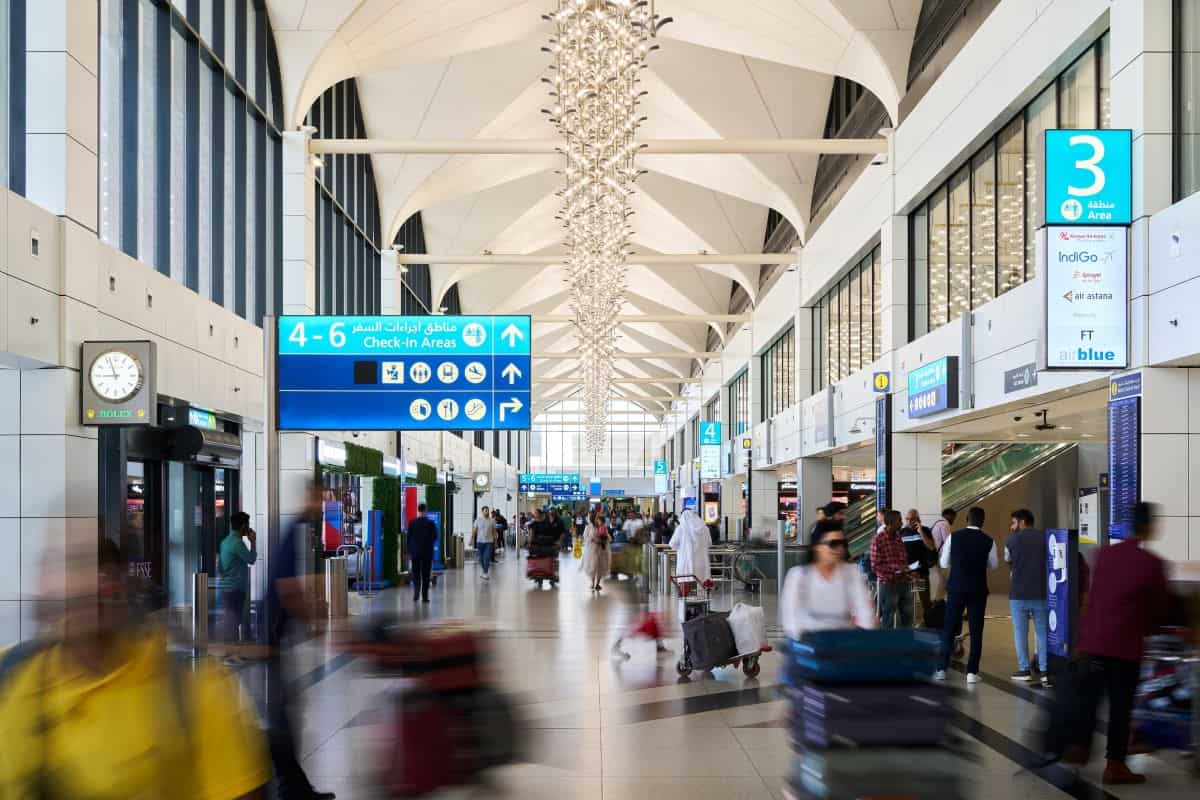
Singapore, the UAE, Japan, South Korea and China are accelerating a new era of tourism where AI airports, biometric borders and digital traveller services are becoming central to the visitor experience. The shift is moving airports beyond traditional transport hubs into intelligent gateways connected with smart cities. Singapore has already introduced advanced automated immigration systems at Changi Airport, allowing travellers to experience faster biometric clearance. Meanwhile, other leading destinations are expanding facial recognition, automated border controls and digital mobility platforms to prepare for rising international travel demand.
The transformation reflects a wider tourism competition where destinations are investing not only in attractions but also in seamless journeys. From airport arrival to city exploration, technology is redefining how travellers enter, move through and experience countries.
Advertisement
Advertisement
The New Digital Gateway Era Begins At Airports
Airports are becoming the first digital touchpoint between travellers and destinations. For decades, airports competed through passenger capacity, airline connectivity and terminal facilities. However, the next phase focuses on intelligent processing, predictive systems and frictionless movement.
The global travel industry faces increasing pressure as international visitor numbers continue recovering and expanding. Traditional immigration counters, manual document checks and long queues are becoming less suitable for high-volume tourism markets.
Advertisement
Advertisement
Governments and airport operators are therefore investing in connected systems that combine artificial intelligence, biometric identification, automation and real-time passenger management.
The objective is not simply faster processing. It is the creation of a complete digital travel ecosystem where airports connect with transport networks, hotels, attractions and city services.
Advertisement
Advertisement
A future traveller could check in digitally, pass through security using biometric confirmation, clear immigration without repeatedly showing documents and navigate a city using integrated digital platforms.
This development is particularly visible across Asia and the Middle East, where tourism authorities are linking aviation innovation with wider smart-city ambitions.
Advertisement
Advertisement
| Technology Shift | Traditional Airport Model | Emerging Smart Travel Model |
|---|---|---|
| Identity verification | Passport checks at counters | Facial, iris and biometric recognition |
| Immigration | Manual officer processing | Automated border control systems |
| Boarding | Physical documents | Digital identity confirmation |
| Passenger movement | Fixed processes | AI-supported personalised journeys |
| City connection | Separate transport services | Integrated smart mobility networks |
Singapore Builds A Passport-Light Travel Future
Singapore has emerged as one of the strongest examples of digital border transformation through its New Clearance Concept developed by the Immigration and Checkpoints Authority (ICA).
The country has progressively replaced traditional immigration procedures with biometric-based clearance at Changi Airport and other checkpoints. Since May 2024, foreign visitors arriving in Singapore have been able to use automated lanes without prior enrolment, creating a more seamless entry process.
In September 2024, Singapore completed passport-less immigration clearance across all four Changi Airport terminals for eligible travellers. Singapore residents can clear immigration using facial and iris biometrics without presenting passports, while foreign visitors can use passport-less clearance when departing.
The system forms part of Singapore’s broader ambition to make automated clearance the normal experience at its borders.
Advertisement
Advertisement
| Singapore Digital Border Development | Traveller Impact |
|---|---|
| Automated immigration lanes | Reduces dependence on manual counters |
| Facial and iris biometrics | Creates faster identity verification |
| Digital arrival systems | Simplifies entry procedures |
| Passport-less departure clearance | Reduces document handling |
| Automated checkpoint processing | Supports growing passenger volumes |
The ICA states that automated lanes use biometric technology to provide efficient and secure immigration clearance for eligible travellers.
For international visitors, the practical benefit is a smoother airport experience. However, travellers must still carry valid passports because airlines and destination countries may require physical travel documents.
Singapore’s approach demonstrates how immigration technology can become part of a destination’s tourism identity. Changi Airport is no longer competing only through terminal design or airline connections. It is competing through the quality of the passenger journey.
UAE Turns Airport Innovation Into A Tourism Strategy
The United Arab Emirates is following a similar path by positioning its airports as advanced digital gateways for international visitors.
Dubai International Airport and Abu Dhabi’s Zayed International Airport represent two major aviation hubs where technology supports the UAE’s ambition to remain a global tourism and business centre.
The UAE has invested heavily in automated immigration gates, biometric processing and artificial intelligence solutions. These systems aim to reduce queues while improving security screening and passenger flow.
Advertisement
Advertisement
Dubai’s airport ecosystem has increasingly focused on smart passenger movement. Facial recognition technology, automated gates and digital identity solutions are becoming important components of the airport experience.
The UAE model differs from Singapore’s approach because it combines airport technology with large-scale smart-city development. Digital transport, tourism platforms and government services are increasingly connected.
| UAE Smart Travel Focus | Importance For Visitors |
|---|---|
| Biometric airport processing | Faster movement through terminals |
| Smart immigration systems | Reduced waiting times |
| Digital government services | Easier visitor interaction |
| Connected urban mobility | Improved city navigation |
The UAE’s strategy highlights a broader industry trend. Airports are becoming extensions of national tourism infrastructure rather than isolated aviation facilities.
For travellers, this means future visits may involve fewer physical interactions and greater reliance on secure digital identification.
Japan Uses Technology To Manage Growing Visitor Demand
Japan is also advancing digital travel solutions as international tourism expands.
The country has experienced strong visitor growth following the reopening of international travel. This has increased pressure on airports, immigration facilities and popular destinations.
Advertisement
Advertisement
Japan has responded by expanding automated immigration systems, digital customs procedures and technology-supported tourism services.
Major gateways including Tokyo’s Haneda Airport and Narita International Airport have adopted advanced passenger processing solutions designed to improve efficiency.
The technology push also connects with Japan’s wider smart tourism strategy. Authorities are exploring digital tools to improve visitor distribution, reduce congestion and provide more efficient travel experiences.
| Japan Technology Area | Tourism Application |
|---|---|
| Automated immigration | Faster international arrivals |
| Digital customs systems | Improved passenger processing |
| Smart tourism platforms | Better visitor information |
| Airport automation | Higher operational efficiency |
Japan’s technology-driven approach is particularly important as the country targets continued international tourism expansion. Digital systems help manage larger visitor volumes while maintaining service standards.
The country’s challenge is balancing technological progress with the traditional hospitality experience that remains central to Japanese tourism.
The Global Race For Intelligent Travel Infrastructure
Singapore, the UAE and Japan represent different models of the same transformation.
Advertisement
Advertisement
Singapore focuses strongly on biometric border efficiency. The UAE combines airport innovation with smart-city development. Japan integrates automation with destination management.
Together, these developments show that future tourism competition will increasingly depend on invisible infrastructure.
Travellers may remember famous landmarks, but their overall destination experience will also depend on how easily they can enter a country, navigate cities and access services.
The next stage of travel will not only measure how many visitors arrive. It will measure how intelligently destinations welcome them.
South Korea Pushes The Smart Airport Frontier Through Incheon
South Korea has positioned Incheon International Airport as one of Asia’s leading examples of technology-driven aviation infrastructure. The airport has consistently expanded automation, biometric identification and artificial intelligence-based passenger services to support rising international demand.
The country’s Smart Airport Strategy focuses on improving passenger convenience while strengthening operational efficiency. Incheon has introduced biometric-based services, automated security systems and digital passenger solutions designed to shorten processing times.
Advertisement
Advertisement
The airport has also expanded its Smart Pass programme, allowing eligible passengers to use facial recognition technology for selected airport procedures. The system connects traveller identity verification with airport services, reducing repeated document checks during the passenger journey.
For international visitors, the importance is clear. South Korea is using technology to create a smoother arrival and departure experience while supporting tourism growth beyond traditional airport capacity expansion.
| South Korea Smart Travel Development | Traveller Benefit |
|---|---|
| Incheon Smart Pass facial recognition | Faster movement through selected airport stages |
| Automated immigration facilities | Reduced waiting periods |
| Digital passenger services | More convenient airport navigation |
| AI-supported operations | Improved airport efficiency |
South Korea’s approach reflects a wider Asian trend. Airports are no longer focusing only on physical expansion. They are investing in intelligent systems that can manage larger passenger volumes without creating additional congestion.
The country’s digital travel ecosystem also connects with wider smart-city ambitions. Seoul and other major cities increasingly integrate transport, payment and visitor services through technology platforms.
For travellers, this means airport innovation continues after arrival. Digital connectivity becomes part of the entire tourism journey.
China Develops Large-Scale Digital Travel Ecosystems
China represents one of the largest technology-driven travel markets in the world. Its approach combines smart airports, digital payments, artificial intelligence and connected urban mobility systems.
Advertisement
Advertisement
The country’s major aviation hubs, including Beijing Capital International Airport, Beijing Daxing International Airport and Shanghai Pudong International Airport, have invested in automation and digital passenger services.
China’s smart airport development has focused on improving efficiency across check-in, security, baggage handling and passenger movement.
Beijing Daxing International Airport, which opened in 2019, was designed around advanced passenger-flow management. The airport incorporates intelligent systems aimed at reducing walking distances, improving operational coordination and creating smoother passenger transfers.
| China Digital Travel Feature | Role In Tourism |
|---|---|
| Smart airport systems | Faster passenger processing |
| Digital payment networks | Easier visitor transactions |
| AI transport solutions | Improved city mobility |
| Automated airport services | Greater operational efficiency |
China’s digital tourism model differs from Singapore and Japan because of its scale. The country combines airport technology with nationwide digital infrastructure.
Mobile-based services play a major role in the visitor experience. Digital payments, transport applications and online travel platforms have become important parts of daily movement for many travellers.
However, international visitors may need preparation before arrival. Access to certain digital platforms and payment systems can differ from other destinations. Understanding local digital requirements remains important for overseas travellers.
Advertisement
Advertisement
China’s example demonstrates how smart tourism is moving beyond airports. The future travel ecosystem connects aviation, payments, transport and urban services into one integrated network.
Five Nations, Five Models Of Future Travel
Although Singapore, UAE, Japan, South Korea and China share a similar ambition, each country is developing a different technology pathway.
Some prioritise border efficiency. Others focus on airport-city connectivity. Several combine both approaches.
| Country | Main Technology Focus | Key Passenger Advantage |
|---|---|---|
| Singapore | Biometric immigration and passport-light clearance | Faster border movement |
| UAE | Digital airports and smart-city integration | Seamless international connectivity |
| Japan | Automation and smart tourism management | Efficient visitor handling |
| South Korea | Facial recognition and intelligent airport operations | Reduced processing time |
| China | Large-scale digital travel ecosystem | Integrated mobility experience |
This comparison shows that the future of travel will not follow one single blueprint.
Instead, destinations are developing different versions of digital tourism infrastructure based on their population, visitor demand and national technology strategies.
How Digital Borders Are Changing Traveller Experiences
The biggest transformation is taking place at border control.
Advertisement
Advertisement
For decades, immigration relied mainly on physical passports, manual inspections and officer-led processing. Digital systems are now changing this model.
Biometric verification allows authorities to confirm identity through facial recognition, fingerprints or iris scans.
For travellers, the benefits include:
- Faster airport movement
- Reduced queues
- Less document handling
- More predictable arrival procedures
However, digital border systems do not remove all requirements. Travellers still need valid passports, visas where required and compliance with immigration rules.
The technology changes the process, but not the legal requirements for international entry.
| Traditional Border Process | Digital Border Process |
|---|---|
| Passport presented repeatedly | Biometric identity verification |
| Manual inspection | Automated authentication |
| Physical queues | Digital processing lanes |
| Separate systems | Connected travel platforms |
The expansion of biometric travel also raises important questions around privacy, cybersecurity and personal data management.
Advertisement
Advertisement
Governments must maintain strong safeguards because biometric information is highly sensitive. Future tourism growth will depend not only on speed but also on traveller trust.
Smart Cities Become The Next Stage Of Tourism Competition
The airport is only the beginning of the digital journey.
Leading destinations are now connecting airports with wider urban systems.
Singapore links airport innovation with its broader smart nation strategy. The UAE connects aviation development with digital government and urban infrastructure. South Korea integrates airport technology with advanced city networks.
This creates a new tourism model where visitors experience a connected destination from arrival onwards.
A traveller may soon move through a city using digital identity, smart transport systems and personalised tourism platforms.
Advertisement
Advertisement
The competition between destinations will therefore expand beyond attractions and hotels.
Infrastructure visibility will become increasingly important. A destination that offers smooth digital movement may create stronger visitor satisfaction.
Technology Brings Opportunities And New Challenges
The expansion of smart travel infrastructure offers major benefits, but it also creates challenges.
Privacy remains one of the biggest concerns. Facial recognition systems require careful management of personal information.
Cybersecurity is another critical issue. Airports and tourism networks have become increasingly dependent on digital systems.
A technology failure could affect thousands of travellers within minutes.
Advertisement
Advertisement
Accessibility also requires attention. Not every traveller has the same level of digital confidence. Older visitors, people with disabilities and passengers unfamiliar with digital systems may require alternative options.
| Opportunity | Challenge |
|---|---|
| Faster passenger processing | Protection of biometric data |
| Improved tourism efficiency | Cybersecurity risks |
| Personalised visitor services | Digital accessibility |
| Reduced airport congestion | Dependence on technology |
The future of travel will therefore require balance. Innovation must improve convenience while maintaining security, inclusion and traveller confidence.
Why Smart Travel Matters For Tourism Growth
The rise of AI airports reflects a deeper transformation in global tourism.
Countries are investing in digital infrastructure because visitor experience increasingly begins before travellers reach hotels, attractions or city centres.
Airport efficiency influences destination perception. Long queues, complicated entry procedures and poor connectivity can affect visitor satisfaction.
Conversely, seamless movement can strengthen a country’s tourism reputation.
Advertisement
Advertisement
World Tourism Day highlights the importance of innovation in shaping future travel. The next generation of tourism will depend on destinations that combine cultural experiences with intelligent infrastructure.
Singapore, the UAE, Japan, South Korea and China show how technology is becoming a strategic tourism asset.
The Digital Journey Ahead For Travellers
The future of tourism will increasingly begin with a digital interaction.
Airports will continue evolving from transport facilities into intelligent gateways. Borders will become more automated. Cities will become more connected.
For travellers, this means greater convenience but also greater responsibility. Understanding digital entry systems, biometric requirements and local travel platforms will become essential.
The countries leading this transformation are demonstrating that tourism success is no longer measured only by visitor numbers. It is also measured by how effectively destinations welcome and support travellers.
As technology advances, the most competitive destinations may be those that combine innovation with trust, efficiency and human hospitality.
Advertisement
