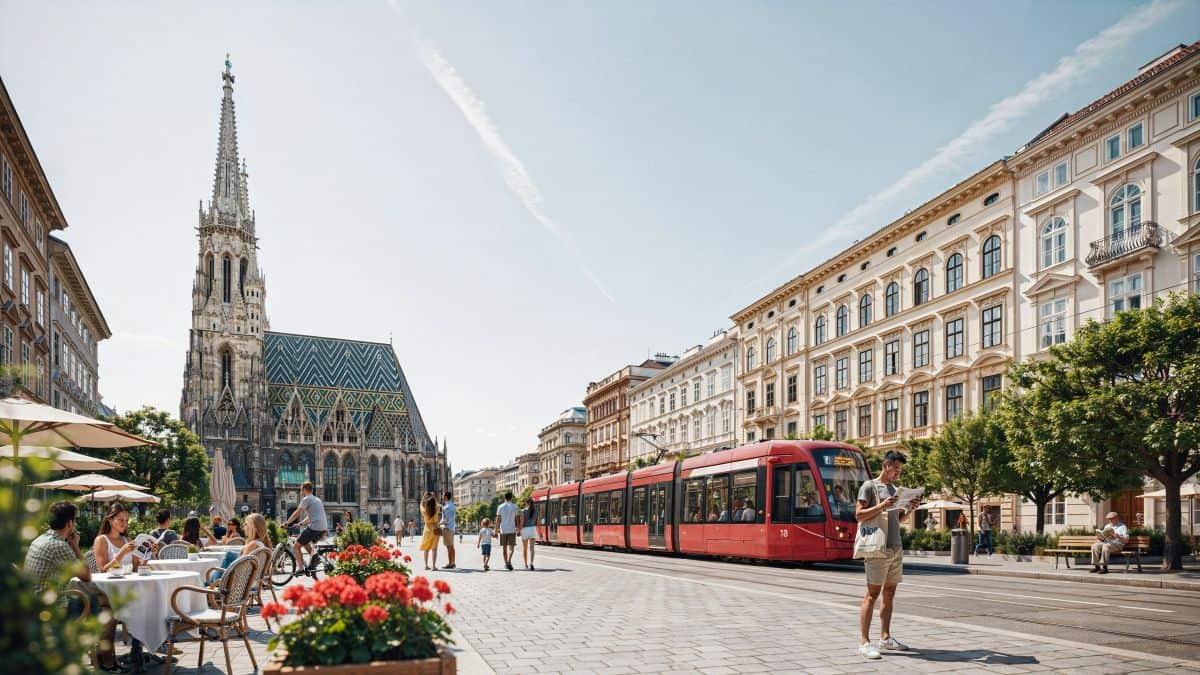
Image generated with Ai
Vienna has reached a significant milestone in its tourism journey after recording its strongest year for overnight stays while introducing a revised accommodation tax designed to support the city’s long-term development. The Austrian capital welcomed 20.065 million overnight stays during 2025, the highest annual figure ever recorded for the city, according to the Vienna Tourist Board. As visitor demand continues to grow, the City of Vienna has implemented a phased increase in its accommodation tax, known locally as the Ortstaxe, as part of a broader strategy to maintain public infrastructure, municipal services and the overall quality of the visitor experience.
The latest developments demonstrate how Vienna is balancing continued tourism success with responsible urban management. Rather than focusing solely on increasing visitor numbers, the city is combining destination growth with long-term planning to ensure tourism continues to benefit residents, businesses and future travellers alike.
Advertisement
According to the Vienna Tourist Board, the Austrian capital registered 20,065,000 overnight stays in 2025, representing the highest annual tourism performance in the city’s history.
International visitors continued to account for the majority of overnight stays, highlighting Vienna’s enduring appeal as one of Europe’s leading cultural and city-break destinations. The city welcomed travellers from numerous international markets who visited its historic architecture, museums, concert halls, imperial landmarks, culinary experiences and year-round cultural events.
Advertisement
Advertisement
The record performance reflects Vienna’s continuing ability to attract visitors seeking heritage, music, gastronomy, business events and urban leisure experiences while maintaining its reputation as one of Europe’s most desirable travel destinations.
The Vienna Tourist Board has described the result as another important milestone in the city’s long-term tourism development strategy.
Alongside record visitor numbers, the City of Vienna has introduced changes to its local accommodation tax.
Officially known as the Ortstaxe, the tax increased from 3.2 percent to 5 percent on 1 July 2026. The city has also confirmed a second adjustment, with the rate scheduled to increase to 8 percent from 1 July 2027.
According to the City of Vienna, the tax is calculated on the accommodation charge while excluding value-added tax and breakfast charges. The revised structure forms part of the city’s broader financial planning while maintaining transparency regarding how accommodation taxation is administered.
The City has published detailed guidance to help accommodation providers implement the updated tax calculations in accordance with municipal regulations.
The City of Vienna has clearly explained the purpose behind the revised accommodation tax.
Rather than describing the measure solely as a tourism initiative, municipal authorities have stated that the additional revenue supports the city’s ability to maintain reliable public services and infrastructure.
According to the City, the broader financial package contributes to investments that help preserve areas including public transport, mobility, education and municipal services used by both residents and visitors.
As tourism continues to grow, maintaining infrastructure becomes increasingly important to ensure that the city remains attractive, accessible and enjoyable for everyone.
This approach reflects a wider principle adopted by many destinations where visitor-related taxes contribute towards sustaining the quality of the urban environment without compromising the visitor experience.
Vienna’s latest policy illustrates how sustainable tourism extends beyond attracting more visitors.
Successful tourism destinations increasingly recognise that long-term growth depends upon protecting the quality of public spaces, transportation systems, cultural attractions and everyday city life.
By linking tourism-generated revenue with public investment, cities seek to ensure that increasing visitor numbers do not place excessive pressure on infrastructure.
The City of Vienna has emphasised that maintaining efficient public services benefits residents while also enhancing the experience of international travellers who rely on clean public spaces, reliable transport and well-managed urban facilities during their visits.
This balanced approach supports tourism growth without sacrificing the qualities that make Vienna an attractive destination.
Tourism has become an important contributor to Vienna’s wider urban development.
Beyond hotels and visitor attractions, tourism supports restaurants, museums, retail businesses, cultural institutions, public transport and numerous local services that collectively shape the visitor experience.
As overnight stays continue reaching new records, municipal authorities are placing greater emphasis on ensuring that tourism development remains aligned with broader city planning objectives.
Rather than pursuing visitor growth in isolation, Vienna continues integrating tourism into its wider vision for sustainable urban management and high-quality public services.
This coordinated strategy helps preserve Vienna’s reputation while preparing the city for future visitor demand.
The Austrian capital remains one of Europe’s most recognised cultural destinations.
Historic palaces, world-famous museums, classical music traditions, elegant architecture, green public spaces and internationally recognised cultural institutions continue attracting visitors from around the world.
According to the Vienna Tourist Board, international markets generated the majority of overnight stays during 2025, demonstrating the city’s enduring appeal among overseas travellers.
This strong international demand reinforces Vienna’s position within Europe’s competitive tourism landscape while encouraging continued investment in visitor infrastructure and destination management.
In addition to leisure tourism, Vienna continues strengthening its position as an international destination for meetings, congresses and corporate events.
The Vienna Tourist Board has reported record activity across the meetings industry, supporting additional overnight stays and contributing to the city’s wider visitor economy.
Business travellers frequently extend their visits to experience Vienna’s cultural attractions, museums, restaurants and historic neighbourhoods, creating additional opportunities for local tourism businesses.
This combination of leisure tourism and international business events helps maintain year-round visitor activity while reducing seasonal fluctuations.
As visitor numbers continue growing across many global destinations, responsible destination management has become an increasingly important priority.
Cities must carefully balance economic benefits with the protection of public infrastructure, environmental quality and residents’ quality of life.
Vienna’s approach demonstrates how municipal authorities can respond to tourism growth through measured policy adjustments while continuing to invest in services that support both residents and visitors.
The revised accommodation tax forms part of this broader strategy by helping create a sustainable financial framework for future tourism development.
Vienna’s latest tourism achievements reflect more than record-breaking visitor numbers. They illustrate how one of Europe’s leading destinations is planning for the future through responsible tourism management and long-term investment.
By combining historic tourism success with carefully managed accommodation tax reforms, the City of Vienna aims to preserve the qualities that have made the Austrian capital internationally admired while ensuring public infrastructure continues supporting both residents and millions of future visitors.
As destinations worldwide increasingly focus on sustainable tourism, Vienna’s approach highlights the importance of balancing visitor growth with thoughtful urban planning, reliable public services and continuous investment in the overall travel experience.
Advertisement
Advertisement
Advertisement













Friday, September 4, 2026

Friday, September 4, 2026
Friday, September 4, 2026

Thursday, September 3, 2026

Wednesday, September 2, 2026

Friday, September 4, 2026

Friday, September 4, 2026