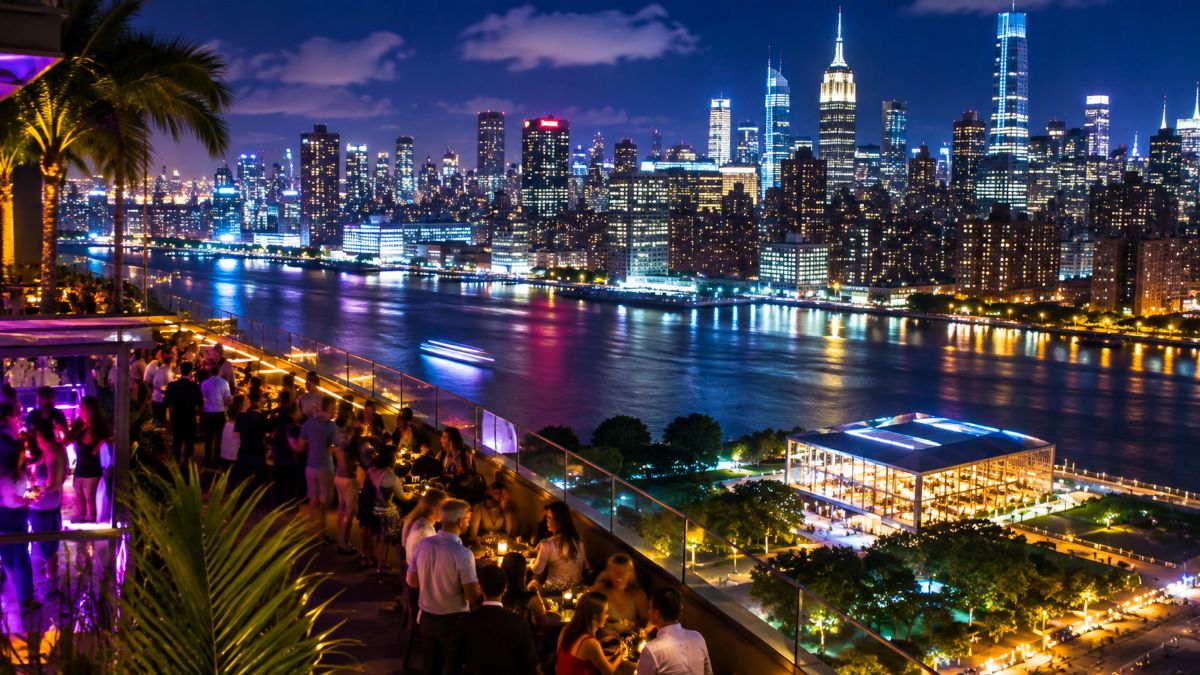
Image generated with Ai
New York City has strengthened its position as a leading destination for after-dark travel after being named the best city for nightlife in the United States and the third-best nightlife city worldwide in Time Out’s 2026 global ranking. The result places the American metropolis behind Bangkok and Berlin but ahead of every other U.S. city included in the assessment. The ranking provides a significant boost to New York’s reputation as a destination where visitors can combine entertainment, culture, dining, music and social experiences after sunset.
The latest assessment was based on responses from more than 24,000 people across 150 cities, supported by insights from Time Out editors and city experts. Rather than judging nightlife only through famous clubs, the methodology considered quality, affordability, safety, diversity, excitement, welcoming environments and the ability to find community. For international travellers, the result reinforces the idea that the city’s nighttime appeal extends well beyond traditional clubbing and remains an important part of the wider U.S. tourism experience.
The third-place global ranking is particularly notable because Time Out’s methodology allows only the highest-ranking city from each country to appear on the final list. That makes New York the leading U.S. representative and effectively gives it the country’s top nightlife title for 2026.
The city achieved an 82 percent local rating for nightlife, with residents describing the experience as good or amazing. Time Out’s expert panel also gave the destination a 95 percent approval score. The combination of strong local satisfaction and expert recognition helped push it into the global top three.
Advertisement
Advertisement
The result is significant for travel because nightlife increasingly forms part of the overall city-break experience. Visitors are not necessarily travelling only to attend a nightclub. They may be looking for live music, late-night restaurants, cocktail bars, cultural events, neighbourhood gatherings and social experiences that reveal another side of a destination.
New York’s greatest strength is the sheer variety available after dark. A visitor can move between sophisticated cocktail lounges, intimate wine bars, live-music venues, dance floors and community-oriented events without experiencing the same type of evening twice.
This diversity also allows different generations and traveller groups to construct their own versions of a night out. Some visitors may prefer high-energy dancing, while others may favour food, music, neighbourhood bars or cultural programming.
That flexibility has become increasingly important as nightlife habits change. Time Out’s broader 2026 research argues that nightlife is evolving rather than disappearing, with people increasingly exploring neighbourhoods, rooftop events, street gatherings and smaller venues instead of concentrating exclusively on major clubs.
Advertisement
Advertisement
| Nightlife Factor | New York City 2026 Result | Travel Significance |
|---|---|---|
| Global nightlife position | 3rd | Places the city among the world’s leading after-dark destinations |
| U.S. position | 1st | Makes it America’s highest-ranked city |
| Local nightlife approval | 82% | Indicates strong resident satisfaction |
| Expert approval | 95% | Reflects strong recognition from nightlife specialists |
| Affordability approval | 40% | Highlights the challenge of expensive nights out |
| Key characteristics | Exciting, diverse, lively | Supports broad appeal for international visitors |
The ranking also exposes an important weakness. Only 40 percent of local respondents considered a night out affordable, giving the city the lowest affordability score among the destinations surveyed in this ranking.
For travellers, that means the city’s exceptional nightlife can come with a substantial financial commitment. Accommodation, transportation, food, drinks, entrance fees and entertainment can quickly increase the cost of an evening.
Yet the affordability issue does not appear to have damaged the destination’s overall reputation. Instead, it highlights a wider distinction between the quality of nightlife and its accessibility. A city can offer outstanding experiences while still requiring travellers to plan carefully around budgets.
For tourism planners and visitors, this creates an opportunity for greater attention to neighbourhood venues, free cultural events, public spaces and lower-cost evening experiences.
One reason New York continues to attract nightlife-focused travellers is that entertainment is not concentrated in a single district. Manhattan remains an important part of the after-dark economy, but visitors can also find distinctive experiences across Brooklyn and other parts of the city.
Harlem offers community-focused events and local nightlife, while Brooklyn has developed a strong reputation for independent venues, wine experiences and alternative cultural gatherings. Other areas offer live music, late-night dining and dance-focused entertainment.
This geographic diversity is important because it encourages visitors to explore beyond conventional tourist routes. Nightlife can therefore function as a gateway to neighbourhood tourism, allowing travellers to encounter local businesses, communities and cultural scenes.
New York’s third-place position also demonstrates how varied the global nightlife market has become. Bangkok claimed first place, while Berlin ranked second. Melbourne, São Paulo, Medellín, Johannesburg, Brighton, Beijing and Amsterdam completed the global top ten.
The ranking shows that successful nightlife destinations do not follow one formula. Bangkok combines rooftop venues, street-side bars, clubs and late-night food, while Berlin remains internationally recognised for its club culture and independent nightlife communities.
New York occupies a different position, relying heavily on scale and diversity. Its appeal comes from the ability to combine nightlife with restaurants, music, arts, neighbourhood culture and major attractions.
The recognition could further strengthen New York’s position in international city-break tourism. Travellers increasingly seek destinations where multiple experiences can be combined within one trip, and nightlife gives cities an additional reason to attract visitors beyond museums, shopping and landmarks.
For international visitors, an evening itinerary can complement daytime sightseeing. A traveller might spend the day exploring cultural attractions before moving into neighbourhood restaurants, music venues or nightlife districts after sunset.
The ranking also reinforces the value of the city’s cultural diversity. Time Out found that New York was especially likely to be described by respondents as exciting, diverse and lively.
Concerns about club closures, higher operating costs, rising rents and changing drinking habits have created uncertainty around traditional nightlife. However, the latest ranking suggests that these pressures have not eliminated the city’s after-dark culture.
Instead, nightlife is becoming more fragmented and flexible. Smaller gatherings, community events, wine clubs, live music, neighbourhood venues and alternative parties can coexist with established clubs and major entertainment spaces.
For tourism, that evolution could ultimately make the city more interesting. Visitors are increasingly able to choose between polished entertainment districts and more intimate local experiences.
For travellers planning a U.S. city break, the ranking adds another reason to experience New York beyond its famous daytime attractions. The city offers an unusually broad nighttime portfolio, from sophisticated dining and cocktails to live music, dancing and community-led events.
The strongest appeal is not simply that there are many places to go. It is that the city can accommodate dramatically different definitions of a successful evening.
The 2026 ranking therefore presents a balanced picture: New York is expensive, but its nightlife remains exceptionally diverse, energetic and internationally competitive. With an 82 percent local quality rating and 95 percent expert approval, its third-place global position confirms that America’s most famous urban destination continues to evolve after dark.
1. What city was ranked the best for nightlife in the United States in 2026?
New York City was ranked the best U.S. city for nightlife by Time Out in its 2026 global ranking.
2. Where did New York City rank worldwide for nightlife?
New York City ranked third worldwide, behind Bangkok and Berlin.
3. Which city ranked first for nightlife in 2026?
Bangkok ranked first in Time Out’s 2026 global nightlife ranking.
4. Which city ranked second?
Berlin ranked second worldwide.
5. How many people participated in the nightlife survey?
More than 24,000 locals across 150 cities contributed to the research.
6. What percentage of New Yorkers rated nightlife positively?
Eighty-two percent of New Yorkers surveyed rated the city’s nightlife as good or amazing.
7. Is New York nightlife affordable?
Affordability is a major weakness. Only 40 percent of respondents agreed that going out at night was affordable.
8. What makes New York nightlife distinctive?
Its major advantage is variety, including clubs, cocktail bars, live music, wine venues, community events and neighbourhood nightlife.
9. Does New York nightlife only focus on nightclubs?
No. The current scene extends across dining, live entertainment, bars, community events, cultural experiences and smaller neighbourhood venues.
10. Why is the ranking important for travellers?
It reinforces New York’s position as a leading international city-break destination where daytime sightseeing can be combined with diverse after-dark experiences.
Advertisement
Tags: American nightlife, best nightlife cities, New York City nightlife, New York Tourism, NYC nightlife 2026
Advertisement
Advertisement











Wednesday, September 2, 2026

Wednesday, September 2, 2026
Wednesday, September 2, 2026

Wednesday, September 2, 2026

Wednesday, September 2, 2026
Tuesday, September 1, 2026

Wednesday, September 2, 2026
Wednesday, September 2, 2026