Image generated with Ai
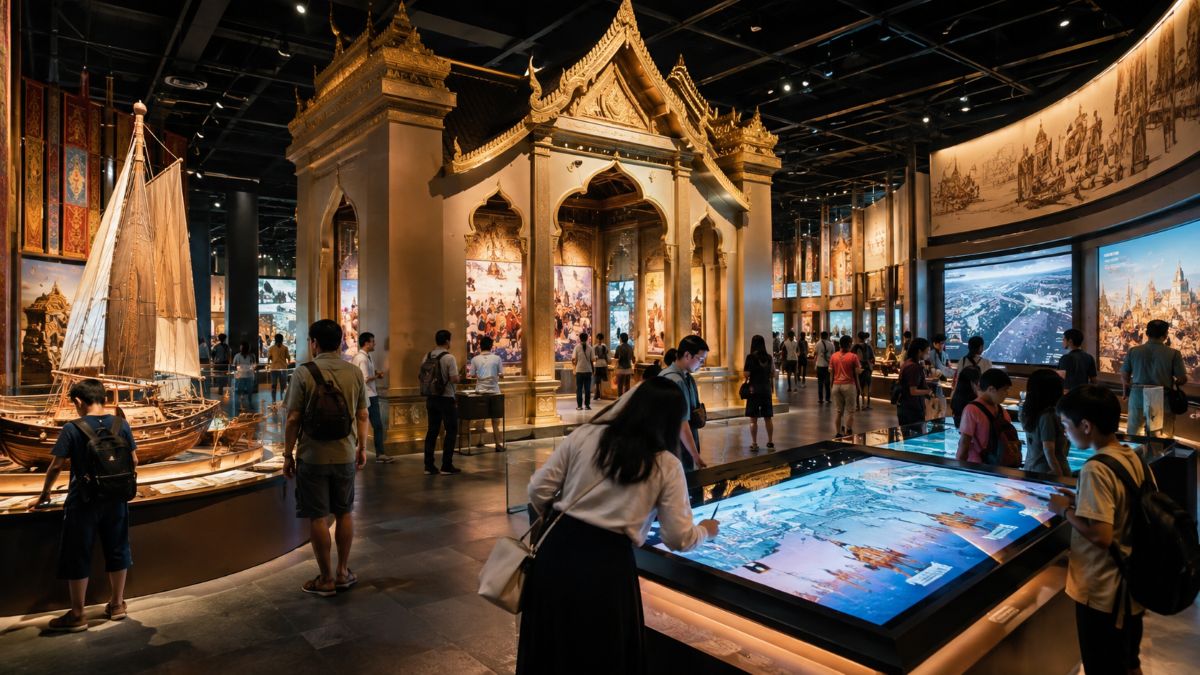
Thailand is inviting travellers to look at the country through an unfamiliar lens as Museum Siam in Bangkok presents Thai Dialogue: Foreign Quote, an exhibition examining Thai identity through the records and observations of overseas travellers, merchants, missionaries, diplomats and scholars. Running until 4 October 2026, the exhibition encourages visitors to consider how external perspectives have influenced understandings of Siam and Thailand. Rather than presenting history as a single, settled narrative, the experience turns different viewpoints into a dialogue about culture, identity and connection.
For international travellers, the exhibition also provides a gateway into one of Bangkok’s distinctive cultural attractions. Museum Siam combines heritage architecture with interactive storytelling, while its permanent Decoding Thainess exhibition explores customs, food, beliefs, institutions and changing ideas of Thai identity across 14 rooms. Its location on Sanam Chai Road, near Sanam Chai MRT station, makes it particularly accessible for visitors exploring Bangkok’s historic core.
Advertisement
Thai Dialogue: Foreign Quote takes an important approach to cultural tourism by asking visitors to reconsider familiar ideas about Thailand. Overseas visitors historically encountered Siam through commerce, diplomacy, religion, scholarship and travel, leaving behind accounts that provide alternative perspectives on the country.
The exhibition uses these perspectives not simply to describe the past but to encourage discussion about Thai identity. For travellers, this creates a more engaging cultural experience because the museum becomes a place for questioning and interpretation rather than a conventional collection of historical objects.
Advertisement
The temporary exhibition is located on the first floor and remains open until 4 October 2026. The exhibition is free, giving travellers another accessible cultural activity to include in a Bangkok itinerary.
A related collaboration with Phuket Museum, titled Phuket: A Port City That Did Not Wait for Bangkok, continues during the same period. Together, the projects broaden the conversation beyond Bangkok and demonstrate how connections between Thailand and the wider region have shaped cultural development.
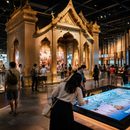
Museum Siam’s cultural appeal begins before visitors enter its galleries. The grand building features classical arches, columns and formal symmetry, characteristics that can make it appear more like a palace than an administrative building.
The structure was actually built as an office for the Ministry of Commerce. Plans were prepared in 1921 and construction was completed in 1922 under the supervision of the Department of Public Works. Italian architect Mario Tamagno served as chief architect, while Emilio Giovanni Gollo was chief engineer.
The building also illustrates how architecture can adapt to Bangkok’s tropical environment. Classical architectural traditions did not typically incorporate projecting awnings, yet Bangkok’s intense sunlight and heavy rainfall required practical responses. Concrete awnings at the rear allowed the building to address the climate while retaining its formal architectural character.
For cultural travellers, this combination of architecture and interpretation adds depth to a visit. The destination is not simply a museum housed inside an old building; the structure itself forms part of the historical story.
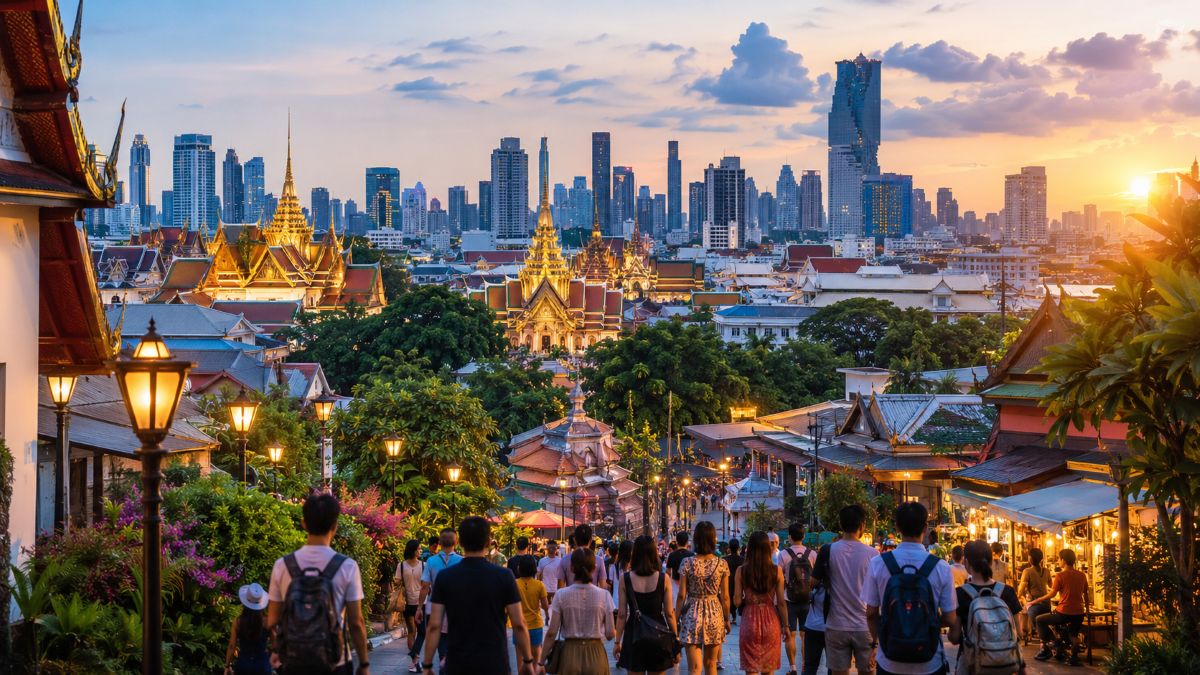
Image generated with Ai
The transformation of the former ministry building reflects Thailand’s changing approach to museum education. A Cabinet resolution in 2003 approved planning funds for the building’s transformation, followed by restoration and improvements to the surrounding landscape. Museum Siam reopened on 2 April 2008 as a model for Thailand’s first learning museum.
Its programming has subsequently extended beyond traditional displays. In 2010, the museum created a real rice field on its front lawn for Know How: Farmers, Researchers of the Fields. The five-month exhibition allowed visitors to experience the stages of rice cultivation directly.
The museum also introduced Night at the Museum in the same year, keeping the site open from 4pm to 10pm and combining light and sound presentations with cultural storytelling. In 2011, Olá Siao: 500 Years of Thai-Portuguese Relations incorporated theatre into an exhibition about historical connections involving power, commerce and religious faith.
These initiatives demonstrate why Museum Siam can appeal to travellers seeking more participatory forms of cultural tourism.
The museum’s permanent Decoding Thainess exhibition provides another major reason to visit. Spread across 14 rooms, it explores Thai history, architecture, customs, clothing, food, beliefs and changing interpretations of what it means to be Thai.
Museum Siam experience What travellers can explore Thai Dialogue: Foreign Quote Foreign perspectives on Siam and Thai identity Decoding Thainess Fourteen interactive rooms about Thai culture Underground Museum Archaeological history connected with the Sanam Chai area Siam Origins Thai and Southeast Asian culinary connections Historic architecture A former Ministry of Commerce building dating from 1922
The permanent galleries include themes such as Thai Since Birth, Thai Institutions, Taste of Thai, Thai Beliefs, Thai Traditions and Thai Snapshot. Rather than relying solely on static objects, the museum uses replica models, photographs, everyday objects, sculptures, digital technology, sound, lighting and interactive games.
This approach is particularly relevant to modern cultural tourism because visitors are encouraged to participate in the interpretation. The experience recognises that identity can evolve, be borrowed, adapted and understood differently by different generations.
Travellers should make time for Museum Siam because it offers more than a conventional sightseeing stop. The museum helps visitors understand Thailand through history, culture, architecture, food and international connections, making it particularly valuable for those who want to look beyond Bangkok’s famous landmarks. Its interactive exhibitions encourage travellers to question how Thai identity has developed and how outside influences have contributed to the country’s cultural story.
Bangkok can reasonably be presented as a major travel attraction during the current period of global travel disruption, but I would avoid calling it a completely “new” attraction.
Thailand itself activated a Tourism Crisis Monitoring Centre in March 2026 after Middle East tensions caused flight disruptions, showing that the country has been directly affected by the wider disruption.
At the same time, Bangkok has demonstrated considerable tourism resilience. JLL reported that Bangkok recorded 1.7% tourism growth in 2026, even while Thailand’s overall international visitor arrivals were declining. Bangkok was also ranked the most-booked city destination for 2026 in data cited by Thailand’s Tourism Authority.
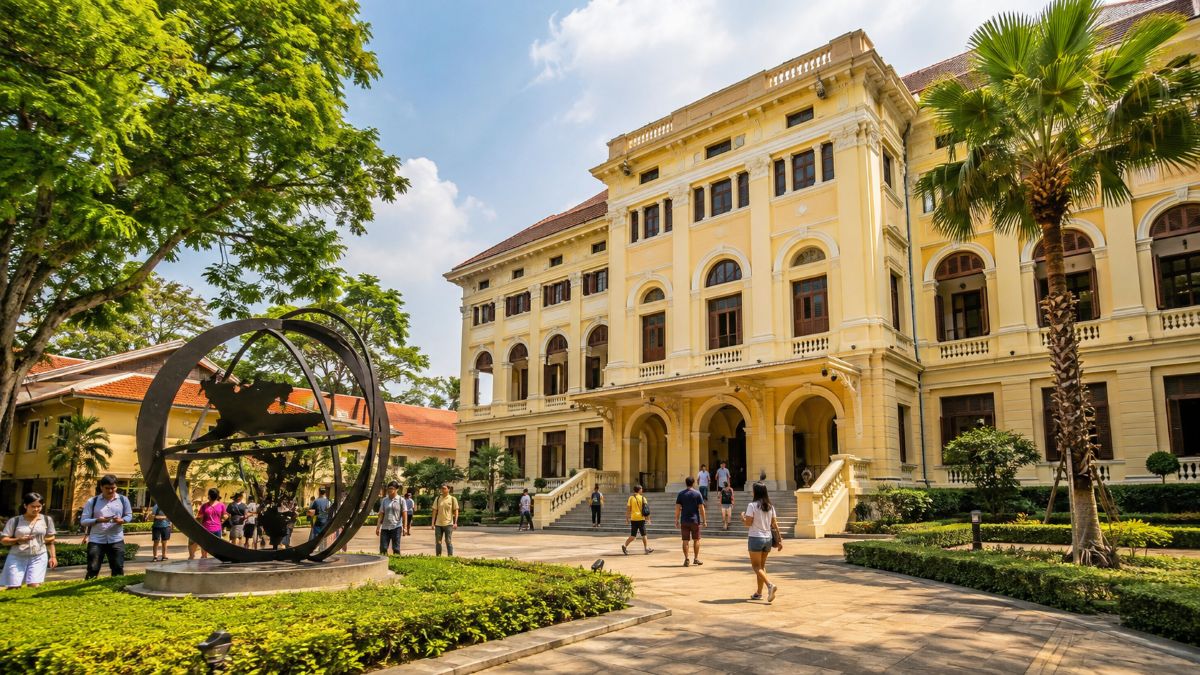
Image generated with Ai
The key point is not that Bangkok has suddenly become a new destination, but that its combination of accessibility, cultural attractions, museums, food, heritage and urban infrastructure makes it particularly relevant to travellers reassessing destinations during a period of international uncertainty. TAT has itself shifted towards quality-led and more resilient tourism while acknowledging geopolitical pressures, air-connectivity constraints and changing travel demand.
And Museum Siam fits this narrative very well because it gives visitors a cultural reason to choose Bangkok beyond the city’s traditional sightseeing attractions. Its temporary Thai Dialogue: Foreign Quote exhibition runs until 4 October 2026 and examines Thai identity through foreign perspectives, while its permanent Decoding Thainess exhibition offers 14 interactive rooms.
Bangkok is becoming an increasingly relevant choice for travellers navigating a period of international travel disruption. While the Thai capital is not a new destination, its strong combination of cultural attractions, accessible transport, historic districts, food experiences and modern tourism infrastructure gives visitors more reasons to consider it when planning an international holiday. Museum Siam adds another dimension by allowing travellers to explore Thailand beyond its better-known temples, shopping areas and nightlife.
For travellers looking for meaningful experiences during uncertain times, Museum Siam offers an alternative to conventional city sightseeing. Its Decoding Thainess exhibition presents 14 rooms covering Thai history, architecture, customs, clothing, food, beliefs and changing interpretations of Thai identity. Interactive technology, models, photographs, sound, lighting and games make the experience more engaging for visitors.
Thai Dialogue: Foreign Quote runs until 4 October 2026, giving visitors travelling to Bangkok during September and early October an opportunity to experience a temporary cultural attraction alongside the museum’s permanent exhibitions. The temporary exhibition is free.
Museum Siam itself is part of Bangkok’s historical appeal. The building was constructed as an office for the Ministry of Commerce, with plans drawn in 1921 and construction completed in 1922. Its classical arches and columns remain prominent architectural features, while adaptations such as concrete awnings demonstrate how the structure responded to Bangkok’s tropical climate.
Another major highlight is Siam Origins, the restaurant within the Museum Siam grounds. Inspired by the temporary exhibition, it serves laksa as an exploration of Southeast Asian culinary connections. The dish combines rice noodles with a coconut-rich herbal curry, spices, tofu, fish balls, prawns, egg and fresh vegetables.
Bangkok should not be described as a newly discovered destination. Instead, the stronger travel story is that its established cultural depth is becoming especially valuable as travellers reassess international journeys during periods of disruption. Visitors can combine heritage, museums, food, architecture and contemporary city experiences within a single destination.
Bangkok’s appeal during travel disruption lies in its depth, accessibility and variety, while Museum Siam provides travellers with a particularly strong cultural reason to explore the Thai capital from a new perspective.
The cultural dialogue does not stop at the exhibition galleries. Siam Origins, the restaurant within the Museum Siam grounds, extends the theme through food.
Inspired by Thai Dialogue: Foreign Quote, the restaurant has introduced laksa, a Malay-style curry noodle dish associated with Peranakan food culture. The exhibition-inspired menu uses food to explore connections between Southeast Asian communities and culinary traditions.
The Museum Siam version combines rice noodles with a coconut-rich herbal curry, spices, fried tofu, fish balls, fresh prawns, a soft-boiled egg and vegetables. Sambal is available for visitors seeking additional heat.
Other dishes include khanom jeen sao nam, while the wider menu draws inspiration from Thailand’s four regions. This makes the dining experience complementary to the museum’s wider cultural message, showing travellers how history and identity can also be experienced through cuisine.
Museum Siam offers travellers a different way to experience Bangkok. Instead of focusing exclusively on temples, shopping districts and modern entertainment, visitors can explore how Thai culture has developed through interactions with neighbouring societies and the wider world.
Its location also makes it practical for cultural itineraries around Bangkok’s historic centre. Sanam Chai MRT station provides direct access to the museum area, allowing visitors to combine the attraction with other sightseeing around the historic heart of the capital.
The museum’s combination of architecture, exhibitions, interactive technology, food and regional connections gives international visitors several layers of discovery. For travellers interested in history and culture, the attraction demonstrates that understanding Thailand involves looking not only at what is distinctly Thai but also at the exchanges that helped shape it.
Museum Siam is located on Sanam Chai Road and operates from Tuesday to Sunday between 10am and 6pm. General admission is 100 baht for adults and 50 baht for students. Sanam Chai MRT station Exit 1 leads directly to the museum area.
Thai Dialogue: Foreign Quote runs until 4 October 2026 and follows the same Tuesday-to-Sunday, 10am-to-6pm schedule. Admission to the temporary exhibition is free.
Siam Origins is located within the museum grounds and is listed as open Tuesday to Sunday from 9am to 7pm.
For travellers planning a Bangkok cultural itinerary in September or early October 2026, the exhibition therefore offers a timely opportunity to explore Thai identity through international perspectives while experiencing one of the capital’s distinctive historic buildings.
1. What is Thai Dialogue: Foreign Quote at Museum Siam?
It is a temporary exhibition exploring Thai identity through records and perspectives left by foreign travellers, merchants, missionaries, diplomats and scholars.
2. When does the exhibition run?
Thai Dialogue: Foreign Quote runs until 4 October 2026.
3. Is the temporary exhibition free?
Yes. The supplied visitor information states that the temporary exhibition is free.
4. Where is Museum Siam located?
Museum Siam is located on Sanam Chai Road in Bangkok.
5. How can travellers reach Museum Siam by public transport?
Sanam Chai MRT station Exit 1 leads directly to the museum area.
6. What is Decoding Thainess?
It is Museum Siam’s permanent exhibition featuring 14 rooms examining Thai history, customs, food, beliefs, architecture and changing ideas of Thainess.
7. What makes Museum Siam different from a conventional museum?
It uses interactive displays, models, sound, lighting, digital technology, games and questions to encourage visitors to participate in learning.
8. Can visitors eat at Museum Siam?
Yes. Siam Origins operates within the museum grounds and offers Thai and Southeast Asian-inspired dishes.
9. Why is laksa featured at Siam Origins?
The laksa was inspired by Thai Dialogue: Foreign Quote and reflects cultural and culinary connections across Southeast Asia.
10. What are Museum Siam’s general opening hours?
The museum is open Tuesday to Sunday from 10am to 6pm.
Advertisement
Tags: Bangkok attractions, Bangkok cultural attractions, Bangkok museums, Bangkok Travel, Cultural Tourism Thailand
Advertisement
Advertisement












Wednesday, September 2, 2026

Wednesday, September 2, 2026
Wednesday, September 2, 2026

Wednesday, September 2, 2026

Wednesday, September 2, 2026

Tuesday, September 1, 2026

Wednesday, September 2, 2026
Wednesday, September 2, 2026