
Singapore F1 Braces for Malaysia Haze as Unhealthy Air Threatens Outdoor Travel Plans

Published
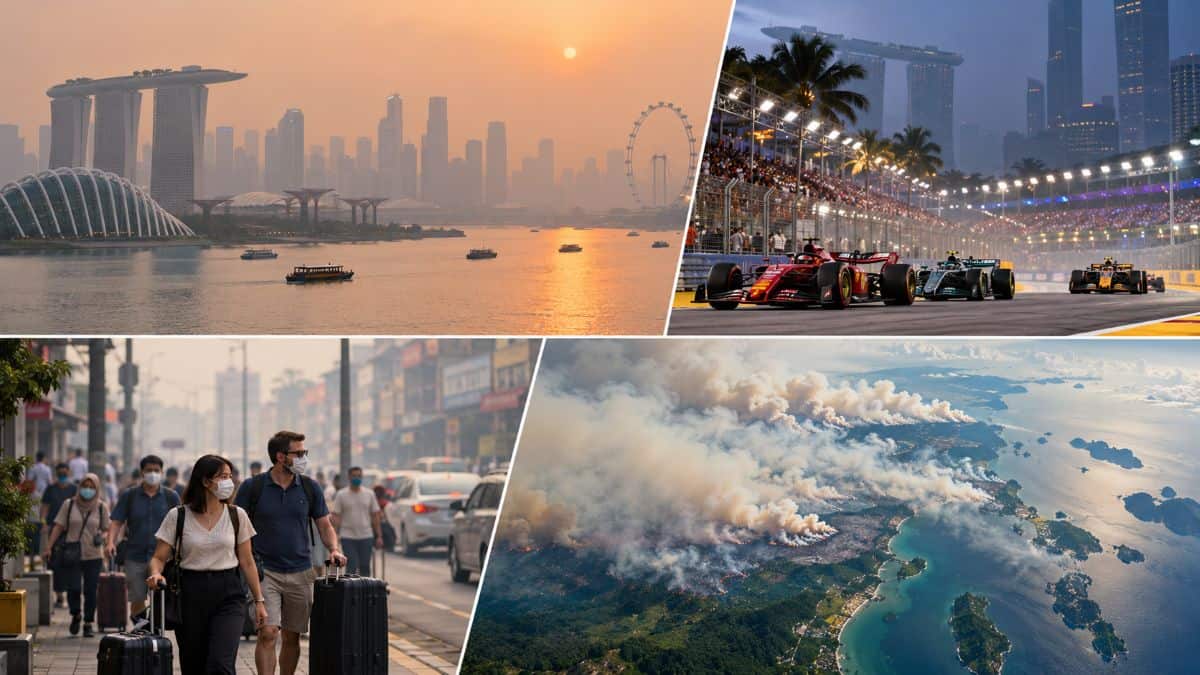
Malaysia’s worsening Malaysia haze has forced around 200 schools, kindergartens and nurseries to close in Batu Pahat, Johor. The disruption comes just days before the 2026 Singapore Grand Prix, raising fresh concerns for travellers arriving for one of Asia’s biggest sporting weekends. Singapore recorded a 24-hour PSI of 102 to 135 on October 6, placing conditions in the unhealthy range. One-hour PM2.5 readings also reached 73 to 103 micrograms per cubic metre. Smoke from fires in southern Sumatra and West Kalimantan continues to affect the wider region. For visitors, the immediate issue is not a confirmed race disruption, but changing conditions for outdoor travel.
Batu Pahat Faces Severe Air Pollution
Batu Pahat has become a focal point of the latest haze episode across southern Malaysia. Around 200 schools, kindergartens and childcare facilities in the district were ordered to close on October 7.
Advertisement
Advertisement
The decision followed an Air Pollutant Index reading above 200. Such levels indicate very unhealthy conditions and create particular concerns for children and other vulnerable groups.
For travellers, Batu Pahat’s location makes the development especially relevant. The district lies in Johor, within the wider southern Malaysian travel corridor connecting Kuala Lumpur, Johor Bahru and Singapore.
Advertisement
Advertisement
The closures do not mean that all travel through Johor has stopped. However, they provide a clear indication that pollution has become serious enough to alter normal public activity.
| Key Indicator | Current Situation |
|---|---|
| Affected Malaysian area | Batu Pahat, Johor |
| Facilities affected | Schools, kindergartens and nurseries |
| Facilities affected | Around 200 |
| Local pollution level | API above 200 |
| Singapore PSI on October 6 | 102–135 |
| Singapore PM2.5 | 73–103 µg/m³ |
| Singapore Grand Prix | October 9–11 |
| Main regional smoke sources | Southern Sumatra and West Kalimantan |
The situation also demonstrates why travellers should treat air quality separately from ordinary weather conditions. Clear skies do not necessarily mean clean air when regional smoke remains present.
Advertisement
Advertisement
Singapore F1 Weekend Arrives At A Delicate Moment
The timing could hardly be more significant for Singapore’s tourism industry. The city is preparing for the Formula 1 weekend, which brings international visitors, packed hotels and heavy movement around Marina Bay.
The Singapore Grand Prix takes place from October 9 to 11. Practice and qualifying sessions begin before the main race on Sunday evening.
Thousands of visitors will spend long periods outdoors throughout the weekend. They will walk between circuit zones, queue at entrances, move between grandstands and explore the city around the race.
That makes the current air-quality situation more important than a normal haze episode. Visitors may face extended exposure even when individual outdoor activities seem manageable.
There is currently no confirmed indication that the Singapore Grand Prix will be cancelled because of the haze. The more immediate concern is how visitors manage their time outdoors while conditions remain unsettled.
Air Quality Has Deteriorated Quickly
Singapore’s air-quality readings show how rapidly the situation has changed. Conditions that were moderate earlier in October moved into the unhealthy category by October 6.
Advertisement
Advertisement
The 24-hour PSI stood between 60 and 73 on October 1. By October 6, the range had increased to between 102 and 135.
One-hour PM2.5 also rose substantially during the same period. Readings moved from 17 to 32 micrograms per cubic metre on October 1 to 73 to 103 on October 6.
| Date | 24-Hour PSI | 1-Hour PM2.5 |
|---|---|---|
| October 1 | 60–73 | 17–32 µg/m³ |
| October 2 | 63–79 | 36–70 µg/m³ |
| October 3 | 79–104 | 30–56 µg/m³ |
| October 4 | 73–96 | 41–90 µg/m³ |
| October 6 | 102–135 | 73–103 µg/m³ |
For travellers, this movement is more important than any single reading. Conditions can change within hours as winds shift and smoke moves across the region.
Visitors should therefore avoid planning an entire weekend around one air-quality measurement. Checking conditions each morning and before major outdoor activities is a more reliable approach.
Indonesian Wildfires Keep The Region On Alert
The haze affecting Malaysia and Singapore is part of a wider regional pattern. Smoke from fires in southern Sumatra and West Kalimantan has contributed to deteriorating conditions.
Prevailing winds can transport smoke across national borders. This means a traveller in Singapore can experience the effects of fires occurring hundreds of kilometres away.
Advertisement
Advertisement
The same phenomenon explains why conditions can differ significantly between neighbouring destinations. One location may experience poor air quality while another remains comparatively comfortable.
For Southeast Asian tourism, this creates a recurring operational challenge. Environmental conditions can affect several destinations without directly closing airports, hotels or attractions.
Travellers should therefore look beyond the immediate destination when assessing conditions. Regional weather, wind direction and wildfire activity can all influence the air they breathe.
F1 Visitors Should Reduce Unnecessary Exposure
A Singapore F1 trip does not have to be abandoned because of elevated pollution. However, visitors may need to change how they structure their days.
A long walking tour before several hours at the circuit could create unnecessary exposure. Visitors can instead use indoor attractions during periods of poorer air quality and reserve outdoor activities for better conditions.
The same approach works for families. Children should not spend prolonged periods outdoors when pollution levels become unhealthy, particularly during strenuous activities.
Advertisement
Advertisement
Travellers with respiratory or cardiovascular conditions should take additional care. Older people, pregnant travellers and young children also warrant greater caution during periods of elevated particulate pollution.
The key consideration is duration of exposure. Spending ten minutes outdoors is very different from spending several consecutive hours walking, exercising or waiting outside.
Singapore Offers Plenty Of Indoor Alternatives
One advantage for travellers is Singapore’s extensive range of indoor attractions. Visitors can modify their itineraries without losing an entire holiday day.
Shopping centres, museums, galleries, restaurants, entertainment complexes and covered attractions can replace long outdoor excursions. Visitors can also shorten walking routes by using public transport between major destinations.
A haze-sensitive itinerary could place outdoor sightseeing early in the day and indoor attractions during periods when pollution becomes more uncomfortable.
| Travel Plan | Better Approach During Haze |
|---|---|
| Marina Bay walk | Check PM2.5 first |
| Long walking tour | Consider an indoor alternative |
| F1 circuit visit | Limit unnecessary outdoor waiting |
| Family sightseeing | Prioritise covered attractions |
| Outdoor exercise | Avoid strenuous activity |
| Restaurant hopping | Choose venues near transport |
| Johor day trip | Check local air quality beforehand |
| Airport transfer | Allow additional travel flexibility |
This approach allows visitors to preserve the most important elements of their trip while reducing unnecessary exposure.
Advertisement
Advertisement
Johor Travellers Need Extra Flexibility
The situation in Batu Pahat also matters for travellers combining Singapore with Malaysia. Johor remains a major gateway for visitors travelling between the two destinations.
Road travellers should check local conditions before starting long journeys. Haze can affect visibility and make extended periods outdoors less comfortable, particularly around border crossings and transport waiting areas.
The school closures do not mean that the entire Johor transport network has closed. Instead, they signal that local pollution has reached a level requiring significant protective measures.
Travellers should therefore distinguish between local public-health measures and wider transport disruption. One does not automatically mean the other.
Visitors planning a Singapore-Johor itinerary should also avoid overly tight schedules. Keeping additional time between hotel check-outs, border crossings and flights can reduce stress if conditions slow travel.
What The Haze Means For Air Travellers
The current situation does not automatically indicate widespread flight cancellations. Commercial flights can continue operating even when ground-level air quality deteriorates.
Advertisement
Advertisement
For travellers, the more important issue may arise after landing. A flight can arrive on schedule while outdoor sightseeing becomes uncomfortable or unsuitable.
Visitors flying into Singapore should therefore monitor their airline for flight-specific information. They should separately check local air-quality conditions before leaving the airport or hotel.
Travellers connecting through Singapore should also remember that air quality and flight operations are different issues. An unhealthy PSI does not itself mean that Changi Airport has stopped operating.
The same principle applies to travellers flying into Malaysian airports. Flight status should always be checked directly with the airline before departure.
Rain Could Bring Temporary Relief
Weather will play a major role in determining how the situation develops over the coming days. Rain can temporarily remove some airborne particles and improve visibility.
However, temporary improvement does not necessarily end the underlying haze episode. Conditions can deteriorate again when dry weather returns or smoke continues to move across the region.
Advertisement
Advertisement
Batu Pahat is forecast to experience thunderstorms from October 9. That could provide some short-term improvement after the current period of haze.
Singapore’s conditions will also depend heavily on wind direction. A change in prevailing winds could reduce smoke concentrations, while another shift could increase them.
For visitors arriving for F1, the lesson is straightforward. Check the latest conditions every day rather than relying on a forecast made several days earlier.
Travellers Should Monitor Two Key Readings
Singapore provides two particularly useful measures for visitors. Understanding the difference can make daily travel planning much easier.
The 24-hour PSI provides a broader assessment of air quality. The one-hour PM2.5 reading gives travellers a more immediate indication of current particulate pollution.
The two should be considered together rather than treated as competing measurements.
Advertisement
Advertisement
| Reading | Why It Matters |
|---|---|
| 1-hour PM2.5 | Useful for immediate outdoor decisions |
| 24-hour PSI | Useful for broader daily planning |
| Weather forecast | Indicates possible rain and wind changes |
| Haze updates | Explains regional smoke movement |
| Fire hotspot information | Shows wider wildfire activity |
Travellers should check these indicators before beginning lengthy outdoor activities. The information can also help families decide whether children should participate in outdoor plans.
Health Precautions Matter More Than Sightseeing
Wildfire smoke contains fine particles that can irritate the eyes, throat and respiratory system. Prolonged exposure can become more concerning for vulnerable travellers.
Visitors should avoid strenuous outdoor exercise when pollution levels rise. They should also reduce unnecessary exposure if they experience coughing, breathing difficulties or significant irritation.
A well-fitting particulate respirator can provide additional protection during necessary outdoor travel. However, masks should not be treated as permission to undertake prolonged strenuous activity in polluted conditions.
Indoor environments with effective air filtration can offer a better option during periods of heavy haze. Travellers should also follow local health guidance if conditions deteriorate further.
A Haze-Ready F1 Itinerary Makes Sense
Visitors arriving for the Singapore Grand Prix can still enjoy the city while making modest changes to their schedules. The best approach is to create a flexible itinerary with indoor alternatives already identified.
Advertisement
Advertisement
Travellers can prioritise the race weekend while avoiding unnecessary outdoor activities around it. They can also use public transport to reduce walking between distant attractions.
Families should keep children’s outdoor schedules shorter if air quality deteriorates. Visitors with underlying health concerns should consider more conservative plans.
Hotels can also become useful bases rather than simply places to sleep. Guests can monitor conditions from their accommodation before deciding whether to head outdoors.
This approach makes the holiday more adaptable. The goal is not to avoid Singapore, but to travel intelligently while conditions remain changeable.
Singapore’s Race Weekend Remains A Major Draw
The Singapore Grand Prix remains scheduled for October 9 to 11, bringing another major international tourism surge to the city.
The race weekend is expected to generate substantial visitor movement around Marina Bay, with international fans combining the event with leisure travel, dining and shopping.
Advertisement
Advertisement
The current air-quality episode adds an unusual environmental variable to that demand. Visitors will need to consider conditions when planning outdoor activities rather than simply following a fixed sightseeing schedule.
Meanwhile, the situation in Batu Pahat demonstrates how seriously parts of southern Malaysia are responding to deteriorating air quality. The wider haze episode also underlines the interconnected nature of Southeast Asian travel.
For visitors, the most sensible response is preparedness rather than panic. Check official air-quality readings, keep outdoor plans flexible and allow additional time for cross-border travel.
The Singapore Grand Prix remains an important event on the regional tourism calendar. Yet for travellers arriving this week, air quality deserves the same attention as weather, transport and hotel arrangements.
With conditions capable of changing quickly, visitors should make daily decisions using current information. A flexible itinerary, sensible outdoor exposure and suitable precautions can help travellers enjoy Singapore while responding responsibly to the haze.
Advertisement
