
Lisbon World Aviation Festival 2026 Sees Turkish Airlines, TAP and Alaska Advance AI Innovation

Published
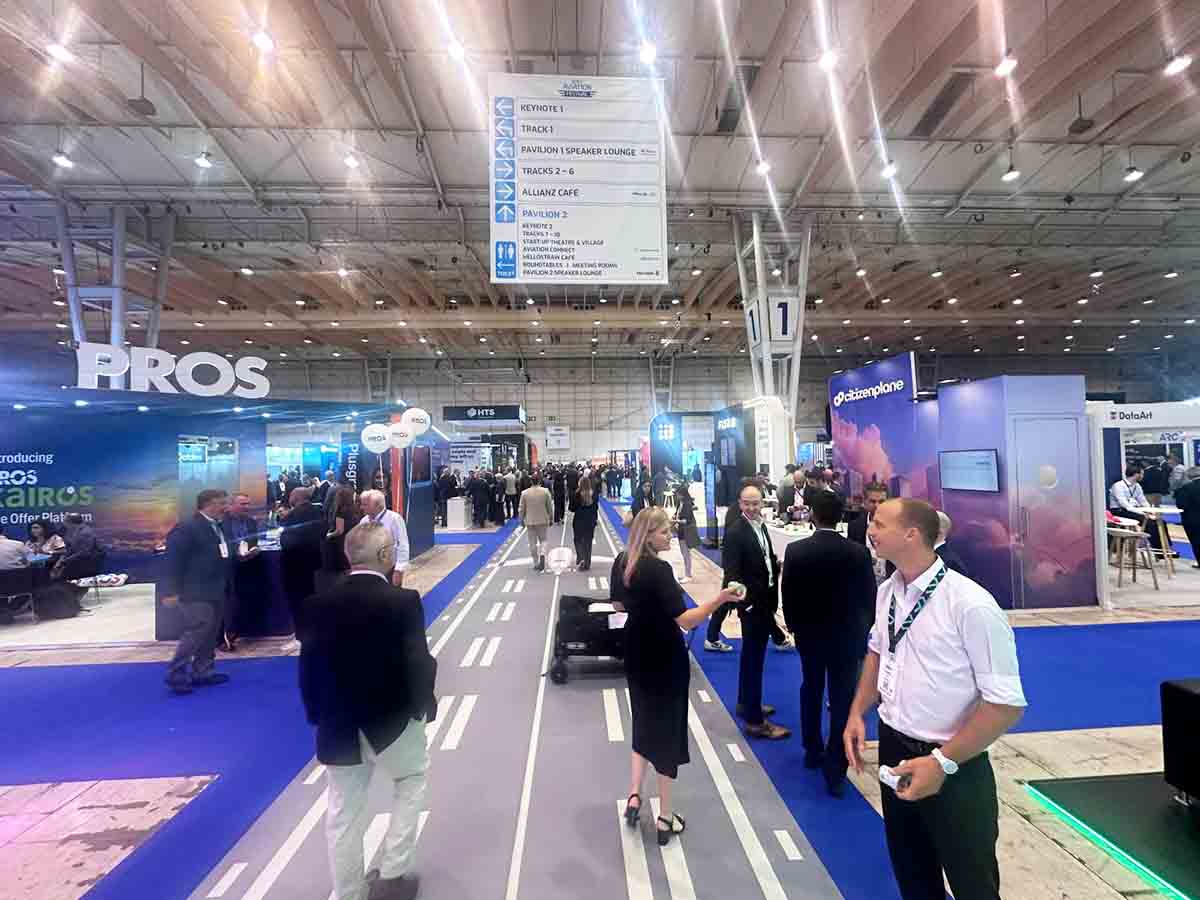
The World Aviation Festival 2026 opened in Lisbon on 13 October, bringing together airlines, airport operators, aviation technology companies and industry decision-makers to examine how artificial intelligence, automation and digital services can improve air travel. The opening day focused on aircraft turnaround delays, operational efficiency, baggage technology, customer experience and partnerships designed to modernise aviation services.
The three-day event runs from 13 to 15 October at Feira Internacional de Lisboa (FIL). Organiser Terrapinn expects more than 4,500 participants and 600 speakers, making it a major international platform for aviation technology and business innovation.
The 2026 programme also introduces an Airport and Airline Collaboration Track and an Ancillary Arena, where businesses can present new ideas for generating airline revenue.
Global Aviation Industry Focuses on Artificial Intelligence and Operational Efficiency
The opening sessions demonstrated how aviation companies are moving beyond experimental uses of artificial intelligence towards practical applications in airports and airline operations.
Advertisement
Advertisement
Industry discussions concentrated on reducing operational delays, improving communication between airport service providers and supporting passengers when travel plans change.
For airlines, these developments carry financial importance. Delays increase operating costs, disrupt aircraft schedules and create difficulties for passengers making onward connections.
Advertisement
Advertisement
Automation can help airport teams identify problems earlier, while digital customer service platforms can provide information without requiring travellers to contact an airline representative.
However, speakers also acknowledged that successful technology adoption depends on the ability of airlines, airports and ground handling companies to work together. Day 1 of the World Aviation Festival 2026 opened today in Lisbon, with airlines, airports and technology companies sharing how artificial intelligence (AI) and automation are being used to speed up aircraft turnarounds, improve ground operations and make journeys easier for passengers. Exhibitors also released new industry research and announced airline partnerships at and ahead of the festival.
Assaia Research Reveals Aircraft Turnaround Delays and Potential Savings
A major discussion emerged from aviation technology company Assaia, which presented its 2026 Turnaround Report.
According to the company, aircraft turnaround operations across North America and Europe exceeded their scheduled duration by an average of 11.1 minutes during the first quarter of 2026.
Assaia estimated that eliminating this operational gap could potentially save the airline industry up to $44 billion annually.
Its research also indicated that aircraft turnarounds monitored using artificial intelligence operated 36% closer to their scheduled completion times.
Advertisement
Advertisement
These findings underline the financial importance of coordinating baggage loading, refuelling, catering, passenger boarding and other activities required between flights.
Even relatively small improvements can help airlines maintain schedules and reduce the possibility of delays affecting subsequent services.
The potential savings remain company estimates rather than independently established financial outcomes.
Digital Research Raises Questions About Airline Visibility in AI Search
A separate study presented by aviation consultancy Raven examined how airlines appear in responses generated by artificial intelligence assistants.
Its Customer Growth Index assessed the digital performance of 101 airlines and identified a gap between brand visibility and direct website referrals.
The research found that AI assistants mentioned relevant airlines in 78% of responses to travel-related questions but provided links to airline websites in only 27%.
Advertisement
Advertisement
For 85 of the 101 airlines examined, AI assistants linked more frequently to online travel agencies and metasearch services than directly to airline websites.
Finnair led the ranking, while Raven estimated that the shortcomings identified could represent approximately $3 billion in annual lost revenue opportunities.
The findings highlight a developing commercial challenge for airlines seeking to maintain direct relationships with passengers as AI-assisted travel searches become more common.
For travellers, the growth of AI-powered booking assistance could change how flights are compared, selected and purchased.
Alaska Airlines Advances Digital Car Rental Booking and Baggage Tracking
Alaska Airlines featured in two technology partnership announcements during the opening day.
Travel technology company Meili announced a partnership with the airline to improve its car rental booking experience, supporting greater convenience for passengers arranging ground transport.
Advertisement
Advertisement
Meanwhile, BAGTAG presented BAGTAG Pulse, its third-generation electronic baggage tag, which Alaska Airlines plans to introduce into its operations.
The technology supports baggage location tracking through Apple Find My and Google Find Hub.
It also enables airlines to update electronic baggage tags remotely when luggage is transferred to another flight.
The proposed capabilities could simplify baggage handling during disrupted journeys, although their practical benefits will depend on successful deployment and integration.
The commercial rollout is expected to follow the product’s introduction into airline operations.
For passengers, improved baggage visibility may reduce uncertainty when connections are missed or checked luggage is delayed.
Advertisement
Advertisement
Pegasus Airlines and EL AL Expand Technology Partnerships
Turkish low-cost carrier Pegasus Airlines announced an investment in Zingly.ai to support the introduction of agentic voice artificial intelligence into its guest service operations.
The technology is intended to resolve passenger requests during telephone conversations, reducing the need for repeated contact or additional intervention.
Such systems may become particularly useful when airlines experience flight cancellations, schedule changes or unusually high customer service demand.
Separately, travel technology provider Arbitrip reported that a hotel booking platform developed for Israeli carrier EL AL generated more than 35,000 hotel nights during its first month.
The reported performance illustrates how airlines are expanding their commercial activities beyond ticket sales.
Hotel bookings, car rentals and other ancillary services provide additional revenue opportunities while allowing passengers to arrange more of their journeys through airline-linked platforms.
Advertisement
Advertisement
Bristol Airport Adopts OneReg Safety Management Technology
Bristol Airport emerged as another participant in the festival’s partnership announcements after aviation compliance technology provider OneReg confirmed its first UK airport collaboration.
The airport is working with OneReg to implement a new safety management system while undertaking a £400 million development programme.
The partnership reflects the growing importance of digital compliance, operational oversight and safety reporting in airport modernisation.
Digital safety systems can support more consistent record keeping, identify operational trends and improve access to information required by airport management teams.
For Bristol Airport, the initiative forms part of its wider efforts to modernise infrastructure and operational processes.
OneReg described the agreement as an important milestone in its expansion into the British aviation market.
Advertisement
Advertisement
Autonomous Airport Vehicles and AI-Powered Ground Operations Gain Attention
The festival’s Startup Theatre explored how autonomous technology could change airport operations.
Representatives from AeroVect, Azalea Robotics, Moonware and Humoniq discussed the opportunities and practical challenges associated with deploying artificial intelligence in aviation environments.
AeroVect highlighted the suitability of structured airside operations for automation, where vehicles and equipment frequently follow established procedures.
Azalea Robotics reported that its autonomous fleet was operating at Atlanta airport, with plans for expansion and applications supporting Delta Air Lines operations.
Moonware emphasised the importance of change management when introducing unfamiliar technology into existing airport processes.
Humoniq discussed the ability of conversational voice AI to support passengers across different languages, particularly during cancellations and disruption.
Advertisement
Advertisement
Together, the discussions demonstrated why autonomy is attracting attention across airport ground handling, passenger assistance and operational planning.
Turkish Airlines Demonstrates AI Technology for Aircraft Turnaround Monitoring
Turkish Airlines presented its Turnaround AI platform, designed to improve visibility of activities taking place around aircraft between arrival and departure.
Elif Rümeysa Erikel, senior programme manager for ramp operations, explained how the system uses existing apron cameras to identify ground handling activities.
The platform records when individual tasks begin and finish, connecting those events with specific aircraft and parking stands.
According to the airline’s presentation, the technology monitors more than 30 operational events and achieves over 92% accuracy in detecting critical events under supported conditions.
This information helps teams recognise developing delays while aircraft servicing is still underway.
Advertisement
Advertisement
For an airline managing a large international network, better turnaround coordination can support punctuality, aircraft utilisation and passenger connections.
Turkish Airlines also outlined its longer-term ambition to expand its fleet to 1,000 aircraft by 2036.
TAP Air Portugal Focuses on Passenger Information and Self-Service Solutions
Host-country airline TAP Air Portugal used the festival to explain how customer experience improvements can begin before passengers reach the airport.
Sofia Lufinha, the airline’s chief customer officer, said approximately 30% of contact centre calls concern information passengers require before travelling, including visa requirements.
TAP is therefore developing ways to communicate relevant information after bookings are completed.
Other initiatives include baggage tracking through the airline’s mobile application and self-service options for changing flights following cancellations.
Advertisement
Advertisement
The carrier is also developing chatbot technology to extend access to its WhatsApp concierge services beyond top-tier customers.
These measures aim to make essential travel information more accessible while reducing pressure on customer service teams.
Industry representatives from Cresta and Ada also discussed how AI could improve contact centre performance, staff training and the management of complex passenger enquiries.
Lisbon Festival Highlights the Next Phase of Aviation Digital Transformation
The opening day showed that aviation technology investment is increasingly focused on measurable operational and commercial outcomes.
Aircraft turnaround monitoring, baggage tracking, automated customer service and digital safety management all address challenges affecting airlines and passengers.
The festival’s dedicated collaboration programme also reflects growing recognition that technological improvements cannot be delivered by airlines or airports independently.
Advertisement
Advertisement
Organisers have scheduled discussions covering sustainability, payments, airline retailing, customer experience and operational technology throughout the three-day programme
As the aviation industry works to manage costs while improving reliability, the Lisbon event provides a platform for evaluating emerging technology, establishing commercial relationships and sharing practical operational experience.
The central challenge will be converting announcements and demonstrations into dependable services that deliver meaningful improvements for travellers.
Advertisement
