
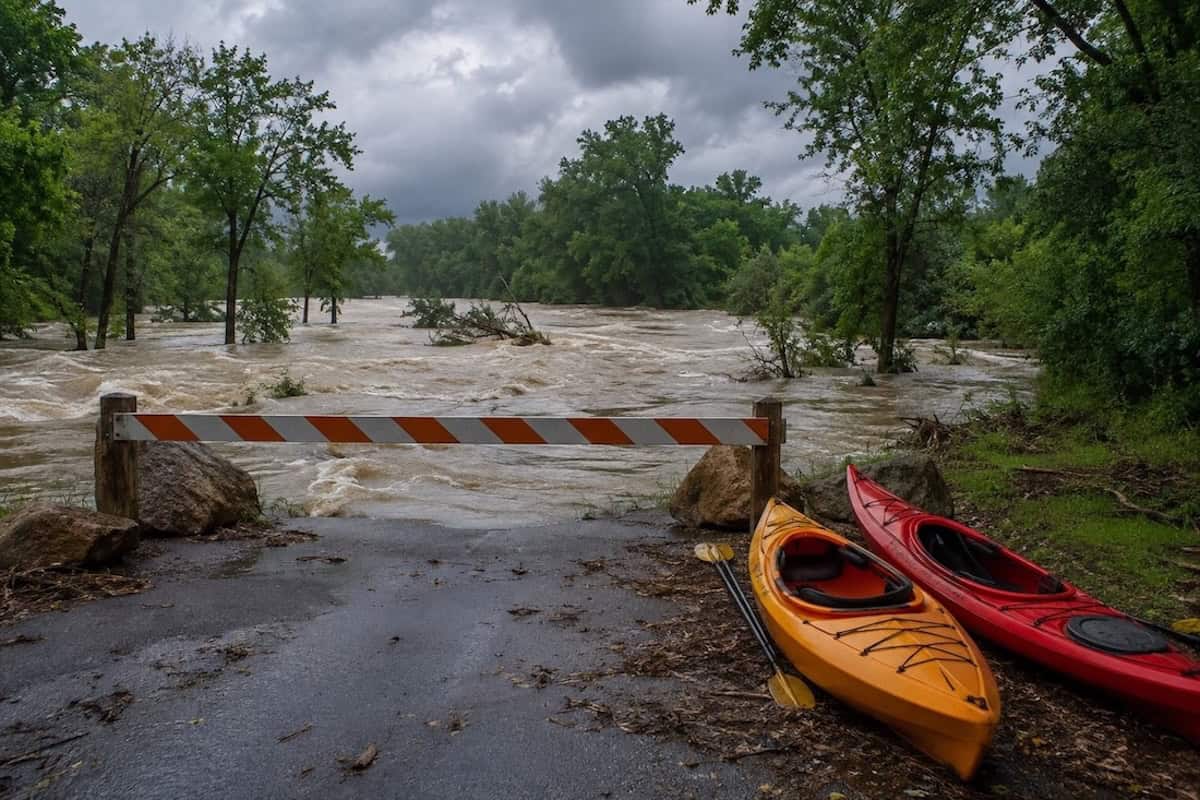
Image generated with Ai
White River travel restrictions are spreading as flooding disrupts river tourism in United States and across the world, creating new challenges for travellers seeking outdoor adventures. These travel restrictions are changing how visitors plan river tourism, while flooding is forcing destinations to reconsider access, safety and recreation. Across the world, river tourism faces growing uncertainty as extreme water conditions affect popular waterways and attractions. Therefore, travellers need reliable information before planning activities near rivers. Travel And Tour World urges readers to follow this developing story closely, understand why White River travel restrictions are spreading, and discover how flooding could reshape river tourism in United States and across the world for future journeys.
Hamilton County has prohibited recreational travel on the White River following historic flooding that pushed the river to a record level and damaged infrastructure across the region.
Advertisement
The emergency action is particularly important for travellers visiting Hamilton County, Carmel, Noblesville and surrounding communities for outdoor recreation.
The county’s restrictions prohibit recreational entry into the White River, making kayaking, canoeing, swimming, tubing and wading off-limits until further notice. Emergency management personnel and first responders are exempt.
Advertisement
Advertisement
The restriction follows a historic flood event. Hamilton County reported that the White River reached a record crest of 23.96 feet at the Noblesville gauge, exceeding the previous record of 23.8 feet established in 1913. County road-closure information separately recorded a 24.60-foot gauge reading at Logan Street during the peak flooding.
For travellers, the danger extends beyond visibly high water.
Flooding has altered parts of the river environment and damaged infrastructure. Hamilton County has warned residents and visitors to avoid high water while recovery continues.
One particularly concerning area is around Hazel Dell Parkway and 106th Street in Carmel, where flood damage has affected infrastructure and changed local water flows.
The situation means visitors should not assume that falling water levels indicate safe recreational conditions.
Strong currents, erosion, debris and damaged structures can remain dangerous even after floodwaters begin receding.
The emergency restrictions represent a major change for travellers who normally visit the White River for outdoor activities.
Hamilton County has extensive recreational facilities connected with the river. Its official campground information identifies fishing, hiking and canoe access among the available recreational opportunities at White River Campground.
However, tourists should distinguish between the availability of a destination and the safety of entering the river.
The county’s emergency measures take priority over normal recreational opportunities.
Travellers should therefore verify the latest official information before visiting river-access locations.
The flooding was severe enough to move Hamilton County into an emergency response.
County officials had warned earlier in August that rising White River levels could affect Riverwood, Clare, Strawtown, Riverbend, Trails End and other low-lying communities.
The river subsequently reached a historic crest, with the county confirming that the previous 1913 record had been exceeded.
For visitors, this means normal sightseeing plans may require adjustment.
Outdoor travellers should avoid attempting to reach closed river areas and should follow barricades and official instructions.
The restrictions do not mean travellers must cancel an entire Hamilton County visit.
Visitors can consider land-based attractions while authorities assess flood damage and infrastructure.
Carmel provides walking and cycling opportunities, including routes connected with the White River landscape. The city’s official trail information includes the White River Greenway and River Road-area recreational routes.
Hamilton County also promotes parks, trails, camping and other outdoor experiences.
Travellers should select activities that are officially confirmed as open and safe rather than approaching restricted waterways.
Anyone planning an Indiana trip should check Hamilton County’s official emergency updates before travelling to the White River area.
Kayaking, canoeing, swimming, tubing and wading should not be attempted while the prohibition remains active.
Tourists should also avoid damaged riverfront infrastructure and respect access closures.
The key message for international visitors is simple: do not treat receding floodwater as a signal that the river is safe.
Hamilton County’s White River remains an important outdoor attraction, but current conditions require travellers to put safety ahead of adventure. Official county updates should be checked again before any river-related activity is planned.
The White River restrictions in Hamilton County are part of a wider pattern seen across destinations where flooding, high water, debris and damaged infrastructure make normal recreation unsafe. Governments increasingly use temporary closures, navigation restrictions, park shutdowns and boating warnings to protect visitors during extreme weather. These measures can disrupt kayaking, canoeing, fishing, camping and riverside tourism, but they also prevent visitors from entering environments where hazards may be hidden below the water. The following examples show how different regions are managing similar risks and why international travellers should check official conditions before planning river-based activities.
| Destination | Government action or warning | Main visitor impact | Key official data |
|---|---|---|---|
| Hamilton County, Indiana, USA | Recreational White River travel prohibited during the emergency | Kayaking, canoeing, swimming, tubing and wading affected | River reached record levels during the 2026 flood emergency |
| Victoria, Australia | Flooded creeks and rivers closed or strongly discouraged for recreation | Boating, swimming and access to affected parks restricted | Authorities warn about debris, submerged trees and hidden hazards |
| River Thames, England | Navigation can be restricted or closed in specified sections | Boating itineraries and river navigation can change | Environment Agency updates restrictions and river conditions |
| Iowa, USA | State recreation areas can experience closures affecting boat ramps, trails and facilities | Outdoor trips may require alternative destinations | Iowa DNR maintains active park-alert information |
| Western Australia | Flood-damaged river and gorge infrastructure can trigger closures | Adventure tourism and access to attractions interrupted | Danggu Geikie Gorge National Park closed for debris-removal works |
| New Zealand | Flooding can close roads, river corridors and recreation areas | Access, camping and outdoor activities disrupted | Government identifies increasing pressure from extreme rainfall and flooding |
Victoria provides one of the clearest comparisons for travellers visiting Hamilton County. Victorian authorities specifically advise people not to swim, play or undertake recreational boating in flooded creeks and rivers. The warning is based on hazards that may remain invisible from the riverbank, including debris, damaged infrastructure, submerged trees and rapidly moving water. Parks Victoria has also reported temporary access-gate closures when river levels rise. Emergency Victoria warns motorists that only 15 centimetres of flowing floodwater can be enough to float a car, showing why road access can become part of the tourism problem.
The River Thames demonstrates that restrictions are not limited to wilderness rivers or flood emergencies. England’s Environment Agency maintains an official system covering navigation restrictions and closures along the Thames. Its guidance states that navigation can be restricted or closed in particular locations. Current river-condition information is updated regularly, while boaters are advised to check warning boards and speak with lock staff. For international visitors taking river cruises, hiring boats or planning independent navigation, this means an advertised waterway experience does not necessarily guarantee uninterrupted access on the day of travel.
Iowa provides another useful example because its Department of Natural Resources maintains a live system of state-park alerts. These notices can affect roads, trails, campgrounds and boat ramps. In August 2026, the Volga River State Recreation Area appeared in the state’s alert system, while other Iowa parks had closures or infrastructure restrictions. For travellers, the lesson is important: a river destination can remain attractive while individual facilities around it are temporarily inaccessible. Visitors should therefore check the exact park, ramp or trail rather than relying on a general statement that a destination is open.
Western Australia shows how river restrictions can continue beyond the immediate flood emergency. The Department of Biodiversity, Conservation and Attractions announced that Danggu Geikie Gorge National Park would close from August 7, 2026, while additional river-debris removal work was undertaken. This demonstrates an important tourism reality: falling water levels do not automatically mean that an attraction is safe. Debris removal, damaged roads, unstable riverbanks and repairs can extend closures well beyond the original weather event. Adventure travellers should therefore check reopening announcements before making long-distance journeys.
New Zealand is another significant comparison because government environmental assessments identify more frequent extreme rainfall and flooding as growing pressures on freshwater environments. The country’s Environment Ministry reports that extreme weather events, including floods, have cost the country billions of dollars over recent years. The government also estimates that Cyclone Gabrielle alone could require between NZ$700 million and NZ$1.1 billion in recovery costs for the food and fibre sector. Although these figures are not tourism-only losses, they demonstrate how flood events can affect regional economies, infrastructure and visitor access simultaneously.
The biggest consequence for destinations is often the knock-on effect rather than the closure itself. A prohibited river activity can affect guides, equipment rental companies, campgrounds, restaurants, accommodation providers, transport operators and attractions around the waterway. The Broads in England illustrates the scale of this relationship. The destination received around 7.2 million visitors in 2022, generating an estimated £456 million and directly supporting more than 4,999 full-time-equivalent jobs. Boating, canoeing, fishing, walking and wildlife experiences are among its visitor activities. A prolonged interruption to water-based tourism can therefore affect a much wider commercial ecosystem than the waterway alone.
The common thread across these destinations is risk management. Floodwater can carry branches, logs, vehicles, damaged structures and other debris. Riverbanks can become unstable, while water levels and currents may change faster than visitors expect. Victoria’s emergency authorities specifically warn that boating in floodwaters is dangerous because of debris and submerged trees. Victoria’s transport authorities have also warned boaters about hidden objects remaining after flooding, even when waterways reopen. These examples explain why authorities may keep restrictions in place after the most visible flooding has passed.
For tourists, river restrictions increasingly need to be treated as part of normal destination planning. Travellers should check government alerts immediately before departure, particularly when visiting during periods of heavy rainfall or flood warnings. They should never bypass barriers or enter restricted waterways simply because the area appears accessible. Flexible itineraries are particularly valuable for adventure tourism because hiking, museums, food experiences, cultural attractions and other land-based activities can replace cancelled river excursions. The wider global trend suggests that responsible river tourism will increasingly depend on real-time information, temporary closures and stronger visitor awareness as extreme weather creates more unpredictable conditions.
The rise of White River travel restrictions shows how quickly flooding can disrupt river tourism across the world. As extreme weather creates stronger currents, damaged infrastructure and unsafe waterways, destinations are placing traveller safety before recreation. From Indiana to other major river destinations, temporary closures can affect boating, kayaking, fishing, camping and local tourism businesses. Therefore, travellers should check official government alerts before visiting any river destination. Flexible travel plans can also help when attractions suddenly close. Travel And Tour World urges global travellers to stay informed, respect restrictions and choose safer alternatives while authorities assess changing river conditions.
Advertisement
Advertisement
Advertisement












Friday, September 4, 2026
Friday, September 4, 2026

Friday, September 4, 2026

Friday, September 4, 2026

Thursday, September 3, 2026

Wednesday, September 2, 2026

Friday, September 4, 2026

Friday, September 4, 2026


