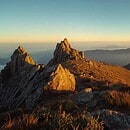

Image generated with Ai
Canada’s summer free-admission campaign entered the market after Lake O’Hara’s principal 2026 inventory windows had already opened or closed. Campground bookings began on 10 February, the public shuttle draw closed on 23 March and licensed-guide reservations opened on 1 April, while the renewed Canada Strong Pass was announced on 21 May. Free park admission therefore reduces entry costs but does not create shuttle seats, campsites or accommodation, producing a critical inventory gap for travellers and travel sellers.
Canada’s renewed national tourism incentive is creating an unusual commercial challenge at Lake O’Hara, one of the country’s most tightly managed wilderness destinations.
Advertisement
The Canada Strong Pass provides free admission to Parks Canada locations and a 25 per cent reduction on eligible camping and overnight accommodation between 19 June and 7 September 2026. The offer is available to Canadian and international visitors. However, the federal announcement was released on 21 May, only 29 days before the summer programme began.
By that stage, Lake O’Hara’s principal booking cycle was already well advanced.
Advertisement
The destination’s 30-site campground had opened for reservations 100 days earlier, on 10 February. Applications for the day-use shuttle random draw had closed 59 days earlier, on 23 March. Certified guides had received access to their reservation channel from 1 April, 50 days before the national campaign was announced.
This sequence establishes the central industry issue. The national campaign can stimulate fresh summer demand, but it cannot retroactively create inventory at a protected destination where capacity was allocated before the promotion entered the consumer market.2026 milestone Official date Timing against the federal announcement B2B travel significance Lake O’Hara campground booking launch 10 February 100 days earlier Core overnight inventory entered the market before the national promotion Public shuttle draw applications opened 2 March 80 days earlier Travellers needed to plan before the campaign was announced Public shuttle draw applications closed 23 March 59 days earlier New campaign-driven customers missed the main allocation window Licensed-guide reservations opened 1 April 50 days earlier Guide inventory was already exposed to advance trade demand Canada Strong Pass announced 21 May Reference date National demand stimulation began after key access decisions Free-admission period began 19 June 29 days later Campaign and Lake O’Hara shuttle seasons started together Free-admission period ends 7 September During shuttle season Normal admission returns while Lake O’Hara transport continues Lake O’Hara shuttle season ends 4 October 27 calendar days after free admission ends Late-season travellers must again account for park entry charges
The timing does not make the campaign ineffective. It does, however, expose a distribution flaw that agents, destination management companies and packaged-tour operators must recognise. Free national park entry can generate enquiries without guaranteeing the controlled transport needed to convert those enquiries into confirmed Lake O’Hara visits.
The Canada Strong Pass eliminates the general admission charge at Yoho National Park during the campaign period. It does not waive reservation charges, transport services, parking, third-party accommodation or separately priced programmes.
Parks Canada’s regular Yoho admission rates are C$12.25 for an adult, C$10.75 for a senior and C$24.50 for a family or group of up to seven people arriving in one vehicle. The commercial-group rate is C$10.42 per person. Those admission charges are removed during the Canada Strong Pass period, but Lake O’Hara’s C$25.50 return shuttle fare remains payable.
The day-use draw also carries a non-refundable C$10 application fee. Successful applicants must then pay the bus fare and the relevant reservation charge. Lake O’Hara’s online shuttle reservation, modification or cancellation fee is C$3.50, rising to C$5.50 for telephone transactions.
For a family of four completing a successful online shuttle booking through one draw application, the free-admission campaign removes the regular C$24.50 family entry cost. However, four shuttle seats total C$102, while the draw application and online reservation charges bring the access transaction to C$115.50 before accommodation, food, transfers or tour-operating margins.Lake O’Hara cost component Normal 2026 charge Canada Strong Pass treatment Commercial implication Yoho adult admission C$12.25 Waived from 19 June to 7 September Genuine saving but not the largest access cost Yoho family or group admission C$24.50 Waived during campaign Reduces gate cost for vehicle-based families Commercial group admission C$10.42 per person Free admission applies to all visitors Entry saving does not secure group transport Lake O’Hara return shuttle C$25.50 per person Still payable Principal transport cost remains Shuttle draw application C$10 per application Still payable and non-refundable Unsuccessful applications still create cost Online shuttle reservation fee C$3.50 Still payable Administrative fee remains outside promotion Telephone shuttle reservation fee C$5.50 Still payable Higher transaction cost for call-centre booking Parks Canada camping Published rate less 25 per cent where eligible Discounted Availability and administrative fees remain separate Lake O’Hara Lodge Third-party pricing Not included Requires an independent booking Elizabeth Parker Hut Third-party pricing Not included Separate Alpine Club reservation required
The savings message must therefore be presented precisely. Lake O’Hara becomes cheaper to enter at the national park level, but not freely or automatically accessible as a complete tourism experience.
Lake O’Hara’s defining tourism constraint is not its park gate. It is the 11-kilometre access road and the reservation-controlled bus system that carries visitors from the parking area into the alpine destination.
Only two inbound day-use departures are scheduled, at 8.30 am and 10.30 am. Outbound services operate at 9.30 am, 11.30 am, 2.30 pm, 4.30 pm and 6.30 pm. Day-use reservations can include no more than six people, with children counted within the booking. Cycling is prohibited on the road.
This effectively turns a natural attraction into a finite transport product. A visitor can receive free admission to Yoho National Park while remaining unable to obtain the essential mobility inventory needed for a practical day visit.
The public shuttle draw allows applicants to select a party size and rank up to six preferred inbound dates and times. Applications are selected randomly and can succeed only when enough seats remain for the entire requested party. An applicant seeking five seats cannot be placed into an inventory position containing only two available seats.
That mechanism creates particular difficulty for organised groups. Larger parties require a single block of contiguous availability, while smaller bookings can fit into fragmented capacity more easily. Operators designing family, luxury, small-group or escorted itineraries must therefore treat party size as an inventory-risk variable rather than merely a pricing consideration.
Lake O’Hara seats that remain unreserved after the random draw become available through standard booking channels. Further availability can emerge when existing customers modify, decline or cancel their plans. Reservations may be made until 3.30 pm on the day before travel when inventory is available.
This provides a tactical route for flexible independent travellers. It does not provide dependable forward inventory for a tour operator selling an international package weeks or months in advance.
A cancellation-led model requires repeated availability checks, rapid payment and flexible travel dates. It cannot reliably support fixed air tickets, prepaid hotel nights, ground transfers or guaranteed departure brochures.
Secondary resale cannot be used to solve the shortage. Parks Canada reservations cannot be resold and become void when resold. Operators must use authorised booking processes and comply with applicable guide, outfitter and business-licence requirements.
This creates an important product-design distinction. Lake O’Hara should not appear as a guaranteed itinerary component until the relevant shuttle, campground or authorised accommodation confirmation has been secured.
The first Canada Strong Pass programme produced a 13 per cent rise in visits to Parks Canada locations during 2025. That national result demonstrates that free entry can materially accelerate demand. The 2026 campaign is therefore entering a market with evidence of strong consumer response rather than operating as a symbolic discount.
Yoho National Park was already handling 694,867 visitors in 2023–2024, representing a 4.7 per cent annual increase. Kicking Horse frontcountry campground occupancy stood at 70.2 per cent, while the combined backcountry occupancy rate for Yoho and Little Yoho Valley reached 40 per cent.
Those broad occupancy figures must not be mistaken for Lake O’Hara availability. The destination contains only 30 campground sites and operates under its own access-allocation system. A park can have apparent accommodation capacity at aggregate level while its most recognisable individual experience remains unavailable.Demand and capacity indicator Official figure Correct interpretation Increase in Parks Canada visits during the 2025 pass 13 per cent Free admission can stimulate significant additional demand nationally Yoho visitation in 2023–2024 694,867 The park was already receiving substantial traffic Yoho annual visitation growth 4.7 per cent Demand was increasing before the renewed campaign Kicking Horse frontcountry occupancy 70.2 per cent Some general park camping capacity may remain available Yoho and Little Yoho backcountry occupancy 40 per cent Aggregate data does not represent Lake O’Hara scarcity Lake O’Hara campground supply 30 sites Destination-specific inventory remains structurally restricted Maximum Lake O’Hara camping stay Three consecutive nights Long stays cannot be used to increase package capacity Maximum campground bookings Two per household per season Repeat access is deliberately constrained
This distinction has revenue implications beyond Parks Canada. Travellers unable to secure Lake O’Hara access may still retain flights, hotels and vehicle hire in Alberta or British Columbia, but their spending may move towards alternative attractions. Poorly communicated packages can instead produce cancellations, complaints, refund exposure and diminished confidence in the seller.
Lake O’Hara’s restrictions are not temporary congestion measures. They form part of Yoho National Park’s long-term ecological and visitor-management strategy.
Approximately 1,256 square kilometres, or 97 per cent of Yoho National Park, has been legally declared wilderness. The management plan maintains bus-access quotas, area closures and voluntary trail restrictions at Lake O’Hara to protect alpine ecosystems and reduce disruption within wildlife corridors. The random draw is also being monitored as a possible model for other high-use locations.
The area contains additional controls after visitors arrive. Odaray Plateau remains seasonally closed from 1 May to 30 November. Use of the Odaray Highline Trail is voluntarily limited to four groups per day before 15 August, two groups daily from 16 August to 15 September and four groups daily from 16 September. These controls protect habitat used by species including grizzly bears and mountain goats.
Current conditions add another operational layer. Parks Canada’s 17 July update rated many principal Lake O’Hara trails as good, including Lake O’Hara Trail, the Opabin routes, Lake Oesa Trail and Lake McArthur High Level Trail. All Soul’s Alpine Traverse was not recommended because of avalanche danger and high-elevation snow, while Yukness Ledges and Odaray Grandview remained affected by snow-covered sections.
Free admission therefore cannot be interpreted as unrestricted access to every trail, route or landscape within the destination.
Visitors without a bus reservation may walk the 11-kilometre access road. A return journey requires 22 kilometres of road hiking before any additional Lake O’Hara trail is attempted.
Parks Canada requires road hikers to prepare with sufficient food, water, bear spray, suitable clothing and appropriate footwear. Cycling is prohibited, and camping outside the designated reservation-only campground is not permitted.
The walking option keeps pedestrian access technically available, but it is unsuitable as a standard substitute for many families, older travellers, time-constrained international visitors or clients expecting a moderate sightseeing excursion.Access method Advance booking Capacity constraint Main traveller consideration Day-use shuttle Required Random draw and remaining seats Most practical option but cannot be guaranteed Lake O’Hara campground Required 30 sites and three-night maximum Includes controlled overnight access Elizabeth Parker Hut Required through third party Separate operator inventory Not covered by free-admission benefit Lake O’Hara Lodge Required through third party Private accommodation availability Independent pricing and booking conditions Walking the access road No shuttle booking required Physical ability and daylight 22-kilometre return before additional hiking
Canada’s 2026 campaign demonstrates that affordability and availability have become separate components of national park tourism.
Removing admission charges can broaden interest, encourage domestic travel and improve the perceived value of Canadian itineraries. It cannot expand fragile alpine landscapes, add unrestricted transport or override conservation thresholds.
Lake O’Hara consequently offers a preview of a wider international tourism model. Popular natural attractions are increasingly likely to combine lower or subsidised entry costs with tightly controlled transport, timed reservations, visitor quotas and destination-specific inventory systems.
For the travel industry, future competitiveness will depend less on advertising nominally free access and more on controlling the reservation layers that make access operationally possible. At Lake O’Hara, the most valuable tourism product in summer 2026 is not the waived park ticket. It is the scarce, confirmed seat that turns national promotion into an achievable wilderness experience.
Advertisement
Tags: Canada free national park admission, Canada national park travel, Canada Strong Pass 2026, Canadian Rockies sustainable tourism, Lake O’Hara booking rules
Advertisement
Advertisement













Friday, September 4, 2026

Friday, September 4, 2026
Friday, September 4, 2026

Thursday, September 3, 2026

Wednesday, September 2, 2026

Friday, September 4, 2026
Friday, September 4, 2026