
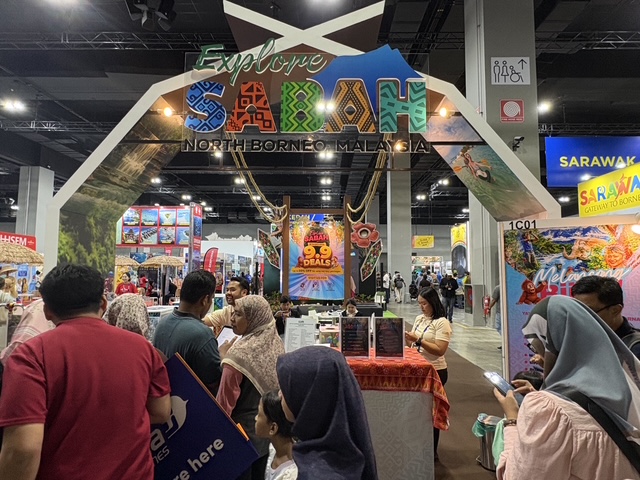
Malaysia’s travel industry is turning its attention to Kuala Lumpur this weekend as the 59th National MATTA Fair opens at the Malaysia International Trade and Exhibition Centre (MITEC), bringing airlines, tour operators, tourism organisations, hotels, attractions and travel businesses together under one roof.
Running from 4 to 6 September 2026, the event is expected to attract between 150,000 and 180,000 visitors, underlining the scale of Malaysia’s outbound and domestic travel market.
Advertisement
With more than 2,026 booths across 10 exhibition halls and over 40,820 square metres of exhibition space, the latest MATTA Fair is considerably more than a conventional holiday-shopping event. It provides a snapshot of where Malaysian travellers are looking to go, which destinations are increasing their presence and how airlines and tourism companies are competing for consumers.
he countries/destinations represented at the fair include:
Advertisement
The Malaysian Association of Tour and Travel Agents (MATTA) has positioned its national fair as a major consumer travel marketplace, allowing visitors to explore and purchase travel products directly from participating businesses.
The September edition features 285 participating companies, covering a broad range of travel services and destinations.
For consumers, this means the fair brings together products that would normally require separate searches across airline websites, travel agencies, hotels and destination websites.
Visitors can compare international and domestic holiday packages, air travel, accommodation, tours, attractions and other travel-related offers while speaking directly with industry representatives.
The fair is open to the public free of charge, with operating hours from 10am to 9pm daily.
That accessibility is significant. Rather than positioning travel planning exclusively as an online transaction, MATTA Fair creates a physical marketplace where consumers can ask questions, compare itineraries and discuss holiday options before committing to a purchase.
One of the clearest signals from this year’s event is the continued strength of Malaysia’s domestic tourism market.
According to MATTA, the domestic tourism section of the fair has been fully booked, with a waiting list.
That demand indicates that Malaysian tourism businesses continue to see value in meeting consumers face-to-face, even as digital booking platforms dominate much of the travel-purchasing process.
Domestic travel also remains strategically important because it spreads tourism spending across different parts of the country rather than concentrating demand solely on international destinations.
For Malaysian travellers, the domestic section offers an opportunity to discover destinations, hotels, resorts, attractions and experiences within the country, potentially encouraging more frequent short breaks alongside larger overseas holidays.
Among the international destinations participating, Taiwan has been selected as MATTA Fair’s “International Favourite Destination” for the September 2026 edition.
The decision reflects the strong tourism relationship between Malaysia and Taiwan.
Taiwan recorded 8.575 million international visitor arrivals in 2025, while Malaysian travellers accounted for 424,094 arrivals, making Malaysia an important regional source market.
At the same time, more than 390,000 Taiwanese visitors travelled to Malaysia in 2025, highlighting the two-way nature of tourism between the markets.
Taiwan’s prominent position at MATTA Fair therefore has implications beyond destination marketing. It demonstrates how tourism boards are using major consumer events to strengthen destination awareness and convert traveller interest into actual bookings.
For Malaysian consumers, Taiwan also offers a combination of city tourism, food, culture, nature, shopping and seasonal experiences that can be packaged across different price points.
Another development worth watching is the stronger representation of Central Asian destinations.
MATTA Fair 2026 includes destinations such as Uzbekistan and Almaty in Kazakhstan, alongside established markets including Japan, South Korea, China and Indonesia.
Central Asia has increasingly attracted attention from international tourism markets because of its combination of historic cities, distinctive landscapes, cultural heritage and comparatively different travel experiences.
Uzbekistan, for example, offers access to historic destinations associated with the Silk Road, including Samarkand, Bukhara and Khiva. Kazakhstan provides a different proposition, combining modern urban experiences in Almaty with mountain landscapes and outdoor tourism.
Their presence at a major Malaysian consumer travel fair is significant because tourism growth often begins with destination visibility. Consumers cannot easily consider a destination they have never encountered through travel agencies, airlines, tourism campaigns or media coverage.
MATTA Fair provides those destinations with direct access to potential travellers at the moment they are actively considering their next holiday.
The growing interest in less traditional destinations does not mean established Asian markets are losing their appeal.
Japan, South Korea and China continue to feature prominently among the destinations represented at the fair.
These markets benefit from strong awareness among Malaysian travellers and established air connectivity. They also offer diverse tourism products, ranging from major cities and shopping to food, culture, nature and seasonal travel.
The continued presence of these destinations alongside newer markets illustrates an important characteristic of the current travel environment: consumers are not necessarily replacing familiar destinations with emerging ones.
Instead, the market is broadening.
Travellers may continue returning to destinations they already know while also becoming increasingly willing to consider new regions and experiences.
Aviation is another central component of MATTA Fair 2026.
Malaysia Aviation Group (MAG) is serving as the Official Airline Partner and Premier Sponsor, with participation from several brands and businesses across its wider travel ecosystem.
These include Malaysia Airlines, Firefly, Amal, Enrich, Journify and MHholidays.
The group is also presenting the MAG Arena, which spans more than 46,000 square feet and includes 60 booths.
The scale of the airline presence highlights the increasingly close relationship between aviation and tourism distribution.
Airlines are no longer simply selling seats. They are using loyalty programmes, holiday packages, destination marketing, travel platforms and ancillary products to capture a larger share of the traveller’s journey.
Travel fairs provide an effective environment for this strategy because consumers arrive with a clear travel intention.
A visitor researching Japan, Taiwan or Central Asia may be interested not only in the destination but also in flight schedules, fares, connections, loyalty benefits and bundled holiday products.
Price and promotional offers remain among the strongest reasons consumers visit large travel fairs.
MATTA Fair brings together airlines, travel agencies and tourism businesses in an environment where travellers can compare different products and potentially secure promotional rates.
The fair is also bringing back its Buyers’ Contest. Consumers spending RM100 at the event qualify for an entry, creating an additional incentive to complete purchases during the fair.
However, travellers should not assume that every fair promotion automatically represents the lowest possible price.
A sensible approach is to compare the total package cost, including flights, accommodation, transfers, baggage, meals, cancellation conditions and other inclusions.
The headline price is only one part of the value equation.
The growth of travel marketplaces also makes consumer protection increasingly relevant.
MATTA has highlighted the importance of purchasing travel services through licensed travel agents, particularly against the background of concerns about scams involving unlicensed operators.
This is an important issue for consumers because travel purchases are often made months before the actual journey. A problem with an unverified operator can therefore emerge long after money has been transferred.
Travellers should check the credentials of the company they are dealing with, understand what is included in a package and retain receipts, booking confirmations and other documentation.
A face-to-face travel fair can provide useful access to established industry businesses, but normal consumer due diligence still matters.
Getting to MITEC is another consideration for visitors, particularly because a large event can create additional traffic around the venue.
Rapid KL is operating a free shuttle service between KL Sentral and MITEC during the fair, with services running throughout the three-day event.
The reported operating period is approximately 8am to 10pm, with buses running at intervals of around five to 10 minutes depending on traffic conditions.
For visitors arriving by train or connecting through central Kuala Lumpur, the shuttle provides an alternative to driving directly to the exhibition centre.
Given the expected visitor numbers, using public transport and shuttle services could also make the overall experience more predictable.
The significance of MATTA Fair 2026 extends beyond the three-day exhibition.
Its scale reflects a Malaysian travel market that is becoming more diverse, competitive and experience-driven.
Domestic tourism remains strong, while established international destinations continue to attract consumers. At the same time, tourism boards and travel companies are introducing Malaysian travellers to markets that have traditionally received less attention.
The growing visibility of Uzbekistan and Kazakhstan, the international focus on Taiwan, and the continued strength of destinations such as Japan and South Korea all point towards a broader outbound travel landscape.
Airlines are responding by strengthening their consumer-facing presence, while travel agencies are using physical engagement to complement online booking channels.
For the industry, that combination creates an important opportunity: convert growing travel interest into actual bookings while helping consumers make better-informed decisions.
The 59th National MATTA Fair demonstrates how travel fairs continue to matter even in an era dominated by digital booking.
With 2,026 booths, 285 participating companies, 10 exhibition halls and potentially up to 180,000 visitors, the event provides an unusually concentrated view of consumer travel demand.
Its most revealing feature may not be the sheer number of exhibitors, however. It is the range of destinations and products competing for the attention of Malaysian travellers.
From domestic escapes and established Asian favourites to Taiwan and emerging Central Asian markets, the choices available to consumers are expanding.
For the travel industry, MATTA Fair therefore serves two purposes at once: it is a major sales platform and a useful indicator of where Malaysian travel demand is heading.
As travellers become more experienced and more selective, destinations and companies that can combine competitive value, reliable connectivity, distinctive experiences and trusted service are likely to have the strongest opportunity to turn curiosity into bookings.
Advertisement
Advertisement
Advertisement













Friday, September 4, 2026

Friday, September 4, 2026

Friday, September 4, 2026

Thursday, September 3, 2026

Wednesday, September 2, 2026

Friday, September 4, 2026

Friday, September 4, 2026