
Palau Tourism Growth Meets Kayangel’s Biweekly September Boat Access as National Visitor Goals Rise

Updated
Published
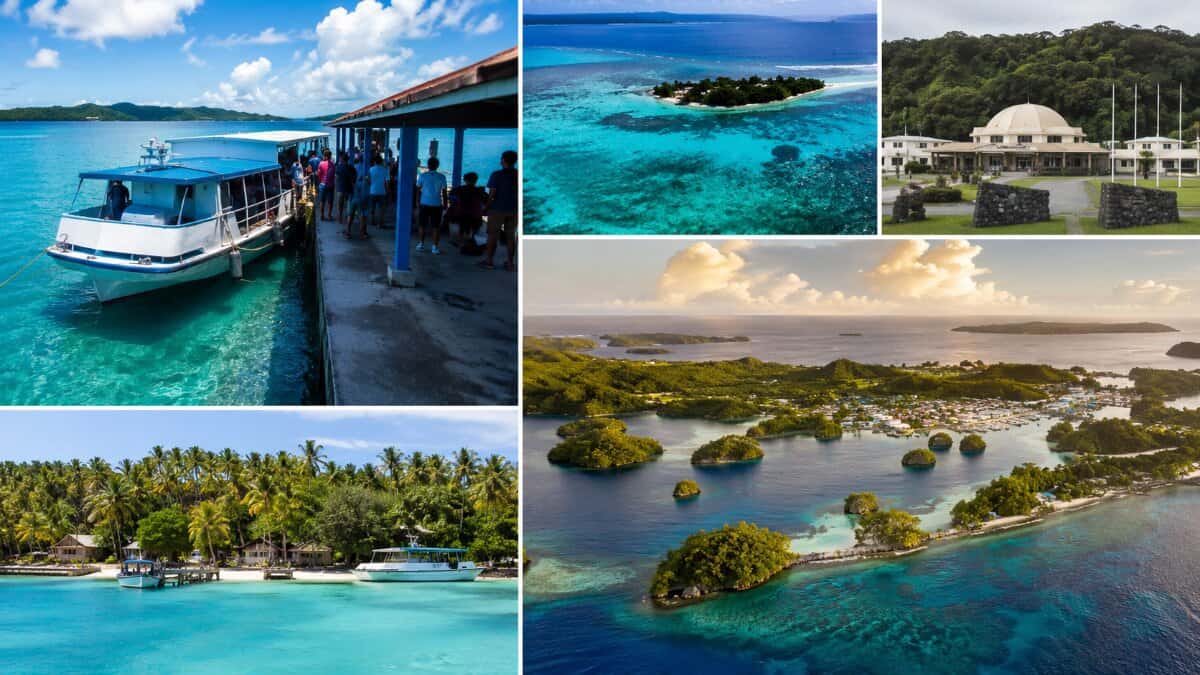
Image generated with Ai
Palau’s accelerating tourism recovery is exposing a previously overlooked destination-management issue: getting visitors into its smallest outer-island tourism areas may become harder than getting them into the country. Palau welcomed 51,040 visitors between January and July 2026, 27% more than a year earlier, yet Kayangel’s public state-boat service remains biweekly, with the September visitor pattern centred on departures from Koror on 4 and 18 September and weekend returns on 6 and 20 September. The mismatch makes Kayangel a real-world test of how Palau can disperse tourism without overwhelming small-island infrastructure.
Palau tourism recovery is making last-mile access the next strategic question
Palau’s tourism recovery has strengthened significantly during 2026. According to the Palau Visitors Authority July 2026 Visitor Arrival Report, January–July arrivals reached 51,040, compared with 40,339 in the same seven months of 2025. Japan increased 80%, Australia 68%, South Korea 57% and China 46%, while Europe rose 11%. China remained the largest source market with 18,394 arrivals, followed by Taiwan with 8,524, USA and Canada with 7,032, and Japan with 6,998.
Advertisement
Advertisement
July alone generated 6,963 visitors, recovering from 5,925 in June and standing about 15% above July 2025. The significance is not simply that Palau is attracting more travellers. Demand is broadening across several markets at the same time that the country is attempting to develop tourism beyond its heavily established Koror base.
According to the Republic of Palau Development Plan 2023–2026, Koror State remains the country’s main tourism destination and possesses developed hotels, restaurants, tour operations, retail businesses, utilities and supporting infrastructure. The same national plan explicitly records that other states do not possess tourism infrastructure on an equivalent scale.
Advertisement
Advertisement
That difference places Kayangel at the centre of an important question for Palau tourism: can visitor spending be dispersed geographically without simply transferring congestion, infrastructure pressure and environmental risk from established tourism centres to much smaller communities?
Advertisement
Advertisement
Kayangel’s September boat calendar creates a natural tourism capacity gate
According to the Palau Visitors Authority’s official Kayangel state-boat information, the service operates biweekly around paydays. Its visitor itinerary provides for a Friday departure from Koror at 09:00, reaching Kayangel at approximately 10:45. A same-day option departs Kayangel for Koror at 13:00, while the three-day itinerary returns from Kayangel at 09:00 on Sunday.
For September 2026, the relevant weekend patterns fall on 4–6 September and 18–20 September. A tourist one-way journey is listed at US$20, while the Friday-to-Sunday return arrangement costs US$40. Seat reservation is required, with payment used to confirm the booking through the Kayangel State office in Koror.
| Kayangel public-access indicator | September 2026 position | Tourism significance |
|---|---|---|
| Operating pattern | Biweekly, tied to paydays | Public access cannot simply expand with daily tourism demand |
| Principal Friday departures from Koror | 4 and 18 September | Only two scheduled weekend entry opportunities during the month |
| Weekend return dates | 6 and 20 September | Itineraries must be built around fixed return windows |
| Koror departure | 09:00 | Requires precise pre-trip scheduling |
| Indicative arrival | 10:45 | Approximately 1 hour 45 minutes of marine transfer time |
| Same-day Kayangel departure | 13:00 | Leaves an approximately 2 hour 15 minute scheduled island window |
| Tourist one-way fare | US$20 | Public transport remains significantly different from bespoke charter touring |
| Tourist weekend return | US$40 | Makes slow, community-based overnight dispersal commercially conceivable |
Official schedule and pricing: Palau Visitors Authority.
Advertisement
Advertisement
The crucial distinction is that the publicly available source does not publish passenger seat capacity. It would therefore be inaccurate to claim a specific numerical tourism ceiling. What it does establish beyond doubt is extremely low service frequency, which itself limits how quickly visitor demand can be transferred from Koror into Kayangel.
Palau’s expanding gateway network contrasts sharply with outer-island frequency
The international side of Palau’s transport system has moved in the opposite direction. The July PVA report recorded 10 United Airlines services per week, comprising six from Guam, two from Manila and two direct Tokyo Narita services. China Airlines was operating four weekly Taiwan services, Cambodia Airways two charter flights from Macau, Hong Kong Airlines two from Hong Kong, Qantas one weekly Brisbane service and Philippine Airlines two Manila frequencies.
Advertisement
Advertisement
Those carriers alone account for at least 21 weekly international services where PVA specifies a frequency, before considering other operations for which the report does not provide a directly comparable weekly number. The current Palau International Airport website also lists September 2026 schedules and identifies connections involving Guam, Manila, Narita, Brisbane, Macau, Hong Kong and Taipei, while warning that timetables can change.
| International gateway indicator | Latest official position |
|---|---|
| United Airlines | 10 services weekly |
| China Airlines | 4 weekly |
| Cambodia Airways | 2 weekly charters |
| Hong Kong Airlines | 2 weekly charters |
| Qantas | 1 weekly |
| Philippine Airlines | 2 weekly |
| Frequencies explicitly quantified above | At least 21 weekly |
| Kayangel state-boat pattern | Biweekly |
Sources: Palau Visitors Authority and Palau International Airport Corporation
The comparison should not be interpreted as equal transport capacity: an international aircraft and an outer-island utility vessel perform completely different functions. It does, however, reveal the structural issue facing destination dispersal. Palau can increase international accessibility much faster than it can increase access to its smallest tourism communities.
First-time leisure demand makes the Kayangel question more immediate
Palau’s July entry-form dataset adds another layer. It covered 6,608 tourist entries, a slightly different dataset from the 6,963 total monthly visitor arrivals. Within that entry-form population, 80% were first-time visitors and only 20% were repeat travellers. Leisure or holiday travel accounted for 88.3%.
Swimming and snorkelling ranked as the leading reported activity, followed by sightseeing, scuba diving, shopping and cultural or historical touring. Tour agents were also the largest booking channel in the entry-form breakdown, ahead of self-booking.
Advertisement
Advertisement
Those characteristics matter to the trade because Kayangel is precisely the type of remote marine product that could appeal to travellers seeking snorkelling, beaches, fishing and lower-density nature experiences. Yet it cannot currently be treated as an unlimited extension to a standard Koror itinerary.
PVA describes Kayangel as approximately 1.78 square kilometres, around 25 miles north of the tip of Babeldaob, and notes that only a handful of visitors traditionally explore the atoll because of its distance from the principal urban tourism area.
A community of 41 shows why visitor dispersal needs more than marketing
The latest Republic of Palau census figure available by state reinforces the scale difference. According to the government’s Population Census data, Kayangel had just 41 residents in the 2020 Census, down from 54 in 2015 and 188 in 2005. Koror, by comparison, recorded 11,400 residents in 2020.
This does not mean 51,040 national visitors travelled to Kayangel. They did not. National arrivals must never be converted into a Kayangel visitor-to-resident ratio without destination-level visitation statistics.
Instead, the census illustrates the operational scale of the host community. Even comparatively small tourism flows can have a different effect in a settlement measured in dozens of residents rather than thousands. Water, waste, accommodation, guiding, food supply, emergency response, marine safety and community tolerance therefore become part of product capacity.
Advertisement
Advertisement
This concern is already recognised institutionally. In January 2026, PVA carried out a three-day assessment of Kayangel’s beaches, natural attractions and available visitor accommodation, specifically as part of work supporting sustainable tourism development and visitor-experience quality across Palau’s states.
Government policy turns Kayangel into a real carrying-capacity experiment
According to the Republic of Palau Responsible Tourism Framework, national tourism management should establish sustainable carrying-capacity ranges, monitor monthly and peak visitor numbers at tourism sites, measure the percentage of capacity being used and identify instances where limits are reached or exceeded.
That policy connection makes Kayangel more significant than a ferry-timetable story. The state boat currently acts as an informal demand regulator. It restricts public accessibility through frequency before hotels, beaches or natural sites can experience the volumes seen in established visitor centres.
The Palau Development Plan adds another layer. Its economy-wide target calls for visitor arrivals to exceed 100,000 by the end of 2026, while its tourism-sector framework aims ultimately to recover to 150,000 value-adding visitors, with the sector monitoring plan targeting 150,000 by the end of FY2027. The plan simultaneously stresses community benefits and infrastructure standards.
Ngerulmud therefore enters this story not as a tourism gateway but as Palau’s national capital and the policy centre behind a much larger strategic challenge: growth must be converted into value without allowing national arrival targets to dictate inappropriate volumes for every individual state.
Advertisement
Advertisement
The overlooked infrastructure clue lies in Palau’s marine transport plan
The marine-transport section of the Palau Development Plan provides perhaps the strongest evidence for the new angle. It records that local maritime services carry passengers and cargo to states not connected to Koror by road and also support tourism.
At the time of the plan’s infrastructure assessment, Kayangel State Government was using one 29-foot and one 38-foot open utility boat. The plan also identified broader issues around maintenance costs, staffing and the need for more efficient purpose-built maritime transport.
This does not establish the precise vessels operating on every September 2026 sailing. It does establish that Kayangel’s marine-access baseline is fundamentally different from a high-capacity scheduled ferry network.
For the travel trade, this is the crucial information gain: Kayangel should currently be sold as scarce tourism inventory, not simply as another destination to which demand can be diverted.
Critical operational takeaways for travel agents and tour operators
- Reserve before building the itinerary: Kayangel public transport should be confirmed before hotels, international flights or onward activities are structured around the island.
- Use 4–6 and 18–20 September as the core public-boat windows: travellers requiring dates outside those patterns need separately verified transport arrangements.
- Do not advertise unpublished seat capacity: PVA publishes frequency and reservation procedures but not a public numerical passenger ceiling.
- Build schedule buffers: the public itinerary is fixed around marine transfer windows, and operators should avoid tight international connections immediately after outer-island travel.
- Treat overnight tourism as capacity-sensitive: accommodation, food, guiding and local services should be confirmed before adding volume.
- Avoid turning dispersal into displacement: moving large numbers away from Koror only works sustainably where destination infrastructure and community capacity can absorb them.
- Check September flight schedules independently: Palau International Airport states that schedules may change without notice.
- Prioritise high-value, low-volume products: guided marine experiences, longer stays and community-linked spending are more consistent with Palau’s official tourism policy than rapid volume expansion.
What happens next for Palau tourism
Kayangel could become one of the clearest demonstrations of whether small-island destinations can expand tourism economically without copying the high-volume model of their principal gateway.
Advertisement
Advertisement
Palau’s recovery is now sufficiently strong for this issue to matter. International connectivity has broadened, January–July arrivals are up 27%, first-time leisure demand remains substantial, and national planning targets contemplate materially higher annual visitor volumes. Yet Kayangel remains small, remote and dependent on limited marine transport.
The strategic opportunity is therefore not automatically adding boats. It is building a reservation-led system in which transport inventory, accommodation, community services, environmental monitoring and visitor experiences expand in sequence.
If Palau succeeds Kayangel could become a model for controlled destination dispersal across vulnerable island economies with international tourism growth reaching smaller communities without requiring those communities to become mass destinations themselves. That is the larger significance of the September 2026 boat schedule and why this seemingly small transport detail now deserves attention across the tourism industry.
Advertisement
