

Flights Cancelled Over Middle East As Dubai, Sharjah, and 10 Others Record 83 Cancellations And 1,185 Delays

Published
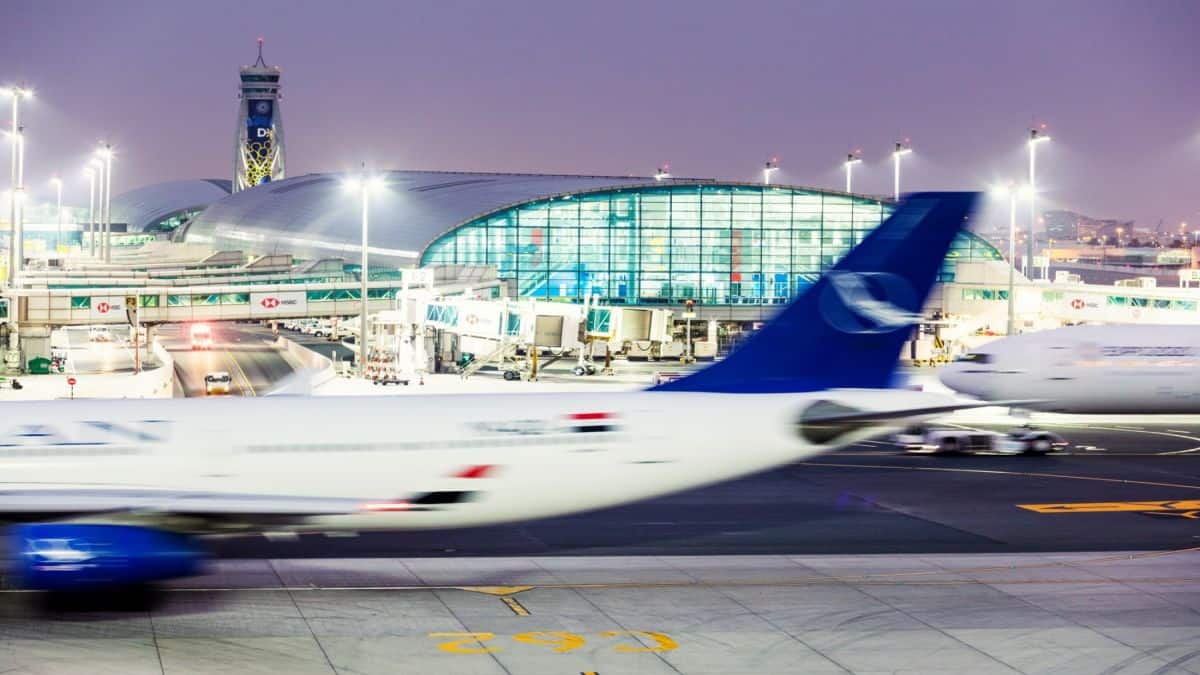
Air travel across the Middle East has been hit by a wave of disruptions, resulting in 1,185 flight delays and 83 cancellations across the region’s most critical transit hubs.
The cascading delays impacted major gateways in the UAE, Saudi Arabia, Egypt, Qatar, and Bahrain. Riyadh‘s King Khalid International Airport and Dubai International Airport (DXB) were the hardest hit, leaving hundreds of passengers disrupted.
Because Middle Eastern super-hubs operate on tightly packed, 24-hour schedules, a disruption at one major airport rapidly creates a domino effect across the region, heavily impacting fleet availability and crew rotations.
The Worst-Hit Airports: Where the Bottlenecks Happened
Riyadh and Dubai suffered the heaviest operational hits in the Middle East, with nearly a third of all flights experiencing departure or arrival delays.
| Airport | Total Delays | Cancellations | Delay Rate (Arr / Dep) | Impacted Airlines |
| Riyadh (King Khalid) | 263 | 18 | 36% / 30% | Saudia (102 delays), flynas (55), flyadeal (44) |
| Dubai (DXB) | 221 | 19 | 19% / 22% | Emirates (85 delays), flydubai (73) |
| Jeddah (King Abdulaziz) | 158 | 7 | 23% / 16% | Saudia (56 delays), flynas (29), flyadeal (25) |
| Abu Dhabi (Zayed International) | 139 | 2 | — | Etihad (100 delays), Air Arabia (19) |
| Doha (Hamad) | 135 | 3 | — / 22% | Qatar Airways (110 delays) |
| Cairo | 118 | 3 | 17% / — | EgyptAir (53 delays), Air Cairo (13) |
| Sharjah | 98 | 2 | — | Air Arabia (92 delays) |
| Abha | 36 | 8 | 55% / 22%* | flyadeal (18 delays), Saudia (10) |
*Abha also recorded a 12% departure cancellation rate.
Airlines Most Affected by the Disruptions
Saudia took the heaviest operational blow, recording 182 delays and 29 outright cancellations—making up over 30% of the region’s total scrapped flights.
Advertisement
Advertisement
Qatar Airways and Etihad Airways also saw significant schedule breakdowns at their respective hubs in Doha and Abu Dhabi, though both airlines managed to avoid high cancellation numbers, instead delaying flights. Low-cost carriers like Air Arabia (99 delays), flynas (99 delays), and flyadeal (91 delays) also struggled to maintain their rapid turnaround times. Gulf Air, meanwhile, was forced to cancel 20 of its services.
What Should Impacted Passengers Do?
If you are flying through the Middle East this week, standard boilerplate advice won’t cut it. Here is exactly how to protect your journey and your wallet:
Advertisement
Advertisement
- Know Your Regional Rights: If you are flying from Saudi Arabia, check the General Authority of Civil Aviation‘s passenger-rights regulations, which set out provisions for alternative flights, refunds, care, support and compensation in specified cancellation and delay circumstances.
- Beware the “Connecting Flight” Trap: If your first leg (e.g., London to Dubai) is delayed, and you miss your connection to Asia on the same ticket, the airline is legally obligated to rebook you. However, if you booked two separate tickets on different airlines, you will be considered a “no-show” for the second flight.
- Skip the Line, Use the App: Do not stand in a 300-person line at the airport customer service desk. Rebooking systems on the Saudia, Emirates, and Qatar Airways mobile apps process alternative routing.
- Save Every Receipt: If you are forced to book a hotel or buy meals due to a delay exceeding 4 to 6 hours, keep itemized receipts. Many major Middle Eastern carriers will reimburse reasonable duty-of-care expenses if the delay was within their operational control.
Yesterday also recorded notable flight cancellations. Read our previous coverage here.
The data has been carefully compiled by our editorial team using real-time aviation figures recorded on 8 October 2026 at 5:33 pm ET USA (3:03 am IST).
Primary Source: FlightAware.
Verification Protocol: All statistics have undergone independent review and cross-checking by our human editorial desk. Timestamped records, data logs, and feed snapshots are securely archived internally to support historical accuracy and editorial transparency.
Note: Real-time flight-tracking figures reflect active airspace and operational data. Minor variations may occur when these figures are compared with information displayed at individual airport terminals or airline departure gates.
Travelers are advised to verify the latest flight status, schedule changes, and operational updates directly with their respective airlines and airports.
Advertisement
Verified by Somudranil Sarkar
