
Middle East Travel Disruption Swept across Doha, Jeddah and More Airports with 131 Cancellations and 1,692 Delayed Flights

Published
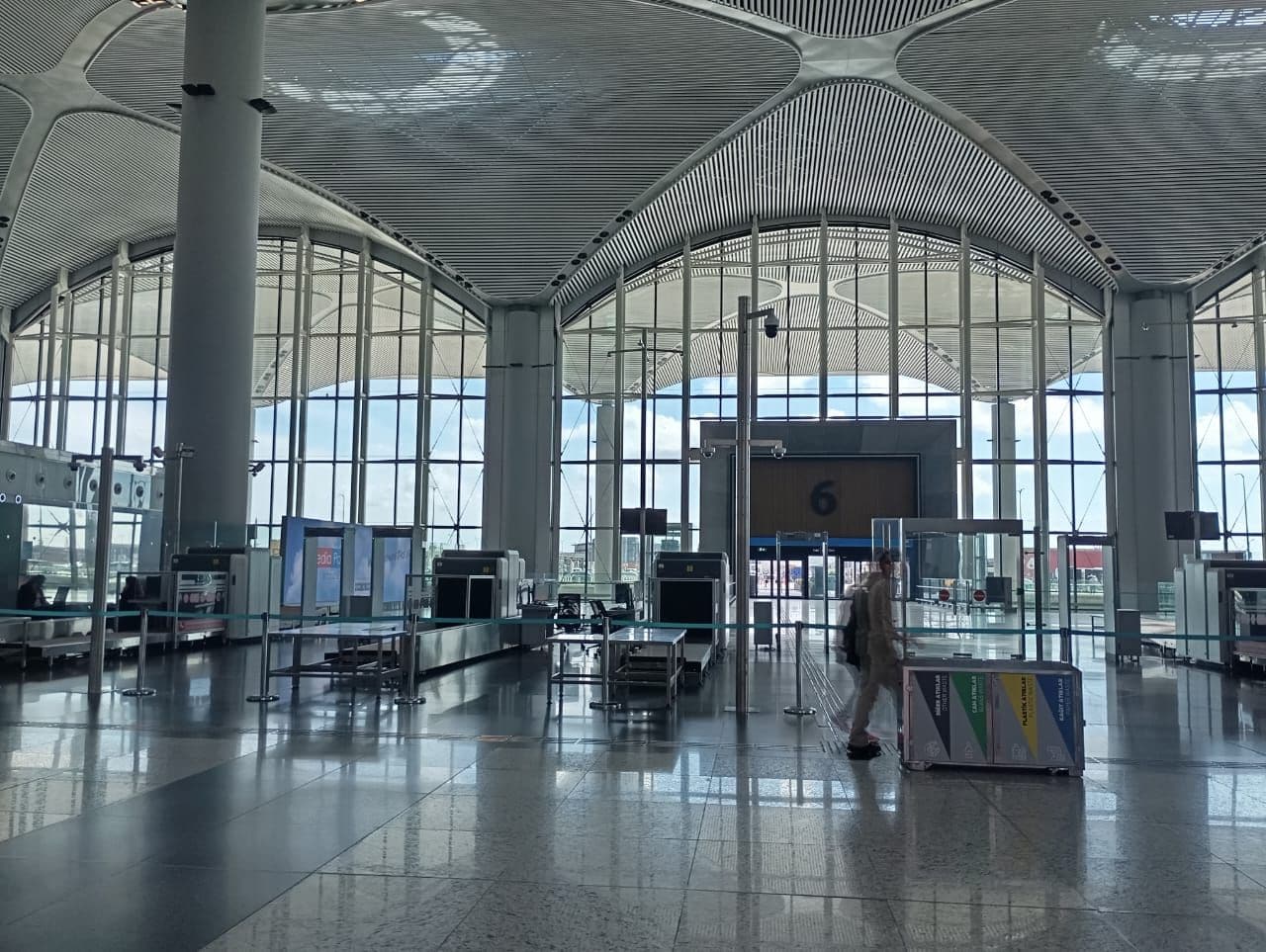
Travel in the Middle East has been severely disrupted at Doha, Jeddah, and other airports; major aviation hubs have had 131 cancellations and 1,692 delayed flights. The interruption occurs at a time when airline operations are under additional pressure due to airspace limitations, flight rerouting, and regional security issues. Additionally, as carriers continue to modify schedules around the area, recent attacks on Saudi airports have created additional operational difficulties. Airports in Doha, Jeddah, Riyadh, Dubai, Abu Dhabi, Cairo, Istanbul, and other places have reported delays or cancellations. Restricted routes, on the other hand, may compel planes to take longer routes, which would interfere with crew schedules and aircraft rotations. As airlines react to shifting airspace restrictions and ongoing regional operating difficulties, travelers passing through the Middle East should keep a careful eye on flight updates.
Which Airports of Middle East Are Facing the Biggest Travel Disruption?
King Khalid International Airport in Riyadh stands out with 354 delayed flights and 25 cancellations, making it the most heavily delayed airport in the supplied data. This could have wider consequences because Riyadh connects domestic Saudi routes with numerous regional and international services.
Advertisement
Advertisement
Saudi Arabia’s King Abdulaziz International Airport in Jeddah has recorded another 162 delays and 11 cancellations. Meanwhile, King Fahd International Airport has 47 delays and two cancellations.
Smaller Saudi airports show a different pattern. Abha Regional Airport has 21 delays but as many as 19 cancellations. Gizan Regional Airport has three cancellations and no reported delays, while Najran Domestic Airport has four cancellations and zero delays. Yanbu Domestic Airport similarly reports four cancellations without any delays.
Advertisement
Advertisement
Together, these figures show that disruption is affecting both major Saudi gateways and smaller domestic airports.
Dubai, Abu Dhabi and Sharjah Face Significant Delays
The United Arab Emirates is another major pressure point.
Advertisement
Advertisement
Dubai International Airport has recorded 197 delays and 27 cancellations, giving it the highest cancellation count among the listed airports. As Dubai functions as one of Asia’s most important international connecting hubs, passengers travelling beyond the UAE could also encounter disrupted connections.
Abu Dhabi International Airport reports 108 delays and four cancellations, while Sharjah International Airport has recorded 101 delays and one cancellation.
Advertisement
Advertisement
This means all three major UAE gateways included in the data are experiencing disruption, although delays substantially outnumber cancellations at Abu Dhabi and Sharjah.
How Are Doha, Bahrain, Israel, Jordan and Other Regional Hubs Affected?
At Hamad International Airport in Doha, the supplied figures show 130 delays and one cancellation. Doha therefore appears primarily affected by delays rather than widespread cancellations.
Bahrain International Airport has a smaller number of delays, at 24, but a comparatively notable 13 cancellations.
Israel’s Ben Gurion International Airport has recorded 201 delays and three cancellations, giving it the second-highest number of delays among the airports listed after Riyadh.
Advertisement
Advertisement
In Jordan, Queen Alia International Airport has 43 delays and one cancellation. Erbil International Airport in Iraq reports two delays and two cancellations, while Damascus International Airport in Syria has six delays and four cancellations.
Beyond the core Middle East market, Istanbul Airport in Turkey has recorded 163 delays and eight cancellations. Cairo International Airport in Egypt has another 133 delays and four cancellations.
| Airport (Code) | Country/Region | Origin Cancelled % | Destination Cancelled % |
|---|---|---|---|
| Bahrain Int’l (BAH) | Bahrain | 5% | 6% |
| Cairo Int’l (CAI) | Egypt | 0% | 0% |
| Ben Gurion Int’l (TLV) | Israel | — | 0% |
| Mitiga Int’l (MJI) | Libya / MENA | 6% | — |
| Abha Regional (AHB) | Saudi Arabia | 25% | 17% |
| King Abdulaziz Int’l (JED) | Saudi Arabia | 1% | 1% |
| King Khalid Int’l (RUH) | Saudi Arabia | 2% | 3% |
| Yanbu Domestic (YNB) | Saudi Arabia | 66% | — |
| Damascus Int’l (DAM) | Syria | 7% | 7% |
| Istanbul Airport (IST) | Turkey | 0% | 0% |
| Abu Dhabi Int’l (AUH) | UAE | 0% | 0% |
| Dubai Int’l (DXB) | UAE | 3% | 2% |
Which Airlines across Middle East Are Recording the Most Delays and Cancellations?
The airline figures reinforce Saudi Arabia’s prominence in the disruption data.
Saudia has recorded 191 delayed flights, equivalent to 36% of its listed operations, alongside 25 cancellations, or 4%. Among the airlines supplied, it therefore has both the highest number of delayed flights and the highest number of cancellations.
Other Saudi carriers are also affected. flyadeal reports 59 delays, or 36%, and six cancellations, or 3%. Flynas has 92 delayed flights, representing 35%, and three cancellations, or 1%.
In the UAE, FlyDubai has recorded 87 delays, equivalent to 27%, and eight cancellations, or 2%. Air Arabia has 95 delays, representing 42%, and one cancellation listed at 0% after rounding.
Advertisement
Advertisement
Qatar’s flag carrier also shows substantial delay activity. Qatar Airways has 113 delayed flights, or 18%, alongside one cancellation, listed at 0%.
Bahrain-based Gulf Air reports 15 delays, or 10%, and 13 cancellations, representing 9%.
Israeli, Jordanian, Iraqi, Syrian and Iranian Airlines Also Feature
Among Israeli airlines, Israir has recorded 40 delays, representing 49% of its listed flights, and two cancellations, or 2%. El Al reports 66 delays, equivalent to 38%, and one cancellation, listed at 0%.
Jordan’s Royal Jordanian has 19 delayed flights, or 13%, and two cancellations, or 1%. Crown Airlines records one cancellation, representing 100%, and no delays.
Iraq’s Fly Baghdad similarly records two cancellations, or 100%, with zero delays.
Syrian Arab Airlines has two cancellations, representing 14%, alongside one delayed flight, or 7%. Iran’s Mahan Air reports one cancellation, equivalent to 5%, and three delays, representing 16%.
Advertisement
Advertisement
Outside these markets, Turkish Airlines has 115 delays, or 7%, and two cancellations, listed at 0%, while Egypt Air records 45 delays, or 18%, and two cancellations, also listed at 0%.
What Should Affected Passengers over Middle East Region Do Now?
- Travellers scheduled to fly through the affected airports should check their flight status directly with their airline before leaving for the airport. This is especially important for passengers travelling through Riyadh, Dubai, Ben Gurion, Istanbul, Jeddah, Cairo, Doha, Abu Dhabi and Sharjah, where the supplied figures show substantial delay volumes.
- Passengers with connecting flights should check the status of every sector of their itinerary, not only their first departure. A delayed inbound aircraft can affect a later service even when that onward flight initially appears to be operating normally.
- Travellers should also keep airline notifications switched on and monitor their booking for schedule changes. Those facing cancellations should check available rebooking, rerouting or refund options directly with their carrier.
- Passengers should retain booking confirmations, boarding passes and receipts for reasonable additional expenses in case these are required for an airline or travel-insurance claim.
- Finally, travellers should allow additional time for airport procedures and avoid relying on tight connections where alternatives are available.
Data Verification Notice
The data presented in this report was carefully curated by our editorial team using real-time aviation figures recorded on 6 October 2026 at 6:08 pm ET (USA), corresponding to 7 October 2026 at 2:08 am GST.
Primary Source: FlightAware, Local Correspondent
Verification Protocol: Our human editorial desk independently reviewed and cross-checked all reported statistics before publication. Timestamped records, feed snapshots and supporting data logs are securely archived internally to maintain historical accuracy, verification standards and editorial transparency.
Data Note: Real-time flight-tracking information reflects active airline, airport and airspace operations at the time of collection. Figures can change as flight statuses are updated. Therefore, minor differences may appear between these records and information displayed by individual airlines, airport terminals or departure gates.
You can read yesterday’s report on flights disrupted over Middle Eastern airports.
Advertisement
Verified by Paramita Sarkar
