
South Korea Leads Asia Travel Growth Through Hallyu Wellness and Rising Flights to Seoul

Published
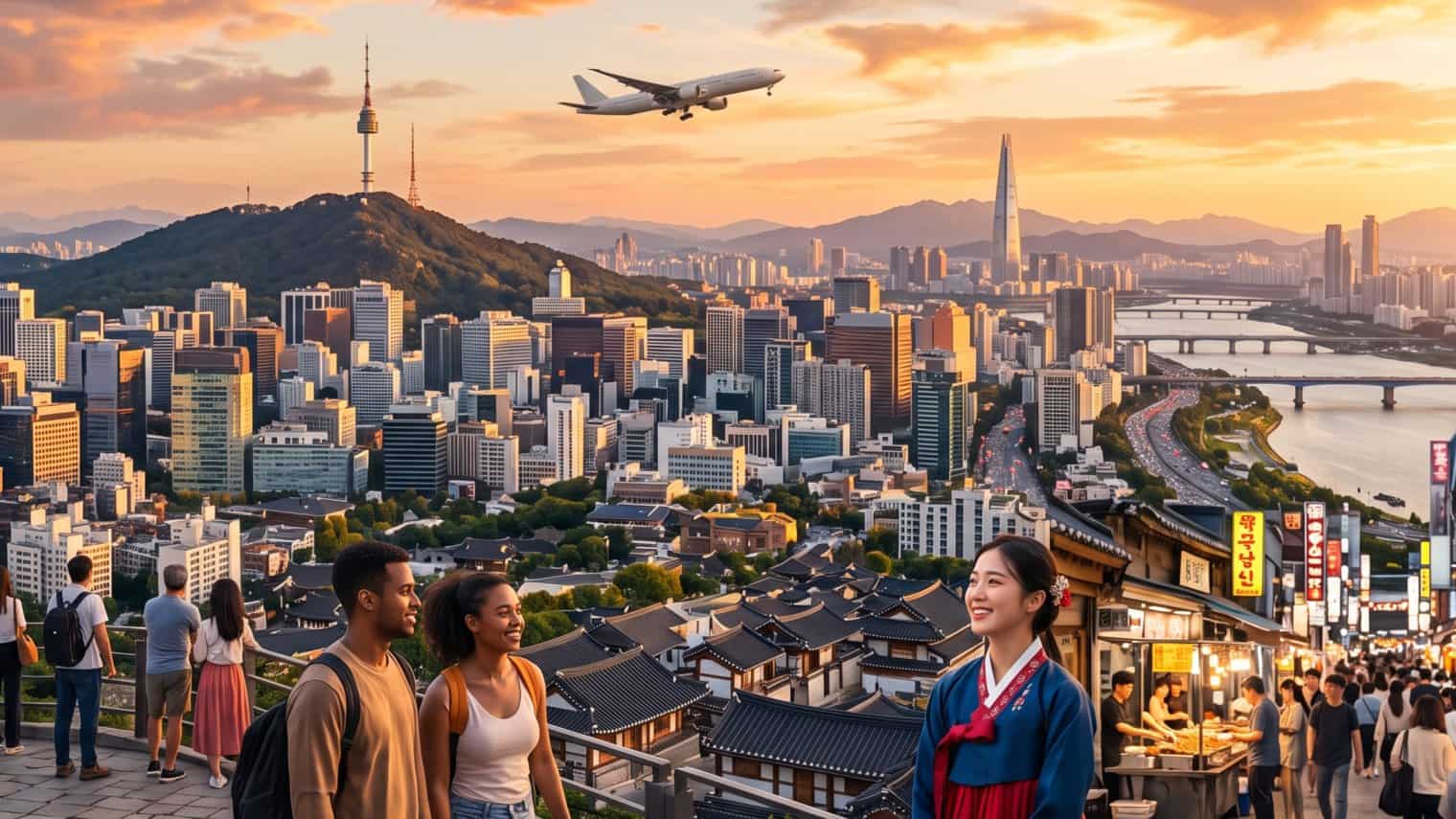
Image generated with Ai
South Korea travel is entering a powerful new growth phase as Seoul attracts millions of international visitors through Korean culture, wellness experiences and expanding aviation links. The capital has become one of Asia’s most sought-after holiday choices, supported by strong tourism recovery, rising visitor spending and increasing global interest in Hallyu.
Official figures show Seoul welcomed 8.23 million foreign visitors in the first half of 2026, while international visitor spending reached KRW 5.617 trillion. The growth highlights how Seoul tourism is transforming into a global lifestyle experience beyond traditional sightseeing.
Seoul’s Global Tourism Rise Reflects a New Era for South Korea Travel
Seoul has emerged as a major force in Asian tourism as travellers increasingly search for destinations that offer culture, entertainment, wellness and modern urban experiences. The city’s growth is not based on a single trend. Instead, it combines several powerful tourism drivers that have strengthened its international appeal.
The reported 91% year-on-year increase in flight bookings reflects the growing demand for Seoul among overseas travellers. Although this booking figure comes from commercial travel-market data rather than government statistics, official tourism data confirms the wider upward movement.
Advertisement
Advertisement
The Seoul Metropolitan Government reported that international arrivals reached 8.23 million during the first six months of 2026. This represented a 21.3% increase compared with the same period a year earlier. Foreign visitor spending also increased significantly, reaching KRW 5.617 trillion, a rise of 56.8%.
Advertisement
Advertisement
These figures show that South Korea travel is moving towards higher-value tourism. Visitors are spending more on experiences, shopping, dining, beauty services and cultural activities.
The official Seoul tourism report highlights how international visitors are increasingly exploring the city through lifestyle-based travel. Instead of only visiting famous landmarks, tourists are seeking authentic neighbourhood experiences, Korean food, wellness programmes and entertainment-related attractions.
This shift has strengthened Seoul’s position as a leading South Korea holiday destination for travellers from Asia, Europe, North America and beyond.
Why Hallyu Has Become a Major Engine Behind Korean Culture Tourism
The global popularity of Korean entertainment has changed how millions of people view Seoul. The Korean Wave, widely known as Hallyu, has transformed the city into a destination where travellers want to experience the culture they see through music, television, fashion and digital platforms.
Korean culture tourism has become one of Seoul’s strongest tourism advantages. Visitors now travel to experience the places, flavours and lifestyles connected with Korean creative industries.
Advertisement
Advertisement
K-pop remains a major attraction, but Seoul’s cultural appeal extends much further. Travellers are increasingly interested in Korean cuisine, traditional markets, fashion districts, beauty stores and historic neighbourhoods.
The Seoul Metropolitan Government has identified cultural experiences, festivals and local activities as important elements supporting international tourism growth.
The city has developed tourism programmes that encourage visitors to explore different areas rather than concentrating only on traditional attractions. These efforts support longer stays and increase visitor spending across local businesses.
The influence of Hallyu has also created demand among younger international travellers who want immersive experiences. Many visitors combine entertainment interests with shopping, food tourism and cultural exploration.
This has helped Seoul develop a unique tourism identity. The city combines ancient heritage with advanced technology, creating a destination where traditional palaces, modern architecture, digital experiences and global entertainment exist together.
Advertisement
Advertisement
As a result, Seoul tourism has become closely connected with global cultural trends, making the city increasingly attractive for international holidaymakers.
Rising Flights to Seoul Strengthen Asia’s Aviation and Tourism Connections
Improved air connectivity has played a crucial role in Seoul’s tourism expansion. More convenient flight options have helped international travellers reach the Korean capital more easily.
The growth of Flights to Seoul has been supported by aviation recovery, expanded international routes and increased airline capacity.
South Korea’s Ministry of Land Infrastructure and Transport has continued supporting international aviation expansion as passenger demand grows. The ministry has worked with airlines and international partners to increase route availability and strengthen connectivity.
In 2026, international aviation capacity continued expanding across major markets. Increased flight opportunities have helped Seoul maintain its position as a regional gateway connecting Asia with Europe and North America.
Advertisement
Advertisement
The country’s aviation network is supported by Incheon International Airport, one of Asia’s leading international airports. Its extensive airline connections allow travellers to access Seoul easily through direct flights and connecting routes.
The airport’s role is particularly important for overseas holidaymakers planning short city breaks or longer Asian journeys.
The connection between aviation growth and tourism demand is clear. More flights create easier access, while stronger tourism demand encourages airlines to maintain and expand services.
This cycle has helped Seoul strengthen its position as a competitive global destination.
China Japan and Regional Markets Drive Seoul’s Visitor Growth
Seoul’s tourism growth in 2026 has been supported strongly by nearby Asian markets. Official data shows that visitors from China and Japan remain among the largest international visitor groups.
Advertisement
Advertisement
During the first half of 2026, Chinese visitors represented the largest overseas market for Seoul, with around 2.47 million arrivals. Japan followed with approximately 1.5 million visitors. Taiwan and the United States also remained important markets.
These markets benefit from geographical proximity, strong air connectivity and established travel links.
China’s importance has increased as aviation cooperation continues improving. Expanded passenger flight rights between South Korea and China have supported more opportunities for airlines to increase services.
Japan also remains a highly connected market because of frequent flights between Japanese cities and Seoul.
For regional travellers, Seoul offers a combination of convenience and variety. Visitors can experience luxury shopping, traditional culture, entertainment, food and wellness within a compact metropolitan area.
Advertisement
Advertisement
This accessibility has helped Seoul compete with other major Asian destinations.
The growth of regional travel also supports local tourism businesses. Hotels, restaurants, retailers and cultural attractions benefit from increased international visitor activity.
The expansion of these markets demonstrates how South Korea travel has become increasingly integrated into Asia’s wider tourism network.
Seoul’s wellness boom adds a new dimension to South Korea travel demand
Seoul’s tourism success in 2026 is not limited to entertainment and sightseeing. Wellness has become a major reason why international visitors choose the city. South Korea travel is increasingly connected with beauty treatments, healthcare services, relaxation programmes and lifestyle experiences.
The rise of wellness tourism has helped Seoul attract visitors who seek more than a short city break. Many travellers now combine cultural exploration with skincare, medical services, fitness programmes and traditional Korean wellness experiences.
Advertisement
Advertisement
The growth of this sector supports higher-value tourism because wellness travellers often spend more on accommodation, dining, services and personalised experiences.
Seoul has developed a reputation as a global destination for beauty and wellness innovation. Korean skincare, cosmetics and health-related services have gained worldwide attention through the influence of Hallyu.
This trend has created a new category of travellers who plan trips specifically around Korean lifestyle experiences.
The expansion of wellness tourism also supports local businesses. Hotels, clinics, restaurants, beauty companies and cultural attractions benefit from increased international demand.
For Seoul, wellness is becoming an important part of its tourism strategy because it encourages longer stays and wider visitor spending.
Advertisement
Advertisement
As global travellers increasingly focus on health, balance and personal experiences, wellness strengthens Seoul’s position as a leading South Korea holiday destination.
Government initiatives strengthen Seoul tourism through global visitor programmes
The Seoul Metropolitan Government has introduced several initiatives to improve the international visitor experience and maintain tourism momentum.
The city has focused on creating a more welcoming environment for overseas travellers through multilingual services, cultural programmes and tourism support systems.
One major initiative has been Seoul Welcome Week, designed to provide assistance and experiences for international visitors during important travel periods.
These programmes aim to improve visitor convenience from arrival to departure. They also promote local attractions beyond the city’s most famous landmarks.
Advertisement
Advertisement
The strategy reflects a wider shift in global tourism. Modern travellers increasingly look for destinations that provide smooth travel experiences, digital convenience and authentic local engagement.
The city government has also invested in festivals and public events to increase Seoul’s international appeal.
The 2026 Seoul Spring Festival attracted approximately 7.06 million visitors, including more than 1.17 million international participants. The event demonstrated the growing role of festivals in attracting overseas travellers.
Night tourism has also expanded as a key part of Seoul’s visitor economy. Events such as the Han River Drone Light Show have created new reasons for visitors to explore the city after sunset.
These government-led initiatives support Seoul tourism by creating diverse experiences throughout the year.
Advertisement
Advertisement
Seoul’s festivals and experiences increase international visitor spending
The growth of Seoul as a global destination is closely linked with the city’s ability to create memorable experiences.
International travellers are increasingly choosing destinations based on activities rather than only attractions. Seoul has responded by expanding cultural events, entertainment programmes and local experiences.
Festivals have become an important tourism tool because they attract visitors while supporting nearby businesses.
Large-scale cultural events encourage tourists to stay longer and spend across multiple sectors, including hotels, restaurants, retail stores and transport services.
The city’s combination of traditional heritage and modern creativity gives Seoul a unique advantage.
Advertisement
Advertisement
Visitors can explore historic palaces, traditional markets and cultural districts while also experiencing advanced technology, entertainment venues and modern shopping areas.
This balance has strengthened Korean culture tourism and created a tourism model that appeals to different age groups.
Younger travellers are attracted by K-pop, fashion and digital experiences. Older travellers often seek heritage, food and wellness opportunities.
The result is a diverse tourism ecosystem where different visitor interests contribute to overall growth.
Seoul’s approach shows how destinations can combine culture, technology and lifestyle to create stronger international demand.
Advertisement
Advertisement
Aviation expansion creates stronger opportunities for Flights to Seoul
The increase in tourism demand has been supported by improving aviation connectivity.
More international routes and greater airline capacity have made Seoul easier to access from major global markets.
The Ministry of Land Infrastructure and Transport has continued supporting aviation recovery and international route expansion as passenger demand increases.
Aviation growth remains one of the most important factors behind Seoul’s tourism performance because accessibility directly influences travel decisions.
When travellers have more flight options, competitive prices and convenient schedules, destinations become more attractive.
Advertisement
Advertisement
Incheon International Airport plays a central role in this growth. The airport connects Seoul with major cities across Asia, Europe and North America.
Its global network allows international visitors to use Seoul not only as a final destination but also as a gateway for wider Asian travel.
The reported 91% year-on-year increase in flight bookings reflects this strong market interest. However, the exact booking figure comes from commercial travel data and is not an official government statistic.
Official aviation developments confirm that international connectivity remains a key factor supporting Seoul’s tourism expansion.
Economic impact grows as South Korea holiday destination attracts high-value visitors
Seoul’s tourism expansion is creating wider economic benefits across the city.
Advertisement
Advertisement
The increase in foreign visitor spending shows that international tourism is becoming an important contributor to local economic activity.
Official figures show overseas visitors spent KRW 5.617 trillion during the first half of 2026. The 56.8% increase compared with the previous year highlights stronger demand for tourism-related services.
This spending supports many industries, including:
- Hotels and accommodation providers
- Restaurants and food businesses
- Retail and shopping districts
- Beauty and wellness companies
- Cultural attractions
- Transport services
The growth of South Korea holiday destination demand also creates opportunities for tourism businesses to develop new products.
Companies are increasingly focusing on personalised experiences, luxury travel, wellness packages and cultural activities.
Advertisement
Advertisement
The shift towards experience-based tourism means visitors are contributing more widely to the economy.
A traveller visiting Seoul for food, shopping, entertainment and wellness creates economic value across multiple sectors.
This model benefits both large tourism companies and smaller local businesses.
Seoul’s future outlook remains connected with culture technology and global travel demand
Seoul’s tourism growth in 2026 reflects a broader transformation in international travel.
The city has moved beyond being a traditional capital-city destination. It has become a global lifestyle destination where culture, technology, wellness and entertainment come together.
Advertisement
Advertisement
The continued popularity of Hallyu provides a strong foundation for future tourism growth.
At the same time, improved aviation connections and government tourism strategies are helping Seoul remain competitive.
Future growth will depend on maintaining visitor satisfaction, expanding international accessibility and developing sustainable tourism experiences.
The city’s ability to combine traditional Korean heritage with modern global trends will remain a major attraction.
For international travellers, Seoul offers a destination that continues to evolve.
Advertisement
Advertisement
The city provides experiences connected with food, fashion, wellness, entertainment and culture.
This combination is helping South Korea travel gain stronger recognition among global holidaymakers.
As tourism patterns continue changing, Seoul’s focus on authentic experiences and international connectivity positions it as one of Asia’s most dynamic travel destinations.
Conclusion
South Korea travel has entered a new growth era as Seoul attracts international visitors through Hallyu, wellness, cultural experiences and expanding aviation links. Official figures show strong growth in arrivals and visitor spending, proving the city’s rising global appeal.
Seoul tourism continues evolving beyond sightseeing into a complete lifestyle experience. While the reported 91% increase in flight bookings reflects market demand, government data confirms the wider expansion. With stronger Flights to Seoul, growing Korean culture tourism and increasing international interest, Seoul is strengthening its role as a leading South Korea holiday destination.
Advertisement
