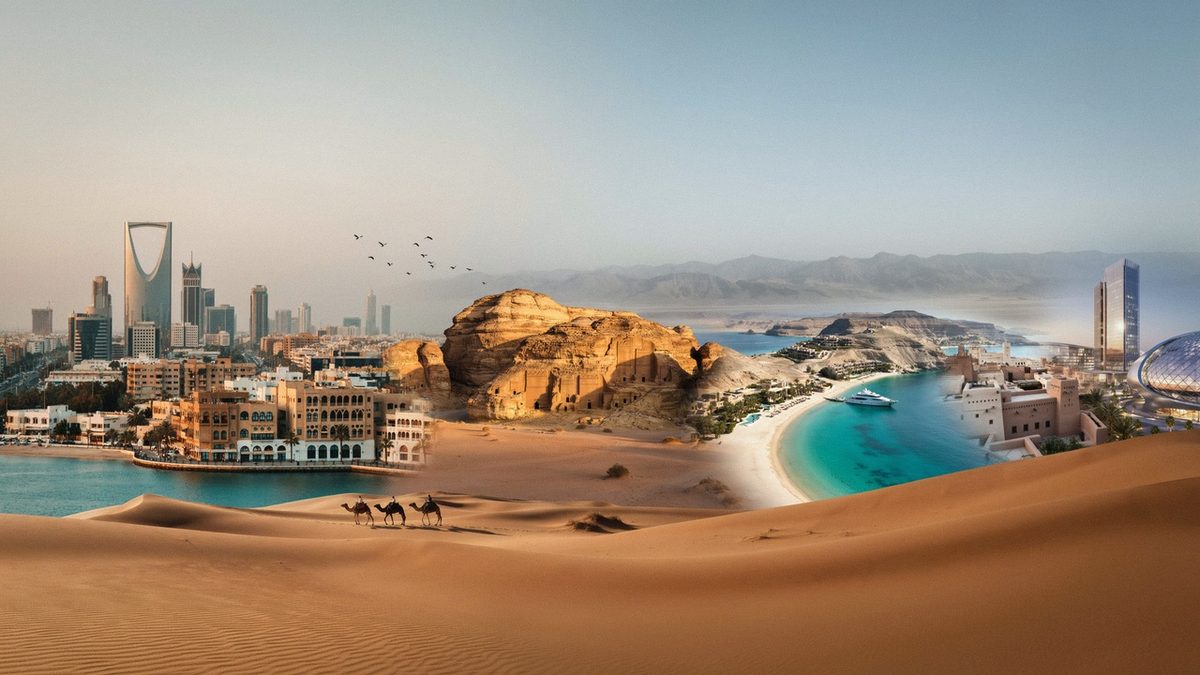
Image generated with Ai
Saudi Arabia is undergoing one of the most ambitious tourism transformations in the world as the Kingdom develops new destinations, expands hospitality infrastructure and opens its cultural, natural and heritage attractions to international travellers.
Once recognised mainly for religious journeys to Makkah and Madinah, Saudi Arabia is now building a diverse tourism ecosystem that includes luxury coastal resorts, archaeological wonders, desert adventures, entertainment destinations and cultural experiences.
Tourism has become a central pillar of Saudi Arabia’s economic diversification strategy under Vision 2030, which aims to strengthen non-oil industries and position the Kingdom among the world’s leading travel destinations.
The transformation has already delivered major milestones. Saudi Arabia surpassed its earlier tourism target of attracting 100 million visits ahead of schedule and has increased its ambition to welcome 150 million visits annually by 2030.
Advertisement
Advertisement
With major investments in airports, hotels, attractions and visitor experiences, Saudi Arabia is creating a new identity as a destination where ancient heritage meets futuristic travel.
Saudi Arabia’s tourism strategy is built around creating a more diverse visitor economy that extends beyond traditional pilgrimage travel.
Vision 2030 has encouraged investment across multiple tourism segments, including leisure, adventure, cultural tourism, luxury hospitality and entertainment.
The Kingdom’s approach focuses on showcasing its unique assets: ancient cities, dramatic landscapes, untouched coastlines and centuries-old traditions.
Advertisement
Advertisement
| Tourism Area | Development Focus |
|---|---|
| Cultural tourism | Heritage sites, museums and historic districts |
| Luxury tourism | Premium resorts and exclusive experiences |
| Nature tourism | Deserts, mountains and Red Sea ecosystems |
| Religious tourism | Improved pilgrimage experiences |
| Entertainment tourism | Festivals, events and attractions |
| Adventure tourism | Outdoor activities and exploration |
The strategy aims to make Saudi Arabia a year-round destination rather than a market dependent on specific travel seasons.
Saudi Arabia is attracting a new generation of travellers interested in experiences beyond conventional tourism.
The Kingdom’s growing appeal comes from its ability to offer destinations that are difficult to find elsewhere. Visitors can explore ancient rock formations in AlUla, dive into the Red Sea, experience modern entertainment in Riyadh or discover historic neighbourhoods in Jeddah.
This combination of heritage and innovation is creating a distinctive travel identity.
| Experience | Destination |
|---|---|
| Ancient heritage exploration | AlUla and Hegra |
| Luxury coastal escapes | Red Sea destinations |
| Cultural discovery | Diriyah and Jeddah Historic District |
| Desert adventures | Arabian desert landscapes |
| Entertainment experiences | Riyadh and Qiddiya |
| Religious journeys | Makkah and Madinah |
Saudi Arabia’s tourism growth is increasingly built around storytelling, allowing visitors to connect with the Kingdom’s history, culture and landscapes.
AlUla has become one of Saudi Arabia’s most important cultural tourism destinations.
Known for its dramatic desert landscapes, ancient civilisations and archaeological treasures, AlUla represents the Kingdom’s ambition to develop heritage tourism on a global scale.
The area includes Hegra, Saudi Arabia’s first UNESCO World Heritage Site, alongside historic settlements, rock formations and cultural attractions.
| Feature | Visitor Appeal |
|---|---|
| Ancient history | Discover thousands of years of civilisation |
| Desert landscapes | Unique photography and adventure opportunities |
| Cultural events | Festivals and artistic experiences |
| Sustainable tourism | Low-impact destination development |
AlUla demonstrates how Saudi Arabia is using heritage preservation as a foundation for modern tourism growth.
Saudi Arabia’s Red Sea coastline is emerging as one of the Kingdom’s most ambitious tourism developments.
The region combines pristine marine environments, luxury resorts and sustainability-focused experiences.
Projects such as The Red Sea and AMAALA are designed to attract international visitors seeking exclusive coastal holidays while protecting natural ecosystems.
| Feature | Tourism Impact |
|---|---|
| Luxury resorts | Attracts premium international travellers |
| Marine conservation | Supports sustainable tourism |
| Diving experiences | Creates adventure tourism appeal |
| Island destinations | Expands coastal travel options |
| Wellness facilities | Strengthens luxury tourism offering |
The Red Sea is helping Saudi Arabia compete with established luxury destinations worldwide.
Saudi Arabia’s cities are also playing a crucial role in the tourism transformation.
Riyadh is developing into a major cultural, entertainment and business destination, while Jeddah continues strengthening its position as a gateway to the Red Sea and a centre of heritage tourism.
| City | Main Tourism Strength |
|---|---|
| Riyadh | Entertainment, events, business tourism and modern attractions |
| Jeddah | Historic districts, coastline and cultural experiences |
| Medina | Religious and heritage tourism |
| Dammam | Eastern Province attractions and coastal experiences |
Large-scale events, improved infrastructure and new hospitality projects are helping Saudi cities become more attractive to international visitors.
Saudi Arabia’s tourism transformation includes several major destination projects designed to create globally recognised attractions.
These developments are intended to support economic diversification while creating new visitor experiences.
| Project | Tourism Vision |
|---|---|
| Red Sea Project | Sustainable luxury coastal destination |
| AMAALA | Wellness, arts and luxury tourism |
| Qiddiya | Entertainment, sports and leisure destination |
| Diriyah Gate | Heritage and cultural tourism hub |
| NEOM | Futuristic destination development |
These projects are reshaping perceptions of Saudi Arabia by introducing new forms of tourism alongside traditional cultural attractions.
Improved accessibility has been one of the most important factors behind Saudi Arabia’s tourism expansion.
The Kingdom has expanded visa access, improved transportation links and invested in hospitality infrastructure to make travel easier.
| Development | Impact |
|---|---|
| Electronic visa services | Simplifies visitor entry |
| Airport expansion | Supports international connectivity |
| New hotels and resorts | Increases accommodation capacity |
| Digital tourism platforms | Improves visitor planning |
| Transport upgrades | Enhances movement between destinations |
These improvements support Saudi Arabia’s ambition to become a competitive global tourism market.
Saudi Arabia’s tourism journey is entering a new phase focused on expanding visitor numbers, improving experiences and strengthening international recognition.
The Kingdom’s revised target of 150 million visits by 2030 reflects confidence in continued tourism growth.
Future growth is expected to come from a combination of international leisure travellers, regional visitors, religious tourism and domestic travel.
| Priority | Expected Outcome |
|---|---|
| Sustainable destinations | Long-term environmental protection |
| More accommodation options | Wider visitor access |
| Cultural preservation | Stronger heritage tourism |
| International marketing | Greater global visibility |
| New attractions | More reasons to visit |
Saudi Arabia is positioning itself not only as a destination to visit once, but as a country offering multiple journeys across different regions and experiences.
Saudi Arabia is developing tourism as part of Vision 2030 to diversify its economy and reduce dependence on oil revenues.
The Kingdom aims to reach 150 million annual visits by 2030.
Major destinations include AlUla, Riyadh, Jeddah, the Red Sea region, Diriyah, Makkah and Madinah.
Yes. The country is expanding beyond religious tourism with cultural, adventure, luxury and entertainment experiences.
Saudi Arabia combines ancient heritage, untouched landscapes, modern cities and large-scale tourism developments in one destination.
AlUla represents Saudi Arabia’s heritage tourism ambitions through archaeological sites, cultural experiences and unique desert landscapes.
Saudi Arabia’s tourism sector is entering a defining period of global expansion. Through Vision 2030, the Kingdom is transforming its travel landscape from a destination known mainly for pilgrimage into a diverse tourism powerhouse.
With heritage wonders, luxury resorts, futuristic projects and improved global accessibility, Saudi Arabia is creating a new chapter in Middle East tourism.
The Kingdom’s journey demonstrates how strategic investment, cultural preservation and destination innovation can reshape a nation’s position on the global travel map.
Advertisement
Tags: AlUla travel, Middle East Tourism, Red Sea tourism, Saudi Arabia tourism 2026, Saudi tourism growth
Advertisement
Advertisement











Thursday, September 3, 2026

Thursday, September 3, 2026

Thursday, September 3, 2026

Thursday, September 3, 2026

Wednesday, September 2, 2026
Wednesday, September 2, 2026
Thursday, September 3, 2026
Thursday, September 3, 2026



