
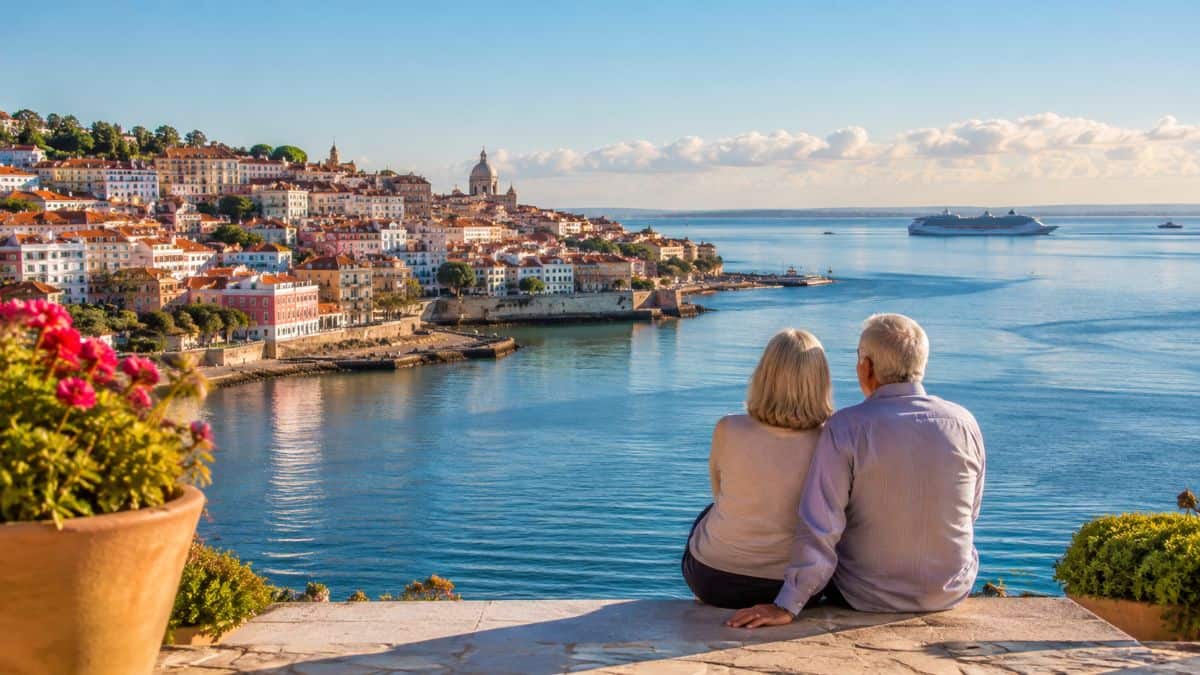
Image generated with Ai
In 2026, according to International Living, Portugal is the world’s safest country for retirees, taking the top spot over several popular established European retirement destinations. The other top countries in this ranking were also European; Ireland was 2nd, followed by Italy and Greece. The ranking combines International Living’s Annual Global Retirement Index and the Global Peace Index. In addition, the staff at International Living include first-hand details about the retiree safety environment from the places they visit. Portugal scored very well for retiree safety, which is deserved for more factors than just low crime. ‘Holiday visits’ are becoming increasingly important for travelers when considering potential long-term relocation, and Portugal has a lot to offer in terms of long-term retirement, including its sometimes-0 crime, Euroweather, lots cultural sites and activities, and established tourism.
Portugal’s position at the top of the 2026 safety-focused retirement ranking places the country firmly in the spotlight for international travellers considering a European base. According to the information behind the ranking, Portugal placed seventh in the Global Peace Index and fourth in International Living’s Annual Global Retirement Index.
Advertisement
The combination gives Portugal a notable advantage because the assessment does not rely exclusively on crime statistics. Retirement suitability can depend on several interconnected factors, including affordability, climate, political and social stability, legal conditions and the general quality of daily life.
For travel audiences, this makes Portugal particularly interesting because the characteristics that support retirement also contribute to a strong holiday experience. Visitors can move between Atlantic beaches, historic urban centres, food destinations and smaller coastal communities without having to choose between cultural discovery and a relaxed pace.
Advertisement
Advertisement
Portugal’s safety reputation is also supported by information from the Overseas Security Advisory Council, or OSAC, which identifies theft and fraud among the most common crimes affecting visitors and residents while describing Portugal as having one of the lowest crime rates in the European Union.
Portugal is not alone in attracting retirees and long-stay travellers. Ireland ranked second in the safety-focused assessment, while Italy was placed sixth and Greece seventh.
These destinations offer distinctly different experiences, demonstrating why retirement travel in Europe cannot be reduced to a single lifestyle model. Ireland appeals through its landscapes, historic towns and community-oriented travel experience. Italy combines centuries of cultural heritage with regional food traditions, historic cities and Mediterranean scenery. Greece, meanwhile, offers island living, coastal landscapes and a climate that has long attracted international visitors.
The rankings also demonstrate the continuing strength of Southern and Western Europe as retirement destinations. Travellers who begin by visiting these countries for short breaks can experience local neighbourhoods, transport networks, healthcare access, food markets and everyday community life before deciding whether a longer stay could suit them.
Advertisement
Advertisement
| Destination | 2026 Safety-Focused Ranking | Travel Appeal |
|---|---|---|
| Portugal | 1st | Atlantic coast, historic cities and relaxed lifestyle |
| Ireland | 2nd | Landscapes, heritage and community atmosphere |
| Italy | 6th | Culture, cuisine, cities and Mediterranean living |
| Greece | 7th | Islands, beaches, history and warm climate |
Portugal’s appeal becomes especially clear outside Lisbon. The country provides a variety of destinations for travellers who want a slower pace without giving up access to restaurants, cultural attractions and established visitor infrastructure.
Cascais is one of the most prominent coastal choices. Located close to Lisbon, the seaside town combines beaches, waterfront scenery, restaurants and an attractive urban environment. Its proximity to the capital also makes it suitable for travellers who want access to a major city while spending much of their time beside the Atlantic.
Further north, Nazaré provides a different atmosphere. The destination is recognised for its long sandy beach, seafood and powerful Atlantic waves. Its dramatic coastline gives the town a strong identity and makes it attractive to visitors interested in both traditional Portuguese culture and ocean scenery.
Nearby Caldas da Rainha adds another dimension, with historic architecture and thermal-bath traditions. The destination can appeal to travellers seeking a quieter base while remaining within reach of Portugal’s central coastal attractions.
Porto offers another compelling option for retirees and long-stay visitors. The northern city has a distinct character shaped by its riverside setting, historic architecture and food and wine traditions.
For travellers who prefer urban environments, Porto provides a different experience from the resort-oriented image sometimes associated with Portugal. Historic streets and neighbourhoods sit alongside restaurants, cultural venues and modern amenities, creating a destination where visitors can combine sightseeing with everyday city life.
This diversity is important for retirees because long-term suitability often depends on personal lifestyle preferences. Some travellers may prioritise beaches and outdoor activities, while others may prefer historic districts, cafés, museums and access to urban services.
Portugal’s strength is that these different experiences exist within the same national travel landscape.
Safety can influence every stage of a retirement decision, from selecting accommodation to using public transport and exploring neighbourhoods after dark. For older travellers, confidence in the destination can make a significant difference to the quality of the overall experience.
The information cited in the ranking indicates that petty crime does still occur in Portugal, particularly theft. However, the broader assessment places the country among the strongest destinations for retirement safety.
Travel behaviour remains important regardless of a country’s overall ranking. Visitors should take normal precautions with valuables, documents and personal belongings, particularly in crowded tourist areas and transport hubs.
The emphasis on everyday safety also highlights why first-hand experiences can complement statistical measures. International Living’s Portugal correspondent described a sense of ease in everyday life, including the ability to walk alone at night and see residents using mobile phones openly in public.
Such observations do not eliminate individual risks, but they help explain the destination’s reputation among travellers and prospective retirees.
One reason Portugal continues to attract attention is the way tourism and long-term living overlap. A conventional holiday may introduce visitors to beaches, restaurants and historic landmarks, while an extended stay provides an opportunity to understand the practical realities of living in a destination.
This shift is becoming increasingly relevant to travel trends. Travellers are no longer necessarily viewing destinations only through the lens of short holidays. Remote work, extended stays and retirement travel have encouraged visitors to consider how destinations function beyond the main tourist season.
Portugal is well positioned for this type of travel because its destinations offer contrasting environments. Lisbon provides metropolitan energy, Cascais offers coastal sophistication, Nazaré brings dramatic Atlantic scenery, Caldas da Rainha provides a quieter cultural setting and Porto delivers a historic urban lifestyle.
For travellers planning longer European journeys, this range makes it possible to compare different forms of Portuguese living within one country.
Portugal’s first-place position also reflects a wider shift in how travellers evaluate retirement destinations. Safety is increasingly considered alongside climate, affordability, culture, connectivity and lifestyle.
The ranking does not mean that every retiree will find Portugal suitable, nor does it suggest that other European destinations lack safety. Instead, it highlights Portugal’s strong performance across several indicators used to assess retirement living.
For travel media, the development is significant because retirement destinations can also become major long-stay tourism markets. Travellers who initially arrive for a holiday may return for several weeks, explore different regions or eventually consider spending part of the year in the country.
That creates opportunities for coastal communities, historic cities, hospitality businesses and regional tourism economies beyond traditional peak-season tourism.
Portugal’s varied landscape and tourism options may be its greatest asset. Portugal’s versatility allows its visitors to have different options without even crossing a border. Portugal has beaches, historical exercise, gastronomy, and wellness all inside its borders.
Portugal’s flexibility attracts retirees first. They can move to different locations throughout the country and take time to decide which specific area they like the best. For holiday travel, flexibility means people can travel to many locations within Portugal and spend a longer time in each location.
Portugal ranking as the safest country for retirees in 2026 is another reason to consider traveling to and living in/retiring to Portugal. The combination of safety and all other aspects of living ranks it high above other destinations.
The growing vision for European travel where more travelers go on longer trips and engage in deeper more immersive travel experiences means continued important destination status for Portugal.
1. Which country is considered the safest for retirees in 2026?
Portugal has been identified as the world’s safest retirement destination in the 2026 safety-focused assessment discussed by International Living.
2. Why is Portugal attractive to retirees?
Portugal combines a strong safety profile with coastal scenery, historic cities, favourable climate, food culture and varied lifestyle options.
3. Is Portugal safer than Italy for retirees?
In the cited 2026 assessment, Portugal ranked first while Italy ranked sixth among the listed safest retirement destinations.
4. Where did Greece rank for retirement safety?
Greece ranked seventh in the assessment referenced in the report.
5. Which European country ranked second?
Ireland ranked second in the safety-focused retirement assessment.
6. Is Portugal suitable for long-stay travellers?
Portugal offers a broad range of coastal and urban destinations, making it suitable for travellers interested in extended stays and lifestyle exploration.
7. What are some popular coastal destinations in Portugal?
Cascais and Nazaré are among the destinations highlighted for their beaches, Atlantic scenery, food and relaxed atmosphere.
8. Why is Porto attractive to long-stay visitors?
Porto combines historic architecture, riverside neighbourhoods, food and wine culture and an established urban environment.
9. Does Portugal have petty crime?
Yes. The information cited in the assessment indicates that theft and fraud are among the common crimes reported in Portugal, so normal travel precautions remain advisable.
10. Is Portugal only suitable for retirees?
No. Portugal is a major holiday destination for travellers of different ages and interests, with beaches, heritage, gastronomy, outdoor activities and vibrant cities.
Advertisement
Advertisement
Advertisement













Friday, September 4, 2026

Friday, September 4, 2026

Friday, September 4, 2026

Thursday, September 3, 2026

Wednesday, September 2, 2026

Friday, September 4, 2026

Friday, September 4, 2026