

Marmilla Wellness Trails: A Guide to Slow Travel, Yoga, and Heritage in Sardinia

Published
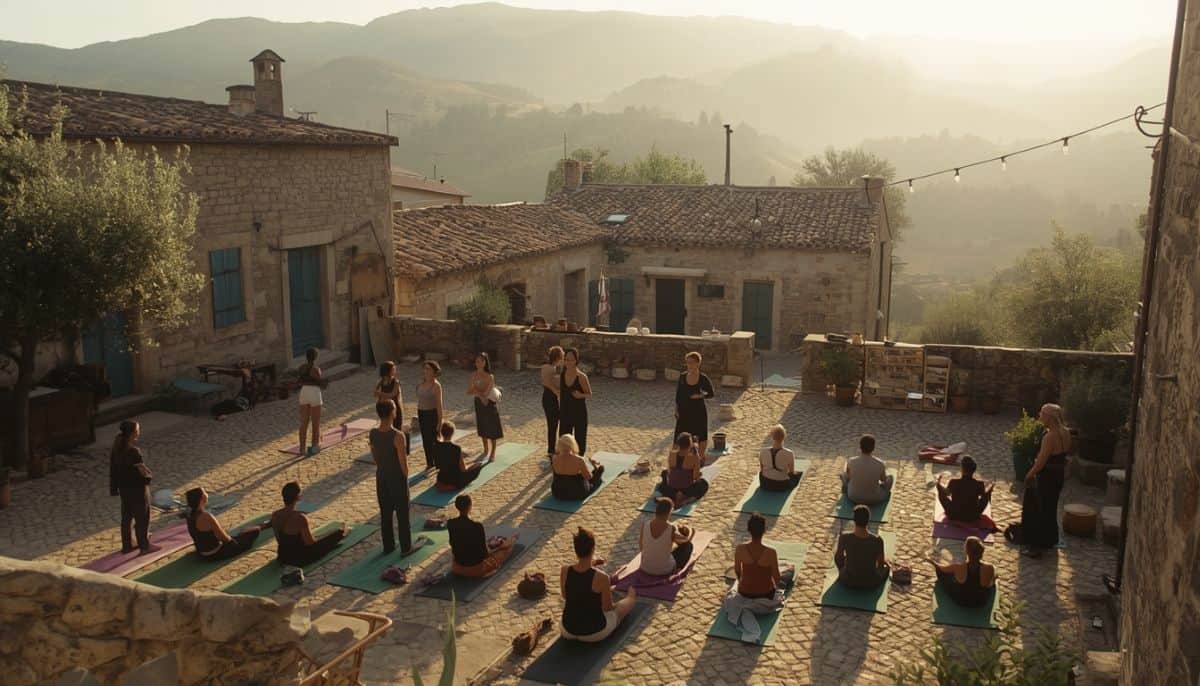
Modern travel is shifting away from rapid transit and overcrowded hubs toward intentional, place-based restoration. In the interior of south-central Sardinia, the historic territory of Marmilla offers a clear template for this transition. Characterized by gently rolling volcanic hills (areddas), basalt plateaus, and ancient agricultural communities, the region hosts the annual Marmilla Slow Heritage & Wellness Trails across the municipalities of Villanovaforru, Collinas, and Barumini. Running each autumn, this three-day community-led gathering connects low-impact recreation with historic preservation, demonstrating how rural villages can combat depopulation through regenerative travel.
What Is Slow Tourism and Why Is It Essential for Rural Preservation?
Slow tourism is an intentional travel methodology prioritizing ecological integrity, local economic equity, and deep cultural immersion over rapid, checklist sightseeing. Instead of consuming destinations superficially, practitioners stay longer in a single region, travel via low-carbon transit or footpaths, and interact directly with the communities hosting them.
In fragile rural environments, this approach serves as a critical defence against economic decline and land abandonment (spopolamento). According to data from the Italian National Institute of Statistics (ISTAT) and the European Network for Rural Development (ENRD), seasonal mass tourism heavily concentrates revenue in coastal belts, while inland communities lose population and ancestral land practices.
Decentralized cultural and outdoor tourism rebalances this dynamic by:
Advertisement
Advertisement
- Distributing Economic Direct Spend: Channelling lodging, dining, and guiding expenditures into family-run guesthouses (alberghi diffusi), certified agrarian cooperatives, and local artisan guilds.
- Preserving Agricultural Heritage: Sustaining the economic viability of heritage crops—most notably Marmilla’s dry-farmed almond groves, ancient durum wheat varieties (Senatore Cappelli), and centuries-old olive orchards.
- Protecting Vernacular Architecture: Generating the local tax base and private capital needed to maintain traditional basalt stone masonry, mud-brick dwellings (ladiri), and historic village centres.
Healing Landscapes: Structured Wellness Trails in the Sardinian Interior
The intersection of physical well-being and landscape stewardship forms the core of the Marmilla trail initiative. Rather than developing invasive new tourist infrastructure, the programme repurposes pre-existing shepherds’ paths, historic cartways, and forestry routes into three interconnected wellness disciplines:
1. Sensory Trekking on the Giara Plateau
Led by certified environmental excursion guides (AIGAE), guided walks across the basalt borders of the Giara di Gesturi emphasize sensory observation over aerobic pacing. Hikers traverse Mediterranean macchia—dominated by lentisk, myrtle, and cork oak—learning to identify indigenous medicinal flora while observing the region’s semi-feral horses (cavallini della Giara) without disrupting local wildlife habitats.
Advertisement
Advertisement
2. Acoustic Yoga and Field Meditation
Set adjacent to the Nuragic-era stone platforms of Su Nuraxi and the botanical reserves outside Villanovaforru, daily open-air yoga sessions use natural topographies as acoustic amphitheatres. Certified instructors lead breathwork (pranayama) focused on stress mitigation and sensory grounding, using the natural cadence of the rural landscape to foster a measurable sense of place.
3. Ethnobotanical Field Clinics
Facilitated by Sardinian herbalists and regional agronomists, these walking seminars teach participants the historical culinary, medicinal, and textile applications of native plants, including wild fennel, helichrysum, and asphodel.
Advertisement
Advertisement
Living Traditions: Intangible Cultural Heritage and Native Crafts
Physical wellness in Marmilla is linked to the preservation of intangible cultural heritage. As codified under the UNESCO 2003 Convention, safeguarding rural culture requires active practice rather than static museum curation. The festival programme integrates visitors directly into living community traditions:
- Native Almond Cultivation & Confectionery: Marmilla’s dry-cultivated almonds are renowned for high essential-oil concentrations. Master bakers lead hands-on workshops in village squares, instructing visitors in the geometric scoring and baking of ceremonial pastries like gueffus and amarettos.
- Basalt and Ladiri Masonry Demonstrations: Local conservators provide practical demonstrations on traditional masonry, demonstrating how sun-dried mud bricks provide passive thermal insulation for historic dwellings.
- Acoustic Traditions of the Campidano and Marmilla: Evening performances focus on polyphonic singing (cantu a tenore) and the launeddas, an ancient Sardinian polyphonic triple-pipe woodwind dating back to the Bronze Age, played using circular breathing techniques.
Practical Information: Planning Your Visit
- Location: South-central Sardinia, Italy (Villanovaforru, Collinas, Barumini).
- Transit: 45 minutes north of Cagliari Elmas Airport (CAG) via the SS131 highway; local regional buses connect via Sanluri.
- Accommodations: Distributed village hotels (alberghi diffusi) and certified rural farm stays (agriturismi).
- Recommended Gear: Category A/B hiking footwear, UV-protective layers, refillable water filtration bottles.
Frequently Asked Questions
What is slow tourism?
Slow tourism is a sustainable travel approach that emphasizes ecological awareness, low-impact transportation (such as hiking or rail travel), deep connection with local communities, and the extended appreciation of regional heritage over fast-paced consumption.
Where is Borgo della Marmilla located?
Marmilla is a historical and geographic subregion located in south-central Sardinia, Italy, encompassing historic towns such as Villanovaforru, Barumini, and Collinas, situated between the Campidano plain and the Giara basalt plateau.
How do wellness trails support rural sustainability?
Wellness trails utilize pre-existing natural footpaths and pastoral routes, preventing habitat destruction from new commercial development while directly funnelling ecotourism spending into village conservation, trail maintenance, and family-run agricultural enterprises.
Advertisement
