
Austrian Airlines Faces One of Its Toughest 2026 Challenges as Middle East Crisis Hits Revenue and Operations

Published
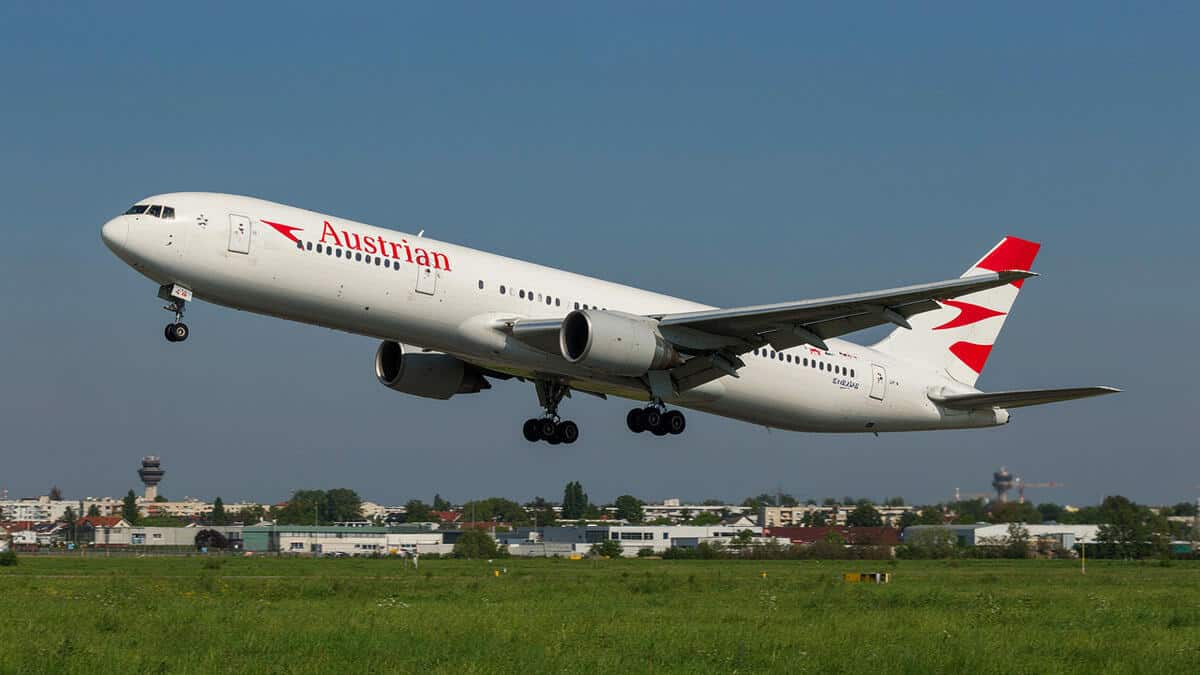
Image generated with Ai
Austrian Airlines faced significant financial pressure during the first half of 2026, mainly due to the ongoing impact of the Middle East crisis. The airline recorded an adjusted EBIT loss of €93 million for the period, marking a €50 million decline compared with the same period a year earlier. Despite extensive fuel hedging strategies, the carrier’s fuel expenses increased by more than €60 million year-on-year in the first six months of 2026.
The temporary suspension of flights to several destinations, including Amman, Erbil, Tel Aviv and Tehran, due to security concerns also created major financial challenges. The route cancellations resulted in a negative impact on earnings in the double-digit million-euro range. Austrian Airlines explained that the conflict involving Iran significantly affected operations through rising jet fuel prices and the need to cancel services on affected routes. Although higher ticket prices helped recover part of the losses, they were unable to fully compensate for the additional costs recorded up to June 2026.
To limit the financial impact, Austrian Airlines has introduced a series of internal measures focused on reducing costs and improving efficiency. The airline has accelerated adjustments to its project portfolio and is implementing faster savings initiatives across administrative operations. However, the carrier remains committed to long-term investments and continues to strengthen key operational areas.
Despite the cost-cutting measures, Austrian Airlines is maintaining recruitment efforts in critical departments, including flight operations, aircraft maintenance and ground handling. The airline said these workforce investments are necessary to preserve its strong operational reliability and maintain service quality.
Advertisement
Advertisement
Due to the sharp increase in jet fuel prices, Austrian Airlines is also reviewing its network strategy and adjusting its winter 2026/27 flight schedule. The changes aim to prevent continued losses on routes that are no longer economically sustainable under current market conditions. Similar capacity adjustments have already been introduced across the Lufthansa Group during the summer schedule, including the phase-out of Lufthansa Cityline operations.
Advertisement
Advertisement
One of the major changes will be the suspension of the Vienna–Graz domestic route from the winter timetable. The connection has reportedly generated considerable losses over several years, leading Austrian Airlines to make the difficult decision after assessing the wider impact on Graz as a business and economic centre.
However, Graz will continue to maintain strong international connectivity through the Lufthansa Group network. The city will remain linked with major European hubs through 46 weekly flights to Frankfurt, Munich and Zurich. Austrian Airlines will also introduce larger aircraft on selected Frankfurt and Munich services during the winter season. Additionally, Zurich services will increase by two weekly flights compared with the 2025/26 winter schedule.
Passengers from Graz will still have access to Austrian Airlines’ wider international network through AIRail services, allowing travellers to connect to global destinations via Vienna using integrated rail and air links.
Advertisement
Advertisement
Beyond the Vienna–Graz adjustment, Austrian Airlines will temporarily suspend flights to Tbilisi, Keflavik and Porto. The airline will also remove several overnight aircraft and crew positioning arrangements, known as night stops, as part of its effort to reduce operating costs.
The changes will affect overnight operations in destinations including Klagenfurt, Copenhagen, Warsaw and Krakow. The Klagenfurt night stop had already been temporarily discontinued during 11 weeks of the 2026 summer schedule due to cost considerations.
Advertisement
Advertisement
Through these network adjustments, cost-saving programmes and operational changes, Austrian Airlines aims to manage short-term financial challenges while protecting its long-term growth strategy. The airline continues to focus on maintaining reliable services, supporting essential operations and adapting its network to changing market conditions.
“The difficult economic situation has made the streamlining of our winter flight schedule unavoidable, requiring a clear-eyed assessment of routes that have generated significant losses for many years. Externally driven crises in the aviation industry are nothing new, but they are affecting us at ever shorter intervals. This makes it all the more urgent to strengthen our financial resilience. In addition to numerous internal efficiency initiatives, a sustainable reduction in Austria’s high operating costs is essential”, summarized CEO Annette Mann in light of these figures. “Once again, we would like to emphasize the importance of a viable, long-term aviation strategy for Austria as a business and aviation location. Discussions with all relevant stakeholders are currently progressing constructively, and we are therefore optimistic that we can achieve tangible improvements by the end of the year.” Despite the challenging overall environment, the company aims to return to profitability for the full year 2026 through a combination of partial fare adjustments to reflect higher costs and significant internal efficiency efforts.
Austrian Airlines Reports Strong First-Half 2026 Performance With Higher Revenue, More Passengers and Fleet Transformation Progress
Austrian Airlines delivered a positive performance during the first six months of 2026, recording growth in revenue, passenger numbers and operational efficiency despite a challenging global aviation environment. The airline strengthened its position as Austria’s national carrier by improving profitability, increasing aircraft utilisation and expanding its international network.
Between January and June 2026, Austrian Airlines generated revenue of €1.22 billion, representing a 4% increase compared with €1.12 billion during the same period a year earlier. Available seat capacity remained stable, with available seat kilometres reaching 13.53 billion, showing almost no year-on-year change.
Operational reliability remained high throughout the first half of the year. Around 98.8% of Austrian Airlines flights operated according to schedule, although this represented a slight decline of 0.5 percentage points compared with the previous year.
Advertisement
Advertisement
Strong Late Booking Demand Drives Passenger Growth and Higher Load Factors
Austrian Airlines experienced a shift in traveller booking behaviour during 2026, with many passengers making reservations closer to their departure dates. While early demand for the summer season appeared cautious, bookings accelerated significantly as the travel period approached.
The airline reported that this late surge in demand contributed to stronger aircraft occupancy levels during the summer travel period. Passenger load factor increased by 3.5 percentage points, rising from 77.2% in the first half of 2025 to 80.6% in the same period of 2026.
Passenger traffic also recorded solid growth. Austrian Airlines transported 6.96 million travellers between January and June 2026, marking a 6% increase compared with the previous year.
Despite ongoing geopolitical challenges affecting international aviation, the airline managed to maintain strong customer demand and improve the efficiency of its operations.
Capacity Shift Opens More Leisure Travel Opportunities
Austrian Airlines successfully adjusted its flight schedule after temporarily suspending services to several Middle Eastern destinations. The airline redirected available aircraft capacity towards popular holiday markets, allowing it to introduce additional services to high-demand leisure destinations.
Advertisement
Advertisement
During the 2026 summer schedule, Austrian Airlines added approximately 800 extra flights to destinations including Palma de Mallorca, Dubrovnik, Barcelona, Nice and Málaga.
This strategic capacity redeployment helped the airline respond to changing travel patterns while providing more options for passengers seeking European leisure destinations.
The airline’s expanded summer network also supported Austria’s tourism connectivity by strengthening Vienna Airport’s role as an international travel hub.
Austrian Airlines Expands Network With Seven New Destinations
The airline entered the 2026 summer season with an expanded route network, launching flights to seven new destinations across Europe and the Atlantic region.
The newly introduced routes connected passengers with Ponta Delgada in the Azores, Ohrid in North Macedonia, Bergen in Norway, Mytilini on the Greek island of Lesbos, Bastia in Corsica, Bilbao in Spain and Alicante in Spain.
Advertisement
Advertisement
With these additions, Austrian Airlines now serves more than 120 destinations worldwide, reinforcing its position as one of Europe’s important network carriers.
The expanded network provides travellers with greater access to leisure markets while supporting Austria’s international tourism and business connections.
Fleet Renewal Strategy Continues With Boeing and Airbus Investments
Despite focusing on efficiency improvements, Austrian Airlines continues to move forward with its long-term fleet modernisation programme.
The airline expects to receive two additional Boeing 787-9 Dreamliner aircraft during 2026. These deliveries will increase the number of Dreamliners in the fleet to five aircraft, strengthening the airline’s long-haul capabilities.
On short- and medium-haul routes, Austrian Airlines is also expanding its Airbus A320neo fleet. Another brand-new Airbus A320neo aircraft is scheduled to join the fleet in autumn 2026 and will become the first Austrian Airlines aircraft equipped with Starlink connectivity.
Advertisement
Advertisement
The airline plans to gradually introduce Starlink technology across its entire fleet in the coming years, improving onboard connectivity for passengers.
At the same time, Austrian Airlines is continuing the retirement of its Embraer aircraft. Four of the airline’s 17 Embraer aircraft have already been removed from service during 2026 as part of the fleet transition.
Future Fleet Structure Focuses on Greater Efficiency
Austrian Airlines expects its fleet transformation to be completed in the coming years. From 2029 onwards, the airline plans to operate Airbus A320-family aircraft for short- and medium-haul flights and Boeing Dreamliners for long-distance operations.
This simplified fleet structure is designed to improve efficiency, reduce operational complexity and better match aircraft capacity with passenger demand.
The airline highlighted that the fleet renewal programme will help strengthen competitiveness during periods of market uncertainty by creating a more flexible and efficient operation.
Advertisement
Advertisement
The introduction of newer aircraft is also expected to support lower fuel consumption, improved passenger comfort and enhanced operational performance.
Vienna Airport Lounge Expansion Moves Forward
Alongside fleet improvements, Austrian Airlines is continuing investments in passenger facilities at Vienna Airport.
Construction work is progressing on new lounge facilities as part of the Vienna Airport South Terminal Expansion project. The new lounge area will cover more than 5,000 square metres and is scheduled to open in the second quarter of 2027.
The upgraded facilities are expected to provide passengers with a more modern airport experience, including improved comfort and enhanced services for premium travellers.
Premium Economy Upgrade and New Uniforms Mark Future Improvements
Austrian Airlines is also preparing for further improvements to its passenger experience.
Advertisement
Advertisement
The airline is entering the final preparation stage for the renewal and expansion of its Premium Economy Class product. The upgraded cabin offering is planned to launch from the winter season.
In another major change, Austrian Airlines employees across cockpit, cabin and ground operations will receive new uniforms from 2028. This will mark the first complete uniform redesign for employees in three decades.
Testing of the new uniforms began in July 2026, with more than 100 employees participating in operational trials until October. The testing process focuses on comfort, functionality and suitability for daily airline operations.
The new uniforms represent another step in modernising the airline’s image while ensuring employees receive practical and comfortable workwear.
Austrian Airlines Strengthens Its Position for Future Growth
Austrian Airlines’ first-half 2026 results highlight continued progress despite uncertainty across the global aviation sector. Higher revenue, stronger passenger demand, improved load factors and network expansion demonstrate the airline’s ability to adapt to changing market conditions.
Advertisement
Advertisement
With ongoing fleet renewal, new destinations, upgraded passenger facilities and future technology investments, Austrian Airlines is preparing for long-term growth while strengthening Vienna’s role as a major European aviation hub.
“Austrian is investing across the entire travel experience to make journeys for our guests even more comfortable, modern, and enjoyable. Looking ahead to our 70th anniversary next year, this is also a clear statement that we believe in the long-term future of Austria as an aviation location and, with it, the future of Austrian Airlines”, said Austrian Airlines CEO Annette Mann.
Advertisement
