
Greece Stays in the Mediterranean Tourism Spotlight as Long-Haul Travel Intentions Decline Across Europe

Updated
Published
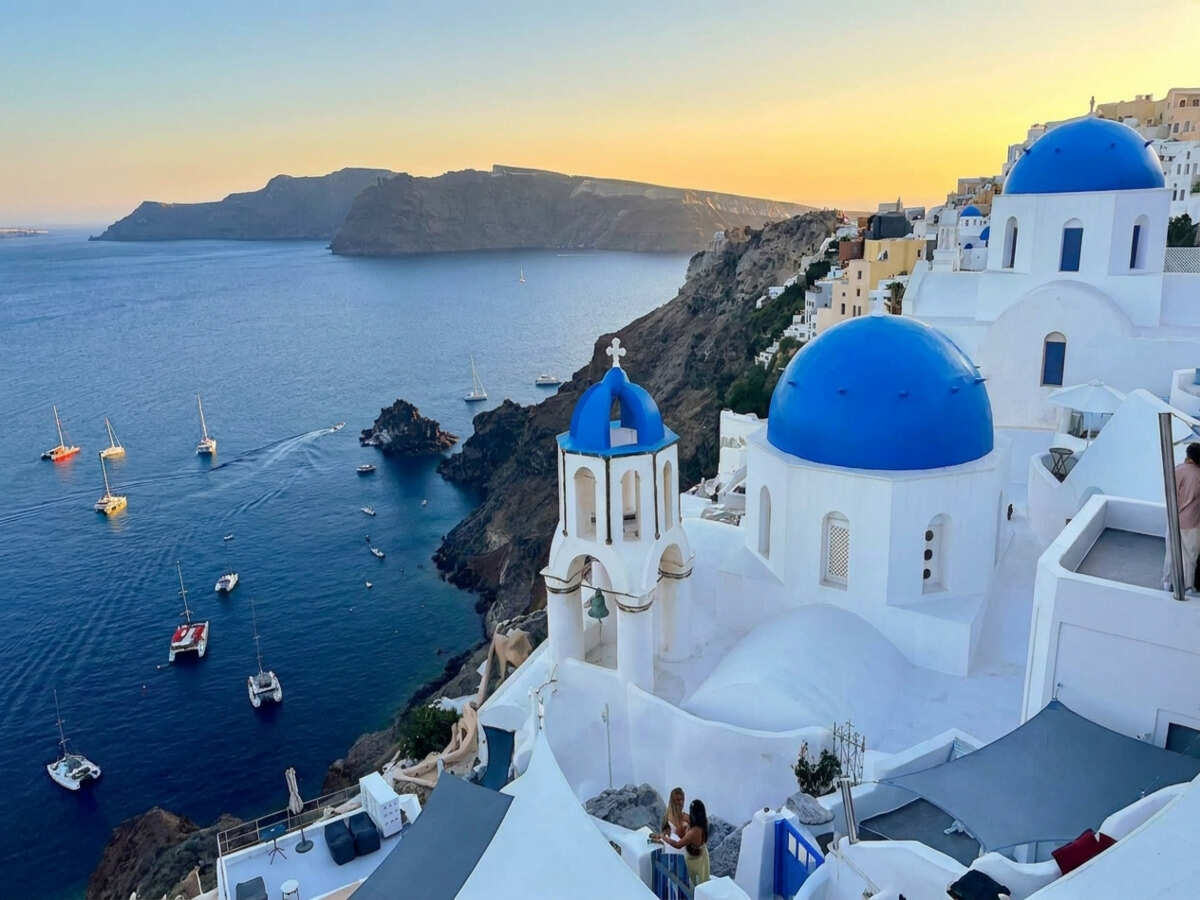
Mediterranean destinations such as Spain and Greece continue to draw interest from travelers around the world even as European holiday travel enters a fall period in 2026 owing to the demand for culture, history, cuisine, and multination travels. Greece is continuing to maintain its attraction to international tourists even though there has been a drop in the number of people intending to make long-distance travels within Europe. In the latest ETC study, 15% of those intending to make trips to Southern and Mediterranean Europe have an intention of traveling to Greece during September to December 2026. While fewer foreign travelers plan trips to Europe, air travel bookings have remained constant.
Greece Remains a Preferred Mediterranean Destination Despite Declining European Travel Interest
Greece continues to feature among the Mediterranean destinations attracting international attention as Europe faces a more challenging autumn tourism outlook.
According to the European Travel Commission’s Long-Haul Travel Barometer 3/2026, 15% of prospective European visitors interested in Southern and Mediterranean destinations included Greece in their travel plans.
The research examines the September–December 2026 period, offering insight into how overseas travellers are approaching holidays after the busiest summer months.
Advertisement
Advertisement
Although the figures measure intentions rather than actual arrivals, Greece’s inclusion among the preferred destinations shows that it remains visible in an increasingly competitive international tourism market.
The findings also underline the Mediterranean’s continuing importance to Europe’s tourism industry.
Advertisement
Advertisement
France Leads Mediterranean Travel Preferences as Greece Secures Its Position
Competition among Southern European tourism destinations remains significant, with several established holiday markets attracting interest from prospective long-haul visitors.
France leads the five countries highlighted in the regional findings, receiving interest from 52% of respondents considering Southern and Mediterranean Europe.
Advertisement
Advertisement
Italy follows with 35%, while Spain attracts 25%. Portugal accounts for 19%, placing Greece fifth among the five displayed destinations with 15%.
These percentages reflect destination preferences among relevant respondents, rather than confirmed bookings or national tourism market shares.
Nevertheless, Greece’s presence alongside France, Italy, Spain and Portugal demonstrates its continuing relevance within a region known for cultural heritage, coastal attractions and established holiday infrastructure.
Southern Europe Captures 67% of Prospective European Holidaymakers
The Mediterranean’s attraction extends beyond individual destinations.
Advertisement
Advertisement
The ETC research indicates that 67% of respondents planning to visit Europe expressed interest in at least one Southern or Mediterranean European destination.
This makes the region a particularly important part of the continent’s long-haul tourism outlook for the final four months of 2026.
For Greece, the broader regional preference offers opportunities to remain included in international holiday considerations, particularly among travellers exploring several European countries.
However, interest in Southern Europe does not necessarily translate into equivalent visitor arrivals.
Actual tourism performance will depend on confirmed reservations, travel affordability, airline connectivity and the destinations eventually selected by prospective visitors.
European Long-Haul Travel Intentions Fall as Global Holidaymakers Reconsider Overseas Trips
Europe’s tourism industry faces softer demand expectations as fewer travellers indicate plans for long-distance holidays.
Advertisement
Advertisement
Across Australia, Brazil, Canada, China, Japan, South Korea and the United States, 50% of surveyed respondents intend to undertake a long-haul journey between September and December 2026.
That represents a decline from 55% during the corresponding period in 2025.
Interest in visiting Europe has also weakened, falling from 38% to 34%.
Nevertheless, Europe’s proportion of overall long-haul travel intentions remains broadly stable at around two-thirds.
This suggests the continent has maintained its relative competitive position even as the wider pool of prospective international travellers has contracted.
Confirmed Flight Bookings Reveal a Stronger Commitment Among European Travellers
One of the most significant findings concerns the difference between declining travel intentions and actual booking behaviour.
Advertisement
Advertisement
Despite reduced interest in European holidays, 17% of all surveyed respondents have already secured flights to Europe.
That proportion remains unchanged from autumn 2025.
More importantly, among respondents intending to visit Europe, 52% now hold confirmed flight bookings, compared with 42% during the previous autumn.
The increase suggests that a greater share of prospective visitors have progressed beyond considering a European holiday and committed to travelling.
For tourism destinations, including Greece, this distinction matters because confirmed reservations provide a firmer indication of potential demand than expressed travel intentions alone.
China and Brazil Lead European Travel Interest as South Korea Records a Modest Increase
International demand varies considerably among the seven markets examined.
Advertisement
Advertisement
China remains the strongest surveyed source market for intended European travel, with 54% of respondents considering a visit.
Brazil follows at 45%, reinforcing its importance to Europe’s long-haul tourism market.
South Korea is the only surveyed country recording an increase in travel intentions, rising from 33% in autumn 2025 to 36% in 2026.
However, the ETC cautions that this change is not statistically significant.
The 2026 research also introduced a new respondent panel, although the organisation reports that its overall findings remain consistent with longer-term patterns.
These differences highlight the importance of individual source markets when assessing Europe’s future visitor demand.
Advertisement
Advertisement
First-Time International Visitors Create Fresh Opportunities for European Tourism
Europe continues attracting travellers who have never previously visited the continent.
The ETC findings indicate that 53% of prospective European visitors between September and December 2026 will be making their first trip to the region.
China records the highest proportion of first-time visitors at 61%, followed by the United States at 57%.
This represents an important development for destinations competing to attract new international audiences.
First-time travellers may seek recognisable landmarks, major cities and established tourism experiences when planning their itineraries.
For Greece, its archaeological heritage, historic cities and internationally recognised islands provide attractions that could appeal to such visitors.
Advertisement
Advertisement
However, the research does not separately establish first-time traveller demand for Greece itself.
Multi-Country Holidays Transform How Global Visitors Explore Europe
International tourists increasingly view Europe as an opportunity to experience several destinations during one holiday.
According to the survey, 66% of prospective visitors intend to explore at least two European countries.
Only 34% expect to remain within a single country.
The average planned itinerary includes 2.7 countries, demonstrating the importance of cross-border travel.
Additionally, 58% of respondents anticipate staying between seven and fourteen nights.
Advertisement
Advertisement
This travel pattern creates opportunities for destinations that can be incorporated into wider European journeys.
For Greece, convenient international connections and practical itinerary planning could help attract travellers combining Mediterranean destinations, although the survey does not identify specific routes involving the country.
Airlines and European Rail Networks Shape International Holiday Planning
Transport connectivity remains central to how prospective visitors intend to explore Europe.
Low-cost airlines are considered by 45% of respondents planning travel between European countries, while 44% are considering full-service airlines.
Rail travel also attracts considerable interest.
Around 40% are considering European rail passes, while 39% are interested in purchasing individual train tickets.
Advertisement
Advertisement
These results demonstrate that travellers are evaluating different ways to balance convenience, travel time and expenditure.
For Greece, aviation remains particularly relevant to international arrivals and journeys involving its islands.
The wider findings also show why connections between destinations can influence travellers deciding which countries to include in a European itinerary.
Rising Holiday Costs Continue to Challenge Europe’s International Tourism Market
Affordability remains the largest obstacle to long-haul holidays, even though financial concerns have eased compared with 2025.
Among respondents not intending to undertake a long-distance trip, 44% identify high travel costs as their principal reason.
That represents a decrease of five percentage points from the previous year.
Advertisement
Advertisement
Meanwhile, among travellers choosing long-haul destinations outside Europe, 30% cite costs as a barrier to visiting the continent.
This proportion has fallen by twelve percentage points.
The figures suggest financial pressures remain significant, but their influence has weakened.
For Greece and competing Mediterranean destinations, communicating holiday value remains important as travellers compare accommodation, transport and daily expenses.
Food, Accommodation and Cultural Attractions Dominate European Holiday Spending
The ETC research also identifies where prospective visitors expect to direct their holiday budgets.
Food and drinks emerge as the leading spending priority, cited by 50% of respondents.
Advertisement
Advertisement
Accommodation follows closely at 47%.
The largest daily-budget group, representing 37%, expects to spend between €100 and €200 per person.
When considering attractions, architectural landmarks and urban experiences share the leading position, each attracting 36% interest.
Natural attractions follow at 35%, while gastronomy appeals to 32%.
These preferences illustrate the value travellers place on combining sightseeing, cultural discovery and local experiences.
Greece’s historic landmarks, landscapes and culinary traditions align with several of these interests, although the figures represent Europe-wide preferences.
Advertisement
Advertisement
Why Greece’s Autumn Tourism Appeal Matters for the Mediterranean
Greece’s position within the ETC findings highlights the continuing appeal of Mediterranean tourism beyond the summer season.
The country appears among the five Southern European destinations identified in the regional results, even as overall long-haul intentions decline.
At the same time, stronger booking commitment among travellers still planning European holidays offers a more encouraging signal for the broader tourism industry.
The findings do not establish an increase in Greek visitor arrivals or confirm that its peak tourism season has extended.
Instead, they indicate that Greece remains part of international destination planning during a period of greater financial caution and changing travel priorities.
What Travellers Should Know Before Planning a Greek Autumn Holiday
Travellers considering Greece between September and December should distinguish between destination popularity and actual travel conditions.
Advertisement
Advertisement
The ETC figures indicate international interest, but they do not establish that Greece will experience fewer crowds, lower accommodation prices or increased flight availability.
Weather, ferry services, seasonal hotel operations and opening arrangements can also vary across mainland destinations and islands.
Travellers planning multi-country holidays should therefore examine transport connections carefully and compare total trip expenses rather than accommodation prices alone.
With food, culture, architecture and natural attractions ranking highly in European travel preferences, Greece offers several established reasons to consider an autumn visit.
Greece Maintains International Tourism Visibility as Europe Enters a Cautious Travel Period
The autumn 2026 findings present a mixed outlook for Europe’s tourism sector.
Fewer overseas respondents intend to travel long-haul, and the proportion considering Europe has declined. Yet confirmed flight bookings remain stable, while the share of committed travellers among those intending to visit Europe has increased.
Advertisement
Advertisement
Southern and Mediterranean Europe continues attracting substantial interest, with Greece maintaining a position among the destinations considered by prospective visitors.
The central message is one of resilience rather than confirmed growth.
Despite the decrease in tourism in the autumn season in Europe, places such as Spain, Greece, and others from the Mediterranean region are still able to draw foreign visitors due to their popularity in terms of culture, landmarks, gastronomy, and multination travel. As travelers tend to be pickier nowadays, Greece retains its significance in the European autumn tourism scene.
Advertisement
