
Romania Restores Direct International Train Services to Bulgaria and Turkey With Seasonal Rail Links to Varna, Sofia and Istanbul Boosting Balkan Tourism – Here’s What to Know Before You Travel

Published
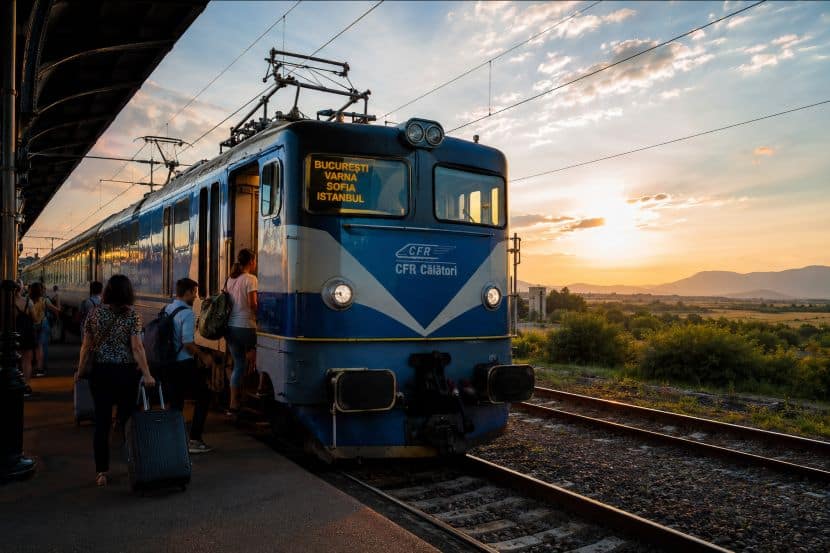
Romania has officially restored one of southeastern Europe’s most important seasonal cross-border rail networks, with CFR Călători international rail services once again connecting Bucharest directly with Varna, Sofia and Istanbul throughout the 2026 summer travel season. The renewed routes strengthen regional tourism connectivity, provide travelers with an affordable alternative to short-haul flights, and reinforce the growing role of rail transport in Europe’s sustainable mobility agenda. Operating until October, the seasonal services allow passengers to travel directly from Romania’s capital to Bulgaria’s Black Sea coast, Bulgaria’s political and cultural center, and Turkey’s largest metropolis through comfortable daytime and overnight journeys.
The return of these international rail links comes as European travelers increasingly seek lower-carbon transport options while tourism demand across the Balkans continues to recover and expand. According to European tourism and mobility trends, international rail travel has witnessed renewed interest following major investments in cross-border railway infrastructure, digital ticketing and sustainable transport initiatives. By reopening these seasonal routes, CFR Călători international rail services not only improve accessibility across Romania, Bulgaria and Turkey but also support regional tourism businesses, hospitality providers and local economies during one of the busiest travel periods of the year. Tickets are available well in advance, while Interrail pass holders can also take advantage of the restored connections.
Advertisement
Advertisement
A Strategic Return for Regional Rail Tourism
The reopening of international summer routes demonstrates Romania’s continuing commitment to strengthening railway connectivity throughout southeastern Europe. Although airlines dominate many regional travel corridors, rail continues to attract passengers seeking convenience, scenic journeys and competitive pricing.
The seasonal timetable once again enables travelers departing from Bucharest to reach three of the region’s most visited destinations without requiring multiple transfers.
Advertisement
Advertisement
For tourism stakeholders, the restored network represents far more than additional transportation capacity. It supports destination accessibility, encourages multi-country itineraries and offers greater flexibility for independent travelers exploring the Balkans.
Rail tourism has become an increasingly significant contributor to European travel demand, particularly among younger travelers, families and Interrail users who prioritize environmentally responsible travel options.
Advertisement
Advertisement
Direct International Routes Available During Summer 2026
The restored services cover three major destinations spanning Bulgaria and Turkey.
| Destination | Country | Approximate Journey Time | Service Type | Seasonal Operation |
|---|---|---|---|---|
| Varna | Bulgaria | 9 hours 10 minutes | Day train | Until October 11 |
| Sofia | Bulgaria | 9 hours 55 minutes | Day train | Until October 12 |
| Istanbul (Halkalı) | Turkey | 23 hours 10 minutes | Overnight sleeper | Until October 12 |
The schedule has been designed to accommodate both leisure travelers and long-distance tourists planning extended holidays throughout southeastern Europe.
Unlike many air services that require airport transfers, baggage restrictions and lengthy security procedures, these rail journeys provide city-center departures and arrivals, making them particularly attractive for travelers carrying luggage or planning multi-stop itineraries.
Bucharest and Varna Reconnected Along the Black Sea Corridor
Among the most attractive routes is the direct connection between Bucharest and Varna, one of Bulgaria’s leading seaside destinations.
The journey takes just over nine hours, allowing passengers to leave Romania in the morning and arrive on Bulgaria’s Black Sea coast before evening.
Varna remains one of the region’s strongest summer tourism markets. Its coastline attracts millions of domestic and international visitors annually, while the city combines beach tourism with cultural attractions including Roman archaeological sites, museums, gardens and maritime heritage.
Advertisement
Advertisement
The restored rail connection is expected to benefit not only Romanian tourists but also visitors from other European countries using Bucharest as a regional transport hub.
Competitive entry-level fares further improve accessibility for budget-conscious travelers during the peak holiday season.
Bucharest–Varna Service Overview
| Item | Details |
| Departure | Bucharest |
| Destination | Varna |
| Journey Time | Approximately 9 hours 10 minutes |
| Route Type | Direct |
| Lowest Published Fare | From €27 one way |
| Operating Season | Summer until October |
The relatively short travel time makes the service particularly attractive for weekend breaks, beach holidays and family vacations.
Sofia Continues to Strengthen Its Position as a Regional City Break Destination
Another restored route reconnects Bucharest with Sofia, offering travelers direct access to Bulgaria’s capital.
Although Sofia has traditionally attracted business travelers, the city has increasingly emerged as a leisure destination thanks to its blend of history, architecture, culinary experiences and affordable accommodation.
Visitors can explore centuries-old churches, Ottoman-era landmarks, museums and nearby mountain landscapes while enjoying comparatively lower travel costs than many Western European capitals.
Advertisement
Advertisement
The direct daytime service simplifies cross-border travel between Romania and Bulgaria while reducing dependence on connecting buses or multiple train transfers.
For the regional meetings, incentives, conferences and exhibitions (MICE) sector, improved rail accessibility also supports business mobility between the two neighboring countries.
Rail Transport Gains Momentum Across Europe
The reopening of these international routes reflects a much broader transformation taking place across European transportation.
Governments, railway operators and the European Union continue investing heavily in rail infrastructure as part of wider climate and sustainable mobility objectives.
Rail remains one of the lowest-carbon forms of mass transportation available across Europe, making it increasingly attractive for environmentally conscious travelers.
According to data published by the European Environment Agency, rail transport generates substantially lower greenhouse gas emissions per passenger-kilometre than private cars and commercial aviation, reinforcing its growing role within European tourism planning.
Advertisement
Advertisement
At the same time, cross-border rail travel has benefited from expanding digital ticketing systems, simplified international booking platforms and increasing interoperability between national railway operators.
For destinations throughout southeastern Europe, improved railway connectivity helps distribute visitor flows beyond major airports while supporting secondary cities and regional tourism economies.
Overnight Journey Opens a Direct Rail Gateway to Istanbul
Among the three restored international routes, the overnight connection between Bucharest and Istanbul stands out as the most extensive. The service links Romania with Turkey through Istanbul’s Halkalı railway station, allowing passengers to complete the journey in approximately 23 hours while travelling overnight in sleeper accommodation.
Unlike conventional daytime rail services, the Istanbul route enables travelers to maximize sightseeing time by spending much of the trip overnight. Four-berth sleeper compartments provide an economical option for long-distance passengers, making the service particularly attractive for backpackers, families, Interrail users and slow-travel enthusiasts.
As Istanbul continues to rank among Europe’s busiest tourism gateways, the direct rail connection also provides an alternative for travelers who prefer avoiding airport congestion, baggage restrictions and multiple flight connections.
Bucharest–Istanbul International Sleeper Service
| Category | Details |
|---|---|
| Origin | Bucharest |
| Destination | Istanbul (Halkalı Station) |
| Approximate Journey Time | 23 hours 10 minutes |
| Service Type | Overnight Sleeper |
| Starting Fare | From €57.80 |
| Operating Season | Until 12 October 2026 |
The overnight service also strengthens tourism links between the European Union and Turkey, encouraging longer multi-country itineraries across southeastern Europe.
Advertisement
Advertisement
Why Rail Is Becoming More Competitive for European Leisure Travel
Across Europe, rail operators are witnessing renewed passenger interest as travelers increasingly balance affordability, convenience and environmental considerations when planning holidays.
Several long-term factors continue supporting this shift.
Growing airport congestion during peak summer periods often results in longer processing times, while railway stations remain centrally located within major cities. Travelers can therefore reduce transfer times while enjoying more generous luggage allowances and greater flexibility.
Furthermore, Europe’s expanding network of international rail services supports the rise of “slow travel,” a tourism trend emphasizing immersive journeys over rapid point-to-point transportation.
For tourism businesses, stronger rail connectivity often leads to increased visitor spending across multiple destinations rather than concentrating arrivals at major aviation hubs.
Comparing the Three International Routes
| Route | Approximate Duration | Starting Fare | Best Suited For |
| Bucharest – Varna | 9h 10m | €27 | Beach holidays, family travel |
| Bucharest – Sofia | 9h 55m | €33.60 | City breaks, business travel, culture |
| Bucharest – Istanbul | 23h 10m | €57.80 | Long-distance tourism, multi-country travel |
Each route serves a different segment of the tourism market while collectively expanding regional accessibility throughout southeastern Europe.
Advertisement
Advertisement
Tourism Benefits Extend Beyond Passenger Numbers
The restored seasonal rail services are expected to generate broader economic benefits than passenger transport alone.
Improved accessibility supports hotels, guesthouses, restaurants, museums, tour operators and local transportation providers throughout Romania, Bulgaria and Turkey.
Cross-border tourism frequently produces higher visitor expenditure because travelers typically spend longer periods exploring multiple destinations. This creates opportunities for regional tourism boards to promote combined travel itineraries linking Bucharest, Bulgaria’s Black Sea resorts, Sofia’s historic districts and Istanbul’s globally recognized attractions.
The services also complement the wider European objective of encouraging sustainable tourism by reducing dependence on short-haul aviation where practical rail alternatives exist.
European Rail Continues to Expand
The reopening of these routes aligns with a broader resurgence of international rail across Europe.
Recent years have seen railway operators introduce or restore numerous cross-border services connecting Central Europe, the Balkans and Western Europe. Investments in railway modernization, station upgrades and digital ticketing continue improving passenger experience across the continent.
Advertisement
Advertisement
The European Union’s long-term transport strategies also recognize rail as an essential component of sustainable mobility, encouraging member states to strengthen international interoperability and passenger services.
Romania’s seasonal network therefore represents part of a much wider movement aimed at making international rail travel more accessible, competitive and environmentally responsible.
Travel Planning Information for Summer Visitors
Passengers planning to use the seasonal services can purchase tickets up to 90 days before departure through official booking channels. The restored routes are also available to eligible Interrail pass holders, providing additional flexibility for travelers undertaking extended European rail journeys.
As demand typically increases during July and August, advance reservations remain advisable, particularly for sleeper accommodation on the Istanbul route.
Travelers should also verify passport, visa and border-crossing requirements before departure, especially when traveling between the European Union and Turkey.
Because these routes operate only during the summer season, checking current schedules before travel is recommended.
Advertisement
Advertisement
A Stronger Rail Network Supports Southeast Europe’s Tourism Future
The return of CFR Călători international rail services represents more than the restoration of seasonal train routes. It reflects the growing importance of sustainable cross-border mobility at a time when European tourism continues evolving toward environmentally responsible and experience-driven travel.
By reconnecting Bucharest directly with Varna, Sofia and Istanbul, Romania strengthens tourism accessibility across southeastern Europe while providing visitors with affordable alternatives to short-haul flights. For leisure travelers, business visitors and Interrail passengers alike, these services expand itinerary options and simplify regional exploration.
As governments and railway operators continue investing in international connectivity, CFR Călători international rail services demonstrate how rail remains an essential pillar of Europe’s future tourism landscape, supporting economic growth, destination development and more sustainable travel choices across the region.
Travel Industry Analysis
| Key Indicator | Assessment |
| Tourism Impact | High positive impact for Romania, Bulgaria and Turkey |
| Sustainability | Supports lower-carbon travel compared with short-haul flights |
| Business Travel | Improved regional connectivity between capitals |
| Leisure Tourism | Expands affordable summer travel options |
| Interrail Compatibility | Increases attractiveness for European backpackers and rail tourists |
| Regional Economy | Benefits accommodation, attractions and hospitality sectors |
Advertisement
