
United States Joins Canada and Others in Triggering Mexico Tourism Revenue Spike in June as Spending Falls Before and After the 2026 World Cup

Published
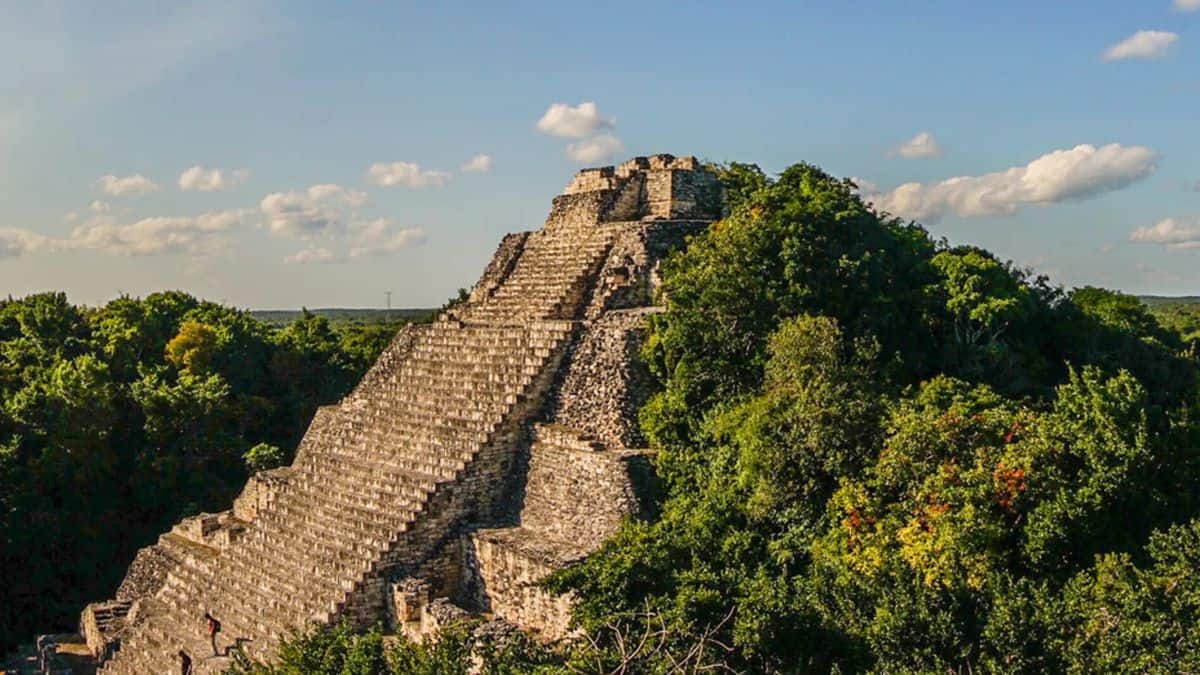
United States joins Canada and others in triggering Mexico tourism revenue spike in June as higher visitor spending, stronger secondary markets and the 2026 World Cup boost helped lift tourism earnings despite uneven arrival trends. Mexico recorded a sharp revenue recovery during the tournament period after spending fell before and after the 2026 World Cup, with increased expenditure per visitor, growing Canadian and Colombian demand, and strong international interest supporting the country’s tourism performance.
Mexico’s World Cup Visitor Boom Masks a Sharp Divide in Tourism Revenue
Mexico’s tourism sector is navigating a striking contrast in 2026, with the FIFA World Cup creating a powerful mid-year visitor surge while spending by international air travellers remains under pressure. International air visitors generated US$17.33 billion between January and July, down 2.6% from US$17.79 billion in the same period of 2025. Spending declined particularly sharply in March and April before rebounding 3.8% in June during the World Cup period. Mexico also reportedly welcomed 51.1 million visitors in early 2026, while Mexico City, Guadalajara and Monterrey together generated more than US$2.46 billion from World Cup tourism. Yet with roughly 60% of tournament attendees described as day-trippers who did not book hotels, the visitor boom did not necessarily deliver the same gains to accommodation businesses or replace demand from higher-spending, longer-stay holidaymakers.
International Air Visitor Spending in Mexico — January to July 2026
| Month | 2026 Spending | 2025 Spending | YoY Change |
|---|---|---|---|
| January | US$2.859bn | US$2.796bn | +2.3% |
| February | US$2.755bn | US$2.768bn | -0.5% |
| March | US$2.880bn | US$3.132bn | -8.0% |
| April | US$2.349bn | US$2.530bn | -7.2% |
| May | US$1.973bn | US$2.056bn | -4.1% |
| June | US$2.249bn | US$2.166bn | +3.8% |
| July | US$2.263bn | US$2.342bn | -3.3% |
| Jan–Jul Total | US$17.328bn | US$17.790bn | -2.6% |
Mexico’s Source Markets Fuel June Tourism Revenue Despite Uneven Arrival Trends
Mexico’s tourism economy produced a strong World Cup-period result in June 2026 despite weakness in its biggest source market. The country received a record 8.2 million international travellers during June, up 2.1%, while international visitor expenditure reached US$2.913 billion, an increase of 5.9%. Foreign tourists arriving by air numbered 1,602,621, while their average expenditure increased 9.6%. The United States remained dominant despite declining arrivals, while Canada, Colombia and several smaller markets provided crucial additional demand. This combination of higher spending per visitor and more diversified arrivals helped push June revenue into positive territory.
Mexico Tourism Performance — June 2026
| Tourism Indicator | June 2026 | YoY Change |
|---|---|---|
| International travellers | 8.2 million | +2.1% |
| International visitor expenditure | US$2.913bn | +5.9% |
| International visitor expenditure June 2025 | US$2.751bn | — |
| Foreign tourists arriving by air | 1,602,621 | — |
| Average expenditure by air tourists | — | +9.6% |
| Cruise passengers | 843,417 | +21.5% |
| Cruise passenger spending | US$73.4m | +30.0% |
United States — Falling Arrivals Still Power Mexico’s Largest Revenue Stream
The United States remained Mexico’s dominant source market even as demand weakened. Mexico received 1,174,871 US air tourists in June, down 12.1% year on year. Through July, arrivals stood at 8,061,646, down 10.0%, but Americans still represented 65.0% of the supplied January–July market. Because the US remains so large, its visitors continued to underpin hotels, restaurants, transport and attractions during the World Cup. A simple arrival-share model suggests June US-linked international visitor spending could have been around ~US$2.1 billion. This is an analytical estimate, not an official country-specific revenue figure, but it demonstrates why Mexico can withstand declining US volume better when spending per air traveller rises.
Advertisement
Advertisement
Canada — Rising Demand Helps Offset the US Tourism Retreat
Canada provided one of Mexico’s most important growth cushions in 2026. Canadian air arrivals reached 1.831 million during January–June, up 7.6%, while the supplied January–July dataset shows 1,924,109 arrivals, representing 15.5% of the market and growth of 7.4%. June alone brought 84,954 Canadian air tourists. Using their share of foreign air arrivals as a broad indicator suggests Canadian travellers could have supported roughly ~US$150–160 million of June visitor spending. The estimate is indicative rather than official. Canada’s importance lies in its direction: while US traffic was contracting, Canadian arrivals continued expanding, giving Mexico additional World Cup-period demand and reducing its dependence on one North American market.
Advertisement
Advertisement
Colombia — Explosive World Cup Growth Creates a New Revenue Driver
Colombia emerged as one of Mexico’s strongest growth markets during the World Cup. June brought 72,465 Colombian air tourists, a remarkable increase of 74.4% from the previous year. January–June arrivals reached 242,064, up 31.5%, while the supplied January–July total climbed to 280,607, representing growth of 29.4%. An arrival-share model suggests Colombian travellers could have accounted for approximately ~US$130 million of Mexico’s June international visitor spending. Although this is not an official expenditure figure, the direction is clear. Colombia supplied precisely the kind of fast-growing regional demand Mexico needed to counter weaker traffic from its traditional US market.
United Kingdom — Stable European Demand Protects Long-Haul Revenue
The United Kingdom delivered stability rather than rapid expansion. Mexico received 254,839 British air visitors through July, marginally above 254,149 a year earlier, representing growth of 0.3%. Britain accounted for 2.1% of the supplied international air-arrival market. Based on the available arrival pattern, British travellers could have contributed roughly ~US$45–55 million to June tourism expenditure. The estimate is indicative because actual expenditure per British visitor is not provided. Nevertheless, stable British traffic was valuable during an uneven year. Long-haul visitors can support accommodation, dining, excursions and transport, helping Mexico maintain tourism yield even when their arrival numbers show little growth.
Argentina — Falling Demand Limits Its Contribution to the World Cup Boom
Argentina stands in sharp contrast with Colombia. Air arrivals fell from 227,832 in January–July 2025 to 187,889 in 2026, a decline of 17.5%. Its share of Mexico’s international air market consequently dropped from 1.7% to 1.5%. Based on its recent arrival pattern, Argentina may have generated roughly ~US$30–40 million in June tourism expenditure, although this is an analytical estimate rather than reported revenue. The decline meant Argentina supplied less incremental support during the World Cup boom. Mexico therefore depended more heavily on expanding markets such as Canada and Colombia, alongside higher spending per visitor, to compensate for weakening Argentine demand.
Advertisement
Advertisement
Spain — Stable Arrivals Keep European Tourism Revenue Flowing
Spain provided another relatively stable source of long-haul demand. Mexico recorded 165,878 Spanish air arrivals through July 2026, compared with 165,399 during the same period in 2025. Growth was only 0.3%, while Spain maintained approximately 1.3% of the international air-arrival market. Using arrival patterns as a broad proxy suggests Spanish travellers could have generated roughly ~US$30–35 million during June. This should not be treated as measured revenue. Spain did not drive the World Cup surge, but its stability helped prevent Mexico’s European market from weakening at the same time as US and Argentine arrivals were falling.
France — Small Growth Adds Another Layer of Revenue Stability
France supplied 153,934 air visitors through July, slightly above 153,296 a year earlier. That represented growth of 0.4%, while its market share remained around 1.2%. An indicative calculation based on the available arrival pattern places French-linked June visitor expenditure at roughly ~US$25–30 million. France therefore played a similar role to Spain and Britain: it did not deliver dramatic additional volume, but it maintained a stable stream of long-haul travellers. That stability mattered because Mexico’s June revenue improvement was built not only on booming markets such as Colombia, but also on established markets continuing to supply travellers while the United States contracted.
Advertisement
Advertisement
Source-Market Performance Through July 2026
| Country | 2026 Air Arrivals | 2025 Air Arrivals | YoY Change | 2026 Market Share |
|---|---|---|---|---|
| United States | 8,061,646 | 8,961,027 | -10.0% | 65.0% |
| Canada | 1,924,109 | 1,791,025 | +7.4% | 15.5% |
| Colombia | 280,607 | 216,872 | +29.4% | 2.3% |
| United Kingdom | 254,839 | 254,149 | +0.3% | 2.1% |
| Argentina | 187,889 | 227,832 | -17.5% | 1.5% |
| Spain | 165,878 | 165,399 | +0.3% | 1.3% |
| France | 153,934 | 153,296 | +0.4% | 1.2% |
Indicative June Revenue Contribution by Source Market
| Source Market | June Tourism Trend | Approx. June Revenue Contribution* |
|---|---|---|
| United States | -12.1% arrivals | ~US$2.1bn |
| Canada | +7.6% Jan–Jun arrivals | ~US$150–160m |
| Colombia | +74.4% June arrivals | ~US$130m |
| United Kingdom | Broadly stable | ~US$45–55m |
| Argentina | -17.5% Jan–Jul arrivals | ~US$30–40m |
| Spain | Broadly stable | ~US$30–35m |
| France | Broadly stable | ~US$25–30m |
World Cup Tourism Adds Another Powerful Layer
The World Cup provided Mexico with an additional tourism boost beyond ordinary source-market movements. During the tournament period, Mexico City, Guadalajara and Monterrey collectively received 7.8 million domestic and international travellers and excursionists. Tourism spending across the three host cities was estimated at more than MXN42.276 billion.
Hotel occupancy averaged 66% across the five weeks of the tournament and climbed to around 85–90% on match days. Airports serving the host destinations handled approximately 6.4 million passengers, while the tournament was associated with 130,900 jobs across the three host cities.
| World Cup Tourism Indicator | 2026 Result |
|---|---|
| Travellers and excursionists in host cities | 7.8 million |
| Tourism spending | MXN42.276bn+ |
| Average hotel occupancy | 66% |
| Match-day hotel occupancy | 85–90% |
| Host-city airport passengers | 6.4 million |
| Jobs associated with tournament activity | 130,900 |
| Mexico City jobs | 100,000 |
| Monterrey jobs | 15,800 |
| Guadalajara jobs | 15,100 |
June Shows How Mexico Turned Falling Arrivals Into Higher Revenue
Mexico’s June performance is ultimately a story about yield rather than visitor numbers alone. International visitor expenditure increased 5.9% to US$2.913 billion, even though arrivals from the United States — the country’s largest air market — dropped 12.1%.
Higher spending per air tourist, which increased 9.6%, helped close that gap. Canada continued expanding, Colombia surged 74.4%, and stable European markets supplied additional long-haul demand. Cruise tourism provided another boost, with 843,417 passengers arriving in June, up 21.5%, while their spending jumped 30.0% to US$73.4 million.
The result shows why Mexico’s 2026 tourism performance cannot be assessed solely through arrival counts. The World Cup, stronger secondary source markets, cruise growth and higher expenditure per visitor allowed Mexico to generate substantially more tourism money in June even while its dominant US air market was moving in the opposite direction.
Advertisement
Advertisement
The United States joins Canada and others in triggering Mexico tourism revenue spike in June as higher visitor spending, growing source markets and 2026 World Cup demand lifted earnings despite spending declines before and after the tournament.
In conclusion, the United States joins Canada and others in triggering Mexico tourism revenue spike in June as stronger visitor spending, expanding source markets and the 2026 World Cup momentum helped increase tourism earnings despite spending falls before and after the tournament period. While US arrivals declined, higher expenditure per traveller, rising Canadian demand, rapid Colombian growth and stable European markets supported Mexico’s tourism performance. The results show that Mexico’s tourism strength in 2026 is being shaped not only by visitor numbers, but also by spending power, market diversification and major global events.
Advertisement
