
Japan Sees Short Term Rental Revolution as Tourism Growth Creates New Opportunities and Housing Pressure

Published
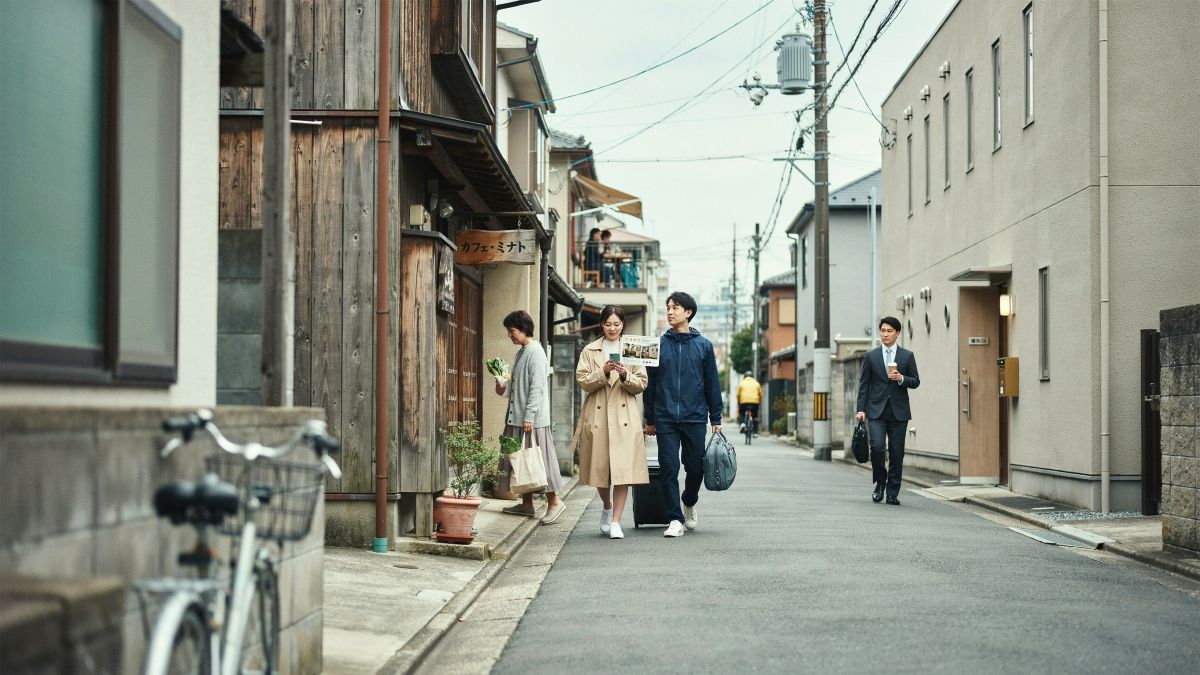
Asia Pacific Tourists Change Their Views on Japan Due to Changes in Short Term Rentals in 2026, which offers them new opportunities but new problems. With the increasing number of tourists, they tend to book not only hotels, but also apartments, holiday rentals and homestays. Thus, Short Term Rentals will help spread money from tourists to the local neighbourhoods. But at the same time, the fast development can lead to the decrease of the number of Housing and affect local people. Japan operates under regulated rentals system, whereas other countries operate with different systems. Hence, Asia Pacific governments should consider the Travel needs together with those of their people.
Asia Pacific Short Term Rentals Are Changing Where Travellers Stay
The rise of short-term rentals gives travellers a much wider accommodation choice.
Advertisement
Advertisement
A family may want an apartment with a kitchen. A large group may prefer a villa. A visitor staying for several weeks may need more space than a conventional hotel room provides. Other travellers may choose a homestay because they want to live closer to local communities.
This flexibility explains part of the sector’s appeal.
Advertisement
Advertisement
The supplied research indicates potentially very large STR inventories across major Asia-Pacific markets, although it also stresses that comparable official figures are scarce.
Its indicative estimates put China at around 700,000 listings, India at about 200,000 and Japan at roughly 90,000 licensed properties based on the cited reference period. Thailand is estimated at around 85,000, while Indonesia and Australia are each placed at roughly 70,000.
Advertisement
Advertisement
These numbers should not be interpreted as a precise 2026 league table. Different countries count properties differently, and some estimates combine several platforms and accommodation categories.
The more important story is scale.
Alternative accommodation has become a substantial part of Asia-Pacific’s visitor economy.
China India Japan and Thailand Show the Huge Scale of the Market
Asia-Pacific cannot be treated as one short-term rental market.
China has a large domestic tourism economy and powerful local booking platforms. Japan operates a formal regulatory framework. India has a diverse homestay landscape. Thailand combines large tourism centres with islands, resorts, cities and rural destinations.
The supplied research also estimates around 50,000 listings in South Korea, 45,000 in Malaysia, 40,000 in Vietnam, 30,000 in New Zealand and 25,000 in the Philippines.
Advertisement
Advertisement
Again, these are indicative estimates rather than directly comparable official inventories.
Singapore sits at the opposite end of the spectrum because it places strict restrictions on short stays in residential properties.
This contrast reveals the central feature of the Asia-Pacific STR story.
There is no single regional model.
One destination may see home-sharing as a tool for tourism development. Another may see unrestricted short stays as a threat to residential housing. A third may permit them but require licences, guest records, safety standards or minimum stays.
For travellers, this means accommodation rules can change sharply when they cross a border.
Advertisement
Advertisement
The Tourism Benefit Goes Far Beyond the Price of a Room
Short-term rentals do more than provide beds.
Guests spend money outside their accommodation.
They buy breakfast. They visit cafés. They use taxis and public transport. They shop in neighbourhood stores. They book attractions. They may pay cleaners, guides, drivers and other local service providers indirectly through their stay.
That creates a wider tourism economy.
The supplied research points to China’s shared-homestay sector reaching RMB22.5 billion in turnover in 2019, illustrating the economic scale that alternative accommodation had already achieved before the pandemic.
The post-pandemic tourism recovery has increased the relevance of this market.
Advertisement
Advertisement
When visitor demand rises quickly, short-term rentals can add accommodation capacity without requiring every destination to build a large new hotel.
That can be particularly useful in smaller towns and rural areas.
A homeowner with a spare room can potentially enter the visitor economy. A village without a major hotel can still host overnight guests. Tourism spending can therefore move beyond established resort districts.
This is one reason STR policy is becoming an important part of destination planning.
Short Term Rentals Can Push Tourism Into Lesser Visited Communities
One of the strongest potential benefits appears outside famous tourism centres.
Overtourism often concentrates visitors in a small number of places. Short-term rentals can help spread demand when they operate in communities with limited traditional accommodation.
Advertisement
Advertisement
This creates an opportunity for countries such as Thailand, Japan, Indonesia, India, the Philippines and Vietnam.
A carefully regulated rural homestay programme could bring visitors into areas where large hotels may not be economically viable.
Local households could earn income.
Small restaurants could gain customers.
Local guides, transport operators and shops could benefit.
Tourists could also experience communities that sit outside established tourism corridors.
Advertisement
Advertisement
But location matters.
Adding rentals in a rural destination with spare housing is very different from converting permanent homes into holiday accommodation in an expensive city with a housing shortage.
That distinction is becoming central to the debate.
Housing Pressure Is Becoming the Hardest Part of the STR Debate
Short-term rentals can generate income for property owners.
But the same financial incentive can create problems for people looking for permanent homes.
Imagine an owner who can earn more from tourists staying for a few nights than from a resident signing a one-year lease.
Advertisement
Advertisement
The owner may choose tourists.
If many owners make the same decision, fewer homes remain available for local residents.
That can increase pressure on rents.
The supplied research cites a Hong Kong study associating a 10 per cent increase in Airbnb listings with roughly a 3.6 to 4 per cent rise in local rents. It also reports an estimated increase in the rent-to-income ratio associated with Airbnb activity.
Such findings do not mean every STR produces the same effect everywhere. Housing markets differ greatly.
But they illustrate why governments increasingly connect tourism accommodation policy with housing policy.
Advertisement
Advertisement
The issue is no longer simply whether visitors want apartments.
The issue is how many residential properties a city can move into visitor accommodation before local housing becomes harder to secure.
Japan Shows How Governments Can Legalise Rentals and Still Set Limits
Japan offers one of the region’s clearest regulatory examples.
The country’s Housing Accommodation Business Act created a formal framework for private lodging operations. The system is commonly associated with the term minpaku.
Under the framework described in the research, operators must register and qualifying properties are generally limited to 180 operating days per year.
Hosts also face requirements covering matters such as guest records, signage and sanitation.
Advertisement
Advertisement
Local authorities can impose additional restrictions.
This creates a middle path.
Japan has not simply opened every residential property to unrestricted tourist use. Nor has it eliminated private lodging.
Instead, it has created a legal structure designed to place boundaries around the market.
For travellers, the lesson is important.
A listing appearing online does not automatically mean that every type of short stay is permitted everywhere.
Advertisement
Advertisement
Visitors should understand the rules governing the property they book.
Singapore Takes a Much Tougher Approach to Residential Short Stays
Singapore demonstrates just how different STR rules can become within the same region.
The city-state maintains strict minimum-stay requirements for residential properties.
The research notes that private residential properties cannot generally be rented for stays of less than three consecutive months. HDB properties operate under even longer minimum-rental rules.
This effectively removes conventional nightly residential home-sharing from much of Singapore’s legal accommodation market.
Travellers seeking short visits therefore need appropriate authorised accommodation, such as hotels and qualifying serviced apartments.
Advertisement
Advertisement
The Singapore model reflects a strong policy emphasis on protecting residential use.
It also demonstrates why travellers should never assume that a short-term rental model permitted in one Asia-Pacific country will be legal in another.
The accommodation may look similar online.
The law behind it can be completely different.
Regulation Is Moving From Tourism Issue to City Management Issue
Across Asia-Pacific, governments face a complicated balancing act.
They want tourism revenue.
Advertisement
Advertisement
They also need homes for residents.
They want entrepreneurs to earn money.
But they need accommodation to meet safety and tax rules.
They want digital booking platforms to encourage travel.
Yet authorities also need reliable information about who operates properties and where visitors are staying.
That explains the growing importance of registration.
Advertisement
Advertisement
A registration system can tell authorities how many legal units operate in a destination.
It can support tax collection.
It can make enforcement easier.
It can also become important during emergencies.
The next phase of STR regulation is therefore likely to focus less on whether home-sharing should simply exist and more on where it should operate, under what conditions, for how many days and with what level of oversight.
Typhoons Earthquakes and Wildfires Add Another Risk to Holiday Rentals
Asia-Pacific has another challenge that makes STR regulation especially important.
Advertisement
Advertisement
Natural disasters.
The region regularly experiences typhoons, earthquakes, floods, wildfires, volcanic activity and other hazards.
A licensed hotel normally sits within a formal tourism and safety system. Authorities generally know where it is. Building and fire rules apply. Staff can communicate with guests.
A dispersed network of private rentals can be harder to manage.
What happens if an evacuation warning arrives?
Does the traveller receive it?
Advertisement
Advertisement
Does the government know tourists are staying in the building?
Does the property meet fire and structural standards?
Does the owner have appropriate insurance?
These questions become critical during emergencies.
At the same time, private accommodation can become useful after disasters. Spare homes and rooms may provide temporary accommodation when normal capacity becomes unavailable.
This gives STRs a dual role.
Advertisement
Advertisement
They can strengthen resilience when properly integrated into emergency systems. Poorly regulated properties can also create additional vulnerability.
Safety Could Become the Next Big Competitive Advantage
Price and location have traditionally dominated accommodation decisions.
Safety could become much more important.
A stronger STR system would require properties to meet clear building and fire standards. Smoke alarms should work. Emergency exits should be clear. Travellers should receive local warning information. Hosts should understand evacuation procedures.
Insurance matters too.
A traveller booking a beach house in a storm-prone area needs confidence that the property operates responsibly.
Advertisement
Advertisement
The same applies to earthquake zones and areas exposed to bushfires.
Platforms can help by improving identity checks, property verification and emergency communication.
Governments can help by creating registration databases that connect tourism properties with public-alert systems.
The result would be more than regulation.
It could create a more trusted accommodation market.
For travellers, trust may eventually become as important as price.
Advertisement
Advertisement
Technology Is Turning Holiday Homes Into a Major Digital Tourism Business
The STR revolution would not exist at its current scale without technology.
Travellers can now search thousands of properties in seconds.
They can compare photographs, locations, facilities, reviews and prices before arriving in a destination.
Global and regional booking businesses compete for this demand.
China has strong domestic platforms. India has its own accommodation ecosystem. Southeast Asia has powerful regional booking services. International platforms also maintain significant footprints across many markets.
The result is an increasingly sophisticated digital marketplace.
Advertisement
Advertisement
Technology also gives regulators new tools.
Platforms can potentially transmit registration information, tax records and booking data where legislation requires it.
Digital systems can help authorities identify unregistered properties.
Future systems may also improve safety.
A booking platform could provide destination-specific emergency information. It could warn guests about severe weather. Verified properties could show compliance with required safety standards.
The technology that helped STRs expand may therefore become part of the solution to regulating them.
Advertisement
Advertisement
Travellers Need to Look Beyond Attractive Photos Before Booking
For tourists, the changing regulatory environment creates a simple message.
Check before booking.
A beautiful apartment and a low nightly price do not answer the most important questions.
Is the rental lawful?
Does it meet local safety rules?
Is the host registered where registration is required?
Advertisement
Advertisement
What happens if the booking is cancelled because authorities act against an illegal property?
Travellers should also examine cancellation conditions, insurance, emergency contacts and property reviews.
This matters particularly when booking in destinations with strict residential accommodation rules.
A cheap stay can become expensive if it fails at the last minute.
The growth of STRs has given travellers more freedom.
That freedom also requires more careful booking decisions.
Advertisement
Advertisement
Smart Rules Could Protect Tourism Without Closing the Door on Innovation
The strongest policy response does not have to be a choice between unlimited rentals and a complete ban.
Governments have several options.
They can require registration.
They can set annual operating limits.
They can establish minimum stays.
They can restrict rentals in neighbourhoods with severe housing pressure.
Advertisement
Advertisement
They can require fire and structural safety standards.
They can collect tourism taxes from qualifying rentals.
They can also use some of that revenue to support housing, infrastructure and destination management.
Another option is geographic diversification.
Governments could make it easier to develop legitimate homestays in rural and lesser-visited areas while maintaining tighter restrictions in housing-stressed city centres.
That would connect accommodation policy directly with tourism dispersal.
Advertisement
Advertisement
Instead of simply asking how many rentals a destination should permit, authorities could ask where additional visitor accommodation produces the greatest public benefit.
Asia Pacific Tourism Is Entering a New Short Term Rental Era
Japan’s Short Term Rental Revolution: An Opportunity and Challenge Created by Tourist Growth, brings into focus the evolving accommodation industry. More and more tourists seeking something other than hotels, can stay at short-term rentals in urban locations, near the coast and in local neighborhoods. At the same time, this Revolution can distribute tourist spending and provide New opportunities for income generation for the host and local businesses. However, fast growth may lead to decreasing number of residential units available to locals and raising housing prices in touristic places. Hence, Japan needs to find a way to satisfy the needs of both tourists and locals.
Advertisement
